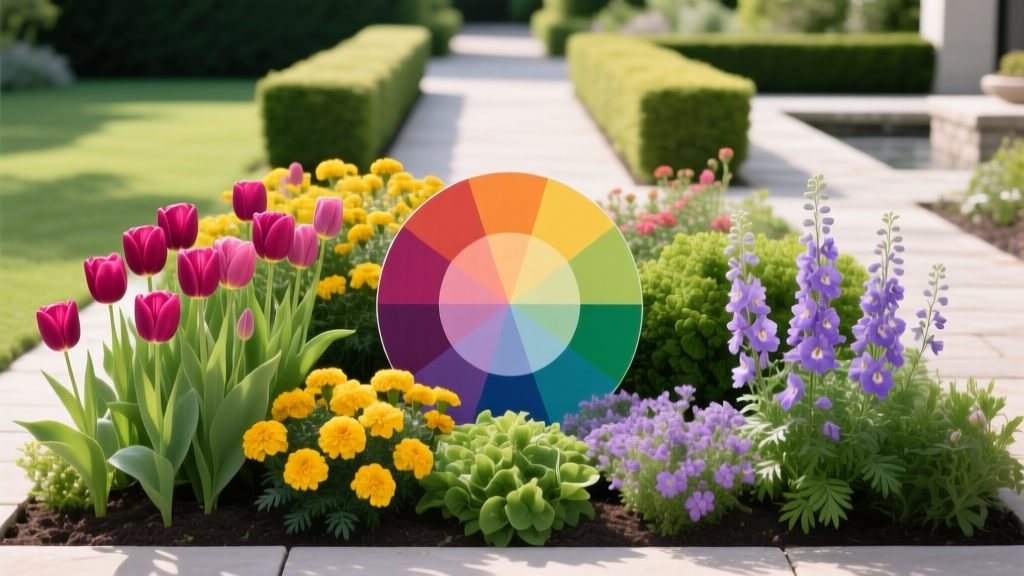
Garden Color Wheel: How to Design Flower Beds with Stunning Color Combinations
The Science of Color in Garden Design
Great garden design isn't random — it follows the same color principles that painters and interior designers use. Understanding the color wheel transforms your garden from a random assortment of flowers into a cohesive, visually stunning landscape that draws the eye and creates emotional impact.
The Color Wheel Basics for Gardeners
The color wheel has three layers relevant to garden design:
- Warm colors (red, orange, yellow) — advance visually, create energy and excitement. Plant these near seating areas and entryways.
- Cool colors (blue, purple, pink) — recede visually, create calm and depth. Use at the back of borders to make spaces feel larger.
- White and silver — act as visual pauses, separating and highlighting other colors. Essential for moon gardens and evening enjoyment.
Scheme 1: Complementary Colors (High Impact)
Colors opposite each other on the wheel create maximum contrast and visual drama.
Purple + Yellow
- Salvia 'May Night' + Coreopsis 'Moonbeam'
- Lavender + Black-eyed Susan (Rudbeckia)
- Catmint + Yarrow 'Coronation Gold'
Blue + Orange
- Delphinium + California Poppy
- Hydrangea (blue) + Daylily 'Stella de Oro'
- Brunnera + Geum 'Totally Tangerine'
Red + Green (natural complement)
Already inherent in nature — red flowers against green foliage. Amplify with silver or burgundy foliage for sophistication.
Scheme 2: Analogous Colors (Harmonious Flow)
Colors next to each other on the wheel create smooth, flowing transitions that feel natural and relaxing.
Pink-Purple-Blue Border
Start with pink echinacea, transition to purple salvia, then blue delphinium at the back. The gradient creates depth — warm pink advances, cool blue recedes — making the border appear deeper than it actually is.
Yellow-Orange-Red Hot Border
Yellow yarrow → orange geum → red crocosmia. This scheme radiates warmth and energy, perfect for sunny borders visible from kitchen windows.
Scheme 3: Monochromatic (Elegant Sophistication)
Using different shades and tints of a single color creates the most sophisticated garden designs. The White Garden at Sissinghurst Castle is the most famous example.
All-White Garden
- Spring: White tulips, white narcissus, white bleeding heart
- Summer: White roses, white phlox, white cosmos, moonflower
- Fall: White mums, white Japanese anemone, silver artemisia
- Foliage accents: Dusty miller, lamb's ear, variegated hosta
All-Purple Garden
Layer deep purple (salvia, allium) with medium purple (catmint, veronica) and light lavender (Russian sage, lavender). Add purple-leaved plants like heuchera 'Palace Purple' and Japanese maple for depth.
The Role of Foliage Color
Flowers come and go, but foliage is constant. Design with leaf color first:
- Burgundy foliage: Heuchera, Japanese maple, ninebark — adds depth
- Silver/gray foliage: Lamb's ear, artemisia, dusty miller — separates bold colors
- Chartreuse foliage: Sweet potato vine, hakonechloa — adds light and energy
- Variegated foliage: Hosta, Solomon's seal — creates visual interest without flowers
Seasonal Color Transitions
Design each bed with all four seasons in mind. For a purple-and-yellow scheme:
- Spring: Purple allium + yellow daffodils
- Summer: Purple salvia + yellow coreopsis
- Fall: Purple aster + yellow goldenrod
- Winter: Purple heuchera + ornamental grasses (golden)
Pro Tips from Professional Designers
- The 60-30-10 rule: 60% dominant color, 30% secondary, 10% accent — just like interior design
- Repeat colors: Use the same color in at least 3 spots throughout the garden to create visual rhythm
- Drift planting: Group the same plant in odd numbers (3, 5, 7) for natural-looking impact
- Photograph your garden: Color relationships look different in photos — this helps spot imbalances