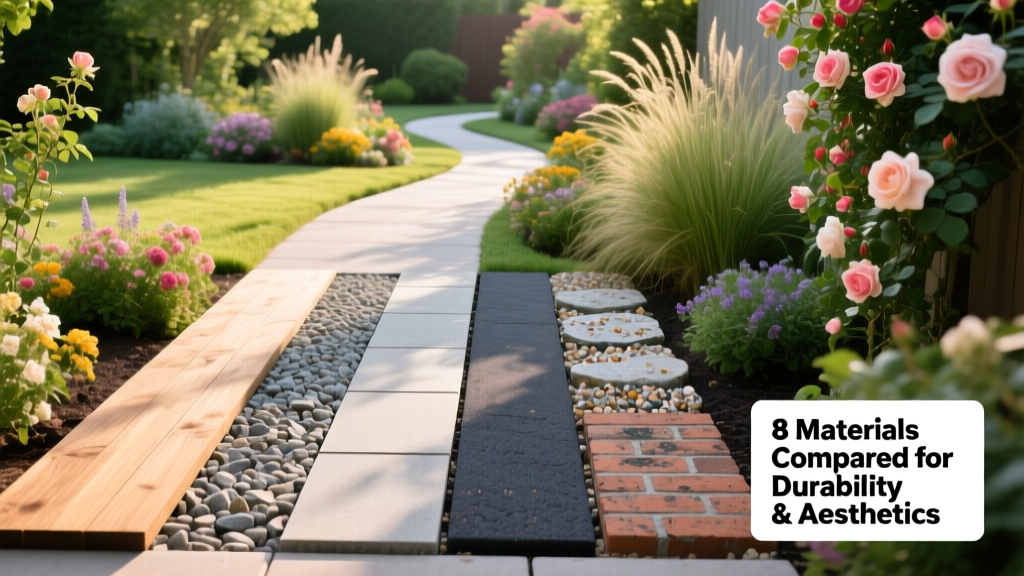
Garden Path Design: 8 Materials Compared for Durability and Aesthetics
Paths Define Your Garden
A garden path isn't just functional — it's the spine of your landscape design. The material you choose sets the tone: formal (brick, stone) or informal (gravel, mulch), expensive (flagstone) or budget-friendly (wood chips). Here's a complete comparison.
8 Path Materials Compared
| Material | Cost (per sq ft) | Durability | Drainage | Maintenance | Style |
|---|---|---|---|---|---|
| Gravel | $1-3 | 10-15 yrs | Excellent | Rake yearly, top up | Informal, cottage |
| Flagstone | $15-30 | 50+ yrs | Good (joints) | Minimal | Natural, rustic |
| Brick | $8-15 | 25-50 yrs | Good | Weed joints yearly | Formal, traditional |
| Wood chips | $0.50-2 | 2-3 yrs | Excellent | Replace annually | Rustic, woodland |
| Concrete pavers | $5-12 | 25-50 yrs | Good (joints) | Minimal | Modern, versatile |
| Cobblestone | $10-20 | 100+ yrs | Good | Minimal | Old World, formal |
| Stepping stones | $3-8 | 20+ yrs | Excellent | Mow between | Japanese, minimal |
| Decomposed granite | $2-5 | 5-10 yrs | Excellent | Rake, top up yearly | Southwest, modern |
Detailed Breakdown
Gravel (Best Budget Option)
Use 3/4 inch crushed gravel (not pea gravel — it shifts underfoot). Install: excavate 4 inches, lay landscape fabric, add 3 inches gravel. Edging is essential to contain spread.
Flagstone (Best Natural Look)
Irregular shapes create organic, flowing paths. Install on compacted sand base (2 inches) with 1-inch gaps for creeping thyme or moss.
Brick (Best Formal Look)
Lay in running bond, herringbone, or basket weave patterns. Install on 4-inch compacted gravel base + 1-inch sand bed. Sweep polymeric sand into joints.
Design Principles
- Width: Main paths 4-5 feet (two people side by side), secondary 2-3 feet
- Curves: Gentle curves feel natural; sharp zigzags look contrived
- Destination: Every path should lead somewhere (bench, focal point, garden room)
- Sight lines: Hide the end of the path to create mystery and encourage exploration
Final Thoughts
For most gardens, a combination works best: gravel for secondary paths (cheap, easy to install) and brick or flagstone for the main entrance path (durable, impressive). Start with gravel — you can always upgrade high-traffic sections later.