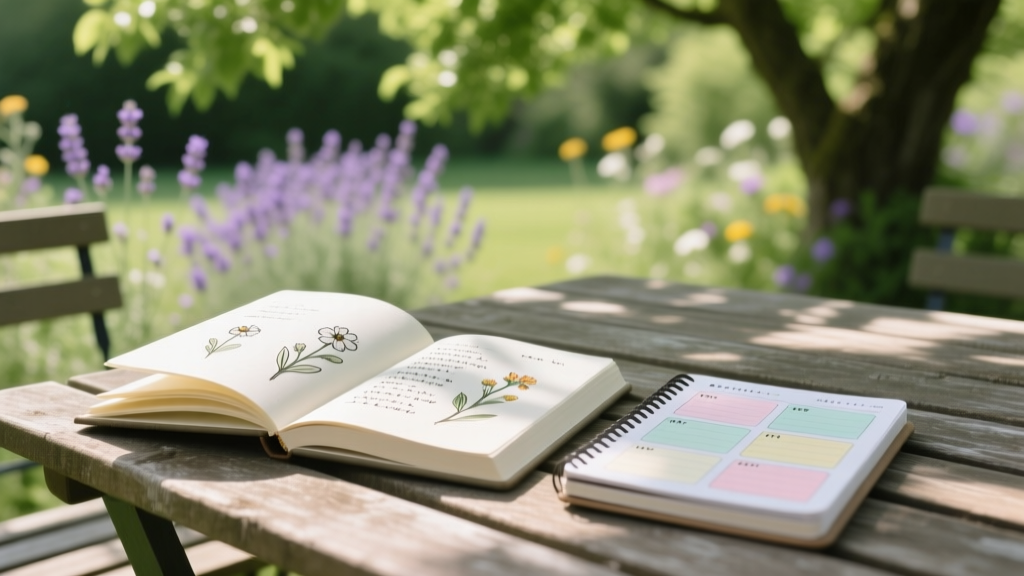
The difference between a good gardener and a great one isn't talent—it's memory. A garden journal turns guesswork into informed strategy.
## Why Keep a Garden Journal?
After 3+ years, you'll forget planting dates, which varieties produced best, frost dates, and pest solutions.
## Essential Sections
### 1. Garden Map (Annual)
- Draw beds to scale
- Mark crop locations for rotation
- Note sun patterns and water sources
### 2. Planting Calendar
Track: variety, start date, transplant date, first/last harvest, actual days to maturity
### 3. Weather and Frost Dates
- First and last frost each year
- Unusual weather events
- Monthly rainfall
### 4. Harvest Log
- Total yield per crop
- Quality notes
- Would you grow again?
### 5. Pest and Disease Record
- What appeared, when, treatment used, effectiveness
### 6. Soil Amendment Log
- What was added, when, how much
- Annual soil test results
## Simple Template Format
```
DATE: ___
WEATHER: ___
TODAY: Planted/Harvested/Maintenance
OBSERVATIONS: Pests/Diseases/Wildlife/Growth
NOTES FOR NEXT TIME: ___
```
## Digital vs. Paper
- **Paper**: No batteries, works with muddy hands, easy sketches
- **Digital**: Searchable, photo integration, auto-dates, cloud backup
- **Recommended**: Google Sheets, Gardenize app, or Rite in the Rain notebook
## Seasonal Review
### Spring Review
Were seed-starting dates correct? Which transplants thrived? Soil prep work?
### Summer Review
Best varieties? Pest problems? Watering schedule working?
### Fall Review
Total harvest vs. last year? Crops worth the space? Infrastructure needs?
### Winter Planning
Review journal, order seeds based on results, update rotation map, set goals.
## Tips for Actually Maintaining
1. Keep it in the garden
2. Write daily, even briefly
3. Take monthly photos
4. Use shorthand
5. Review monthly
6. Pair with morning coffee ritual
## Year-Over-Year Power
After 2-3 years, patterns emerge:
- Correct planting dates for your microclimate
- Recurring pest timing for proactive prevention
- Which varieties truly perform in your conditions
- Soil improvement trajectory