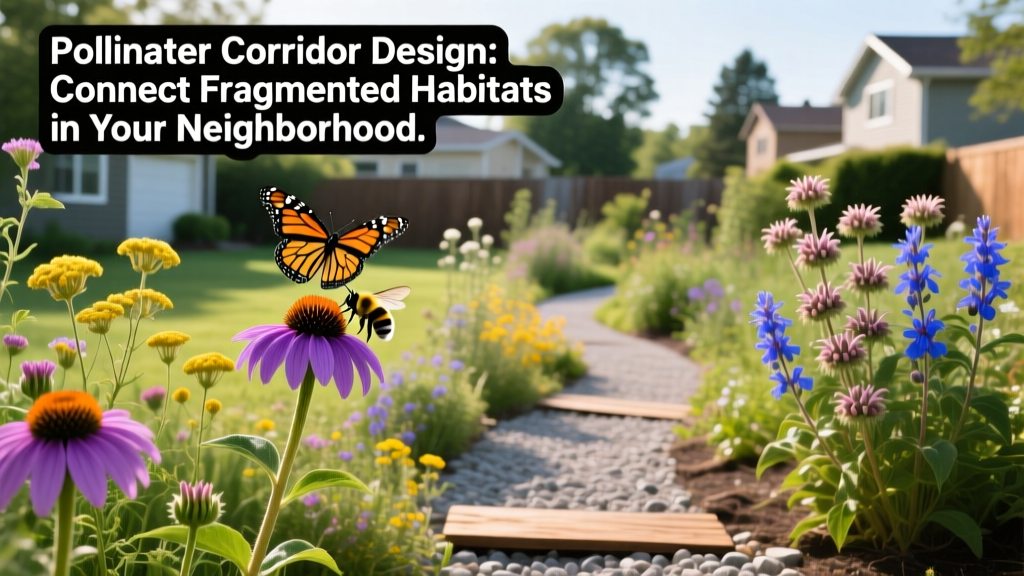
Pollinator Corridor Design: Connect Fragmented Habitats in Your Neighborhood
What Is a Pollinator Corridor?
A pollinator corridor is a connected chain of gardens and green spaces that allows bees, butterflies, and other pollinators to travel safely across urban and suburban landscapes. Individual gardens are islands; corridors turn them into networks.
Why Corridors Matter
- Habitat fragmentation: 80% of urban land is private yards — isolated green patches
- Pollinator decline: Bee populations down 40% in 20 years, butterflies down 80%
- Genetic diversity: Corridors allow pollinators to move between populations
- Food security: 75% of food crops depend on pollinators
Design Principles
1. Width Matters
| Corridor Width | Supports |
|---|---|
| 3-6 feet | Small bees, hoverflies |
| 10-20 feet | Butterflies, larger bees |
| 50+ feet | Birds, small mammals, full ecosystem |
2. Bloom Overlap (3 Seasons)
- Spring: Crocus, snowdrop, serviceberry, wild plum, red maple
- Summer: Bee balm, coneflower, milkweed, sunflower, lavender
- Fall: Goldenrod, aster, sedum, Joe-Pye weed, witch hazel
3. Native Plants (80% Rule)
Native plants support 4x more pollinator species than non-natives. Aim for 80% native, 20% ornamental.
Planting Plan: 10-Foot-Wide Corridor Strip
| Layer | Plants | Spacing |
|---|---|---|
| Canopy (back) | Serviceberry, redbud, wild plum | 10-15 ft apart |
| Shrub (middle) | Buttonbush, New Jersey tea, spicebush | 5-8 ft apart |
| Perennial (front) | Milkweed, coneflower, bee balm, aster | 12-18 inches apart |
| Ground cover | Wild strawberry, creeping phlox, violets | 6-12 inches apart |
Building Community Corridors
- Map your street's existing gardens
- Identify gaps (lawns, vacant lots)
- Offer free native plants to neighbors
- Work with HOA/city to convert unused strips
- Register with Pollinator Partnership
Final Thoughts
Every garden added to a corridor multiplies its impact. Start by converting your front yard — it sparks conversations and is the first link in your neighborhood's corridor.