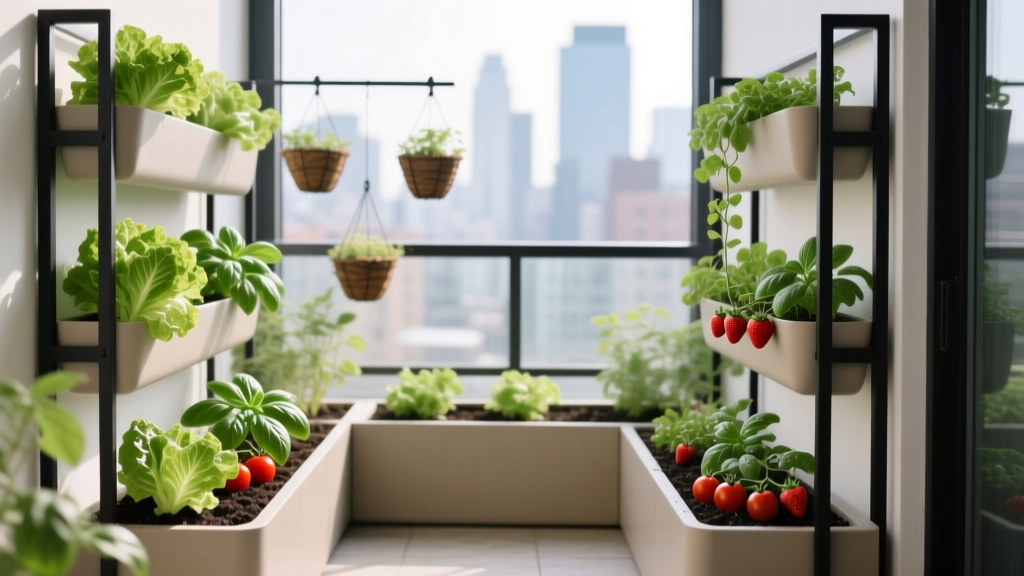
8 Garden Hacks for Small Space Maximum Yield
The fastest way to get a “tiny garden” that barely feeds you is to treat every square foot the same. A 4' x 8' bed doesn’t need “more effort”—it needs smarter real estate: tall crops up, quick crops in the gaps, and water exactly where roots can grab it. Most low-yield small gardens fail for one boring reason: the gardener leaves empty time and empty soil between plants, then waters like it’s a lawn.
Below are eight space-squeezing hacks I use (and see work for clients and neighbors) when the garden is a patio, balcony, side yard strip, or one raised bed. They’re grouped so you can combine them—because stacking hacks is where the real yield jumps happen.
Group 1: Make Vertical Space Do the Heavy Lifting
1) Grow Up, Not Out: The “Trellis Everything” Rule
If it vines, climbs, or can be trained, get it off the ground. A simple 6–7 ft trellis turns one 1.5 ft-deep row into a vertical wall of food, and it also improves airflow (fewer fungal issues than sprawl). Aim for 6"–8" spacing for climbing beans and 12"–18" for cucumbers on a trellis so you’re not wasting bed width.
Real-world example: In a 4' x 8' bed, run a trellis along the north edge and plant 6 cucumber plants at 12" spacing—then plant lettuce in the sunnier front half early, before the vines shade everything. You get cucumbers up high and a whole extra lettuce harvest down low before summer heat hits.
2) Turn One Pot into a Column: Pocket Trellis + “Hanging Edge” Plants
Containers can pull double duty if you build a pocket trellis (a U-shaped wire panel pushed into the pot) and add “hanger” plants around the rim. Use one 15–20 gallon container for one indeterminate cherry tomato trained to a 6 ft stake, then tuck 3–4 basil plants around the edge and let one nasturtium spill over the side.
DIY option: A concrete reinforcing mesh panel (often sold as remesh) cut to 18" x 48" can be bent into a loop and zip-tied—usually cheaper than a fancy tomato cage. Expect to spend about $8–$15 total if you already have snips and zip ties.
3) Use “A-Frame” Trellises to Shade the Right Crops on Purpose
An A-frame trellis (two panels leaned together) creates a little microclimate underneath, which is gold in small beds. Put heat-loving climbers (cucumbers, pole beans) on the outside faces, and grow shade-tolerant greens (spinach, arugula, cilantro) in the filtered light beneath. This is one of the few times “shade” becomes a yield booster because it slows bolting.
Case scenario: Side-yard bed that gets blazing afternoon sun: an A-frame positioned so it casts shade after 2 p.m. can keep cilantro producing an extra 2–3 weeks compared to full sun exposure—especially in warm zones.
Group 2: Harvest the Calendar (Not Just the Square Foot)
4) Succession Planting with a “21-Day Rule” (So Gaps Never Happen)
Small gardens can’t afford empty soil. A simple rhythm is to sow fast crops every 21 days in spring: radishes, salad greens, baby bok choy, and turnips. When one batch finishes, the next is already coming in, and you’re constantly converting sunlight into food instead of bare dirt.
Specific timing: Radishes are often harvestable in about 25–35 days, so a 21-day sowing cycle keeps you in a steady pipeline instead of a one-and-done glut. This is especially effective in a single 4' x 4' bed: dedicate one 1' strip to “repeat sow” crops and you’ll be shocked how much it adds up over a season.
5) Interplant Like a Chessboard: Pair Fast + Slow Crops
Here’s the trick: plant slow, long-season crops at their final spacing, then fill the “empty” space between them with quick crops that will be gone before the big plants need the room. Think: tomatoes at 18"–24" spacing with a ring of 6" lettuce starts between them; or broccoli at 18" with radishes scattered in the gaps.
Real-world example: One raised bed with 4 pepper plants spaced 18" apart can also grow 24–30 green onions (3" spacing) around them. The onions come out as peppers size up, and you basically got a bonus crop “for free.”
“Intercropping and planting schedules that keep soil covered can improve overall productivity per unit area by using light, water, and nutrients more efficiently.” — University extension guidance on intensive planting and intercropping (e.g., UC ANR home vegetable production resources, 2020)
6) Start Seeds in Cells to Steal 2–4 Weeks (Without Crowding the Bed)
Direct-sowing in small beds often wastes prime spring weeks—especially if you’re waiting for soil warmth or dealing with birds eating seedlings. Start seeds in 6-cell packs or 2" soil blocks indoors and transplant sturdy starts once they have 2–3 true leaves. This can buy you 2–4 weeks of growth, which is huge in compact gardens with limited planting zones.
Case scenario: Balcony gardener with only three 10-gallon fabric pots: starting basil, bok choy, and lettuce in a sunny window means you’re harvesting while everyone else is still staring at bare soil. It also reduces the “oops, I over-seeded” problem that leads to thinning and wasted seed.
Group 3: Make Water and Fertility Hyper-Targeted
7) DIY Ollas (or Bottle Ollas) for Deep Watering with Less Waste
Drip irrigation is great, but small spaces love simple, cheap, and reliable. An olla is a porous clay pot buried near plants; you fill it with water and it seeps slowly into the root zone. A classic DIY version is two unglazed terra-cotta pots sealed together, or a “bottle olla” made from a 1-liter bottle with tiny holes, buried neck-up for easy refills.
Specific setup: One medium olla typically serves roughly a 2–3 ft diameter planting area (depending on soil), which is perfect for a tight bed. In hot weather, plan to refill every 2–4 days at first, then adjust once you see how quickly it empties.
Money saver: A DIY bottle olla can cost basically $0–$2 if you reuse bottles, compared to $25–$45 for a commercial olla. For a 4' x 8' bed, two to three DIY ollas can replace a surprising amount of hose watering.
8) Feed in Thin Layers: The “1-Inch Compost + Targeted Liquid” Routine
In small gardens, over-fertilizing is a common yield killer (lush leaves, fewer fruits) and it’s easy to do because the soil volume is limited. Instead, top-dress with 1 inch of compost at planting time, then use a targeted liquid feed only when a crop actually needs it—like tomatoes and cucumbers when flowering starts. A simple, safe approach is fish emulsion at label rates (often around 1–2 Tbsp per gallon) every 2–3 weeks during heavy production.
Data-backed note: Compost improves soil structure and water-holding capacity—especially important in raised beds and containers that dry out faster. Research and extension guidance consistently recommends adding organic matter regularly to maintain productivity in intensive systems (e.g., USDA NRCS soil health principles, 2019; Washington State University Extension home gardening resources, 2021).
Quick Comparison Table: Pick the Right “Space-Saving System”
| Method | Best for | Typical cost | Water efficiency | Biggest watch-out |
|---|---|---|---|---|
| Vertical trellis row (6–7 ft) | Cucumbers, pole beans, small melons | $10–$40 DIY depending on materials | Medium (depends on watering method) | Needs sturdy anchoring in wind |
| DIY bottle olla irrigation | Raised beds, containers, hot climates | $0–$2 per “olla” | High (deep, slow release) | Refill schedule takes a week to dial in |
| Interplanting (fast + slow crops) | Any small bed where gaps happen | $0 (just better planning) | Medium-high (soil stays shaded) | Easy to overcrowd if you don’t harvest on time |
| Seed-starting in cells (2"–3") | Short seasons, balcony gardens | $5–$25 startup supplies | Indirect benefit (faster canopy cover) | Leggy seedlings if light is weak |
Three Small-Space “Hack Stacks” (Real-World Setups That Work)
Scenario 1: The 4' x 8' Raised Bed That Needs to Feed a Household
Stack: North-edge trellis + interplanting + succession sowing. Put pole beans on the trellis (8" spacing), plant 2 tomatoes in the middle (24" spacing), and fill early gaps with 2 rounds of lettuce at 21-day intervals. By the time tomatoes widen, the lettuce is harvested, and the beans are climbing instead of stealing ground space.
Extra detail that matters: Add 1 inch compost across the bed at planting, then mulch with 2" straw once seedlings are established. That mulch layer can cut evaporation dramatically in summer and keeps the bed from turning into a daily watering chore.
Scenario 2: The Apartment Balcony with Only Containers
Stack: One “column pot” + bottle olla + seed-starting. Use a 15–20 gallon fabric pot with a sturdy stake for a cherry tomato, basil around the rim, and a nasturtium spilling over. Bury a 1-liter bottle olla near the root zone so you’re not hand-watering twice a day during heat waves.
Cost reality: A fabric pot ($5–$12), recycled bottle olla (free), and a remesh stake or wood stake ($3–$10) can outperform a $60 designer container setup if you train the plant and keep moisture steady.
Scenario 3: The Skinny Side Yard Strip (3 ft Wide) with Harsh Sun
Stack: A-frame trellis + shade-under planting + thin-layer feeding. Place the A-frame so it shades the bed after mid-afternoon, grow cucumbers up the sunny sides, and tuck cilantro and arugula under the filtered shade. Top-dress with compost and only liquid-feed fruiting crops when flowers appear.
Timing tip: Sow the under-trellis greens 2–3 weeks before you transplant cucumbers so the greens are established and ready to harvest as shade increases.
Two More “Insider” Details That Make These Hacks Pay Off
Keep the “Harvest Window” Tight
Interplanting only works if you harvest the fast crops on time. Radishes left too long get woody, lettuce turns bitter, and suddenly your slow crops are competing for light and nutrients. Put a repeating reminder on your phone every 7 days to check the fast zones—seriously, that one habit is a yield multiplier in small beds.
Use Cheap Reflectors to Boost Light in Tight Corners
If your garden is wedged between a fence and a wall, light is usually your limiting factor, not fertilizer. Staple or clip a strip of white outdoor fabric, an old white sheet, or even white-painted scrap plywood to the darkest-side fence to bounce extra light onto plants. It’s not magic, but in narrow spaces it can noticeably reduce legginess and improve fruit set—especially for peppers and compact tomatoes.
Sources You Can Trust (And Why They Matter)
When you’re gardening intensively, tiny improvements compound. The practices above align with established extension and soil health guidance: improving soil organic matter, keeping soil covered, using efficient irrigation, and maximizing canopy productivity.
- USDA NRCS. Soil Health Principles (2019). Emphasizes keeping soil covered and building organic matter to improve water dynamics and productivity.
- Washington State University Extension. Home Gardening / Compost and Soil Management resources (2021). Recommends regular organic matter inputs (like compost) for sustained bed performance.
- University of California Agriculture and Natural Resources (UC ANR). Home Vegetable Gardening / Intensive Planting resources (2020). Supports spacing strategies, trellising, and efficient use of limited garden area.
If you only try one thing this week, make it this: walk your space and identify the “wasted dimension.” If it’s height, put up a trellis. If it’s time, succession sow every 21 days. If it’s water, bury a DIY olla. Small gardens don’t need bigger beds—they need fewer empty patches and more intentional stacking of plants, timing, and targeted inputs.