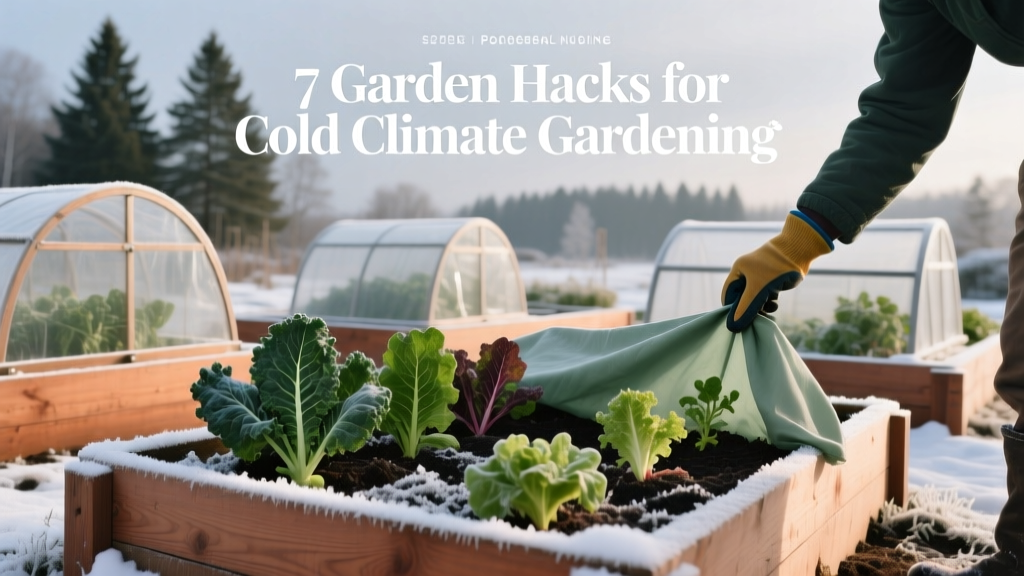
7 Garden Hacks for Cold Climate Gardening
The most expensive mistake cold-climate gardeners make isn’t buying the “wrong” plant—it’s trusting the calendar. A warm week in April can trick you into planting early, then a 28°F (-2°C) night wipes out tender starts in hours. The real hack is building your garden around microclimates, heat storage, and timing buffers so a surprise frost becomes an inconvenience, not a disaster.
Below are seven shortcuts I’ve seen work again and again in cold regions (think USDA Zones 3–6), organized by what they solve: warming soil, protecting plants, and speeding harvests without throwing money at gadgets.
Warm the Soil Faster (Because Cold Soil Is the Real Villain)
1) Lay “solar blankets” on beds 2–3 weeks before planting
Cold air gets blamed for slow spring gardens, but cold soil is what stalls roots. Two to three weeks before you want to plant, cover your bed with clear plastic (or greenhouse poly) pulled tight and anchored—think of it as preheating the oven. Clear plastic warms soil more than black early in the season because it lets sunlight in and traps heat; cut planting holes only when you’re ready to transplant so you don’t vent the warmth.
Real-world example: A Zone 4 gardener in Minnesota pre-warmed a 4x12 ft bed and transplanted broccoli 14 days earlier than their uncovered bed; the covered bed hit about 50°F at 4" depth while the uncovered hovered near 40°F, and growth took off once roots weren’t stuck in “cold mud mode.”
Extension guidance commonly recommends plastic mulches to increase soil temperature and accelerate early growth, especially for heat-loving crops (University of Minnesota Extension, 2020).
2) Build one “hot strip” raised bed (12–18 inches tall) for your earliest crops
If you only have energy for one structural change, make a single raised bed that warms quickly. A bed raised 12–18 inches drains and warms faster than flat ground, and you can concentrate your best soil and compost there for early greens and brassicas. Aim for a 3–4 ft width so you can reach the center without stepping on it (compaction keeps soil colder and wetter).
DIY money saver: Use free pallets (heat-treated, stamped “HT”) or rough-cut lumber offcuts; skip fancy kits. Even a simple 4x8 ft frame can be built for about $40–$80 in materials depending on lumber prices, and it pays back in earlier harvests when groceries are pricey.
3) Add thermal mass: “rock batteries” and water jugs on the north side
Small temperature swings matter in cold climates. Place dark rocks or a line of 1-gallon water jugs along the north edge of a bed (so they don’t shade plants) to absorb daytime heat and release it overnight. Water has high heat capacity, so it’s a cheap way to buffer a few degrees on those borderline frost nights.
Case example: In a windy Zone 5 backyard, lining a low tunnel with six 1-gallon jugs (filled and capped) kept spinach and young lettuce from freezing during a surprise 30°F night; the same setup without jugs had leaf burn on outer edges.
Outsmart Frost and Wind (The Two-Day Disaster Prevention Plan)
4) Use a low tunnel “system,” not a single cover: hoops + cover + clips
Row cover works best when it’s not flapping in the wind or crushing seedlings. Set up 1/2-inch PVC or metal hoops every 3–4 feet, throw over a floating row cover (or clear poly for extra heat), and secure with clamps or binder clips. The air gap is insulation—plants touching plastic on a cold night can still freeze.
Specifics that matter: A medium-weight row cover around 1.0–1.25 oz/yd² typically balances frost protection and airflow for spring; use heavier fabric only when you truly need it because it can reduce light. For quick anchoring, fill old milk jugs with sand and tie the cover corners; it beats chasing fabric across the yard at 6 a.m.
Row covers and low tunnels are widely recommended for season extension and frost protection in cool climates (University of Vermont Extension, 2019).
“The goal is to trap a layer of warmer air around the crop while keeping the cover off the foliage—air space is insulation.”
—University extension season-extension guidance (2019)
5) Learn the “dew point hack” for frost nights (and when NOT to cover)
Not every cold night frosts—wind and humidity decide the outcome. If the forecast shows temps near 32°F but the dew point is low (dry air), radiational cooling can drop leaf temperatures below air temperature, so you’ll frost harder than expected. On calm, clear evenings with low dew points, cover before sunset; on windy nights (8–12 mph), covers may do less because wind strips away trapped warmth.
Real-world scenario: A Colorado Front Range gardener saw a forecast low of 34°F and skipped protection—then lost basil because the dew point was 18°F and skies were clear. Same low temp with cloudy skies a week later caused zero damage. A quick check of dew point can save a season’s worth of warm-season herbs.
Make Plants Tougher (So They Don’t Melt at the First Chill)
6) Hardening-off shortcut: the “2-4-6 schedule” over 6 days
Hardening off doesn’t have to be a two-week ordeal, but it can’t be random. Try this schedule for sturdy transplants: Day 1: 2 hours outside in shade; Day 2: 4 hours; Day 3: 6 hours with 1 hour of morning sun; Day 4–5: 6+ hours with increasing sun and light wind; Day 6: full day outside, then plant if nights are above 40°F for warm-season crops (tomatoes, peppers) or above 32°F for hardy greens. Bring plants in if temps dip below those thresholds.
Why it works: Gradual exposure thickens leaf cuticles and reduces transplant shock, which is critical in cold climates where a stressed plant can stall for 10–14 days. That stall can be the difference between ripe tomatoes in August versus green ones at first frost.
7) Choose “fast-maturity” varieties and plant in waves (not one big gamble)
Short seasons punish slow varieties. Look for days-to-maturity under 70 days for tomatoes, under 60 for cucumbers, and 30–45 for many greens; then plant in two or three waves 10–14 days apart. Staggering means a late frost, hailstorm, or June cold snap doesn’t wipe out your entire harvest window.
Case example: In Zone 3, planting bush beans in three waves (late May, mid-June, late June) kept the freezer filled even after the first sowing got hammered by a 40°F rainy week and slug pressure. The later plantings hit warm soil and outgrew damage quickly.
Pick the Right Protection: A Quick Comparison
If you’re standing in the garden aisle debating what to buy, this table will save you money and frustration. The “best” tool depends on whether you’re fighting frost, wind, or cold soil.
| Method | Best for | Typical cost (DIY-friendly) | Heat boost | Watch-outs |
|---|---|---|---|---|
| Floating row cover (fabric) | Light frost + insect barrier | $15–$35 for 10x20 ft | Moderate (depends on weight) | Needs hoops to avoid crushing; can overheat on sunny days above 70°F |
| Clear plastic low tunnel | Warming soil + early spring push | $10–$25 for poly + hoops | High on sunny days | Vent on warm days or you’ll cook plants; condensation can encourage disease |
| Wall-O-Water style teepees | Early tomatoes/peppers in very cold nights | $10–$15 each (reusable) | High (water thermal mass) | Setup time; takes storage space; wind can be an issue if not anchored |
| Milk jugs + bedsheet (emergency cover) | Surprise frost tonight | $0–$10 (repurposed) | Low to moderate | Sheets can flatten plants; plastic jugs need venting on sunny days |
Three Cold-Climate “Rescue Plans” You Can Copy
Sometimes hacks land better when you can picture them in a real yard. Here are three setups I’ve watched succeed in cold, unpredictable springs.
Scenario A: The “busy gardener” setup (15 minutes per frost event)
Keep hoops installed on your earliest bed all spring, then store row cover and clips in a tote right next to the garden. When the forecast dips to 33°F, you’re not hunting supplies in the dark—you’re clipping fabric in place in under 15 minutes. Add two 1-gallon water jugs inside the tunnel for extra buffering on the coldest nights.
Scenario B: The “renter-friendly” setup (no digging, low spend)
Use 10–15 gallon grow bags and place them against a south-facing wall where reflected heat adds a few degrees. Slide a cheap tomato cage into each bag and drape row cover over the cages on cold nights (clothespins work as clips). This avoids building beds, and you can move the whole garden if you need to chase sun or dodge a late snow pile.
Scenario C: The “I want tomatoes early” setup (controlled risk)
Plant two tomatoes early under protection and two at the normal time, instead of betting everything on an early planting. For the early pair, use a water-filled teepee or a clear plastic low tunnel plus black mulch once the soil has warmed. If a freak 25°F night hits, you might lose the early experiment—but you won’t lose your entire tomato season.
Extra micro-hacks that make the main hacks work better
These are the small details that turn “I tried row cover once” into “I always get a harvest.”
Use a soil thermometer, not vibes
Spend about $10–$15 on a basic soil thermometer and check temperature at 4 inches deep in the morning. Plant peas when soil is around 45°F, and hold tomatoes until soil is closer to 60°F unless you’re using serious protection. Cold soil can keep plants stalled even if air temps feel pleasant.
Vent low tunnels like a pro: 1-inch gap on warm days
If the sun is out and daytime temps hit 60–70°F, crack the tunnel open by about 1 inch on the leeward side to dump excess heat and humidity. A tunnel that hits 90°F at noon and 30°F at night is a stress machine. Consistent temperatures beat extreme swings for steady growth.
Anchor covers with what you already have
Instead of buying specialty pins, use landscaping staples, scrap lumber, or “sand snakes” made from old pantyhose filled with sand. In windy areas, aim for an anchor every 2–3 feet along the edges. This is one of those annoying details that prevents the classic cold-climate failure: a cover that worked fine until a gust turned it into a parachute.
Cold-climate gardening is less about grit and more about small, repeatable systems: pre-warm one bed, keep a ready-to-deploy tunnel kit, and plant in waves so weather can’t ruin all your timing at once. Once you’ve got those pieces in place, spring stops feeling like a gamble—and starts feeling like you’ve got insider control over the season.
Sources: University of Minnesota Extension (2020), season extension and plastic mulch guidance; University of Vermont Extension (2019), season extension/row cover and low tunnel recommendations for frost protection and crop growth.