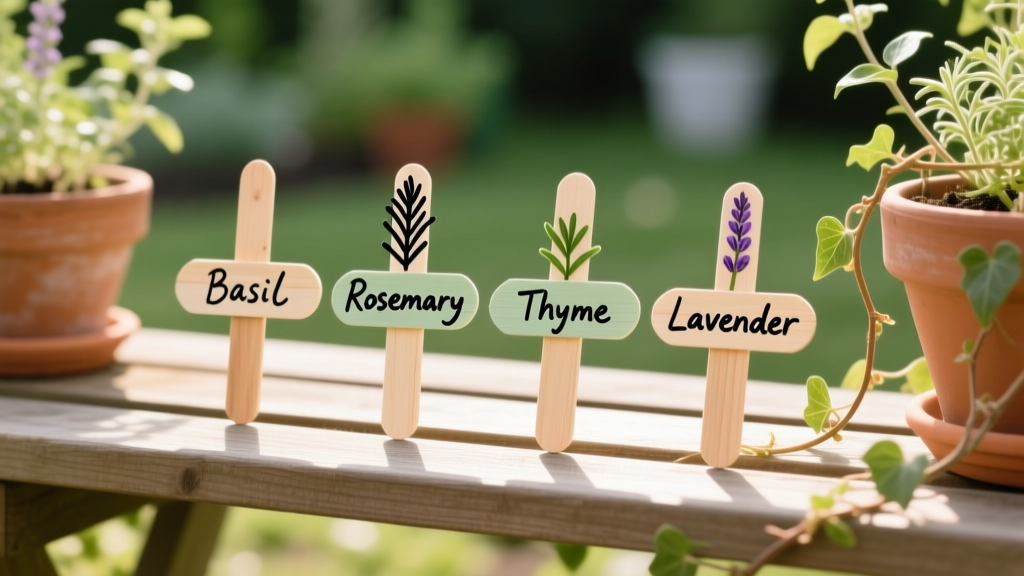
Making Plant Labels from Popsicle Sticks
The sneaky mistake most gardeners make with popsicle-stick plant labels isn’t messy handwriting—it’s assuming “wood + marker” will last outdoors. In full sun and regular watering, plenty of inks fade in 2–6 weeks, and bare wood can go fuzzy, split, or grow mildew long before your tomatoes are ready. The good news: with a few small upgrades (most of them cheap or free), popsicle sticks can become surprisingly durable, readable labels that hold up for a full season—or longer.
Below are the exact methods that work in real gardens, organized by what usually fails first: the stick, the writing, and the placement.
Start with the Right Stick (Because Not All “Popsicle Sticks” Are Equal)
Tip: Choose jumbo craft sticks for anything you’ll keep longer than a month
Standard sticks (about 4.5 inches) are fine for seed trays, but they disappear visually in raised beds and get buried easily after a couple mulch top-ups. “Jumbo” sticks (often 6 inches long and wider) give you more writing space and stand taller, which helps keep the label readable even after rain splashes soil. If you’re labeling perennials or multi-succession beds, the extra height is worth it.
Example: For a square-foot bed with carrots, beets, and radishes, use 6-inch sticks so you can write the crop plus sow date (“Beets – 3/28”) without tiny text.
Tip: Sand the writing area in 20 seconds for sharper text
That “hairy” wood grain is a major reason marker lines look fuzzy. Give the flat face a quick rub with 120–150 grit sandpaper (about 10–20 seconds per stick), then wipe off dust. Ink sits cleaner on a smoother surface, and you’ll get legible labels with less effort.
Example: If your permanent marker keeps feathering, sanding first often fixes it without changing pens.
Tip: Seal only the part that touches soil (to slow rot without wasting time)
You don’t need to paint the whole stick. Brush a thin coat of outdoor sealer or polyurethane on the bottom 1.5–2 inches—the part constantly wet in soil. This reduces swelling and splitting, and it helps the stick pull out cleanly at the end of the season.
Cost note: A small 8 oz can of polyurethane (often $8–$12) is enough for hundreds of label tips since you’re only coating the bottom segment.
Make the Writing Survive Sun, Water, and Time
Tip: Use paint pen + topcoat for the longest-lasting outdoor labels
If you want labels that stay readable all season, a paint marker (oil-based) beats most regular permanent markers. Write, let it dry for 5–10 minutes, then seal the writing with a clear coat (spray or brush). UV and moisture are what ruin legibility, so the topcoat is doing real work here.
Example: For peppers you’ll harvest into late summer, paint-pen labels stay readable when “Sharpie on wood” turns into a gray blur.
Tip: If you only have a regular permanent marker, add one simple barrier
Marker alone on raw wood is a short-timer. Write your label, let it dry for 2 minutes, then cover the text with clear packing tape or a strip of clear laminate (even wide tape works). This creates a waterproof window that reduces smearing during watering and slows fading.
Scenario: You’re labeling a 72-cell tray the night before a plant swap. Tape-over-marker is fast, cheap, and “good enough” for a few months.
Tip: Write on the “edge” for better longevity in rainy beds
On flat faces, water sits and soaks in, especially if the stick is slightly cupped. Writing on the narrow edge reduces the surface area that gets wet and muddy, and it stays readable when splashed soil covers the face. Use a fine-tip paint pen or extra-fine marker to keep letters crisp.
Example: In a basil bed that gets overhead watering, edge-writing stays readable weeks longer than face-writing.
Tip: Add date codes—your future self will thank you
Include at least the sow date or transplant date in a short format, like “5/10”. Timing data is how you learn what works in your microclimate and prevents repeat mistakes (like sowing cilantro too late). It also helps you know when to thin, fertilize, or succession sow.
Example: Label “Beans 5/20” lets you estimate first harvest around 50–60 days for many bush types, and it helps you plan the next sowing.
Weatherproofing Methods (Pick One That Matches Your Patience Level)
Tip: Quick-dip wax treatment for short-term labels (cheap and fast)
Melt a little candle wax and dip the stick halfway, then let it cool. Wax slows water absorption and keeps soil from staining the wood as quickly. It’s not a forever solution in high heat, but it’s great for spring seed-starting labels that only need to last 6–10 weeks.
Cost: One thrifted candle ($1–$3) can coat dozens of sticks.
Tip: Exterior-grade clear coat is best for season-long beds
Spray clear coat is fast for batches—line up sticks, spray, flip, spray again. Aim for 2 light coats rather than one heavy coat to avoid drips that blur writing. Let them cure at least 1 hour before sticking into damp soil.
Example: If you’re labeling 40 varieties in a trial garden, spray sealing is a huge time saver compared to brushing each stick.
Tip: Avoid water-based craft paint as your only “seal”
Craft acrylic can look cute, but it’s not a durable outdoor barrier by itself. In wet beds it can soften and peel, taking the writing with it. If you want colored sticks, paint first, let dry overnight, then add a true outdoor clear coat on top.
Example: Color-coding tomato families (paste vs slicer) works great—just lock it in with a topcoat so the color doesn’t flake.
“Most fading and label failure is driven by UV exposure and moisture—protecting the writing and keeping the label out of constant wetness dramatically improves lifespan.”
—Horticulture extension guidance summarized from outdoor labeling recommendations (e.g., Iowa State University Extension and Outreach, 2020; Oregon State University Extension Service, 2019)
Keep Labels Readable in Real Garden Conditions
Tip: Place labels on the north side of the plant to reduce UV bleaching
If you’re in the Northern Hemisphere, the north side gets a bit less direct sun, which helps slow fading. This is a tiny trick, but it’s free and it adds time to any labeling method. Combine it with a topcoat and you’ll notice the difference.
Example: In a full-sun herb bed, labels placed on the south edge often fade first; shifting them north can buy you extra weeks of readability.
Tip: Use a “double-label” system for anything you really can’t afford to lose
For high-value plantings (rare seeds, breeding projects, perennials), make two labels: one at the plant and one at the bed edge. If one breaks, the backup remains. This is especially helpful after storms, pets, kids, or a well-meaning helper weeding “mystery seedlings.”
Scenario: You’re trialing 12 tomato varieties and saving seed—double-labeling prevents heartbreaking mix-ups at harvest.
Tip: Angle the stick slightly instead of planting it straight down
Sticks placed straight up act like little posts that catch hose spray and heavy rain, driving water into the grain. Angling them 15–30 degrees sheds water better and reduces rot at the top edge. It also makes them easier to read without bending over as far.
Example: In a raised bed, angled labels stay cleaner when you water with a wand.
Tip: Use a “stake protector” in mulched beds
Mulch can swallow labels—especially in deep layers of straw or shredded leaves. Slide the popsicle stick into a short piece of plastic drinking straw or a cut section of drip tubing (2–3 inches long), leaving the writing exposed. The sleeve keeps mulch and moisture off the buried part and makes removal easier.
DIY alternative: Cut old plant pots into strips as mini label-sleeves if you don’t want plastic straws.
Batch-Making Labels Without Losing Your Mind
Tip: Set up a 15-minute assembly line and do a season’s worth at once
Labels are one of those tasks that feel annoying when you do them one-by-one. Instead, batch them: sand 30, write 30, seal 30. You’ll get consistent results and you won’t be hunting for a marker with muddy hands mid-planting.
Example: Before spring sowing, make labels for your “usuals” (lettuce, basil, zinnia, beans) plus 10 blank spares for impulse plantings.
Tip: Pre-write crop names and leave a blank line for dates
Write “Cilantro” and leave space for “4/12” later. This speeds up labeling during busy weeks and encourages you to actually add the date. A date line turns labels into a simple garden log you can read at a glance.
Scenario: During succession sowing every 14 days, pre-labeled sticks prevent “mystery lettuce” rows.
Tip: Store finished labels in a jar with silica packets (yes, really)
If you pre-make labels and toss them in a humid shed, the wood can warp and ink can smear if not fully cured. Let sealed labels cure overnight, then store them in a wide-mouth jar or plastic bin with a leftover silica gel packet. It keeps labels crisp and flat until planting day.
Comparison Table: Which Label Method Matches Your Garden?
| Method | Time per label | Estimated outdoor lifespan | Approx. cost per label | Best for |
|---|---|---|---|---|
| Permanent marker on raw wood | 30–60 seconds | 2–6 weeks (often fades) | $0.02–$0.05 | Indoor seed starting, short-term trays |
| Marker + clear tape over text | 1–2 minutes | 1–3 months | $0.05–$0.10 | Quick labels for swaps, spring beds |
| Paint pen + clear coat | 2–3 minutes | 6–12+ months | $0.10–$0.25 | Full-season beds, variety trials |
| Sealed bottom (poly) + paint pen + clear coat | 3–4 minutes | 1–2 seasons (depends on climate) | $0.15–$0.30 | Perennials, “don’t-lose-this” plants |
Real-World Scenarios (and the Exact Popsicle-Stick Fix)
Scenario: Seed-starting trays indoors that turn into a label graveyard
Those small cells and bottom-water trays love to float labels around. Write on jumbo sticks and cut them in half to create 3-inch mini stakes that fit better, then tape over the writing so it doesn’t smear from humidity. If you bottom-water, keep the writing above the tray rim so it never sits in water.
Extra hack: Add a second label on the tray itself (masking tape + marker) so you still know what’s what if the sticks get moved.
Scenario: A rainy spring turns your garden into a mud-splash canvas
Mud splash is an underrated label killer—text gets coated and you stop reading it. Angle your sticks 15–30 degrees and write on the edge so less surface gets hit. Add a clear coat and place the label just outside the drip line so soil splash doesn’t paint over your hard work.
Example: In a lettuce bed under overhead watering, moving labels 2 inches farther from the row can keep them clean enough to read.
Scenario: You’re growing multiple varieties and saving seed (mix-ups are expensive)
Seed saving demands traceability. Use paint pen + clear coat, and include variety plus a simple code like “T1, T2…” that matches your notebook. Make two labels per variety—one at the plant, one at the bed edge—so a lost label doesn’t ruin the season.
Cost comparison: Spending an extra $0.15 per durable label is nothing compared to losing a $4–$8 seed packet’s worth of genetics.
DIY Alternatives (When Popsicle Sticks Aren’t the Best Tool)
Tip: Use bamboo skewers + taped paper flags for ultra-fast row marking
If you’re labeling dense rows (carrots, spinach), a popsicle stick can feel bulky. Tape a small paper flag to a bamboo skewer, then cover the flag with clear tape to waterproof it. It’s a great “temporary until seedlings are obvious” solution.
Example: Mark “Carrots 4/2” at the row ends, then swap to sturdier labels once thinning starts.
Tip: Repurpose mini blinds for near-indestructible labels
Old plastic mini blinds cut into strips make fantastic labels that won’t rot. Write with a paint pen and they last for years. If you’re done replacing popsicle sticks every season, this is a big upgrade for free.
DIY note: Cut strips about 5–6 inches long and round the corners so they don’t poke you.
Small Details That Make Labels Look Neat (and Stay Useful)
Tip: Write bigger than you think you need
Outdoor labels are read from a standing position, often in bright light or at dusk. Aim for letters at least 1/4 inch tall, especially for bed-edge labels. If you can’t write that big, shorten the name (“Cuke” vs “Cucumber”) and add the date.
Tip: Use a simple color code for fast scanning
Color coding saves time in mixed beds: one color for brassicas, another for nightshades, another for herbs. Use a paint marker stripe at the top or paint the top 1 inch of the stick, then seal it. You’ll spot what you need faster when you’re fertilizing, pruning, or diagnosing pests.
Example: Red stripe for tomatoes/peppers, green stripe for herbs, blue stripe for flowers—simple and memorable.
Tip: Don’t compost painted or sealed sticks—reuse them
Once you’ve sealed or painted a stick, treat it like a reusable tool, not a disposable. At season’s end, rinse, let dry, sand lightly, and re-label. You’ll save money and reduce waste, especially if you invested in paint pens and sealers.
A Few Evidence-Backed Notes (So You’re Not Guessing)
UV exposure is a major driver of fading and plastic breakdown outdoors, which is why even “permanent” inks often fail in sun-facing beds. Extension resources commonly recommend UV-resistant marking methods and protective coatings for outdoor identification, especially where weather exposure is constant (Iowa State University Extension and Outreach, 2020).
Moisture management matters too: keeping labels from sitting in water and reducing constant wetting/drying cycles helps slow wood degradation and ink failure. Practical garden labeling recommendations from university extension educators emphasize choosing durable materials and protecting the written surface for readability over time (Oregon State University Extension Service, 2019).
If you want the “set it and forget it” version: jumbo stick, sanded face, paint pen text, two light coats of clear seal, and place it slightly angled on the north side of the plant. It’s still a humble popsicle stick—but it behaves like a real garden tool, not a temporary note.
Once you get a system you like, make a batch on a rainy afternoon and keep them ready. The first time you walk into the garden and instantly know what’s where (and when it went in), you’ll wonder why you ever trusted a fading marker on raw wood.