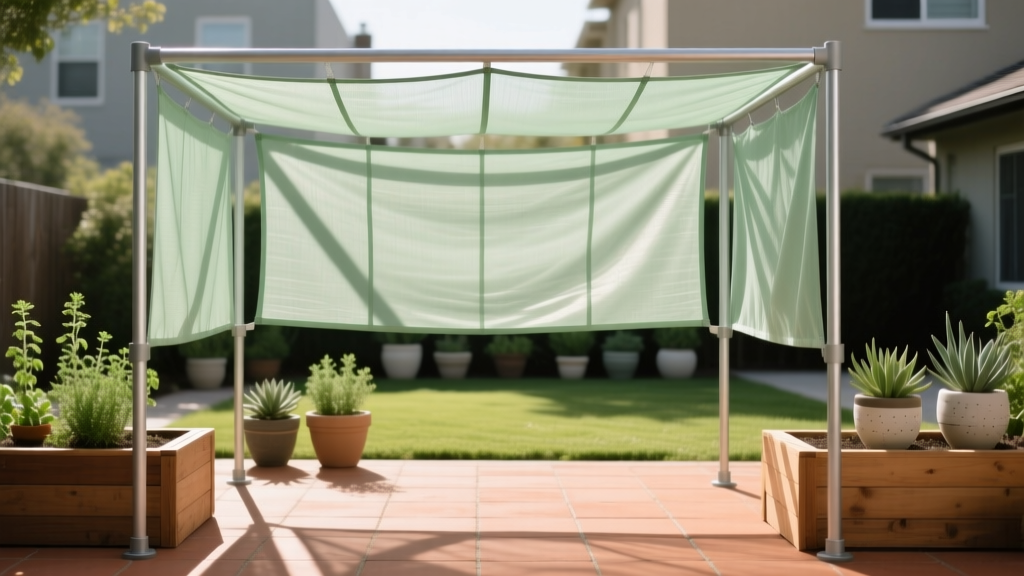
DIY Garden Shade Cloth Frame
The most common mistake with shade cloth isn’t buying the “wrong percent” shade—it’s stretching cloth over a flimsy frame and calling it done. A single summer gust can turn that setup into a ripped sail, snapped stakes, and shredded tomatoes. If you build the frame like it needs to survive wind (not just block sun), shade cloth becomes one of the highest-return hacks in the garden.
Shade can do more than prevent scorch: it can reduce heat stress, slow water loss, and keep fruit from sunburn—if you install it at the right height and tension. Research and extension guidance consistently show that reducing solar load lowers plant stress and can improve marketable yield/quality in hot conditions. For example, the University of Florida IFAS Extension has documented shade’s usefulness for reducing heat/light stress on sensitive crops in warm climates (UF/IFAS, 2018), and Penn State Extension notes shade cloth is a practical tool to reduce sunscald on fruits and vegetables during high heat events (Penn State Extension, 2020).
Start With Smart Planning (So You Don’t Rebuild It in July)
Tip: Pick a shade percentage based on the crop—not your gut
Headline: Match shade cloth to plant needs: 30% for heat relief on most veggies, 40–50% for leafy greens in peak summer.
As a shortcut, 30% shade works well for tomatoes, peppers, cucumbers, and squash when temps spike—enough to take the edge off without stalling growth. If you’re trying to keep lettuce, cilantro, and spinach from bolting, step up to 40–50% during the hottest 4–8 weeks. Real-world example: a raised-bed grower in Sacramento swapped from 50% to 30% over tomatoes after noticing slower ripening; the plants stopped dropping blossoms once the frame stayed, but the cloth got lighter.
Tip: Build for wind first, sun second
Headline: Assume a 25–35 mph gust will hit your frame at the worst time.
Shade cloth behaves like a sail when it’s taut, especially on a big, flat top. Your frame should have diagonal bracing or a “give point” (like bungee ties) so wind energy doesn’t go straight into snapping PVC or ripping grommets. Example: a community garden plot in an open field kept losing cloth until they switched from zip ties to 6–9 inch ball bungees, which flexed instead of tearing.
Tip: Size the frame to the bed plus a working margin
Headline: Add 12–18 inches of overhang so sun doesn’t sneak in at an angle.
If your bed is 4' x 8', don’t build a 4' x 8' shade “lid.” Go closer to 5' x 9' (or at least extend cloth 6–9 inches beyond the edges on all sides). This matters most in late afternoon when angled light can still burn pepper fruit. Example: a patio gardener shading a 2' x 6' trough found the west-side overhang was the difference between spotless peppers and sunscald patches.
Tip: Plan access before you install anything
Headline: Make the shade cloth open like a hatch, not a tarp you fight with.
The number-one “I hate my shade setup” moment is needing to weed, trellis, or harvest and having to unclip 30 fasteners. Choose a frame style where one long side hinges up (carabiners on hooks work great), or where cloth slides like a curtain on wire. Example: a home gardener added $6 stainless carabiners and could flip shade open in under 20 seconds.
Frame Designs That Stay Put (With Hardware Store Parts)
Tip: For small beds, EMT conduit beats PVC in the sun
Headline: Use 1/2" or 3/4" EMT for long-term frames; save PVC for temporary setups.
PVC gets brittle with UV and heat, and it flexes a lot once the cloth is tight. 1/2" EMT is stiffer, cheaper than you’d think, and handles wind better—especially for spans over 4 feet. Example cost: a basic 4' x 8' hoop frame using EMT can land around $35–$70 depending on fittings, while PVC may be $25–$45 but tends to fail sooner in full sun.
Tip: Build a “hoop + ridge” frame to stop sagging
Headline: Add a center ridge pole so rain and shade cloth don’t puddle.
Even though shade cloth is porous, it can sag under morning dew, leaf litter, or a surprise storm. Run a ridge pole down the center (another piece of EMT, wood lath, or even a taut wire) and fasten it to each hoop with conduit straps. Example: on a 10-foot row, a ridge pole kept cloth from dipping into tomato cages and rubbing leaves raw.
Tip: For raised beds, use “inside-corner posts” for a clean look
Headline: Set four vertical posts inside the bed corners and mount the top frame to them.
This avoids tripping hazards and makes the frame feel built-in. Use 1" x 2" lumber or 3/4" EMT as posts; sink them 12–18 inches into soil (or bolt them to the bed frame if it’s wood). Example: a 4' x 4' bed with basil and lettuce used 4 inside posts and a square top—easy to lift off for winter cleanup.
Tip: Use cheap diagonal bracing where it counts
Headline: One diagonal brace can stop the whole structure from racking.
If your frame “wiggles” when you push it, wind will destroy it eventually. Add a diagonal strap (perforated plumber’s tape, scrap wood, or a tensioned wire) on one side and one end. Example: a gardener in Kansas used $4 worth of perforated metal strap and stopped mid-season loosening and leaning.
Shade Cloth Attachment Tricks (No Tears, No Curse Words)
Tip: Skip zip ties on the cloth—use wiggle wire or bungees
Headline: Fasteners should grip without puncturing and should flex in gusts.
Zip ties are fine on the frame, but they concentrate stress on tiny points and can rip cloth as it flaps. If you have a rigid top frame, greenhouse-style wiggle wire + channel is the cleanest, strongest system; if you want budget-friendly, use ball bungees through grommets every 12–18 inches. Example: one 6' x 25' strip held with bungees lasted multiple seasons, while the same cloth zip-tied tore within 3 weeks in wind.
Tip: Reinforce edges before you hang the cloth
Headline: Add a hem or webbing strip so the edge doesn’t stretch out.
Most shade cloth fails at the edge first. Fold a 1–2 inch hem and stitch (UV-resistant thread) or clamp it with fabric clips; even easier, run a strip of 1" nylon webbing along the edge and grommet through both layers. Example: a 50% cloth panel over greens stayed tight all season once the edge was reinforced—no “bacon curl” flapping.
Tip: Tension it like a drum, but give it shock absorbers
Headline: Tight cloth blocks better and flaps less—if it can flex at the connection points.
Loose cloth whips in wind and shreds on contact points. Pull it snug, but attach using bungees or spring clips so the cloth can move a little without tearing. Example: on a windy hillside, a gardener used bungees on the windward side and fixed clips on the leeward side, cutting flapping by about half.
Tip: Put a “chafe guard” anywhere cloth touches hardware
Headline: A 10-cent strip of tape can add years to the cloth.
If the cloth rubs on a bolt, conduit strap, or sharp corner, it will wear through fast. Wrap contact points with old hose, electrical tape, or a strip of canvas before the cloth goes on. Example: a simple hose sleeve over the ridge connection stopped pinhole tears that kept growing every week.
Dialing In Shade: Height, Timing, and Microclimate
Tip: Set the cloth height to match the job
Headline: Higher is cooler; lower is shadier—choose intentionally.
For vegetables like tomatoes and peppers, aim for shade cloth 18–24 inches above the top growth so air still moves through and humidity doesn’t get trapped. For bolt-prone greens, you can go lower—12–18 inches above—to reduce light intensity more aggressively. Example: a gardener shading lettuce at 14 inches above canopy gained an extra 2–3 weeks before bolting in a hot spell.
Tip: Use shade cloth seasonally, not permanently
Headline: Install when highs consistently hit the stress zone, then remove when nights cool.
A good trigger is when daytime highs are regularly above 90°F for warm-season crops (or above 80°F for lettuce/spinach). Keep it on during heat waves, then pull it off once the weather breaks so plants can use full sun again. Example: in Texas, one gardener clips cloth on mid-June through August, then removes it in September to speed late-season ripening.
Tip: Angle matters—shade the west side when fruit burns
Headline: Afternoon sun is the scorch culprit; a side panel is sometimes better than a roof.
If peppers or tomatoes get sunscald, it’s often the intense 3–7 pm sun, not the whole day’s light load. Add a removable west-side panel (like a curtain) rather than darkening the whole bed. Example: a gardener in Colorado kept the roof at 30% but added a west “wall” of 40% cloth during the hottest month—sunscald stopped without slowing ripening.
“Shade cloth can be an effective tool to reduce heat and light stress, but growers should manage it to maintain airflow and avoid excessive shading that can reduce crop productivity.” — University of Florida IFAS Extension (2018)
Comparison Table: Pick the Fastest Frame That Fits Your Space
| Frame option | Best for | Typical cost (approx.) | Build time | Strength in wind | DIY difficulty |
|---|---|---|---|---|---|
| PVC hoops + rebar stakes | Temporary summer shade on small beds | $25–$45 | 45–90 min | Medium-low (UV + flex) | Easy |
| EMT hoops + ridge pole | Windy areas, larger beds, multi-season use | $35–$70 | 1–2.5 hrs | High | Moderate |
| Wood post-and-rail “pergola” top | Permanent raised beds, clean look | $60–$140 | 2–4 hrs | High (if braced) | Moderate |
| Convertible “curtain wire” shade | Patios/balconies, quick open/close access | $20–$60 | 30–90 min | Medium (needs good anchors) | Easy-moderate |
Real-World Builds: Three Scenarios (With Fixes for Common Headaches)
Scenario 1: Raised bed tomatoes in a windy backyard
Headline: Use EMT hoops, ridge pole, and bungee attachments to stop the “shade sail” effect.
In open yards, wind finds the weak point fast—usually the top corners. Go with 3/4" EMT hoops, add a ridge pole, and attach the cloth with bungees every 12–18 inches on the windward side. Example: a 4' x 8' tomato bed near a fence line stopped losing blossoms once 30% shade went up during a 2-week heat wave, and the frame stopped leaning after diagonal bracing was added.
Scenario 2: Lettuce and cilantro that keep bolting in July
Headline: Combine 40–50% shade with lower mounting and early-day watering.
Bolting is triggered by heat and daylength, but you can buy time by keeping the canopy cooler. Mount 40–50% cloth closer (about 12–18 inches above plants) and keep the sides open for airflow. Example: a gardener in North Carolina built a simple square top with four posts and kept cilantro harvestable about 2 extra weeks compared to an unshaded bed.
Scenario 3: Patio containers that cook on reflected heat
Headline: Build a lightweight “umbrella frame” and shade the west side like a curtain.
Patios and balconies can be hotter because of reflected heat off walls and concrete. Instead of a heavy frame, install two vertical posts in large planters (or clamp to a railing), then run a top line and hang cloth as a curtain on the west. Example: a pepper grower on a south-facing balcony used 30% cloth as a 4 pm curtain and stopped fruit sunburn without reducing morning sun.
Money-Saving Hacks (Without Making It Flimsy)
Tip: Buy shade cloth by the roll and cut panels for multiple beds
Headline: A 6' x 25' piece can cover more than you think if you plan panel sizes.
Shade cloth is often cheaper per square foot in larger pieces. If you cut it into (for example) one 6' x 10' panel for a main bed and two 6' x 7.5' panels for smaller beds, you’ll waste less. Example: splitting one roll across three frames cost less than buying three pre-cut “bed covers,” saving roughly $20–$40 depending on brand.
Tip: Repurpose materials, but keep the “stress parts” new
Headline: Scrap wood is fine for rails; don’t gamble on brittle plastic for connectors.
Old 2x2s and fence boards are great for top rails and diagonal bracing. Spend money on the pieces that fail catastrophically: UV-stable fasteners, decent bungees, and solid anchor points. Example: a gardener reused cedar stakes for posts but bought new UV-rated ball bungees—no mid-season snap-and-flap disaster.
Tip: Use simple anchors that don’t pull out
Headline: Rebar and earth augers beat skinny garden stakes every time.
If you’re doing hoop frames, pound 18–24 inch rebar 10–12 inches into the ground and slide the conduit/PVC over it. For permanent posts in loose soil, add a small earth auger anchor and strap the post to it. Example: a sandy-soil garden stopped losing frames after switching from 10" stakes to 24" rebar—same cloth, totally different stability.
Little Tweaks That Make Shade Cloth Feel Effortless
Tip: Add quick-release clips so you actually use the system
Headline: The best shade is the shade you can open fast to harvest and prune.
Install screw hooks on the frame and use carabiners or tarp clips so one side opens like a lid. If you need daily access, make the “opening side” the one you walk from most often. Example: a gardener who prunes tomatoes twice a week stopped skipping it once shade cloth opened in seconds instead of minutes.
Tip: Mark cloth orientation and store it clean
Headline: A Sharpie arrow and a quick rinse prevents weird stretching and mildew smell.
Shade cloth can stretch slightly; if you always reinstall it the same way, your grommets and attachment points line up instead of drifting. At season’s end, hose it off, dry it, and roll it (don’t wad it) to avoid creases that become weak spots. Example: rolling and labeling saved one gardener from re-grommeting every spring.
Tip: Pair shade with mulch to cut watering needs noticeably
Headline: Shade lowers stress, mulch slows evaporation—together they’re a heat-wave cheat code.
Even light shade works better when the soil surface isn’t baking. Add 2–3 inches of straw, shredded leaves, or fine bark under the frame to stabilize moisture. Example: in a heat wave, a mulched-and-shaded pepper bed held moisture long enough to drop watering frequency from daily to every other day.
Shade cloth frames are one of those garden upgrades that feel optional until you’ve had a crop stall out in a brutal hot spell. Build the frame like it’s going to be tested (because it will), attach the cloth so it can flex without tearing, and treat shade as a seasonal tool you can adjust. Once you’ve got a sturdy setup with quick-release access, you’ll start using shade strategically—over new transplants, over greens in the bolt zone, or as a west-side curtain when fruit starts to burn.
Sources: University of Florida IFAS Extension (2018); Penn State Extension (2020).