10 Garden Hacks for Garden Pest Barriers
The most common “pest control” mistake I see isn’t choosing the wrong spray—it’s putting up a barrier that pests can simply walk around, crawl under, or squeeze through. A row cover with a 1-inch gap at the soil line is basically a welcome mat for cabbage moths, and a short fence without a buried skirt is an invitation to rabbits. The good news: barriers work incredibly well when you build them like a pest would try to defeat them.
Below are 10 field-tested hacks—practical shortcuts, cheap DIY tweaks, and a few “why didn’t I do this sooner” tricks—that turn basic barriers into serious pest stoppers.
Group 1: Ground-Level Barriers (where most invasions start)
1) Add a “buried skirt” to fences to stop diggers
If you’ve got rabbits, groundhogs, or even determined dogs nosing into beds, a fence without an underground defense won’t last. Staple hardware cloth (or welded wire) to the bottom of the fence and bury it 6–12 inches deep, then flare it outward in an L-shape about 12 inches. When animals try to dig at the base, they hit the wire and usually quit.
Real-world example: A suburban raised-bed setup with a 3-foot fence still lost lettuce nightly—until a 1/2-inch hardware cloth skirt was added. After that, the damage stopped within a week because the rabbits couldn’t tunnel under.
2) Copper tape “ring” for slugs—applied correctly
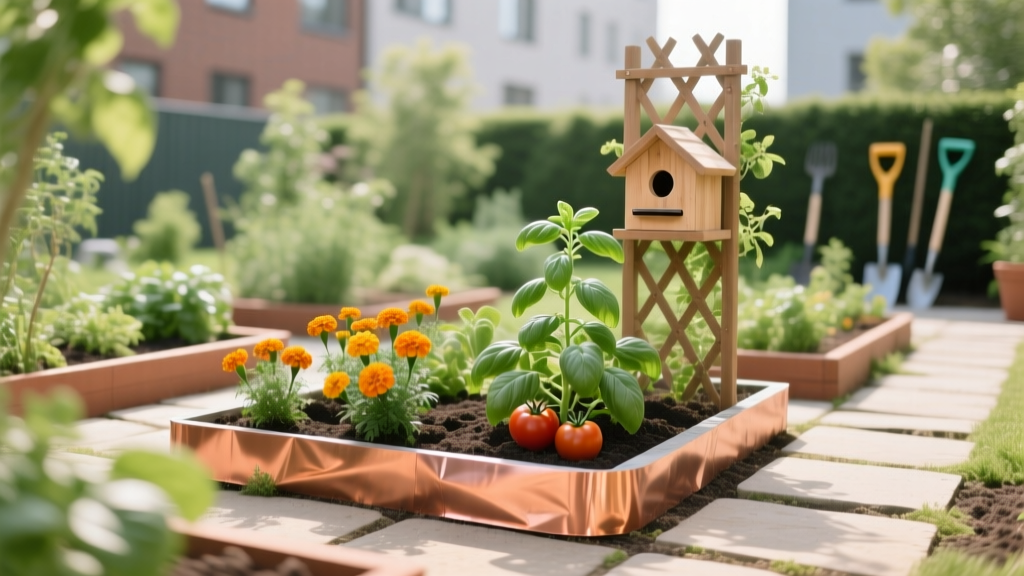
Copper barriers can work, but only when they’re clean, continuous, and wide enough to matter. Use 2-inch copper tape and wrap it around the outside of raised beds or pots, keeping the strip unbroken (overlap seams by at least 1 inch). Wipe the copper with vinegar every 2–3 weeks in rainy seasons so oxidation doesn’t reduce effectiveness.
DIY angle: No copper tape? Staple strips cut from copper flashing—often cheaper per foot at hardware stores—around bed edges.
3) Diatomaceous earth “moat” (and the timing that makes it work)
Diatomaceous earth (DE) is only useful when it’s dry; once wet, it’s basically fancy dust. Instead of sprinkling everywhere, apply a 1-inch-wide band around vulnerable plants after morning dew dries and reapply after rain or overhead watering. Target the base of seedlings to deter crawling pests like earwigs and some beetles.
Scenario: In a damp spring, a gardener protected 24 basil transplants by applying DE at 10 a.m. once leaves were dry; the band was refreshed twice weekly during rainy stretches and cut chewing damage dramatically.
Group 2: Flying Insect Barriers (shut down egg-laying)
4) Row covers: seal the edges like you’re waterproofing a roof
Row cover success isn’t about the fabric—it’s about the seal. Instead of “tucking” fabric under soil (which gaps as it dries), pin it down with sandbags, landscape staples every 3 feet, or 1x2 boards laid along the edges. For moth pests (cabbage looper, imported cabbageworm), install covers the day you transplant and keep them on until harvest, only opening to weed.
Evidence note: Exclusion is a core recommendation for brassica pests in multiple extension guides; physical barriers prevent egg-laying when applied early and sealed well (University of Minnesota Extension, 2020).
5) Swap netting size based on the pest (mesh matters)
Not all “bug netting” is equal. For cabbage moths and most butterflies, a 0.8 mm mesh works; for smaller pests like flea beetles, you’ll want around 0.6 mm (tighter mesh). The tighter the weave, the hotter it can get underneath, so vent on warm days or use hoops 18–24 inches high to keep fabric off leaves.
Practical tip: Label your rolled netting with painter’s tape (“0.6 mm flea beetle”) so you don’t guess mid-season and accidentally install the wrong barrier.
6) The “two-layer door” hack for greenhouse and hoop house pests
If whiteflies or moths sneak in every time you enter, make a simple airlock: hang a second curtain of insect netting inside the doorway, leaving a 12-inch gap from the door. You walk through the outer door, let it close, then pass the inner curtain—two barriers dramatically reduce hitchhikers.
Cost saver: This can be as simple as a $15–$30 piece of insect netting clipped to a PVC frame; it often saves far more by preventing a season-long whitefly battle.
Group 3: Collar-and-Cuff Barriers (micro-defenses around each plant)
7) Cutworm collars: go taller than you think
Cutworms don’t just “cut”—they climb a bit, too. Use collars that are 3–4 inches tall, pushing 1 inch into the soil and leaving 2–3 inches above ground. Cardboard toilet paper rolls work in a pinch, but for longer life, cut strips from a plastic nursery pot and form a ring with a small binder clip.
Case example: A community garden losing pepper seedlings nightly installed 4-inch collars on 40 plants; losses stopped immediately, and the collars were removed after 2–3 weeks once stems toughened.
8) Ash-free, glue-free sticky bands for ants and climbing pests
If aphids keep returning, it’s often ants “farming” them and protecting them from predators. Wrap a 2-inch band of stretchable tape (like painter’s tape) around the stem of a trellised plant or fruit tree trunk, then apply a thin layer of sticky barrier (commercial) on top of the tape—not directly on bark. Replace every 2–4 weeks or when dusty.
Why it’s a hack: The tape layer prevents mess and bark damage, and it makes cleanup take 30 seconds instead of 30 minutes.
Group 4: Fence, Frame, and Height Barriers (for big pests)
9) Deer fence shortcut: angle it, don’t just raise it
Eight-foot deer fencing works, but it’s expensive and not always HOA-friendly. A surprisingly effective shortcut is an angled fence: 5–6 feet tall, angled outward about 45 degrees using simple braces. Deer struggle with depth perception when the top leans toward them, and many won’t attempt the jump.
Numbers that matter: A straight 8-foot fence might cost $2.50–$4.00 per linear foot installed, while a 6-foot angled setup can come in closer to $1.50–$2.50 per foot using T-posts and polypropylene deer netting—depending on your local prices.
10) Hardware cloth “cages” for seedlings (the $2 tomato saver)
When birds, squirrels, or rabbits target young plants, a quick cage beats chasing them around. Cut a 24-inch length of 1/2-inch hardware cloth, roll it into a cylinder, and pin it with a landscape staple; place it over the seedling and press 1–2 inches into the soil. It’s reusable for years and still allows light and airflow.
Real-world example: A gardener in a high-squirrel neighborhood used three cages to protect newly planted tomatoes; after two weeks, the plants were sturdy enough to remove cages and the “dig-and-bite” damage never returned.
Pick the Right Barrier Fast: A Simple Comparison Table
| Barrier method | Best for | Weak spot | Typical cost | Hack to improve it |
|---|---|---|---|---|
| Floating row cover (lightweight) | Moths, beetles, leaf miners (egg-laying prevention) | Edge gaps; overheating in hot spells | $10–$25 for a 10' x 20' piece | Seal edges with boards/sandbags; use 18–24" hoops |
| Insect netting (tight mesh) | Flea beetles, cabbage pests | Snags/tears; needs good support | $15–$40 depending on mesh and size | Label mesh size; patch holes with cloth tape immediately |
| 1/2" hardware cloth | Rabbits, rodents, squirrels (physical exclusion) | Cost; sharp edges | $25–$60 per 25' roll | Bury 6–12"; fold edges down with pliers for safety |
| Copper tape | Slugs/snails on pots/raised beds | Dirty/oxidized copper; gaps at seams | $8–$20 per roll | Use 2" width; overlap seams 1"; wipe with vinegar |
Barrier Build Rules That Make or Break Results
Before you spend another dollar on materials, it helps to remember: pests are persistent, but they’re also predictable. They take the easiest route, exploit the first gap, and repeat what worked yesterday. Build barriers like you’re designing against a clever toddler with unlimited time.
“Exclusion—preventing pests from reaching plants in the first place—is one of the most effective, least toxic approaches, especially when barriers are installed early and maintained.”
—Integrated Pest Management guidance, UC Agriculture and Natural Resources (UC IPM), 2018
Case scenario: Brassicas getting shredded overnight
If your kale and broccoli look like lace by morning, you may be dealing with caterpillars that hatched from eggs laid days earlier. The hack is timing: put row cover on immediately at transplant, not after you notice holes. Once caterpillars are under the cover, you’ve built them a private buffet.
Case scenario: Raised beds + slugs in a rainy spring
Slugs thrive when barriers are half-done. Combine a clean copper band (2 inches wide) on the bed edge with smart watering—aim for morning watering so surfaces dry by night. If you’re using DE, treat it like a “weather-dependent tool” and only apply when the forecast gives you at least 24 dry hours.
Case scenario: You can’t build an 8-foot deer fence
If tall fencing is out, you’re choosing between “make it visually weird” and “make it annoying to enter.” Angled fences often outperform their height because deer don’t like uncertain landing zones. Another budget-friendly tactic is doubling up: a 3–4 foot outer fence set 3 feet away from a 4–5 foot inner fence can confuse deer (depth perception again) and reduce jumping attempts—useful in smaller yards.
Extra Micro-Hacks (tiny fixes that stop big failures)
Patch holes the day you see them. A dime-size tear in netting is plenty for moths to enter and lay eggs. Keep a roll of UV-resistant repair tape or even cloth tape in your garden tote; patching takes 20 seconds and prevents weeks of frustration.
Anchor points beat heavy fabric. People often buy thicker covers when the real issue is wind lift. More anchors (staples every 3 feet, or boards along edges) usually outperform heavier material and cost less.
Make barriers crop-specific. Pollinator-dependent crops (squash, cucumbers) can’t stay covered 24/7 once flowering starts. A practical rhythm is: cover until first flowers, then uncover during the day and re-cover in late afternoon to block squash vine borer moths at dusk—especially during peak flight weeks in early to mid-summer (timing varies by region).
Spend where it counts. If you only upgrade one material, choose hardware cloth for anything involving teeth (rabbits/rodents). Chicken wire keeps chickens in, but it does not reliably keep small mammals out; 1/2-inch hardware cloth is the difference between “mostly protected” and “actually protected.”
Clean barrier edges like you clean gutters. Soil piled against netting edges creates ramps for slugs and earwigs; weeds touching netting become bridges. A 2-inch “moat” of bare soil or mulch-free edge around the perimeter makes crawling pests work harder to reach the seam.
If you build your barriers with the pest’s cheat-codes in mind—digging, squeezing, climbing, and sneaking through gaps—you’ll start seeing something gardeners don’t talk about enough: whole weeks where you simply don’t think about pests. That’s the real hack.
Sources: University of Minnesota Extension (2020) guidance on using row covers and exclusion for vegetable pests; UC Agriculture and Natural Resources Integrated Pest Management (UC IPM) (2018) principles emphasizing exclusion and early installation as effective, low-toxicity control.