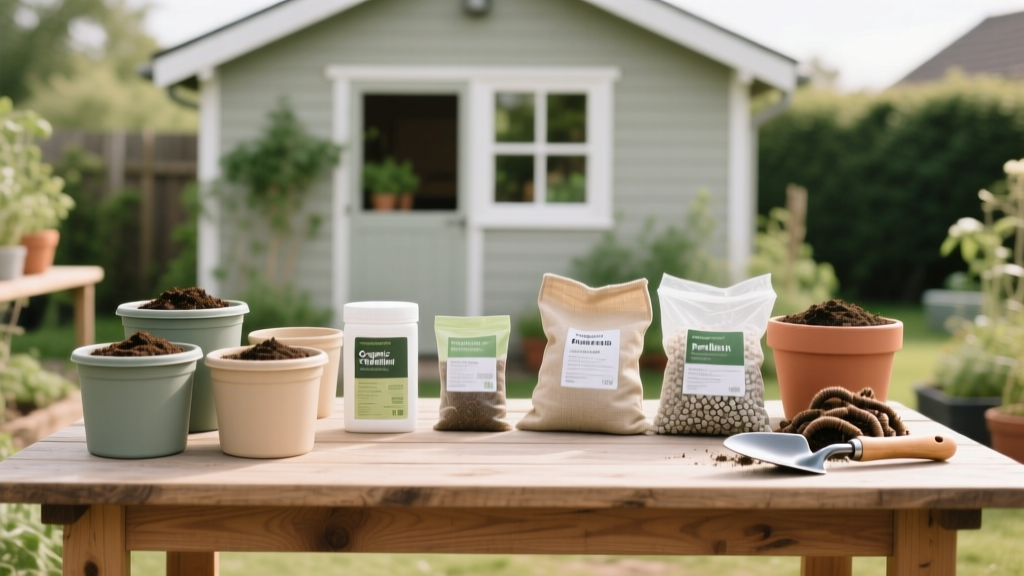
How to Save Money on Garden Soil Amendments
One of the most expensive gardening mistakes is “fixing” soil with bags before you’ve figured out what your soil actually needs. I’ve seen gardeners dump $80–$150 of compost, lime, and fancy blends onto beds that only needed a $15 soil test and a light top-dressing. The sneaky part: over-amending can make plants look worse, not better—especially when phosphorus builds up from repeated compost applications.
Let’s keep your wallet intact and your soil improving year after year, using shortcuts and proven techniques that actually move the needle.
Start With Proof (So You Don’t Buy the Wrong Thing)
Pay for a soil test once—then stop guessing
A basic lab soil test typically costs about $15–$30 and tells you pH plus key nutrients, which is way cheaper than “hoping” a $12 bag of something fixes the problem. Many county extension services also include amendment recommendations based on your crop type. Aim to test every 2–3 years, or yearly if you’re troubleshooting a specific issue (like persistent yellowing).
Example: A 1,000 sq ft yard converted to beds might tempt you into buying 10 bags of compost ($5 each = $50). A $20 test might reveal your organic matter is fine, but pH is low—meaning $8 of lime is the real fix.
Use the “jar test” to avoid paying for texture fixes you don’t need
Before you buy anything, do a quick soil texture check: fill a jar 1/3 with soil, add water and a pinch of dish soap, shake hard for 1 minute, then let settle for 24 hours. You’ll see layers (sand at bottom, silt, then clay), which helps you choose the right strategy—especially if you’re tempted to buy sand for clay (usually a costly mistake).
Real-world detail: If your jar shows a thick clay layer, you’ll get better results with compost + mulch over time than trying to “dilute” clay with sand (which can create a concrete-like mix if proportions aren’t right).
Don’t “correct” pH without a number
Applying lime or sulfur blindly is a money pit: pH change depends on starting pH, soil type, and product. A common garden lime recommendation can range widely (often 5–50 lb per 1,000 sq ft depending on test results and texture), so buying a couple of 40-lb bags “just in case” can be wasted cash and can lock up nutrients.
Source: University of Minnesota Extension emphasizes soil testing before altering pH and cautions against unnecessary applications (University of Minnesota Extension, 2023).
Get More “Amendment” From What You Already Have
Compost smarter: top-dress 1/2 inch instead of dumping 3 inches
More compost isn’t always better. For established beds, a 1/2-inch top-dressing (roughly 1.5 cubic feet per 25 sq ft) is often enough to feed soil life and improve structure without overloading nutrients. If compost is $35 per cubic yard (bulk) versus $5 per 1-cu-ft bag, this switch alone can cut your annual soil budget hard.
Example: A 100 sq ft bed at 3 inches needs ~25 cu ft (25 bags = $125). At 1/2 inch it needs ~4.2 cu ft (5 bags = $25). Same bed, radically different bill.
Make “targeted compost” for free: use leaves like a pro
Bagged compost is basically processed organic matter—so use what falls on your yard. Shred leaves with a mower and apply a 2–3 inch layer as winter mulch; by spring it’s partially broken down and acts like a gentle amendment. If you’re in a leaf-heavy neighborhood, this can replace multiple purchased bags every year.
Case example: A suburban gardener with two mature maples can easily collect 20–30 bags of leaves in fall; shredded and used on beds, that’s the equivalent of several cubic yards of organic material for the cost of your time.
Turn kitchen scraps into “worm castings lite” with a small bin
True worm castings can cost $10–$25 per bag, but a simple worm bin turns food scraps into a steady supply of nutrient-rich material. You don’t need a fancy setup: a lidded tote, shredded cardboard, and red wigglers. Use castings as a seedling boost at 10–20% of potting mix volume (don’t go 100%—it can hold too much moisture).
Example: If you start 50 seedlings, mixing in 2 cups of castings can replace a specialty “seedling booster” product you’d otherwise rebuy every spring.
Buy Amendments Like a Contractor (Not Like a Panicked Gardener)
Stop buying bags when you need bulk
Bagged compost, topsoil, and mulch are convenient—and priced accordingly. If you’re using more than about 15–20 bags in a season, call a local landscape supplier for bulk prices. Bulk compost might run $30–$60 per cubic yard, while bag equivalents can easily exceed $135 per cubic yard (27 one-cu-ft bags at $5 each = $135).
Example: A 10' x 20' bed top-dressed 1 inch needs ~0.62 yd³. Bulk at $45/yd³ = ~$28 plus delivery; bagged at $5/cu ft = ~$85.
Split deliveries with a neighbor (and cut delivery fees)
Delivery is often the hidden cost: $30–$100 per drop isn’t unusual. If you and a neighbor each need 1 yard, order 2 yards together and split the delivery. It’s the same truck, same trip, and you both win.
Scenario: Two gardeners each need compost and mulch in spring. A shared order saves $40 delivery—enough to cover seed or drip fittings.
Know the “money ratios” for common jobs
Quick numbers prevent overbuying. For top-dressing: 1 cubic yard covers ~324 sq ft at 1 inch depth. For raised beds: a 4' x 8' bed at 12" depth is ~32 cu ft (about 1.2 yd³). Measure your space, do the math once, then buy exactly what you need.
Tip: Keep a note in your phone with your bed square footage and the “1 yd³ at 1 inch = 324 sq ft” shortcut.
Use Free (or Cheap) DIY Alternatives That Actually Work
Skip gypsum unless you have a specific reason
Gypsum gets marketed as a cure-all for clay, but it’s not magic—and buying it without soil test guidance is a common money leak. It can help in certain high-sodium soils, but for typical garden clay, organic matter plus time is usually the better investment. Save gypsum purchases for when a soil test or local extension guidance supports it.
Source: Texas A&M AgriLife Extension notes gypsum is not a universal fix for soil structure and is mainly beneficial for sodic soils (Texas A&M AgriLife Extension, 2019).
Use wood chips as a long-game amendment (especially in pathways)
Fresh arborist wood chips are often free and can become future soil improvement. Put chips 4–6 inches deep in paths; over a season, fungi and worms pull organic matter down at the edges of beds. This improves tilth without you buying amendments for the entire garden footprint.
Example: In a 200 sq ft garden with 80 sq ft of paths, mulching paths with free chips means you only need to purchase compost for the 120 sq ft growing area.
Make “compost tea” the cheap way (and only for transplants)
If you like a quick boost, don’t buy bottled “soil tonic” every month. Steep finished compost in water at roughly 1:5 compost-to-water (by volume) for 12–24 hours, strain, and use it to water transplants once at planting. This won’t replace long-term soil building, but it can reduce your urge to buy pricey liquids.
Reality check: If your compost isn’t finished or you let it sit too long, it can go anaerobic—keep it short and use the same day.
“Apply only what the soil test indicates is needed—more fertilizer or amendments do not necessarily improve plant growth and may increase nutrient losses to the environment.” — Extension guidance consistent across land-grant recommendations (e.g., University of Minnesota Extension, 2023)
Pick the Right Amendment for the Job (So You Don’t Pay Twice)
Compost is for structure; fertilizer is for nutrients—don’t confuse the roles
Compost is great for improving soil structure and biology, but it’s not always the cheapest way to supply specific nutrients. If a soil test shows low nitrogen, a modest fertilizer application can be far cheaper than adding inches of compost. Use compost to build soil slowly; use targeted nutrients when a deficiency is confirmed.
Example: If you need a nitrogen bump for corn, a $12 box of blood meal may address it more directly than $60 of compost—while you still top-dress compost lightly for structure.
Use lime/sulfur only when you’re outside the plant’s comfort zone
Many vegetables are fine around pH 6.2–6.8. If you’re at 6.5, don’t spend money chasing 6.8. Save pH correction for when you’re clearly out of range (like 5.2 for brassicas) and apply based on soil test recommendations rather than label vibes.
Case example: A gardener with blueberries (who want acidic soil) stopped buying lime entirely once they realized their “general veggie bed routine” was raising pH and hurting berry performance.
Use biochar only if you can charge it (and get it cheaply)
Biochar can be helpful, but bagged biochar is often expensive ($20–$40 per bag) and can temporarily tie up nutrients if applied “raw.” If you can source it affordably (local producer, homemade from clean wood) and “charge” it by soaking in compost tea or mixing into compost for a few weeks, then it can be worth it. Otherwise, compost and leaf mold usually give better bang for the buck.
Practical ratio: Keep biochar to 5–10% of the mix by volume in beds or potting blends unless you have experience and a good reason to go higher.
Comparison Table: Where the Money Actually Goes
| Goal | Costly Habit | Budget Move | Typical Savings |
|---|---|---|---|
| Improve soil structure | 3" compost blanket every spring | 1/2" top-dress + 2–3" leaf mulch in fall | $50–$120 per 100 sq ft per year (bagged compost prices) |
| Fix nutrient deficiency | “All-purpose” amendment mix without test | $15–$30 soil test + targeted nutrient | $30–$100+ in avoided wrong products |
| Build raised bed soil | Fill 100% with bagged garden soil | Use local bulk topsoil/compost blend + homemade compost | Often 30–60% cheaper per cubic yard |
| Mulch and weed suppression | Bagged bark mulch | Free arborist chips (4–6") in paths + leaves in beds | $20–$80 per season depending on area |
Shortcuts for Common Real-World Garden Scenarios
Scenario 1: New raised beds without the “$300 soil fill” shock
Raised beds are where people overspend fastest because the volume is deceptively large. For a 4' x 8' x 12" bed (about 32 cu ft), don’t fill with premium bagged “raised bed mix” at $10–$12 per 2 cu ft bag (that’s $160–$192 per bed). Instead, fill the bottom 1/3 with cheap, clean native soil (if available), then a bulk topsoil/compost blend, then finish with 2–3 inches of your best compost on top.
Example: Two beds could cost $350+ in bags, versus ~$120–$180 with bulk + partial native soil (even with a delivery fee).
Scenario 2: Clay yard turning into vegetable beds (without buying “clay breaker”)
Don’t try to “fix” clay in one weekend with a trunkful of products. Start with a broadfork or garden fork to open channels, then top-dress with 1/2 inch compost and cover with 2–3 inches shredded leaves or straw. Repeat each fall and spring; by year two, you’ll feel the difference and you won’t need gypsum, sand, or pricey blends.
Example: A gardener converting a 12' x 12' patch saved about $90 by skipping bagged conditioners and using free leaves plus one bulk compost delivery split with a neighbor.
Scenario 3: Container gardening where amendments get wasted fast
Containers are amendment-hungry because you refresh mix often, so be strategic. Reuse potting mix for 2–3 seasons by dumping it into a bin, breaking up roots, and rejuvenating with 20–30% finished compost plus a measured slow-release fertilizer rather than buying all-new bags. If your mix holds too much water, add pine bark fines or perlite—but measure: about 10–15% perlite by volume is usually plenty.
Example: Refreshing 40 gallons of mix with 10 gallons compost is far cheaper than replacing 40 gallons outright (often $60–$120 depending on brand).
Timing Tricks That Keep You From Paying Retail
Buy in the off-season (and store correctly)
Soil products often get marked down late summer/fall, especially opened pallets of bagged compost, mulch, and soil. If you can store bags under a tarp or in a shed, you can stock up when prices dip. Just keep them dry and out of direct sun so plastic doesn’t degrade.
Specific play: If bags drop from $6 to $4, buying 20 bags saves $40—enough to pay for a soil test and still have change.
Apply amendments when they’ll actually be used
Putting fast-available nutrients down right before a long rainy stretch is basically donating money to runoff. Save nitrogen-heavy additions for when plants are actively growing, and focus on fall for slow-build materials like leaves and compost top-dressing. Compost applied in fall has months to integrate before spring planting.
Example: A fall leaf mulch becomes spring soil improvement without you buying extra inputs at the busiest (and priciest) time of year.
“Don’t Get Sold”: Common Products That Often Don’t Earn Their Keep
Be skeptical of tiny bags with big promises
If an amendment comes in a 3–5 lb bag with a $25 price tag and claims to “transform soil instantly,” pause. For most beds, soil improvement is a volume game: compost, mulch, and time. Spend your money where it physically changes the soil—on organic matter, proper mulching, and targeted nutrients based on test results.
Example: A $25 “soil activator” that treats 1,000 sq ft competes with $25 worth of bulk compost that you can actually see and measure.
Don’t double-pay for “topsoil” that’s mostly filler
Cheap topsoil can be mostly sand/silt with very low organic matter, meaning you’ll end up buying compost anyway to make it workable. Ask suppliers what’s in their mix, and if possible, look at it: it should smell earthy, not sour, and have visible organic bits. If you’re filling beds, a 50/50 topsoil-compost blend is often a better value than “topsoil now, compost later.”
Tip: If a supplier can’t tell you the source or approximate organic matter content, treat it like a gamble.
Keep a Simple “Amendment Budget System” (So You Don’t Overspend Next Year)
Track what you used per bed in one note
Write down: bed size, how many cubic feet/yards you added, and what results you saw. This prevents the classic “I think I used… a lot?” problem that leads to overbuying. Next season, you’ll know that your 4' x 12' bed only needed 2 cu ft compost to stay productive.
Standardize your approach: one mulch, one compost source, one test schedule
Constantly switching products makes it harder to learn what works and easier to get upsold. Pick a reliable compost source (bulk if possible), use free leaves or arborist chips for mulch, and run a lab soil test every 2–3 years. Consistency makes your soil better—and your spending predictable.
If you want the fastest money-saving win, do this: measure your bed area, commit to a 1/2-inch compost top-dress instead of the “dump truck” approach, and use free leaves or chips as your main volume input. Add a $20 soil test on a regular schedule, and you’ll stop buying amendments that your garden never asked for in the first place.
Sources: University of Minnesota Extension (2023) soil testing and amendment guidance; Texas A&M AgriLife Extension (2019) gypsum use limitations and appropriate situations.