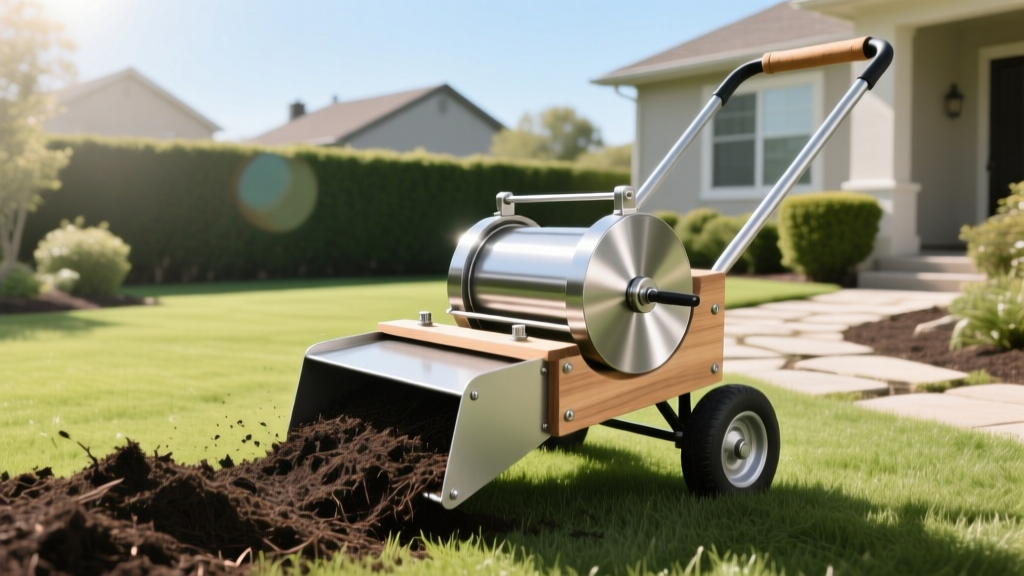
DIY Garden Mulch Spreader Attachment
The most common mulch mistake isn’t picking the “wrong” mulch—it’s spreading it unevenly. A few thick patches (4–6 inches) can hold too much moisture against stems, while thin spots (under 1 inch) let weeds pop right through. The kicker: most of that mess comes from the spreading method, not the material. A simple DIY mulch spreader attachment can turn a back-breaking, patchy job into a quick, controlled pass that lays down an even 2–3 inches where you actually want it.
This article walks you through practical, buildable ideas and the little tuning tricks that make a DIY spreader work like a commercial one—without the $300–$900 price tag.
Start With the Goal: Control Layer Thickness, Not Just “Spread Mulch”
Tip: Aim for 2–3 inches for most beds (and don’t bury trunks)
Most garden beds do best with a mulch layer around 2–3 inches; thicker isn’t automatically better. Keep mulch pulled back 3–6 inches from tree trunks and shrub crowns so you’re not creating a damp collar that invites rot and pests. Real-world example: if you’re mulching tomatoes, a consistent 2-inch layer reduces splash-up and soil crusting, but piling it against the stem can trigger stem rot during humid weeks.
Tip: Calculate volume before you build (so your attachment matches your workload)
Here’s the fast math: 1 cubic yard covers ~162 sq ft at 2 inches (because 1 yard = 27 cu ft; 2 inches = 1/6 ft; 27 ÷ 1/6 = 162). If your front bed is 10 ft × 30 ft (300 sq ft), you’ll need about 1.85 yards for a 2-inch layer. Knowing this helps you size the hopper and decide whether you need a “continuous feed” design (wheelbarrow/tractor) or a smaller handheld drop spreader for tight areas.
Source note: Mulch depth guidance is consistent across university extension recommendations, including Washington State University Extension (2015) and University of Minnesota Extension (2019) on proper mulching practices and avoiding trunk contact.
Pick a Base Platform (The “Attachment” Part) That Matches Your Yard
Tip: Wheelbarrow conversion for most homeowners (cheap, stable, easy)
A wheelbarrow is the easiest DIY platform because it already has a tub, handles, and a balanced wheel. You’re basically adding a controlled outlet at the front lip or bottom so mulch meters out evenly. Example: for a typical 6 cu ft wheelbarrow, a regulated opening can lay mulch in a consistent strip about 18–24 inches wide—perfect for edging along a fence line or around raised beds.
Tip: Lawn tractor/ATV drag spreader for big properties (fastest coverage)
If you’re mulching long rows or a large orchard, a tow-behind sled with a hopper can save hours. A simple DIY version is a plastic utility sled or pallet with a funnel box mounted on top, pulled by a garden tractor. Real-world example: one acre of paths and tree rings can eat 10–20 cubic yards per season; walking a wheelbarrow that far is where weekends go to disappear.
Tip: Hand-push “drop chute” for narrow paths and hoop houses
For tight spaces (like a 3-foot greenhouse aisle), build a small chute attachment on a two-wheeled garden cart or even a sturdy dolly with a bin. The secret is a narrow adjustable outlet that drops mulch straight down instead of flinging it. Example: in hoop houses, a drop chute keeps mulch out of drip emitters and avoids burying irrigation lines.
DIY Build Options That Actually Work (Not Just “Pinterest Pretty”)
Tip: The “Front-Lip Chute” wheelbarrow attachment (simple, reliable)
Build a chute from a 6-inch wide strip of sheet metal or a cut section of plastic gutter, then bolt it to the front lip of the wheelbarrow so mulch flows forward and down. Add an adjustable “gate” (a sliding piece of plywood or metal) to set opening height—start with a 1.5–2 inch gap for shredded mulch. Example: this design shines when you’re top-dressing around perennials because you can feather the flow by tilting the handles slightly up or down.
Tip: The “Bottom Trap Door” for consistent metering (best for chips and bark)
If you can drill and bolt confidently, cut a rectangular opening in the wheelbarrow tub bottom near the front (think 4 inches × 10 inches) and cover it with a hinged door. Use a simple latch and a rope pull on the handle so you can open/close the flow without stopping. Example: this is the go-to when you want a consistent strip along a 40-foot hedge without stopping every few feet to shake mulch loose.
Tip: Add an agitator bar to prevent bridging (especially with damp mulch)
Mulch loves to “bridge” over openings, particularly when it’s damp or has long strands. A DIY agitator can be as simple as a piece of 1/2-inch PVC with zip-tied fins or a bolted flat bar that you jiggle with a handle-mounted lever. Example: if you’re spreading wet shredded hardwood after rain, an agitator prevents that frustrating cycle of “nothing comes out… then too much comes out.”
Tip: Use hardware cloth as a rock/oversize filter if you’re mulching with free chips
Free arborist chips can include chunks that jam gates. Mount a removable screen (like 1/2-inch hardware cloth) over the chute entrance so oversized pieces stay in the tub and you can toss them in shrub areas later. Example: if you’re working with a mixed load from a tree crew, screening keeps your spreader from clogging every 90 seconds.
Tuning the Spread: Make Your DIY Attachment Feel “Dialed In”
Tip: Set your gate opening by mulch type (don’t guess—measure once)
Different mulches flow differently. As a starting point: shredded bark often works with a 1–2 inch gate opening; medium wood chips may need 2–3 inches; compost usually needs a smaller gap to avoid dumping too much. Example: mark three gate positions with a permanent marker so next season you can jump straight to “chips,” “shred,” or “compost” without re-testing.
Tip: Use a “test strip” to calibrate depth in 2 minutes
Before you commit to the whole bed, spread a 3-foot test strip, then check depth with a ruler in three spots. Adjust gate opening or walking speed until you consistently hit your target (like 2.5 inches). Example: this tiny step can save a half-yard of mulch on a long border—especially if you tend to over-apply near the start.
Tip: Control thickness with speed (slow down more than you think)
With most DIY spreaders, walking speed is your “fine adjustment.” A good baseline is a steady 1.5–2 mph walking pace; speed up for thinner coverage and slow down for thicker. Example: along a fence line where weeds are aggressive, slow your pace slightly to build closer to 3 inches—without touching the gate at all.
Tip: Add side skirts if you’re spilling mulch outside the bed
If mulch dribbles off the sides of the chute, bolt on simple side skirts made from scrap plastic or thin plywood. Even a 2-inch tall skirt can keep your strip neat and prevent wasted mulch on paths. Example: this is a lifesaver when you’re mulching next to gravel where every stray chip looks messy.
Mulch Choices That Play Nicely With DIY Spreaders
Tip: Shredded hardwood is the easiest “starter mulch” for flow and finish
Shredded hardwood tends to interlock and stay put once spread, but it still flows well through a gate-style opening. It’s forgiving for DIY equipment because it’s less likely to roll out of place like rounder chips. Example: on sloped beds, shredded material helps prevent the “mulch migration” that can happen after a heavy rain.
Tip: Arborist chips are budget gold—just design for occasional clogs
Arborist chips are often free or low-cost, but they’re irregular in size. If you use them, build a wider gate and plan on an agitator or screen. Example: one homeowner load of chips can be 8–12 cubic yards; even at $0, that’s a serious value compared to bagged mulch.
“Keep mulch a few inches away from tree trunks to prevent moisture buildup and decay at the base.” — University of Minnesota Extension (2019)
That simple spacing rule matters even more when you’re spreading fast with an attachment—you can accidentally create “mulch volcanoes” in seconds if you’re not watching your edges.
Quick Comparison: DIY Spreader Attachment vs Other Methods
| Method | Upfront Cost | Typical Speed | Best For | Main Hassle |
|---|---|---|---|---|
| DIY wheelbarrow chute attachment | $20–$80 (scrap-friendly) | Medium-fast (steady strip) | Most home beds, borders, around shrubs | Needs tuning for different mulch types |
| Rake & pitchfork by hand | $0–$40 | Slow | Small beds, precision around stems | Uneven depth, more fatigue |
| Commercial mulch blower service | $300–$900 per job (varies by region) | Very fast | Large properties, time-crunched installs | Cost, sometimes messy overspray |
| Tow-behind DIY hopper/sled | $60–$200 (depending on build) | Fast | Orchards, long runs, big mulch volume | Turning radius, bed access |
Three Real-World Scenarios (and the Setup That Fits)
Scenario: Suburban front beds (300–600 sq ft) with tight curves
Use a wheelbarrow front-lip chute with a narrow outlet so you can steer around foundation plantings. Set a 1.5-inch opening for shredded mulch and do two light passes instead of one heavy one—your depth ends up more uniform. Example: you’ll avoid that annoying “thick at the start, thin at the end” pattern that happens when you dump and rake.
Scenario: Backyard food garden with drip lines and raised beds
A drop chute that places mulch straight down is your friend here; it keeps mulch from burying emitters and helps you avoid filling bed corners with piles. Time it right: mulch after soil warms (often 2–4 weeks after planting warm-season crops) so you’re not locking in cold soil. Example: in raised beds, you can run the chute down the aisle and then hand-touch around stems with a small rake—fast but still careful.
Scenario: Orchard or long hedge rows (100+ feet) where walking trips kill your day
Consider a tow-behind sled/hopper and set your outlet to lay a band about 24–36 inches wide around the tree line. Keep speed consistent and refill at set intervals (every 10–15 minutes) so you’re not constantly stopping and starting. Example: for a 200-foot hedgerow, a continuous feed setup can cut the job from “all afternoon” to about an hour, depending on how far your mulch pile is from the row.
Clog-Proofing and Maintenance (So It Works Next Weekend Too)
Tip: Dry out soggy mulch for an hour before spreading if you can
Wet mulch bridges and clumps. If your pile is soaked, spread it out in a thin layer on a tarp in the sun for 45–60 minutes before loading—just enough to reduce stickiness. Example: after a rainstorm, this quick dry-out can be the difference between smooth flow and constant chute-jamming.
Tip: Rub a slick layer on the chute (cheap “nonstick” hack)
Mulch slides better on a smooth chute. A quick wipe of paste wax or even a light spray of silicone (applied away from soil and plants) can reduce friction—especially on raw wood chutes. Example: if you built with plywood and notice drag, sealing and waxing the surface can improve flow immediately.
Tip: Reinforce stress points now to avoid mid-job failure
The front lip and bolt holes take the most abuse, particularly when you hit roots or garden edging. Add a backing plate or wide washers and check bolts every few loads. Example: a $2 set of fender washers can prevent the chute from tearing loose halfway through a 2-yard job.
Mulch Technique Tricks That Pair Perfectly With a Spreader Attachment
Tip: Edge first, then fill (it keeps the bed looking crisp)
Run your spreader along the bed edge first to create a clean border band, then fill the middle with wider passes. This prevents mulch from spilling into grass, where it’s a pain to rake out. Example: doing the edge first also gives you a visual “track” so your later passes overlap neatly by about 2–3 inches.
Tip: Use a cardboard underlayer only where weeds are brutal (not everywhere)
Cardboard can be useful under mulch in problem zones, but it’s not always necessary for established beds. If you use it, overlap pieces by 6 inches and wet it lightly so it conforms, then spread mulch on top with the gate opened slightly wider to avoid snagging edges. Example: along a chain-link fence line full of crabgrass, cardboard + 3 inches of mulch can reset the area without herbicide.
Source note: Weed suppression and moisture conservation benefits of mulching are widely supported by extension publications and research summaries, including Washington State University Extension (2015) and related university horticulture guidance on mulch depth, placement, and plant health.
Money-Saving Moves (Because Mulch Adds Up Fast)
Tip: Compare bulk vs bagged using real math (not vibes)
Bagged mulch is convenient, but bulk is usually cheaper per cubic foot. Example pricing: if bags are 2 cu ft each at $4, that’s $2 per cu ft; a $40 bulk cubic yard is $40 per 27 cu ft, about $1.48 per cu ft. If you need 2 yards (54 cu ft), bags cost about $108 (54 × $2) versus $80 bulk—saving ~$28 before you even count the time you’ll save with a spreader attachment.
Tip: Build with salvage first, buy only what matters
The best DIY builds use scrap: old gutter sections, leftover plywood, and spare bolts. Spend money on the parts that improve reliability—like a decent hinge and latch—because that’s what keeps your gate from popping open unexpectedly. Example: a $12 stainless hinge and $8 latch beats rebuilding the whole chute after one messy failure.
Tip: Borrow or trade for materials (mulch jobs are community gold)
Gardeners hoard useful scraps—hardware cloth, angle brackets, even old wheelbarrows with rusty tubs you can patch. Offer to spread a neighbor’s mulch strip if they provide a sled or spare cart. Example: one afternoon trade can save you $50–$150 in materials and give you a second set of hands for calibration.
Safety and “Don’t-Regret-It” Details
Tip: Keep hands out of the chute zone (use a tool, not fingers)
Clogs are tempting to clear by hand, but that’s where sharp edges and pinch points live—especially with a hinged door. Keep a short stick or a trowel clipped to the handle and use that to break bridges. Example: if your gate snaps shut while you’re clearing a jam, fingers lose that contest every time.
Tip: Don’t bury crowns and stems—use a quick finishing pass
A spreader attachment is great for bulk coverage, but do a 2-minute “finishing lap” with a hand rake around plant bases. Pull mulch back from crowns, check tree rings, and level any accidental piles. Example: this is how you get speed and plant health—mechanical spread first, human touch last.
Once you’ve got your attachment tuned—gate marks set, chute slick, and your walking pace steady—you’ll notice something unexpected: mulching gets boring (in the best way). No more wrestling clumps, no more wasting half a yard fixing thick-and-thin spots, and no more sore shoulders from endless rake work. Build it once, tweak it for your mulch type, and your next mulch day becomes a quick lap around the garden instead of an all-day event.