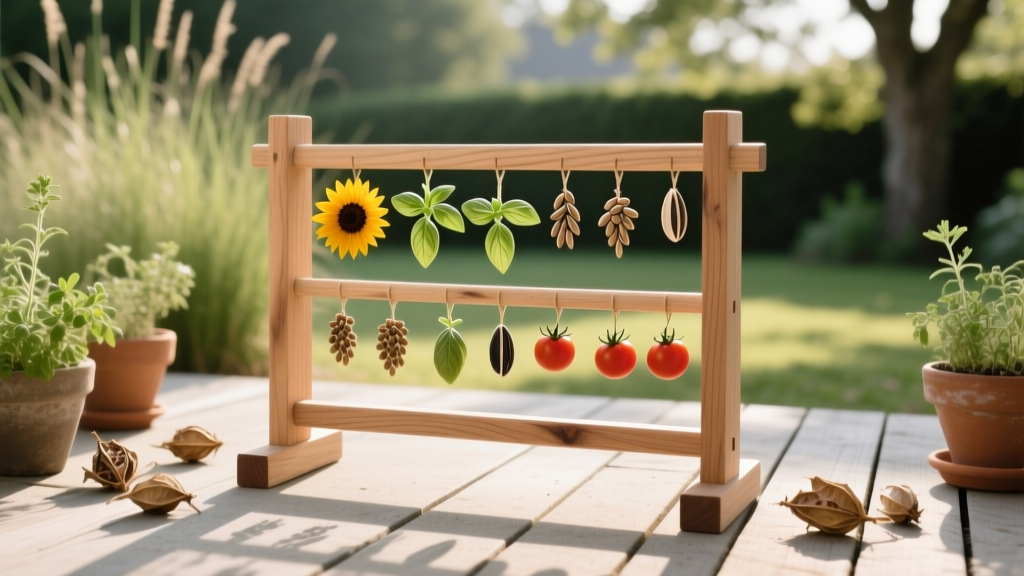
How to Build a Seed Drying Rack
The most common seed-saving mistake isn’t picking the “wrong” variety—it’s drying seeds on a plate or paper towel where air can’t move. That trapped moisture is why perfectly good seeds grow a fuzzy coat overnight, or why they look dry but mold later in the jar. A simple drying rack fixes the airflow problem, and you can build one in an afternoon with materials you probably already have.
Seed drying is mostly about two things: moving air and controlling humidity. Temperature matters too, but you don’t need a dehydrator (and you often shouldn’t use one). The tips below are organized so you can build a rack first, then learn the small tweaks that keep seeds viable for years.
Before You Build: Get the Drying Basics Right
Tip: Aim for “dry enough,” not “bone dry” heat
Seeds store best when they’re dry, but high heat can reduce viability—especially for many vegetables and herbs. A safe target is room temperature (60–75°F) with steady airflow; if you’re using a fan, keep it on low and indirect so seeds don’t fly. Real-world example: I’ve seen basil seeds dry faster at 72°F with gentle airflow than at 95°F in a sunny window—without the “cooked seed” risk.
Tip: Use humidity as your real clock
Drying time isn’t a fixed number because a rainy week and a dry winter day act like two different climates. A cheap hygrometer (often $10–$15) tells you if your drying space is around 30–50% relative humidity, which is a comfortable range for most home seed drying. If your space is 60%+, expect drying to take longer and consider adding a dehumidifier or moving the rack to a drier room.
Tip: Keep seeds out of direct sun
Direct sunlight can overheat seed surfaces and may speed up quality loss, especially for small seeds spread thin. Dry in bright shade indoors, or in a covered porch area with good airflow. Example: tomato seeds on a sunny sill can hit surprisingly high temperatures; on a shaded rack with airflow they dry evenly without “hot spots.”
Source check: The USDA National Center for Home Food Preservation emphasizes drying as a preservation method where controlling moisture is key to preventing spoilage (USDA/NCHFP, 2014). While it focuses on foods broadly, the moisture-control principle is exactly what makes or breaks home seed drying.
The Rack Builds (Pick the One That Matches Your Space)
Tip: The “window screen frame” rack (fast, sturdy, stackable)
This is my go-to because it’s cheap, flat, and easy to expand. Build a simple frame from 1x2 lumber at 24" x 18", then staple fiberglass window screen across it with a staple every 1.5–2 inches. Example cost: one roll of screen ($8–$15) and a couple of 1x2s can make 2–3 racks depending on size.
Tip: Add “feet” so air actually moves under the rack
A rack sitting flat on a counter only dries from the top. Screw or glue on four feet—wood blocks or rubber bumpers—about 3/4" to 1" tall so air can circulate underneath. Real-world example: lettuce seed heads dry noticeably faster on a raised rack because moisture can escape downward instead of pooling against the counter surface.
Tip: The “stacking spacer” trick (dry more without more floor space)
If you want to stack multiple racks, add spacers so trays don’t touch the seeds below. Cut four spacer blocks at 2" tall and screw them to the corners (or use 2" PVC couplers glued on). This gives you a stable, vertical drying tower—great for peak harvest weeks when everything ripens at once.
Tip: The “laundry drying rack conversion” (best for apartments)
A folding sweater-drying rack (mesh) is basically a seed drying rack in disguise. If you already own one, line it with parchment or paper only for wet, pulpy seeds (like tomatoes) and remove the liner once surface moisture is gone so air can pass through. Example: a $25–$40 sweater rack dries multiple herb bundles and screens of flower heads without taking over your table.
Tip: The “box fan + furnace filter” micro-dryer (for humid climates)
If you live somewhere muggy, set a box fan on low and tape a 20" x 20" furnace filter to the intake side to keep dust off your seeds. Place your rack 12–18 inches away from the airflow—not directly on the fan—so seeds don’t scatter. This setup is a lifesaver during rainy seed season when indoor humidity refuses to budge.
Materials, Sizing, and Layout (The Details That Prevent Headaches)
Tip: Use screen mesh that matches your smallest seeds
Standard window screen works for most garden seeds, but tiny seeds can slip through if the mesh is too open or damaged. If you save very fine seeds (like snapdragon or some herbs), lay a second layer: a piece of organza fabric or a fine mesh bag clipped to the frame. Example: dill and basil stay put on organza, while airflow remains excellent.
Tip: Build one “wet tray” and one “dry tray”
Pulpy seeds (tomato, cucumber) start wetter than dry-seeded crops (beans, lettuce). Dedicate one rack with a removable liner—like a sheet of parchment or a silicone mat—for the first 24 hours, then transfer to bare screen to finish. This prevents sticky residue from clogging your main rack and keeps airflow high.
Tip: Label like you mean it (and make it rack-proof)
Use painter’s tape on the frame edge plus a paper tag clipped to the corner—redundancy saves you when tape falls off. Include crop + variety + date + source plant (like “Basil ‘Genovese’ – 8/12 – best plant by back fence”). Real-world example: when you’re drying three different marigolds that look identical as seeds, the second label is the difference between “organized” and “mystery jar.”
Tip: Build the rack to fit your storage bin (not your imagination)
If you plan to store racks between seasons, measure your storage tote first. A common tote interior is around 26" x 17", so building racks at 24" x 16" lets them slide in without fighting the lid. This one detail keeps your drying setup from becoming “that awkward thing” that never gets used.
Drying Techniques That Work with Your Rack
Tip: Spread seeds thinner than you think
Seeds dry faster and more evenly in a single layer. For medium-sized seeds (like zinnia), aim for a layer no deeper than 1 seed thick; for tiny seeds, don’t pile more than about 1/8" deep. Example: radish seeds mounded in the center can feel dry on top while staying damp underneath—prime mold conditions.
Tip: Stir once a day (but only after the surface dries)
Once seeds are no longer glossy or sticky, gently stir or shuffle them daily so trapped moisture can escape. Use a clean, dry spoon or a folded index card to move them without crushing. Real-world example: tomato seeds on day two can clump; breaking clumps apart speeds drying and prevents the sour smell that signals fermentation went too far.
Tip: Use the “snap test” for big seeds, the “bend test” for pods
For beans and peas, a dry seed should feel hard and resist denting; pods should crack and shatter rather than bend. For flower heads, seeds should release easily when rubbed. Example: if milkweed floss still feels cool and damp, it’s not done—give it another 48 hours with airflow.
Tip: Keep drying and cleaning separate days
Trying to fully clean seeds while they’re still damp creates paste and frustration. Dry first, then clean when they’re crisp—usually 3–10 days depending on crop and humidity. Example: dry calendula heads on the rack for a week, then sit down once with a bowl and pull clean seeds quickly without sticky plant bits.
“Seed longevity increases as both moisture content and storage temperature decrease.” — Principles summarized in classic seed storage research (Harrington’s rules; widely cited in seed science literature)
Source check: For practical home seed-saving, extension services consistently recommend drying seeds thoroughly before storage to prevent mold and loss of viability (e.g., University of Minnesota Extension, 2020; Iowa State University Extension and Outreach, 2021).
Comparison Table: Rack Options at a Glance
| Rack Method | Typical Cost | Best For | Drying Speed | Main Watch-Out |
|---|---|---|---|---|
| DIY 1x2 + window screen | $15–$35 per 2–3 racks | Most gardeners; stackable systems | Fast (excellent airflow) | Small seeds may need a liner |
| Folding sweater rack | $25–$40 | Apartments; temporary setups | Medium-fast | Can sag if overloaded |
| Box fan + filter + rack | $30–$60 (if you don’t own a fan) | Humid climates; rainy seasons | Very fast | Too much airflow can blow tiny seeds |
| Oven/dehydrator (not recommended for most) | $0–$100+ | Rare cases; careful low-temp users | Fast but risky | Heat can reduce viability |
Real-World Scenarios (How I’d Set It Up in Your Shoes)
Scenario: You’re saving tomato seeds in a small kitchen
Build one 24" x 18" screen rack and keep a parchment liner handy. After fermenting tomato seeds, rinse well, then spread them thin on parchment for the first 12–24 hours; once they stop sticking, slide them (and the parchment) off and move seeds directly onto the screen to finish. Example: this two-stage move prevents the “paper-glued seed” problem that happens when people dry tomatoes entirely on paper towels.
Scenario: You’re drying bean pods from a big harvest
Skip loose seeds at first—dry pods whole so you’re not handling semi-damp seeds that can bruise. Stack two racks with 2" spacers, lay pods in a single layer, and run a small fan on low across the room. Example: in about 7–14 days (depending on humidity), pods should shatter when twisted; then shell quickly into a bowl and give seeds another 48 hours on the rack.
Scenario: You live in a humid area and everything feels damp
Use the box-fan setup and move drying into the smallest room you can manage (bathroom or laundry room works) so a dehumidifier can actually keep up. Set the dehumidifier to 45–50% RH and keep seeds on raised racks so air hits top and bottom. Example: gardeners on the Gulf Coast often find indoor drying takes forever without humidity control; a single small dehumidifier can cut drying time from 10 days to 4–6.
Scenario: You’re saving tiny flower seeds (snapdragon, petunia, basil)
Line the rack with organza or a very fine mesh so seeds don’t fall through, and place a shallow tray underneath to catch any escapees. Dry seed heads in paper bags for 2–3 days first, then crumble onto the lined rack to finish. Example: basil dries cleanly this way, and you can lift the organza like a “seed hammock” to funnel seeds into a jar.
Shortcuts and Hacks That Make the Rack Even Better
Tip: Add a simple dust cover without blocking airflow
Dust, pet hair, and curious cats are real. Drape a piece of tulle or breathable fabric over the rack like a tent, clipped at the corners, leaving a gap at the bottom edges for airflow. Example: this keeps cat hair out of your lettuce seed while still allowing moisture to escape.
Tip: Build a “seed drying cabinet” from a bookshelf
If your seed saving has outgrown one rack, turn a spare bookshelf into a drying station. Slide racks onto shelf supports, then attach a light curtain or cloth to the front to reduce dust while keeping air moving. Example: a 5-shelf unit can hold 5–10 racks depending on spacing—basically a mini seed lab without the price tag.
Tip: Use binder clips as adjustable dividers
Drying multiple varieties on one rack is fine if you prevent mixing. Clip folded cardstock strips to the screen with binder clips to create lanes. Example: you can dry three different cosmos varieties side-by-side and remove the dividers when you’re done—no permanent partitions needed.
Tip: Don’t guess—track drying batches with a 3-line note
Write a tiny log: start date, expected check date, and any “special handling” (like “wet pulp” or “very small”). A normal check schedule is day 2, day 5, day 7, then every few days until fully dry. Example: this prevents the classic problem of finding a forgotten tray two weeks later and wondering if it overdried, spilled, or mixed.
Storing Your Rack (and the Seeds) So the Work Pays Off
Tip: Clean screens with a dry brush, not a wet scrub
Water can warp wood frames and leave moisture trapped in staples and seams. Brush screens with a dry paintbrush or vacuum with a brush attachment, then wipe the wood frame with a barely damp cloth if needed. Example: a quick brush after each use keeps seed chaff from becoming a sticky mess next season.
Tip: Match seed dryness with smart storage gear
Once seeds are dry, store them in paper envelopes inside an airtight container with a desiccant packet. A simple, cheap system is a reused jar plus a silica gel packet (5–10g) saved from packaging. Example: envelopes prevent condensation issues if you open the jar briefly, and the desiccant gives you a buffer against humidity spikes.
Tip: Don’t freeze seeds unless they’re truly dry
Freezing can be great for longevity, but only if seed moisture is low—otherwise ice crystals can damage tissue. If you’re unsure, keep seeds cool and dry in a closet or basement instead of jumping straight to the freezer. Example: home seed savers often get better results with consistent cool storage (like 50–60°F) than with questionable “maybe-dry” seeds frozen too soon.
A good seed drying rack isn’t fancy—it’s just a reliable way to get air where it needs to go. Once you’ve got one solid rack (and maybe a second stackable one), you’ll stop babysitting seeds on plates and start saving more varieties with less stress. Build it once, tweak it to your space, and you’ll feel the payoff every time you open a jar of clean, dry, ready-to-sow seeds in the middle of winter.
References: USDA National Center for Home Food Preservation (2014); University of Minnesota Extension (2020) seed saving/drying guidance; Iowa State University Extension and Outreach (2021) seed storage and drying recommendations.