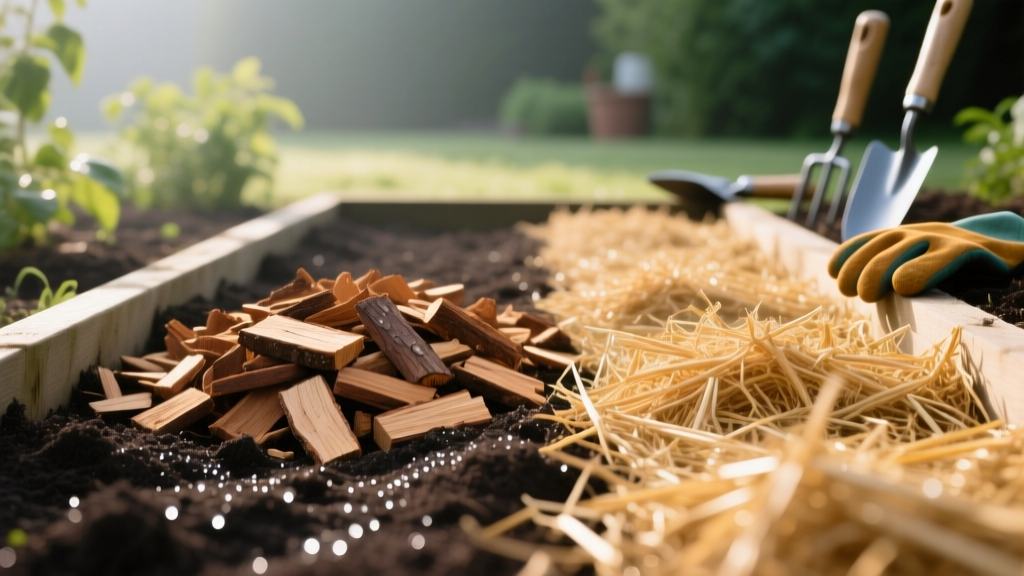
Wood Chips vs Straw Mulch: Which Is Better
The most common mulch mistake I see isn’t choosing the “wrong” material—it’s spreading the right mulch in the wrong place. Put fresh wood chips right up against tomato stems and you can invite slugs and slow early soil warming; spread fluffy straw thick under blueberries and you’ll spend spring pulling oat seedlings like they’re a cover crop you never asked for.
Wood chips and straw both work, but they behave differently in real gardens. Below are practical, proven ways to pick the winner for your beds—and a few shortcuts that save time, water, and money.
Quick snapshot: what you’re really buying
| Feature | Wood chips | Straw mulch |
|---|---|---|
| Best use | Perennials, shrubs, paths, long-term weed suppression | Vegetable beds, garlic, strawberries, quick seasonal coverage |
| Typical depth | 3–4 inches (7–10 cm) | 4–6 inches (10–15 cm) fluffed, then settles |
| How long it lasts | 12–24 months depending on chip size and climate | 3–6 months; often refreshed mid-season |
| Weed control | Excellent when deep enough; strongest against annual weeds | Good but can be “lofty” and let light through if too thin |
| Soil warming in spring | Slower warming (insulating) | Moderate; warms faster than chips if applied later |
| Common headache | Nitrogen tie-up at the surface if mixed into soil | Weed seeds if it’s actually “hay” or poor-quality straw |
| Typical cost range | $0–$50 per cubic yard (often free via arborists) | $6–$12 per bale (varies by region/season) |
One useful rule of thumb: choose wood chips when you want a mulch that stays put and lasts; choose straw when you want a mulch you can pull back, plant through, and refresh fast.
Pick the winner by garden zone (not by personal preference)
Tip: Use wood chips for perennials because they “feed” the soil from the top down
Wood chips excel around fruit trees, shrubs, cane berries, and ornamental beds because you can leave them in place for a year or more. Apply 3–4 inches deep, but keep a 3–6 inch gap around trunks and crowns so you don’t trap moisture against bark. Real-world example: a ring of chips under an apple tree cuts summer weeding down dramatically, and you only top up yearly instead of weekly fussing.
Tip: Use straw in annual vegetable beds when you need quick access for planting and harvesting
Straw is easy to pull aside for direct seeding, then fluff back into place. Aim for 4–6 inches right after seedlings are established (think 2–3 weeks after transplanting tomatoes and peppers), because mulching too early keeps soil cooler and can slow growth. In a salad bed, straw lets you tuck it aside, sow again, and keep succession planting moving.
Tip: For pathways, chips beat straw by a mile (and by one rainy week)
Wood chips knit together and stay walkable after rain; straw tends to mat, slide, and turn into a slick layer in high-traffic lanes. Put down cardboard first (remove tape) and add 4 inches of chips; top up with 1–2 inches when you start seeing cardboard peeking. Example: in a 3-foot-wide garden path, chips stop mud transfer into the house—straw usually doesn’t.
Weed control: thickness matters more than material
Tip: Hit the “light-blocking threshold” for weed suppression
Weeds don’t care about mulch labels—they care about light. For chips, 3 inches is the minimum for decent suppression; 4 inches is where it gets noticeably easier. For straw, 4 inches fluffed is the minimum; if it settles to 2 inches, weeds will sneak through.
Tip: Pair either mulch with cardboard for a near-zero-weeding reset
If you’re converting lawn to beds, lay overlapping cardboard sheets (overlap 6 inches), soak them, then cover with your mulch. This combo blocks light and starves existing grass, which is much tougher than garden weeds. A practical pattern: cardboard + 4 inches of chips for long-term beds; cardboard + 5 inches of straw for a temporary bed you’ll rework in fall.
Tip: Use straw as a “living walkway cleaner” in muddy seasons—then compost it
In spring, toss straw over muddy spots to keep shoes clean; once it’s dirty and compacted, rake it up into the compost pile. This turns a temporary mess-fix into carbon for compost without wasting good chips. Example: after a week of rain, a light layer of straw at the gate can save you from tracking mud through the kitchen.
Water savings and soil temperature hacks
Tip: Time your mulching to trap moisture, not to lock in dryness
Mulch is a moisture preserver, not a moisture creator. Water deeply first (or mulch right after a soaking rain), then apply mulch the same day to reduce evaporation. In hot spells, a 3–4 inch mulch layer can noticeably reduce watering frequency—especially in raised beds that dry fast.
Tip: Use straw when you need warmer soil earlier
Wood chips insulate strongly; that’s great in summer, but in cool springs it can slow soil warming. If you’re pushing early plantings (like squash or peppers), leave soil bare until it warms, then mulch with straw once plants are growing. Example: in a short-season climate, waiting until soil hits about 60°F for warm-season crops can avoid stalling—straw is less “cold-holding” than chips when applied later.
Tip: Use chips to stabilize soil moisture around trees during heat waves
Trees and shrubs suffer when moisture swings wildly. A wide wood-chip ring (think 3–6 feet out from the trunk) keeps roots cooler and reduces drought stress. The University of California Agriculture and Natural Resources notes that organic mulches reduce evaporation and moderate soil temperature (UC ANR, 2021).
“Mulches moderate soil temperatures, reduce evaporation, and suppress weeds—often making the difference between frequent watering and a more stable soil moisture pattern.” — UC Agriculture and Natural Resources (2021)
Nitrogen tie-up (wood chips) vs surprise seeds (straw): avoid the two big gotchas
Tip: Never mix fresh wood chips into the soil where you’re planting this season
The “nitrogen tie-up” issue is mostly a problem when chips are incorporated into soil, because microbes use nitrogen as they break down wood. Keep chips on top as a surface mulch, and your plant roots (deeper down) generally won’t suffer. Washington State University Extension emphasizes using wood chips as a surface mulch rather than mixing them into the soil (WSU Extension, 2020).
Tip: If you want chips in a vegetable bed, use the “compost buffer” trick
For heavy-feeding vegetables, lay down 1–2 inches of finished compost first, then add 2–3 inches of chips on top—compost feeds the plants, chips block weeds and conserve moisture. Real-world example: around established tomatoes, this layered approach keeps the soil darker, cooler, and less crusty in midsummer.
Tip: Buy straw like you’re buying produce—inspect it
Straw should look hollow-stemmed and relatively seed-free; if you see lots of seed heads or it smells like sweet hay, you’re probably holding hay (which is basically weed-seed confetti). Before spreading, shake a flake over a driveway—if you see many seeds drop, don’t put it on your best bed. Example: “clean” wheat straw is usually safer than mixed, weedy bales from unknown fields.
Tip: Ask for “straw, not hay” and request no persistent herbicides
Some straw/hay can carry herbicide residues (like pyridine carboxylic acids) that survive composting and can stunt tomatoes, beans, and peppers. Ask the seller if the field was treated, and if you’re unsure, do a quick bioassay: plant a few bean seeds in a pot with moistened straw soaked-water; twisted growth is a red flag. It’s a 2-week test that can save your whole season.
Scenario playbook (real-world choices that work)
Scenario 1: New raised beds for vegetables on a tight budget
If you just built 2–3 raised beds and need to mulch cheaply, straw usually wins for speed and simplicity. One $8–$12 bale can cover roughly 40–60 square feet at a light-to-medium depth, depending on how fluffy you lay it. Shortcut: mulch only between plants and rows early on, then add a second pass once plants are 8–12 inches tall to avoid burying seedlings.
Scenario 2: A young fruit tree that keeps getting string-trimmer damage
Wood chips are the MVP here, because they create a “no-mow” buffer zone that protects bark. Make a 3-foot radius chip ring, 3–4 inches deep, and keep chips 3–6 inches away from the trunk itself. Real-world example: this simple ring can eliminate the need to weed-whack close to the tree—saving the trunk from nicks that invite pests and disease.
Scenario 3: Strawberries—clean fruit, fewer slugs, less rot
Straw is the classic strawberry mulch for a reason: it keeps berries off damp soil and reduces splashing during rain. Apply 3–4 inches around plants once they’re leafed out, and refresh as it settles. If slugs are a known issue, keep the straw slightly thinner right around crowns and use a wider, drier gap around the bed edges where slugs travel.
Scenario 4: A weedy, compacted side yard you want to turn into a low-effort perennial bed
Go with cardboard + wood chips and skip the rototiller. Overlap cardboard 6 inches, soak it, then add 4 inches of chips; plant perennials by cutting X-shaped slits. In many yards, this approach smothers grass within a season and builds soil structure without you hauling out a machine.
Placement tricks that make both mulches work better
Tip: Leave a bare “breathing ring” around stems and crowns
Piling any mulch against plant stems can invite rot and pests. Keep a 2–3 inch bare ring around veggie stems and a 3–6 inch ring around woody trunks. Example: for zucchini, mulch the basin around the plant, but don’t bury the crown—crown rot is a heartbreak you can prevent with two minutes of tidying.
Tip: Use straw as a temporary “shade cloth” for soil after transplanting
On hot, windy days, a light sprinkle of straw around new transplants reduces soil crusting and transplant shock. Don’t go full depth immediately; start with 1–2 inches, then build to 4 inches after plants perk up. Example: lettuce transplants in late spring can bolt faster if the soil swings from wet to dry—this light straw layer smooths the swing.
Tip: Use coarse chips, not fine “sawdusty” mulch, in wet climates
Fine-textured wood mulch can form a tighter mat and hold too much moisture at the surface, especially in rainy regions. Ask for arborist chips (mixed sizes) or “coarse” chips; they interlock but still breathe. Example: if mushrooms pop up in chips, that’s usually decomposition doing its job—but soggy, slimy layers mean you need coarser material or a thinner application.
Money-saving moves (because mulch can get expensive fast)
Tip: Get free wood chips from local arborists—then manage the pile smartly
Many tree services dump chips for free if you’re within their route; services like ChipDrop can help match you (availability varies). A full drop can be 5–15 cubic yards, which is a lot—plan a “chip zone” where the pile can sit. Use the freshest chips for paths and under trees, and let a portion age for a few months if you want a more mellow, soil-like top dressing.
Tip: Stretch straw by using it where it earns its keep
If you’re buying bales, don’t blanket the whole garden by habit. Put straw where it solves a problem: under cucumbers and squash (keeps fruit clean), around garlic (winter insulation), and in aisles (mud control). Example: mulching only the 18-inch-wide crop rows instead of the entire bed can cut straw use by roughly 30–40%.
Tip: DIY “leaf-straw” from fall leaves as a backup plan
No straw available or prices spiked? Shred dry leaves with a mower and use them like straw: 3–4 inches deep, then water lightly so they settle. Leaves break down faster than chips and can blow around if left unshredded, but shredded leaves are a surprisingly effective seasonal mulch. Example: oak and maple leaves shredded in October can carry a garlic bed through winter with minimal spring cleanup.
When to refresh, and how to tell it’s time
Tip: Refresh wood chips when you can see soil or weeds germinate in the chip layer
Chips slowly decompose from the bottom; as they thin out, sunlight reaches the soil and weeds return. Top up with 1–2 inches rather than starting over, ideally in late spring after soil warms or in fall after cleanup. Example: if your chip layer is down to about 1–2 inches, you’ll feel the difference in weeds within weeks.
Tip: Refresh straw mid-season if it’s matted, thin, or turning into soil
Straw settles quickly; a bed that started at 5 inches may compress to 2 inches by mid-summer. Add another 2–3 inches when you notice it’s no longer shading the soil. Example: in tomato beds, a mid-July straw top-up can keep soil from baking during the hottest stretch.
So which is better—wood chips or straw? The shortcut answer is: wood chips are the long-game mulch for perennials, paths, and stability; straw is the quick-change artist for veggies, strawberries, and seasonal protection. If you match the mulch to the job (and hit the right depth), you’ll spend less time weeding, less time watering, and a whole lot more time enjoying the part of gardening that isn’t just maintenance.
Sources: University of California Agriculture and Natural Resources (UC ANR), “Mulch and Soil Health” (2021); Washington State University Extension (WSU Extension), guidance on wood chips as surface mulch and soil building (2020).