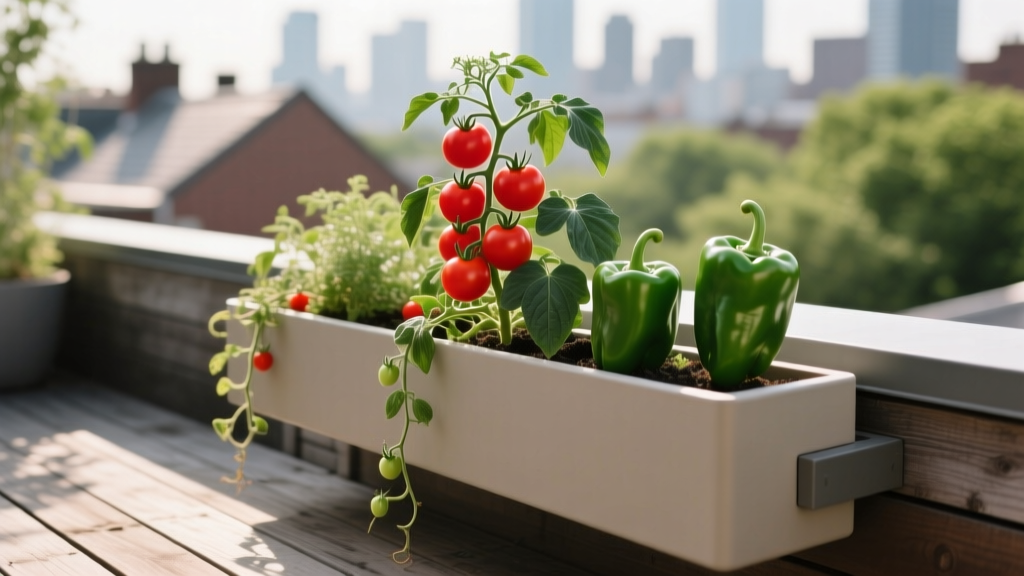
Deck Tomato and Pepper Container Garden
The first warm Saturday of May has a familiar rhythm: you step onto the deck with coffee, glance at the railings, and mentally place a dozen plants into a space that can barely hold two chairs. You want tomatoes and peppers—real ones, not a single sad plant in a tiny pot—yet your deck bakes in afternoon sun, wind tunnels between buildings, and every square foot has to earn its keep. The good news is that a deck can grow a surprising amount of fruit if you design it like a small landscape: assign zones, control vertical space, and treat containers as both infrastructure and décor.
This walkthrough lays out a practical container garden plan focused on tomatoes and peppers, with measurements, spacing, costs, and varieties that reliably perform in pots. Think of it as a mini-deck renovation where the “hardscape” is containers, trellises, and pathways—and the “planting” is your summer harvest.
Design principles for a productive deck layout
Start with the sun map (before you buy a single pot)
Tomatoes and peppers are sun-hungry. Most fruiting varieties perform best with 6–8+ hours of direct sun. On a deck, “full sun” can be patchy due to rooflines and railings. Spend one day observing: note sun at 9 a.m., 12 p.m., and 4 p.m.. If your deck only gets 5–6 hours, choose faster, compact varieties and accept a slightly smaller harvest rather than cramming in more plants.
For context on light needs, University of Minnesota Extension notes tomatoes require full sun for best yield, emphasizing that “Full sun is needed for best yields” (University of Minnesota Extension, 2020). That principle becomes non-negotiable in containers, where roots and moisture are already constrained.
Use a “wall, middle, edge” layout to keep space livable
I design deck gardens the way I design narrow urban side yards: taller structure against a wall, primary production in the middle, and smaller pots at the edges for access and airflow.
- Wall zone (back line): tallest plants and trellises; keeps shade falling “out” rather than over smaller pots.
- Middle zone: your main tomato and pepper containers, spaced for air circulation.
- Edge zone: herbs, flowers, and shallow containers that you can lift or move when entertaining.
If your deck is typical apartment size—say 6 ft x 10 ft (60 sq ft)—you can still run this zoning. The trick is to keep a clear walkway of at least 24 inches so watering and harvesting don’t turn into gymnastics.
Design for wind: anchoring, screening, and plant stability
Wind is the silent yield-killer on decks. It can snap stems, knock over cages, and dry containers in hours. Plan for:
- Weight: larger containers (15–25 gallons) naturally resist tipping.
- Low, sturdy trellising: attach cages to the pot rim with zip ties; add a bamboo stake as a “spine.”
- Wind screen: a breathable mesh or railing planter wall that breaks gusts without creating a sail.
A practical anchoring rule: if your tomato is in a 20-gallon pot and you use a 5–6 ft cage, secure it in at least 3 points (cage to rim + stake) so the structure moves as one unit.
Right-size containers: root volume is your yield budget
In containers, root volume is the limiting factor—more than fertilizer brands or fancy gadgets. A widely used guideline is to provide tomatoes with large containers. Penn State Extension recommends a 5-gallon container for one tomato plant at minimum (Penn State Extension, 2019), though many deck gardeners see better performance in 10–20 gallons, especially for indeterminate types.
Use these target sizes for consistent results:
- Indeterminate tomatoes: 15–25 gallons (best for long-season production)
- Determinate/patio tomatoes: 10–15 gallons
- Peppers: 5–10 gallons (bigger pot = less watering stress)
Soil and water strategy: make the system easy, not heroic
Deck gardens fail when they require daily hand-watering that clashes with real life. Your design should reduce frequency and increase consistency:
- Container mix: quality potting mix (not garden soil) plus 10–20% compost for water-holding.
- Mulch: a 1–2 inch layer of straw or shredded leaves on top to reduce evaporation.
- Self-watering or drip: optional, but life-changing on hot decks.
“In small-space gardens, the most sustainable design choice is the one that reduces daily maintenance friction—especially watering—because consistency beats intensity.” —Adapted from small-space landscape maintenance principles discussed in urban horticulture research and extension guidance.
Three deck layouts that actually work (with real measurements)
Scenario 1: The renter’s 6 ft x 10 ft sunny deck (minimal holes, maximum harvest)
This is the common apartment deck: good sun, limited weight tolerance, and rules against attaching anything permanent to railings. Here’s a productive arrangement that still leaves room for a chair.
Layout plan:
- Back wall line: 2 large tomato pots, each 20 gallons, spaced 30 inches apart center-to-center.
- Middle line: 3 pepper pots, each 7 gallons, spaced 18 inches apart.
- Edge line (rail side): 2 slim herb planters (e.g., 24 inches long) for basil and thyme.
- Walkway: keep 24 inches clear from the door to the far end.
Expected sun: ideally 7–9 hours. If you get less, swap one tomato for another pepper or a compact tomato variety.
Scenario 2: The 12 ft x 12 ft family deck (entertaining-friendly with a “kitchen garden” edge)
When you have a square deck, you can create a true “room” with plants as perimeter. The key is to avoid boxing yourself in with too many tall plants.
Layout plan:
- Perimeter: 4 tomato containers (two indeterminate, two determinate) in 15–25 gallon pots at corners and midpoints.
- One side edge: a continuous line of peppers: 6 plants in 5–7 gallon pots, spaced 16–18 inches.
- Center zone: open space for a bistro set; keep at least a 36-inch diameter clear “turning circle.”
This design feels intentional: the tall tomatoes act like green screens and the peppers become a low hedge of fruit.
Scenario 3: The windy rooftop deck (heat, wind, and intense sun management)
Rooftops are production powerhouses if you tame moisture loss. Here, your design job is to slow wind and stabilize temperature swings.
Layout plan:
- Windbreak line: 3–4 large containers (even empty decorative planters) placed upwind to break gusts.
- Tomato core: 3 indeterminate tomatoes in 25-gallon fabric pots with heavy cages, spaced 32–36 inches.
- Pepper cluster: 6 peppers in 10-gallon pots grouped in a block (plants shelter each other), spaced 16–18 inches.
Watering reality: without drip, many rooftop setups need water 5–10 minutes per day during heat waves. With drip on a timer, it’s closer to 20–30 minutes per week of checking and refilling.
Container and variety choices: tomatoes and peppers that earn their footprint
Tomato varieties that behave well in pots
Choose tomatoes based on your deck’s vertical space, sun hours, and how often you want to prune.
- ‘Sungold’ (indeterminate cherry): prolific, sweet, and forgiving in containers; great for snacks and salads. Needs a strong cage and regular pruning.
- ‘Celebrity’ (determinate): reliable slicer with controlled size; easier to manage on smaller decks and produces a solid mid-season flush.
- ‘Patio’ (dwarf/determinate): compact choice for 10–12 gallon pots when sun is limited or you want more plants with less trellis.
- ‘San Marzano’ (paste, often indeterminate): worthwhile for cooks, but only if you can give it 8+ hours sun and a 20+ gallon pot; otherwise choose a smaller paste type.
Design note: If your deck faces neighbors, cherry tomatoes like ‘Sungold’ can be trained up a neat trellis to create a green privacy panel without feeling like a jungle.
Pepper varieties that thrive in containers (and why)
Peppers are perfect deck crops: they tolerate heat, look tidy, and keep producing if you harvest regularly.
- ‘Jalapeño’ (medium heat): dependable yields, excellent for beginners, and productive in 5–7 gallon pots.
- ‘Shishito’ (mild, blistering pepper): high yield, great for quick cooking; tends to fruit heavily in warm deck microclimates.
- ‘California Wonder’ (bell): classic bell pepper, but give it a larger pot (7–10 gallons) and consistent watering to avoid blossom-end rot issues.
- ‘Cajun Belle’ (sweet with gentle heat): compact, ornamental, and productive—an ideal “edible décor” pepper for front-facing decks.
Spacing reminder: In containers, peppers still need breathing room. Aim for 16–18 inches between pots so foliage dries quickly after rain or watering—your simplest disease prevention step.
A practical comparison: container options for deck tomatoes and peppers
| Container Type | Best For | Typical Size to Use | Pros | Cons | Approx. Cost (USD) |
|---|---|---|---|---|---|
| Fabric grow bag | Tomatoes, peppers (especially hot decks) | Tomato: 15–25 gal; Pepper: 7–10 gal | Air-prunes roots; lighter weight; good drainage | Dries faster; needs saucer or mat to protect deck | $8–$18 each |
| Plastic nursery pot (heavy-duty) | Budget setups, easy moving | Tomato: 10–20 gal; Pepper: 5–7 gal | Cheap; widely available; holds moisture well | Can overheat in full sun; less decorative | $6–$20 each |
| Ceramic/terracotta (glazed or clay) | Decor-forward decks | Tomato: 15+ gal; Pepper: 7+ gal | Stable; attractive; breathable (unglazed) | Heavy; can crack in freeze; higher price | $35–$120 each |
| Self-watering container (reservoir) | Busy schedules, rooftop sun | Tomato: 10–20 gal equivalent; Pepper: 5–10 gal | More consistent moisture; fewer missed-water setbacks | Higher upfront cost; reservoir cleaning needed | $40–$130 each |
Step-by-step setup: build the deck garden in a weekend
This sequence keeps the project clean and prevents the common mistake of placing pots first and realizing later you can’t walk through the space.
- Measure and tape the layout: Use painter’s tape to mark a 24-inch walkway and the footprint of each container (a 20-gallon pot often needs roughly a 20–22 inch diameter circle).
- Protect the deck surface: Set each pot on a saucer or pot feet. Budget option: a $10–$20 rubber boot tray under fabric bags keeps runoff controlled.
- Install support first: Place cages/trellises before planting so you don’t spear roots later. Use a 54–72 inch tomato cage for indeterminate varieties; for determinate, 42–54 inches often works.
- Fill with mix: For a 20-gallon container, plan on roughly 3 cubic feet of potting mix. Pre-moisten it so it settles evenly.
- Plant at correct depth: Tomatoes can be planted deeper (bury a portion of stem to encourage roots). Peppers should go at the same depth as their nursery pot.
- Add slow-release fertilizer: Follow label rates. A practical starting point is a slow-release granular plus a liquid feed later; avoid overloading nitrogen early or you’ll grow leaves instead of fruit.
- Mulch the surface: Add 1–2 inches mulch to reduce watering frequency.
- Water deeply: First watering should fully saturate the mix until you see steady drainage.
- Place herbs/flowers last: Use them as “finish carpentry”—filling edges and softening the look without crowding airflow around tomatoes.
Budgeting the project (with DIY swaps)
A deck container garden can be sleek and expensive, or scrappy and brilliant. Here are realistic numbers for a starter build with 2 tomatoes + 3 peppers:
- Containers: 2 x 20-gal grow bags ($12 each) + 3 x 7-gal pots ($10 each) = $54
- Potting mix: about 9–10 cubic feet total; commonly $12–$18 per 2 cu ft bag = roughly $60–$90
- Cages/stakes: 2 sturdy cages ($15 each) + 3 pepper stakes ($3 each) = $39
- Fertilizer + mulch: $20–$35
- Plants (starts): 5 plants at $4–$6 each = $20–$30
Estimated total: $193–$248 for a clean, reliable setup.
DIY alternatives that work:
- Free buckets (food-grade): A 5-gallon bucket works well for peppers; drill 8–12 drainage holes. For tomatoes, use two buckets nested (one with holes inside one as a saucer) and consider moving up to 10 gallons using larger containers when possible.
- Homemade trellis: Build a tripod from three 6 ft bamboo poles and twine for indeterminate tomatoes—often under $10 per plant.
- Compost blend: If you have access to municipal compost, blend 10–20% into potting mix to stretch volume and improve water retention (don’t use straight compost in containers).
Maintenance expectations (what it really takes)
Plan maintenance like you would plan lighting on a patio: make it easy enough that you’ll actually do it.
Weekly time: Most deck tomato-and-pepper setups take 45–90 minutes per week, plus quick watering checks. During peak heat, add 5 minutes per day if hand-watering.
Your weekly rhythm
- Water: Check moisture daily in hot weather. A deep watering is better than frequent sips. Containers can dry out in 24 hours during wind and heat.
- Prune and train tomatoes: 10–15 minutes weekly. Remove suckers on indeterminate types if you want tidier plants and larger fruit.
- Feed: After flowering begins, use a fruiting-focused fertilizer every 7–14 days (or follow your slow-release schedule). Consistency matters more than strength.
- Harvest: Pick peppers regularly to encourage more production; harvest tomatoes as they ripen to reduce cracking and pest pressure.
Seasonal tasks that prevent mid-summer chaos
- Early season (weeks 1–3): Monitor nighttime lows; if temperatures dip below 50°F, shelter peppers—they sulk in cold.
- Mid-season: Check ties and cage stability after storms; add a second stake if the plant starts leaning.
- Late season: Top indeterminate tomatoes 4 weeks before your typical first frost date so plants direct energy into ripening existing fruit.
Small design touches that make it feel intentional (not like a plant parking lot)
Productive doesn’t have to look messy. A few designer moves:
- Repeat container finishes: Even inexpensive pots look cohesive if you repeat the same color/shape in sets of 2–3.
- Use one “accent herb” pot near the door: Basil in a 12-inch pot makes the whole garden feel like a kitchen extension—and you’ll actually use it.
- Add pollinator flowers in the edge zone: A single pot of sweet alyssum or calendula can increase pollinator visits without stealing root room from tomatoes.
Common deck-garden problems (and how the layout solves them)
Problem: leaves stay wet and disease spreads. Layout fix: keep tomatoes spaced at least 30 inches apart and avoid tucking pots tightly into corners with no airflow.
Problem: constant wilting. Layout fix: move the most sun-exposed plants into larger containers (tomatoes in 20–25 gallons), mulch, and cluster peppers so their canopy shades pot surfaces.
Problem: the deck becomes unusable by July. Layout fix: protect a clear 24-inch path and keep one small “landing zone” (about 3 ft x 3 ft) for standing and harvesting without stepping around pots.
Citations
University of Minnesota Extension. 2020. Tomato growing guidance emphasizing full sun for best yields.
Penn State Extension. 2019. Container vegetable gardening recommendations, including minimum container sizing (e.g., 5-gallon container for one tomato plant).
By midsummer, a well-designed deck tomato and pepper container garden changes how the space feels. The tomatoes lift the eye upward like a green screen, peppers fill in the mid-layer with glossy leaves and colorful fruit, and the deck becomes both lounge and larder. Keep your walkway clear, give roots the volume they deserve, and build your supports like you mean it—then let the plants do what they’re good at: turning sunlight and a few square feet into dinner.