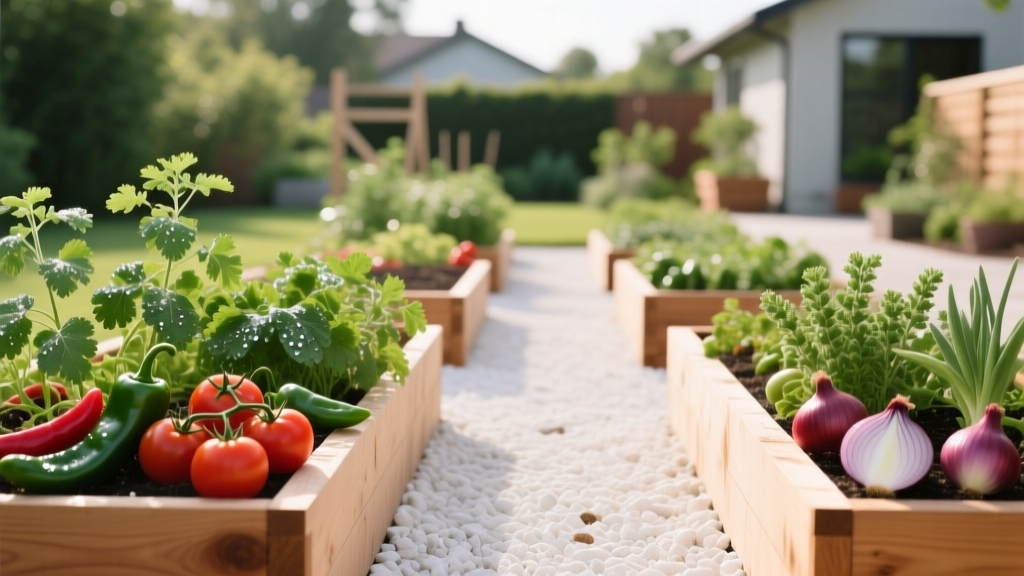
Backyard Salsa Garden Layout
It’s 6:10 p.m., and dinner needs help. You’ve got tortillas, a pan heating, and a bowl that would love a bright, punchy salsa—except the tomatoes are mealy, the cilantro is wilting in the fridge, and that jalapeño you bought last week has turned soft. The fix isn’t a bigger grocery budget; it’s a tighter garden plan. A salsa garden works best when it’s designed like an outdoor prep station: ingredients grouped by how you harvest, how you water, and how much sun they need—so you can step outside, pick, rinse, chop, and eat.
This layout is written like I’d walk you through a client install: we’ll pick the right footprint for your yard (or rental patio), place plants where they thrive, and build in the kind of “small frictions” that ruin yields—shade, cramped spacing, inconsistent watering, and the classic cilantro-bolts-in-a-week problem.
Start with the salsa workflow: harvest paths, sun paths, and water paths
Salsa is a multi-harvest garden. Tomatoes and peppers come steadily once they start; cilantro and green onions are “cut-and-come-again”; garlic is a one-and-done bulb; tomatillos can be prolific but need room. A smart layout keeps the frequent-pick plants closest to where you walk, and the once-a-season plants slightly farther out.
Sunlight: the layout rule you can’t negotiate
Plan for 8+ hours of direct sun for fruiting crops (tomatoes, peppers, tomatillos). Many extension offices recommend full sun for best yield and flavor; for example, the University of Minnesota Extension notes tomatoes perform best in full sun (typically considered 6–8+ hours) and warm conditions (University of Minnesota Extension, 2020). Put tall crops on the north side of beds (in the Northern Hemisphere) so they don’t shade peppers and herbs.
If your yard only gets 5–6 hours, you can still grow a “fresh salsa” garden, but you’ll get fewer tomatoes and smaller pepper harvests. In that case, design for herbs and compact tomatoes, and treat fruiting crops as bonus production rather than guaranteed abundance.
Airflow and disease: spacing is not optional
Salsa staples are prone to fungal issues when crowded—especially tomatoes. Give plants breathing room, keep leaves off the soil, and design access for pruning and harvest. The spacing numbers below are your guardrails, not suggestions.
Watering: design for consistency, not heroics
Inconsistent watering is a common cause of tomato cracking and blossom-end rot. Build a layout that makes it easy to water evenly. A simple drip line (or soaker hose) on a timer is one of the biggest “effort-to-yield” upgrades you can make. Expect a basic hose-timer + drip kit to run around $35–$80 depending on length and fittings.
“The simplest way to improve a garden’s performance is to make the right action the easy action—especially watering.” — Linda Chalker-Scott, horticulturist and author known for research-based landscape guidance (see Chalker-Scott’s extension publications and lectures; quote paraphrased as a design principle rather than a verbatim excerpt).
Three layout options (pick the one that fits your space)
Below are three real-world footprints I design around most often: a single raised bed, a cluster of containers, or a narrow side-yard strip. Each can produce legitimate salsa ingredients if you match the plant list to the footprint.
Scenario 1: The classic raised bed (best yield per square foot)
Footprint: one 4 ft × 8 ft raised bed, 12 in deep. This is the sweet spot: reachable from both sides, enough soil volume for tomatoes, and room to rotate herbs.
Bed zoning: Think of the bed in three bands running lengthwise:
- North band (tall): tomatoes/tomatillos on a trellis
- Middle band (medium): peppers
- South band (low/fast): cilantro, green onions, and a small patch for radishes (quick filler) or basil (optional but excellent in salsa)
Concrete spacing plan (4×8):
- Tomatoes: 2 plants, each 24–30 in apart, trained vertically
- Peppers: 4 plants, 18 in apart
- Cilantro: a 12 in × 24 in patch, succession-sown every 2–3 weeks
- Green onions: a 6 in × 24 in edge strip, planted 2–3 in apart
DIY cost range (typical): a basic 4×8 raised bed can be built for roughly $120–$300 (lumber/blocks, screws, landscape fabric optional), plus soil/compost. Soil is often the big ticket: a 4×8×1 ft bed is ~32 cubic feet; bagged soil/compost blend commonly lands around $120–$220 depending on local pricing and how much compost you add.
Scenario 2: Rental-friendly container salsa garden (moveable, flexible, surprisingly productive)
Footprint: a sunny patio/balcony area roughly 6 ft × 10 ft (or even smaller) with containers grouped tightly to share irrigation and make harvesting easy.
Container sizes that actually work:
- Tomatoes: 10–15 gallon container per plant (bigger is easier to keep evenly moist)
- Peppers: 5–7 gallon container per plant
- Cilantro: 2–3 gallon wide pot (wide matters more than deep)
- Green onions: window box or 8–10 in deep trough
Design trick: Put all containers on the same side of the patio where a hose can reach. If you can’t run a hose, design for a watering can route: keep the water source within 30 feet so “I’ll do it tomorrow” doesn’t become the theme.
Budget alternative: Food-grade buckets (often free or $5–$8) make excellent pepper containers with drainage holes drilled. For tomatoes, aim larger (used nursery pots, half-barrels, or large fabric grow bags often cost $10–$25 each).
Scenario 3: The narrow side-yard strip (long, sunny, and often underused)
Footprint: a strip 2.5 ft × 16 ft along a fence. This layout shines with a trellis: go vertical to keep a walkway clear.
Layout strategy: Install a cattle-panel or wire trellis 6 ft tall along the fence, then plant tomatoes/tomatillos at the base and peppers in front. Herbs fill the front edge where you can harvest without squeezing past foliage.
Access requirement: Leave at least 18–24 in of walking space. If the strip is tighter than that, commit to compact/determinate tomatoes and fewer plants—you’ll get better results with fewer, healthier plants than a crowded jungle you can’t reach.
Plant selection: salsa ingredients that earn their space
A salsa garden can be as simple as tomatoes + cilantro + jalapeños, but you’ll get a more reliable harvest if you choose varieties bred for productivity and disease resistance—especially in backyard microclimates. Variety selection is also how you adapt to short seasons, hot summers, or partial sun.
Tomatoes (the backbone)
Top picks:
- ‘Celebrity’ (slicer): dependable yields, widely adapted, good disease resistance package for many regions; excellent if you want classic red salsa body.
- ‘Roma’ or ‘San Marzano’ (paste types): thicker flesh, less watery salsa; great when you want a quick chop without draining.
- ‘Sungold’ (cherry, optional): not traditional salsa, but a handful brightens flavor; also highly productive, good for kids/snacking while you garden.
Spacing: If staked/trellised, give tomatoes 24–30 in. If you plan to cage and let them sprawl, you may need 36 in or more—usually too much for a salsa bed, so I recommend vertical training.
Peppers (heat control and crunch)
- ‘Jalapeño M’: classic jalapeño shape and heat, productive, reliable for fresh salsa.
- ‘Poblano’ (often sold as ‘Ancho’ when dried): mild-to-medium heat, big fruit for roasting and smoky salsa.
- ‘Lunchbox Red’ (sweet, compact): great for renters or tight beds; sweet crunch balances hot peppers.
Spacing: 18 in between plants is a good practical standard for many garden peppers; it keeps airflow while still letting you fit enough plants for weekly harvests.
Cilantro (design around bolting, don’t fight it)
Cilantro is the plant that makes people feel like they “can’t grow herbs.” The reality: cilantro hates heat and long days; it bolts. So your design should assume turnover.
- ‘Slow Bolt’: bred to delay bolting; buys you extra harvest time.
- ‘Santo’: a common, steady performer in many gardens; good leaf production.
Spacing: sow thickly, then thin to about 6–8 in between plants if you want larger bunches. For constant salsa, sow a new patch every 2–3 weeks and let the old patch flower for beneficial insects if you have room.
Green onions (the “always ready” ingredient)
- ‘Evergreen Hardy White’: reliable bunching onion type for repeated harvest.
- ‘Tokyo Long White’: long shanks, clean flavor, great for fresh pico-style salsa.
Spacing: plant 2–3 in apart in a strip along the bed edge. You can harvest every other onion as it sizes up, leaving the rest to fill in.
Tomatillos (optional, but unbeatable for salsa verde)
If you love salsa verde, tomatillos are worth the space—but they’re bigger plants than most people expect. Also, tomatillos typically need two plants for good pollination and fruit set.
- ‘Toma Verde’: classic green tomatillo, productive.
- ‘Purple’ tomatillo: beautiful color, slightly different flavor; still makes great verde.
Spacing: plan 24–36 in per plant and give them a sturdy cage or trellis.
A quick comparison table: pick your best layout style
| Layout type | Suggested footprint | Best for | Typical plant count | Approx. startup cost |
|---|---|---|---|---|
| Raised bed | 4 ft × 8 ft × 12 in | Maximum yield, easiest weekly workflow | 2 tomatoes, 4 peppers, herbs + onions | $240–$520 (bed + soil + basics) |
| Containers | 6 ft × 10 ft patio zone | Renters, movable sun-chasing, no digging | 1–2 tomatoes, 2–4 peppers, multiple herb pots | $120–$450 (pots + mix + supports) |
| Side-yard trellis strip | 2.5 ft × 16 ft | Long narrow spaces, vertical growing | 2 tomatoes or 2 tomatillos, 3–4 peppers, herbs edge | $150–$400 (trellis + soil amendments) |
Step-by-step setup: build your salsa garden like a small project
Use this sequence for any of the three layouts. It’s fast, but it prevents the common mistake of planting first and designing later.
- Map your sun for one day. Check sun at 9 a.m., noon, and 3 p.m. Mark the spots that get 8+ hours (prime), 6–8 hours (good), and <6 hours (herb-only zone).
- Choose your footprint and commit to access. For beds, keep paths at least 24 in wide. For containers, leave a 18 in “harvest aisle” so you can step in and pick without knocking plants over.
- Install supports before planting. Put in stakes/trellis/cages first so you don’t spear roots later. A simple trellis wire along a fence costs about $15–$40.
- Prep soil with structure. Aim for a mix that drains but holds moisture. In raised beds/containers, blend in compost (often 20–30% by volume). For in-ground strips, loosen soil 10–12 in deep where tomatoes will go.
- Run irrigation (even if it’s basic). Place drip lines or soaker hoses, then test flow for 10 minutes to confirm coverage.
- Plant in the right order. Tomatoes/tomatillos first (deep planting), then peppers, then onions and cilantro from seed. Water in thoroughly.
- Mulch. Add 2–3 in of straw or shredded leaves around tomatoes and peppers to stabilize moisture and reduce soil splash.
- Label and calendar your cilantro sowings. Set reminders every 14–21 days so you always have tender leaves.
Real-world case examples: how the same plan flexes
Case 1: The busy homeowner with one Saturday a month
Space: 4×8 raised bed in full sun (9 hours mid-summer). Goal: enough salsa ingredients for weekly tacos without daily fuss.
Design choices: two ‘Celebrity’ tomatoes on a trellis, four ‘Jalapeño M’ peppers, and a rotating cilantro patch. Drip irrigation on a timer set for early morning. This is the “set it and check it” garden.
Maintenance expectation: about 30–45 minutes per week (pruning, harvesting, checking pests), plus a 60-minute monthly deeper check (retie tomatoes, refresh mulch, clean emitters).
Case 2: The renter with a hot balcony and reflected heat
Space: 6×10 patio, sun from late morning to evening (7 hours), with heat bouncing off stucco. Problem: pots dry out fast, cilantro bolts instantly.
Design choices: one 15-gallon tomato (a paste type like ‘Roma’), two 7-gallon peppers (one jalapeño, one sweet), cilantro in two shallow wide pots placed where they get morning sun but afternoon shade from the tomato. Watering is simplified by clustering pots close so one drip manifold can feed everything.
DIY alternative: shade cloth clipped to the railing during heat waves can drop stress significantly; even a small piece (often $15–$30) can keep cilantro usable longer.
Case 3: The side-yard that used to be “dead space”
Space: 2.5×16 strip along a fence, sun from 10 a.m. to 5 p.m. (7 hours). Problem: hard to mow/weed, awkward to access.
Design choices: a cattle-panel trellis mounted to T-posts, two tomatillos (‘Toma Verde’ plus a purple type) to guarantee pollination, three poblanos in front, green onions along the edge. The trellis turns a nuisance strip into a vertical pantry.
Cost saver: if cattle panel isn’t available, a wire fence section works; the key is rigidity—tomatillos get heavy.
Maintenance rhythm: what this garden asks of you
A salsa garden should feel like a pleasure, not a second job. The trick is small, consistent touchpoints that prevent big problems.
Weekly time budget
- 20–45 minutes/week in peak season for a 4×8 bed (harvest, tie-up, quick pest scan).
- 15–30 minutes/week for a container setup if irrigation is automated; 30–60 minutes/week if hand-watering daily during hot spells.
Seasonal tasks that matter
- Spring: install supports early; harden off transplants over 7–10 days; start first cilantro sowing.
- Early summer: mulch 2–3 in; begin pruning tomatoes (remove lower leaves to improve airflow); start second and third cilantro sowings.
- Mid-summer: monitor watering consistency; harvest peppers regularly to keep plants producing; consider shade cloth if temps spike.
- Fall: pull spent plants; compost healthy debris; save stakes and sanitize cages if disease was present.
Fertilizing without guesswork
Tomatoes and peppers are hungry, but excess nitrogen can push leaves over fruit. A balanced vegetable fertilizer applied per label at planting and again when flowering begins is typically plenty. If you prefer research-based guidance, the UC ANR and other extension programs emphasize following soil test results and avoiding over-fertilization (UC Agriculture and Natural Resources resources on home vegetable gardening and soil management are widely cited; see UC ANR publications, 2019).
Budget planning and smart DIY swaps
Good design doesn’t require fancy materials; it requires spending where it changes outcomes: soil quality, support strength, and watering consistency.
- Spend on: a sturdy tomato support system (flimsy cages collapse right when fruit loads up), and decent potting mix for containers.
- Save on: containers (food-grade buckets), bed edging (secondhand bricks/blocks), and mulch (shredded leaves).
- Split costs over time: build the bed this year, add drip next year, add a trellis upgrade the year after. The layout stays the same; you just improve the hardware.
If you want a realistic “starter basket,” plan for seeds ($3–$5 per packet), a couple of transplants ($4–$7 each), and one good support solution. You can get a productive mini salsa setup running for about $50–$120 if you already have containers, or $250–$500 for a fully built raised-bed system with irrigation.
Small design details that make harvesting feel effortless
Place cilantro and green onions on the outer edge of the bed or container cluster so you can snip them without brushing tomato foliage (which spreads moisture and can move spores around). Keep a small bowl hook or shelf near the garden door—one of those tiny conveniences that turns “I should harvest” into “I did harvest.”
And here’s the designer’s secret: leave 10–15% of your space open at planting time. That breathing room becomes a spot for a last-minute basil transplant, a late cilantro sowing, or a marigold if aphids show up. Gardens that are planned too tightly become frustrating; gardens with a little slack stay productive.
Once the layout is in place, salsa becomes a habit you can taste: step outside, pick warm tomatoes, snap a pepper, grab a fistful of cilantro, and slice a few green onions. Dinner doesn’t need rescuing—it just needs a bowl.
Citations: University of Minnesota Extension (Tomato growing guidance), 2020. University of California Agriculture and Natural Resources (home vegetable gardening/soil and fertilizer best practices), 2019.