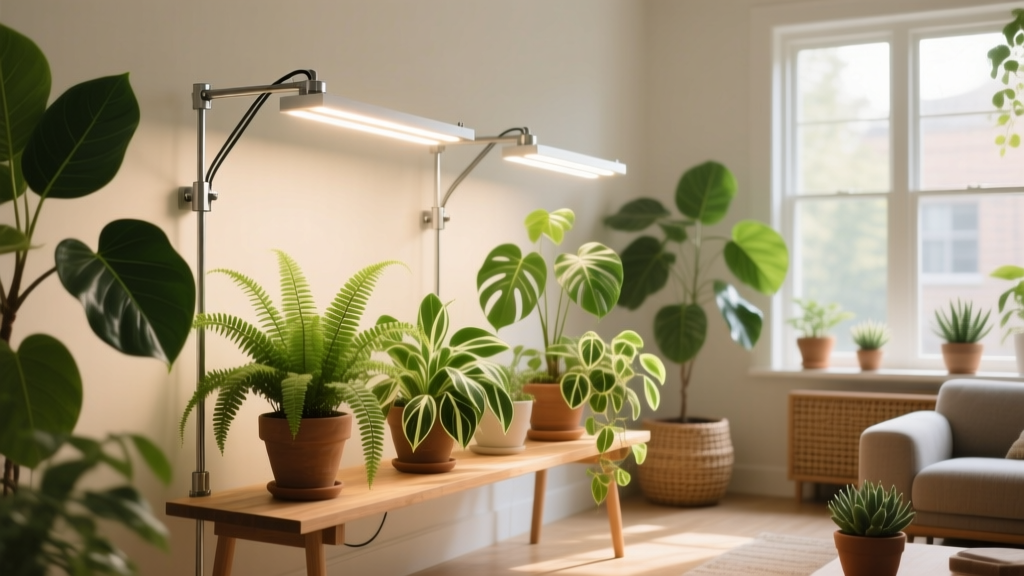
Indoor Grow Lights: Complete Guide to Choosing and Setting Up LED Lights for Plants
Why Grow Lights Matter
Most indoor spaces receive 50-200 lux of ambient light — plants need 5,000-50,000 lux depending on species. Without supplemental lighting, indoor plants stretch weakly toward windows, produce small pale leaves, and never flower or fruit. Modern LED grow lights solve this at a fraction of the energy cost of older technologies.
Understanding Light Spectrum
| Spectrum | Wavelength | Effect on Plants | When to Use |
|---|---|---|---|
| Blue | 400-500nm | Vegetative growth, compact stems, leaf development | Seedlings, leafy greens, herbs |
| Red | 600-700nm | Flowering, fruiting, stem elongation | Flowering plants, fruiting vegetables |
| Full spectrum (white) | 400-700nm | Balanced growth for all stages | General purpose — recommended for most growers |
Types of LED Grow Lights
1. Full-Spectrum White LEDs (Best for Most Growers)
Look like normal white light. Cover all wavelengths plants need. Great for living spaces because they don't produce the purple glow of blurple lights. Samsung LM301H or Bridgelux chips are top quality.
- Cost: $50-200 for a 2x2 foot coverage area
- Power: 100-200 watts actual draw
- Best for: herbs, leafy greens, houseplants, small vegetables
2. Blurple (Blue+Red) LEDs
Purple glow. More energy-efficient per watt of photosynthetic output but unpleasant in living spaces. Best for dedicated grow rooms or closets.
3. LED Strip Lights
Low-profile strips that mount under shelves or cabinets. Ideal for seedling shelves, kitchen herb gardens, and supplementing window light. 20-40 watts per 2-foot strip.
How Much Light Do Your Plants Need?
| Plant Type | PPFD (µmol/m²/s) | Watts per sq ft | Hours/Day |
|---|---|---|---|
| Low-light houseplants (pothos, ferns) | 50-150 | 5-10W | 12-14 |
| Herbs (basil, cilantro, parsley) | 150-300 | 15-20W | 14-16 |
| Leafy greens (lettuce, spinach) | 200-400 | 20-25W | 14-16 |
| Fruiting plants (tomatoes, peppers) | 400-800 | 30-50W | 12-16 |
| Flowering plants | 300-600 | 25-40W | 12-14 |
Light Distance Guide
Too close = light burn (bleached leaves). Too far = stretching (leggy growth).
- Seedlings: 12-18 inches above canopy
- Herbs and greens: 12-24 inches
- Flowering/fruiting: 18-30 inches
- Adjust as plants grow — maintain consistent distance
15 Best Plants for Indoor Grow Lights
- Basil — Thrives under 16h/day light, harvest weekly
- Lettuce — Ready in 30 days from seed
- Microgreens — Harvest in 7-14 days
- Cherry tomatoes — Dwarf varieties only (Tiny Tim, Red Robin)
- Peppers — Hot peppers fruit better indoors than sweet
- Strawberries — Alpine varieties fruit year-round
- Mint — Nearly indestructible under any light
- Pothos — Low light tolerant, air-purifying
- Snake plant — Survives almost any conditions
- Succulents — Need 6+ hours of bright light
- Orchids — Phalaenopsis types do well under LEDs
- African violets — Bloom year-round under 12h light
- Spider plant — Easy to propagate, tolerates varied light
- Cilantro — Grows fast, bolts slowly under cool LEDs
- Green onions — Regrow from store-bought scraps
Timer Setup
Use a $10 outlet timer. Plants need a dark period — never run lights 24/7. Darkness triggers important metabolic processes including root growth and nutrient transport.
Final Thoughts
For most indoor gardeners, a single full-spectrum white LED panel (100-200W) mounted 18 inches above plants covers a 2x2 foot growing area. Start with herbs and microgreens — they give the fastest results and validate your setup before investing in more lights or complex crops.