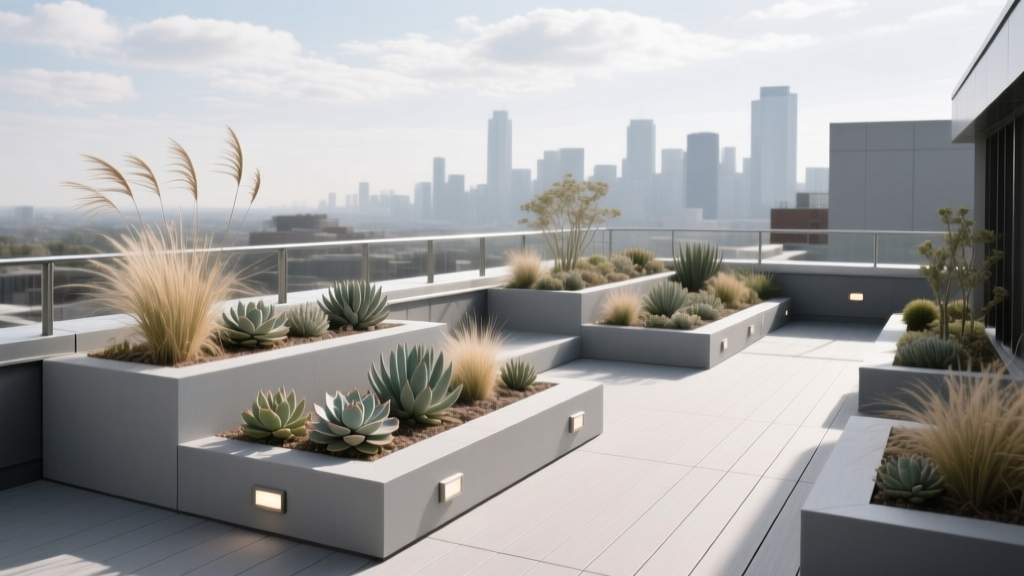
Rooftop Wind-Tolerant Garden Selection
The first time you carry a tray of seedlings onto a roof, it feels like freedom—until the wind tests your confidence. A sudden gust can flip a lightweight pot, shred tender leaves, and turn your carefully planned layout into a scattered puzzle. Rooftops are bright, open, and full of potential, but they’re also exposed. The trick is to design like the wind is a permanent roommate: give it pathways, buffers, and heavy anchors—then choose plants that can take a little weather without sulking.
This is the rooftop garden approach I use when clients want beauty and harvests without constant rescues: build a stable layout first, then select plants proven to handle sun, drying conditions, and breezy microclimates. Along the way, we’ll talk numbers—container sizes, spacing, sunlight hours, and realistic budgets—so you can build something that survives a blustery week and still looks intentional.
Design principles: make wind behave (or at least, do less damage)
Start with a rooftop “wind map” and a simple rule: protect the edges
On most roofs, the strongest wind hits at the perimeter and corners, then accelerates around any solid obstruction (like a stair bulkhead). Before you buy plants, spend 10 minutes observing (or checking after a windy day): where do leaves collect, where do lightweight objects shift, and which corner feels like a wind tunnel?
A practical baseline: treat the outer 3–4 feet of the roof edge as your high-stress zone. That doesn’t mean you can’t plant there—it means you plant defensively there.
Use “layers” to slow wind instead of fighting it with one big wall
A single, solid screen can create turbulence—wind hits it, spills up and over, and can form a whipping eddy on the sheltered side. Layering works better: a sturdy perimeter of heavier planters, then medium-height plants behind, then your delicate or leafy crops in the calmest interior pocket.
“Windbreaks are most effective when they are semi-permeable, reducing wind speed without creating strong turbulence.” — Royal Horticultural Society (RHS), advice on windbreak planting (RHS, 2023)
For renter-friendly setups, “semi-permeable” can be as simple as a trellis with gaps, a row of tall grasses, or a slatted screen attached to weighted planters (not the roof surface).
Anchor everything: weight, footprint, and low center of gravity
Wind doesn’t just break plants—it topples containers. Choose wider bases and heavier materials in exposed zones. As a rule of thumb for rooftops, I like:
- 18–24 inch diameter pots (or larger troughs) for perimeter anchoring plants.
- Minimum 40–60 lb finished weight per large pot (soil + plant + container) in windy corners.
- Rectangular planters that sit 12–18 inches tall instead of narrow, tall cylinders that behave like sails.
Important: If you’re on a building with unknown load limits, ask your landlord or building manager about rooftop live-load capacity. Many roofs are designed for specific loads; avoid clustering extremely heavy planters in one small area.
Soil and irrigation: plan for “wind drought”
Wind pulls moisture from leaves and soil faster than you expect. Even if your roof gets only moderate sun, the wind can create drought-like stress. For most rooftop container mixes, plan to water in summer 3–5 times per week unless you add drip irrigation and mulch.
The U.S. EPA notes that drip irrigation can reduce outdoor water use compared with conventional watering methods (EPA WaterSense, 2024). On rooftops, drip also keeps containers evenly moist—critical when wind is drying one side of the pot faster than the other.
Layout strategies that work in real rooftop footprints
The “U-shaped shelter” layout (best all-around)
If you can only do one design move, do this: place the heaviest, tallest planters in a U-shape around your seating or tender plants, with the open side facing away from prevailing wind. In many cities, prevailing winds vary by season, so use your observations.
Example dimensions: On a 10 ft x 12 ft roof section, place three 24 in x 48 in trough planters in a U, leaving a central pocket roughly 6 ft x 6 ft for mixed containers or a bistro set.
Create “wind shadows” with trellis panels and tall grasses
Instead of a solid fence, use a trellis panel (wood or metal) mounted to planter boxes. A panel around 18–24 inches above the soil line shields young plants while allowing airflow. Add tall, flexible grasses that bend rather than snap.
DIY alternative: Zip-tie reed fencing to a metal trellis for a semi-permeable screen, then attach the trellis to two heavy planters using U-bolts. No roof penetrations, no landlord panic.
Keep pathways deliberate: two feet is your maintenance sweet spot
On rooftops, you’ll carry watering cans, bags of potting mix, and harvest baskets. Give yourself at least 24 inches of clear path between major containers. Anything narrower becomes a daily annoyance—and you’ll “temporarily” set pots in the walkway until the whole layout feels cluttered.
Microclimates: use walls and corners as assets
A stair bulkhead or parapet wall can be your best friend: it blocks wind and radiates a little warmth. Put your most wind-sensitive plants (like basil or tender lettuces) within 12–24 inches of that shelter, then position hardier plants outward.
Plant selection: wind-tolerant varieties that look good and earn their keep
Wind tolerance often comes down to leaf size, leaf texture, and stem flexibility. Small leaves, thicker cuticles, and plants that naturally grow in coastal or exposed conditions tend to win on rooftops.
Edibles that handle rooftop wind
- Rosemary (Rosmarinus officinalis) ‘Arp’: One of the more cold-tolerant choices; woody stems and narrow leaves reduce wind damage. Plant in a 16–20 inch pot; give 6+ hours sun.
- Thyme (Thymus vulgaris) ‘German Winter’: Low-growing, wind-resistant, and happier with slightly leaner soil. Space plants 8–12 inches apart in troughs.
- Sage (Salvia officinalis) ‘Berggarten’: Thick, slightly fuzzy leaves reduce moisture loss. Use a 12–16 inch pot per plant.
- Kale (Brassica oleracea) ‘Lacinato’: Narrow, sturdy leaves handle wind better than frilly types. Space 12–18 inches in raised planters; protect seedlings with a screen early on.
- Chives (Allium schoenoprasum): Flexible foliage; surprisingly unbothered by gusts. Space clumps 6–8 inches.
- Strawberries (Fragaria × ananassa) ‘Seascape’: Good in containers; tuck behind windbreaks so blossoms aren’t blasted. Space 10–12 inches; excellent in hanging pockets if they’re secured.
Ornamentals that thrive in exposed conditions (and make the roof feel finished)
- Feather reed grass (Calamagrostis x acutiflora) ‘Karl Foerster’: Upright but flexible; excellent “living windbreak.” Plant one per 18–24 inch pot.
- Blue fescue (Festuca glauca) ‘Elijah Blue’: Compact clumps that tolerate sun and breezes. Space 10–12 inches in troughs.
- Lavender (Lavandula angustifolia) ‘Hidcote’: Naturally adapted to dry, airy sites; keep soil well-drained. One plant per 14–18 inch pot.
- Yarrow (Achillea millefolium) ‘Moonshine’: Fine-textured foliage and sturdy stems; great pollinator plant. Space 12–18 inches.
- Sedum (Hylotelephium) ‘Autumn Joy’: Succulent-like leaves resist desiccation; handles heat and wind well. Space 12–18 inches.
Small trees and shrubs for structure (only if your roof and rules allow)
Woody plants add permanence and real wind buffering—but they need appropriately sized containers and consistent watering.
- Bay laurel (Laurus nobilis): A classic for containers; leathery leaves tolerate wind. Start with a 20–24 inch pot; prune to keep compact.
- Dwarf mugo pine (Pinus mugo ‘Mops’): Naturally rugged and wind-tolerant; excellent winter structure. Use a 24 inch wide container minimum.
- Potentilla (Dasiphora fruticosa) ‘Goldfinger’: Tough, sun-loving shrub with small leaves; handles exposure well. One per 18–24 inch pot.
A quick comparison: wind tolerance and container needs
| Plant | Why it works in wind | Suggested container | Spacing | Sunlight target |
|---|---|---|---|---|
| Rosemary ‘Arp’ | Woody stems, narrow leaves reduce tearing | 16–20 in pot | 1 per pot | 6–8 hrs/day |
| Lavender ‘Hidcote’ | Dry-site plant; thrives with airflow | 14–18 in pot (fast-draining mix) | 1 per pot | 6+ hrs/day |
| Kale ‘Lacinato’ | Sturdier leaf structure than curly types | 12+ in deep planter | 12–18 in | 5–7 hrs/day |
| Feather reed grass ‘Karl Foerster’ | Bends instead of snapping; makes a living screen | 18–24 in pot | 1 per pot | 6+ hrs/day |
| Sedum ‘Autumn Joy’ | Succulent leaves resist drying winds | 12–16 in pot | 12–18 in | 6+ hrs/day |
Three rooftop scenarios (and how I’d design each)
Scenario 1: The renter’s 6 ft x 10 ft roof nook with strict rules
You’ve got a small footprint, you can’t drill into anything, and you want it to look intentional—not like a nursery clearance aisle. In this situation, the design goal is stability and dual-purpose pieces.
Layout: Place two 24 in x 48 in troughs along the windward edge to act as ballast. Add a third trough on one side to form an L, creating a sheltered inner corner. Inside that pocket, place three to five medium pots (12–16 inch) for herbs and flowers.
Planting plan: Use feather reed grass in one trough as a living screen, then blue fescue and yarrow in the others. Tuck rosemary, thyme, and chives in the interior pots.
Budget snapshot: Expect about $250–$600 total if you buy planters new. DIY alternative: use food-grade 20-gallon tubs (with drainage holes) and wrap them with reed fencing for a cleaner look, often reducing costs by 30–50%.
Scenario 2: The sunny, windy roof deck where you want a dining area plus planters
Here you’re designing for comfort. Wind on a roof deck doesn’t just stress plants—it makes dinner unpleasant. The garden should act like a soft room divider.
Layout: Build a U-shape with three large planters around the dining set, leaving a 36-inch path for chair pull-back and movement. Put the tallest grasses on the outer rim, medium perennials in the middle, and lower herbs nearest the table so fragrance is part of the experience.
Planting plan: Tall: ‘Karl Foerster’ grasses. Mid: lavender ‘Hidcote’ and sedum ‘Autumn Joy’. Low: thyme and chives. Add one bay laurel in a 24-inch pot as an evergreen anchor.
Cost planning: A basic drip kit for containers often runs around $35–$120 depending on size and timer. If you cook and eat out there, this is one of the most worthwhile upgrades you can make—consistent moisture keeps herbs tender instead of tough and stressed.
Scenario 3: The “I want vegetables” rooftop with 8+ hours of sun (and constant breezes)
Vegetables can thrive on rooftops, but wind can reduce yields by stressing plants and interfering with pollination. You’ll get better results by treating the roof like a miniature farm block: windbreak first, crops second.
Layout: Place windbreak planters on the windward side, then position raised beds or large troughs behind them. Keep beds no wider than 4 feet so you can reach the center without stepping into soil (and compacting it).
Planting plan: Windbreak row: grasses + sturdy perennials. Crop row: kale ‘Lacinato’, strawberries ‘Seascape’, sage, and thyme. If you want tomatoes, choose more wind-resilient types like smaller-fruited cherry varieties and cage them heavily—then position them in the most sheltered pocket you can create.
Spacing reminder: In a 4 ft x 8 ft bed, you can fit roughly 12 kale plants at 16-inch spacing, but only if you keep edges protected and water consistently.
Step-by-step setup: build a wind-tolerant rooftop garden in a weekend
- Observe and measure. Sketch your roof area with dimensions (even a simple rectangle). Mark the windiest edge and where shade falls. Note your average sun: many rooftops get 6–10 hours, but don’t guess—check for a day.
- Place your “ballast” planters first. Set the biggest containers on the windward edge and corners. Aim for at least 2–3 heavy anchor planters before you add smaller pots.
- Add semi-permeable screening. Attach trellis panels to planters (not the roof). Keep screens gapped so wind slows rather than rebounds.
- Group containers by water needs. Put drought-tolerant plants (lavender, sedum) together and thirstier plants (strawberries, leafy greens) together. This saves time and prevents accidental overwatering.
- Fill with the right mix. Use a high-quality container mix; avoid heavy garden soil. Top-dress with 1–2 inches of mulch (fine bark or straw) to reduce evaporation and soil splash.
- Plant tight enough to reduce soil exposure, not so tight they compete. A good target is to cover most soil surface by midseason, while keeping recommended spacing (for example, 12–18 inches for kale, 8–12 inches for thyme groupings).
- Secure tall plants immediately. Stake or cage anything that could snap in a gust. Don’t wait for the first wind event to teach the lesson.
- Test your watering rhythm. For the first two weeks, check containers daily. Wind can dry out the windward side; rotate pots weekly if exposure is uneven.
Maintenance expectations (realistic, not heroic)
Weekly time: Plan on 30–60 minutes per week for a small rooftop garden (under 100 sq ft), and 60–90 minutes if you’re growing vegetables. Windy periods add watering time.
Warm season (spring/summer):
- Check moisture 3–5 times per week in hot, windy weather (less if drip is installed).
- Deadhead yarrow and trim lavender lightly to keep plants compact and less wind-catchy.
- Feed container plants every 3–4 weeks with a balanced fertilizer (or use slow-release granules per label instructions).
Fall:
- Cut grasses back in late winter rather than fall if you like winter structure (and extra wind buffering).
- Move the most tender containers closer to walls for shelter.
- Reduce watering, but don’t let evergreens dry out completely—wind desiccation can be worse in cold air.
Winter: If your climate freezes, avoid leaving saucers full of water beneath pots. Freeze/thaw cycles can crack containers. Group pots together to reduce exposure, and consider wrapping especially vulnerable pots with burlap for insulation.
Budget planning and smart DIY swaps
Rooftop gardens can get expensive fast because wind-tolerant design relies on sturdy materials. But you can choose where to spend and where to improvise.
- Spend on stability: large planters, good potting mix, and a few structural evergreen or grass elements. These do the heavy lifting.
- Save on cosmetics: use inexpensive nursery pots dropped into heavier outer containers, or wrap utilitarian tubs with outdoor fabric or reed fencing.
- DIY wind screens: trellis + zip ties + reed fencing can look clean if you repeat the material across the roof. Just keep it semi-permeable.
If you want a realistic starting budget for a functional, attractive wind-tolerant setup: a small rooftop garden with 6–10 containers, quality mix, and plants typically lands around $300–$900, depending on planter materials and whether you add drip irrigation.
Safety notes that protect your garden (and your neighbors)
On a roof, anything that can blow away eventually will. Avoid lightweight décor, unsecured saucers, and flimsy furniture. If you use shade cloth, fasten it like you mean it, and remove it before storms. Keep heavier items away from edges and ensure no container can tip and slide.
Finally, remember that “wind-tolerant” doesn’t mean “wind-proof.” The best rooftop gardens are designed to flex: plants that bend, layouts that buffer, and containers that stay put. Once the structure is right, plant selection becomes the fun part—choosing textures and flavors that look elegant in the sun and don’t panic when the weather turns lively.
Sources: Royal Horticultural Society (RHS), guidance on windbreaks and gardening in exposed sites (2023). U.S. Environmental Protection Agency (EPA) WaterSense, outdoor water-saving and irrigation efficiency guidance (2024).