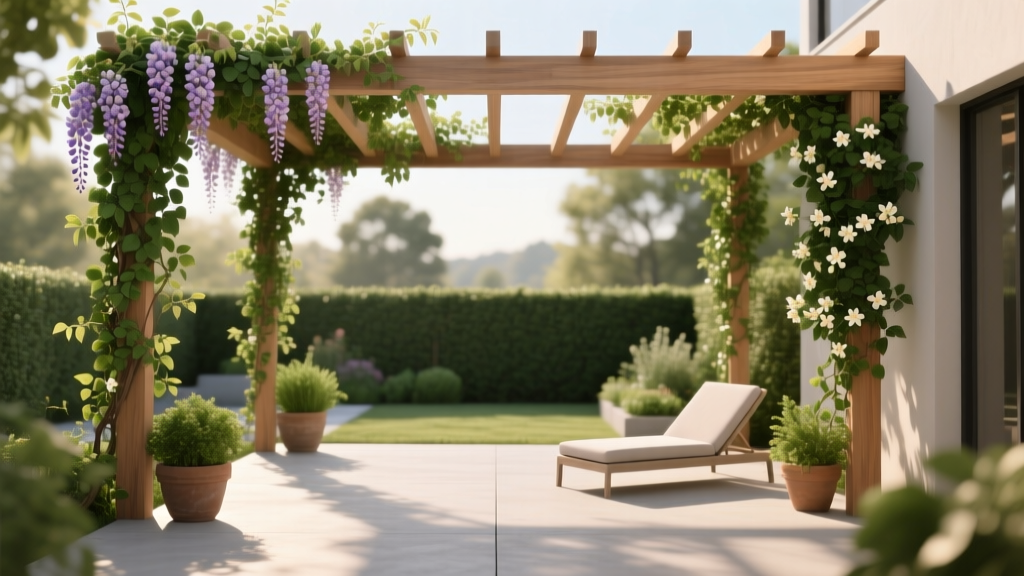
Patio Shade Solutions Using Climbing Plants
It’s 4:30 p.m., the hottest hour on the patio. The table is too hot to touch, the umbrella keeps tilting in the breeze, and the sun is coming in sideways—right under the canopy. You love the outdoor space, but the shade solution feels temporary and fussy. This is exactly the moment when climbing plants shine: they don’t just block sun, they soften it. They cool the air around you, filter glare, and make a patio feel like a room.
As a designer, I think of patio shade in layers: overhead protection, side screening, and circulation—so you can still move, clean, and live there without a jungle taking over. The good news is you can do this in a weekend with a simple trellis, or in a season with a pergola and a “green roof” of vines.
Design principles: shade that feels good and works every day
1) Start with the sun path, not the plant list
Spend one clear day watching your patio. Note sun exposure at breakfast, lunch, and late afternoon. Most patios need protection from west sun (harsh, low angle) and south sun (overhead intensity). A vine on an overhead pergola helps the midday blast; a vertical trellis on the west side handles late-day glare.
As a baseline, full-sun flowering vines perform best with 6–8 hours of direct sun. Many foliage-first options (like climbing hydrangea) tolerate 3–5 hours or bright shade, which can be perfect for covered patios that still need cooling and privacy.
2) Build shade in “planes”: overhead + one wall
If you only add one green surface, make it overhead. If you add two, make the second one the side that gets the worst sun (often west or southwest). This combination typically cuts glare far more effectively than a single trellis on its own, and it keeps the patio usable during shoulder seasons.
For comfortable movement, keep a clear walkway of at least 36 inches from door to seating area, and avoid planting bases that pinch circulation.
3) Plan your structure first: vines are strong (and heavy)
Climbing plants aren’t “light decor”—mature vines can weigh a surprising amount, especially after rain. A safe rule is to treat vine-covered structures as if they’ll carry an extra 8–12 lb per square foot of load once mature and wet (varies by species and training). If you’re renting, a freestanding frame is your best friend.
“Shade is most successful when it’s designed as a spatial element—like a ceiling or wall—rather than as an object placed on the patio.” — Michael Van Valkenburgh, landscape architect (quoted in multiple interviews and project statements; principle echoed in practice)
4) Airflow matters as much as shade
A dense vine wall can cool a patio, but it can also block breezes. I like “latticed shade”: train vines across a grid so you get dappling, not a solid hedge. You can always let it thicken later. On small patios, choose plants that prune cleanly and don’t form bulky trunks at ankle height.
Layout strategies that fit real patios
Pergola “green roof” layout (best for owners)
For a typical patio seating zone—say 10 ft × 12 ft—a pergola gives you a stable framework for overhead shade. Use posts just outside the seating footprint so chairs don’t bang into them. I often specify a pergola height of 8 ft to keep the space airy and make pruning manageable with a small ladder.
Spacing tip: For two vines, plant one at each outer corner, about 12–18 inches from the post base, and train them up and across. This balances coverage and reduces tangling.
Wall-mounted trellis panel (great for small spaces)
If your patio faces a fence or exterior wall, a trellis panel can create shade and privacy without taking up floor space. Mount panels with a 2–4 inch standoff from the wall for airflow—this reduces mildew and protects siding.
For a strong visual “wall,” aim for a trellis area of at least 6 ft wide × 6 ft tall. That size reads like architecture, not a plant accessory.
Freestanding screen (best for renters and flexible layouts)
Renting doesn’t mean giving up living shade. Use a freestanding trellis in a large container: think a 20–25 gallon pot with a sturdy obelisk or panel. Position it on the west edge of your seating area like a movable wall. The benefit: you can rotate it with the season, and you can take it with you.
Hybrid: cable trellis for modern, low-visual clutter
Stainless cable systems are sleek and surprisingly strong. They work beautifully for vines like clematis and star jasmine that don’t need thick rungs. A simple grid of vertical cables 12 inches apart can cover a wall with minimal hardware.
Step-by-step setup: a practical weekend plan
- Measure the shade need. Mark where sun hits your chair at 4 p.m. Add a “shade plane” line on the ground with chalk or tape.
- Choose your structure. For overhead shade, size a pergola to cover at least 70% of the seating zone (example: for a 10×12 patio, aim for a 10×10 to 10×12 pergola footprint).
- Confirm support and clearance. Keep vines at least 12 inches from gutters and roof edges. Keep plant bases 18 inches away from foot traffic zones.
- Install trellis/pergola hardware. Use exterior-rated fasteners. For wall trellises, add 2–4 inch spacers to protect the wall and improve airflow.
- Prepare soil or potting mix. In-ground: loosen soil in a 18-inch diameter area and blend in compost. Containers: use a high-quality potting mix; avoid straight garden soil in pots.
- Plant and water deeply. Water to fully saturate the root zone. For the first month, plan on watering 2–3 times per week (more for containers).
- Train early. Tie new growth every 7–10 days using soft ties. Early training prevents the “one thick rope” problem later.
- Mulch and protect. Add 2 inches of mulch (keep it off the stem). This stabilizes moisture and reduces weeds.
Plant selection: specific climbers that make better shade
The best patio shade vines share three traits: they grow predictably, they’re easy to train, and they give you the kind of shade you actually want—filtered, cool, and not a bug-magnet mess. Here are designer-favorite options, plus why they work.
Fast coverage for overhead shade
Grapevine (Vitis vinifera or Vitis labrusca cultivars) is one of the best true “living roof” plants. Big leaves create deep shade, and the plant is built to climb and sprawl. If you like fruit, choose a seeded or seedless table grape suited to your region.
Why it works: Large leaves create strong shade; easy to prune into a flat canopy along pergola beams.
Design note: Grapes drop leaves in winter—excellent if you want winter sun on the patio.
Wisteria (Wisteria floribunda or W. sinensis; also consider W. frutescens for a more restrained option) offers dramatic spring bloom and dense shade with age, but it needs a very sturdy structure and disciplined pruning.
Why it works: Long-lived, architectural trunks; strong seasonal impact.
Caution: Aggressive growth—best for homeowners who can prune on schedule.
Refined, fragrant shade for walls and screens
Star jasmine (Trachelospermum jasminoides) gives glossy evergreen coverage in many mild climates and smells incredible in bloom.
Why it works: Dense screening, manageable stems, excellent on trellis panels; fragrance makes the patio feel intentional.
Climbing rose (Rosa ‘New Dawn’ or similar repeat-blooming climbers) works beautifully on a side trellis where you want dappling rather than a full roof.
Why it works: Controlled training along wires; flowers at eye level; can be pruned to keep pathways clear.
Partial-shade solutions (for covered patios and north/east exposures)
Climbing hydrangea (Hydrangea anomala subsp. petiolaris) is a patience plant—slow to establish, then increasingly lush. It’s a rare vine that can handle shade well.
Why it works: Handles 3–5 hours of sun; softens walls; bright blooms lift darker corners.
Clematis (Clematis ‘Jackmanii’, ‘Nelly Moser’, or other large-flowered types) is ideal when you want flowers without heavy woody bulk.
Why it works: Climbs on slender supports; combines well with other vines; flexible for renters using pot trellises.
Pollinator-friendly, warm-climate performers
Passionflower (Passiflora caerulea and other hardy types) creates a lush, tropical screen with unique flowers.
Why it works: Fast seasonal coverage; great for a “green curtain.”
Trumpet vine (Campsis radicans cultivars) is powerful and hummingbird-loved, but it can be too aggressive for small patios.
Why it works: Tough as nails, big shade quickly.
Caution: Use only if you have space and strong boundaries—preferably away from foundations.
Quick comparison table: pick the right vine for your structure
| Vine | Best use | Sun needs | Growth/behavior | Maintenance level |
|---|---|---|---|---|
| Grapevine (Vitis spp.) | Pergola roof shade | 6–8 hrs | Strong, can be trained flat; deciduous | Medium (seasonal pruning) |
| Star jasmine (Trachelospermum jasminoides) | Evergreen wall/screen | 4–8 hrs | Dense, twining; fragrant blooms | Low–Medium |
| Clematis (large-flowered types) | Trellis accents, layered shade | 4–6 hrs | Clings to thin supports; lighter canopy | Medium (pruning group dependent) |
| Climbing hydrangea | Shady wall softening | 3–5 hrs | Slow start; clinging roots; substantial later | Low |
| Wisteria | Permanent dramatic pergola | 6–8 hrs | Very strong woody growth | High (strict pruning) |
Budget and DIY options (real numbers to plan with)
Shade projects get expensive when the structure is overbuilt or when you pay for custom carpentry. You can scale this up or down intelligently.
Low-cost renter setup: A 20–25 gallon container, a sturdy trellis panel, and one vigorous vine. Expect $60–$180 total depending on pot and trellis quality, plus $20–$50 for soil.
Mid-range DIY owner setup: A basic pergola kit for a 10 ft × 10 ft area often lands around $800–$2,500 (material and brand dependent), plus plants. Add another $50–$150 for ties, drip tubing, and anchors.
DIY alternative: A cable trellis system can be $100–$300 for hardware depending on coverage. Pair it with a clematis or jasmine for a clean, modern look.
Three real-world scenarios (and how I’d design them)
Scenario 1: A west-facing apartment patio with railing glare
The problem: Late-day sun blasts in under any umbrella, reflecting off nearby windows.
The layout: Place a freestanding trellis in a 20–25 gallon container on the west edge of the seating area, angled slightly to catch the low sun. Keep 36 inches clear from the door to avoid bottlenecks.
The plants: Star jasmine if your winters are mild; clematis in cooler climates. If you need faster screening in a single season, passionflower can work (check local hardiness and invasiveness concerns).
Cost-smart detail: Use a stock tank or recycled large nursery pot inside a decorative cover pot—saves money while still looking finished.
Scenario 2: A small homeowner patio that needs overhead cooling
The problem: The patio is usable in spring, miserable in midsummer. You want shade that doesn’t feel like a dark cave.
The layout: Install a pergola over a 10 ft × 12 ft seating area (or as close as your space allows). Plant two grapevines at opposite corners, 12–18 inches from the posts. Train laterals along the top beams to form a flat canopy.
Why grapes here: They create genuine temperature relief with large leaves, then drop foliage so winter light returns.
Designer move: Add one side trellis (west) with a lighter vine like clematis to stop low-angle sun without fully blocking breezes.
Scenario 3: A townhouse courtyard with a fence that bakes
The problem: Radiant heat off the fence and a feeling of being “on display.”
The layout: Mount trellis panels 2–4 inches off the fence to create an air gap. Run panels in a continuous band—at least 6 ft high—for a cohesive “garden wall.”
The plants: Climbing roses for bloom and structure, paired with evergreen jasmine for year-round screening (climate permitting). This layering gives you flowers, scent, and privacy across seasons.
Maintenance reality: Roses need regular tie-in and a seasonal prune, but they reward you with a patio that feels like a destination.
Training and pruning: how to get shade faster (and keep it tidy)
The fastest route to shade isn’t more fertilizer—it’s training. A vine left alone often shoots upward, then sits at the top with bare stems below. You want lateral growth to build a “leaf ceiling” and a green wall.
- Week 1–4: Tie the main stem to the support; encourage one strong leader rather than many weak ones.
- Month 2–3: Pinch or tip-prune the leader when it reaches the top beam to push side shoots.
- Seasonal: Fan side shoots horizontally across beams or wires; this is where shade comes from.
- After bloom (for many flowering vines): Trim to keep pathways clear and prevent tangles into gutters and eaves.
Maintenance expectations (so it stays a patio, not a project)
Plan on 20–40 minutes per week in the growing season for tying, guiding, and light trimming—especially in year one. Once the framework is established, many patios settle into a rhythm of quick weekly checks plus seasonal pruning.
Spring: Check supports, replace ties, and feed with compost. This is also the time to correct structure—redirect stems before they harden.
Summer: Water deeply. Containers may need water 3–5 times per week during heat waves, while in-ground vines often do fine with weekly deep watering once established (climate dependent).
Fall: For deciduous vines like grapes, remove leaf litter from drains and patio edges. This is when you can see the vine’s “bones” and plan winter pruning.
Winter: Prune for shape and clearance. Check fasteners and tension on cable systems.
Notes on plant safety, surfaces, and rentals
If you’re attaching to walls or fences, choose the right kind of climber. Twining vines (like jasmine and wisteria) wrap around supports. Tendril climbers (like grapes) grab wires and thin rungs. Clinging vines (like climbing hydrangea) attach directly and can mark some surfaces—use a trellis buffer if you want to protect paint or delicate finishes.
Renters: focus on containers and freestanding frames. You can still create a feeling of enclosure by placing two planters with trellises to form an “L” around the seating area, leaving that 36-inch circulation lane to the door.
Design and science notes (with sources you can trust)
Two reasons vine shade feels better than a big umbrella are evapotranspiration and light filtration. Plants cool the air as they release water vapor, and leaves turn harsh light into dappled shade.
A classic reference on shade and microclimate design is Design with Climate by Victor Olgyay (1963), which outlines how shading devices and vegetation can reduce heat gain and improve outdoor comfort. For plant training, pruning, and selection principles that translate well to climbers, the RHS Pruning & Training guidance (Royal Horticultural Society, regularly updated; see RHS materials including 2023 editions) emphasizes shaping plants early and maintaining airflow to reduce disease pressure.
For broader environmental performance of green facades and vegetated shading, a review in Building and Environment discusses how green walls can contribute to cooling through shading and evapotranspiration (Perini, Ottelé, Fraaij, Haas & Raiteri, 2011).
Shade that looks intentional by midsummer
If you want the patio to feel cooler fast, pair a structure with a vigorous vine and commit to training for the first eight weeks. If you want it to feel beautiful, add a second layer—one overhead for comfort, one vertical for privacy and late-day sun control. The sweet spot is a patio where the shade moves, the air still flows, and the plants frame your seating the way walls and ceilings frame a room.
By next summer, you won’t be chasing the umbrella’s shadow. You’ll be sitting under a living canopy that makes the patio feel like it finally belongs to the house—and to you.