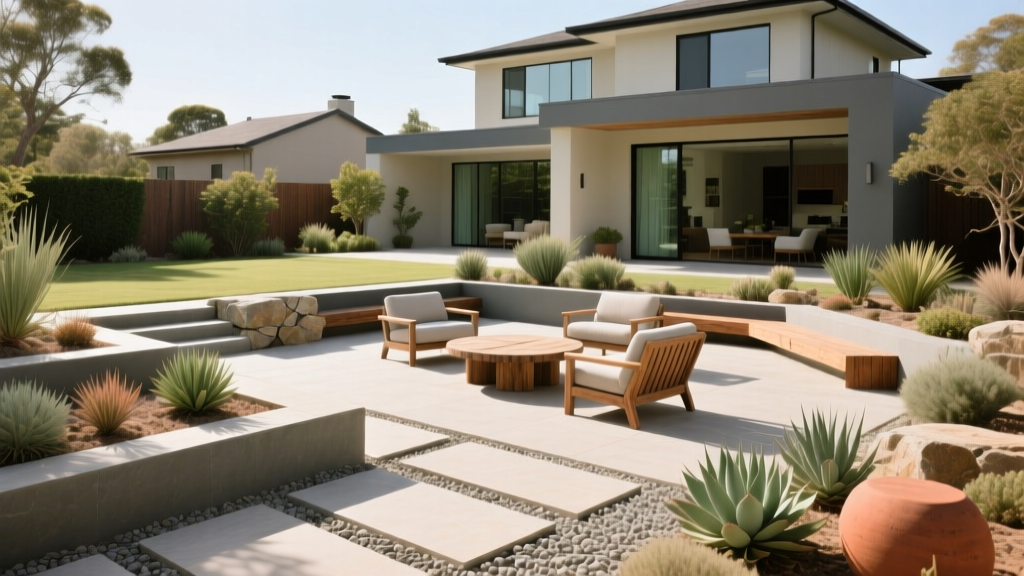
Open Space Garden Planning for Large Yards
The yard is huge—so why does it feel hard to use? You step outside with a cup of coffee and the space looks like a green ocean: lawn from fence to fence, a few lonely shrubs by the house, and that nagging sense that anything you build will either look lost or become a maintenance monster. Large yards are generous, but they’re also unforgiving: small design mistakes get amplified, and “just plant a few things” can turn into a scattered, expensive patchwork.
Let’s plan your open space the way landscape designers do: by shaping outdoor “rooms,” controlling views, and choosing plants that hold up at scale—without turning your weekends into a mowing-and-weeding marathon.
Start with structure: the big moves that make a large yard feel intentional
Design principle #1: Build outdoor rooms with edges, not fences
In a large yard, the biggest problem is often the absence of definition. You don’t need walls; you need edges: planting beds, paths, hedges, and changes in texture that tell your eye where one space ends and another begins.
A practical rule: in a 100 ft x 120 ft backyard (12,000 sq ft), aim to define 3–5 zones. Typical zone sizes that feel comfortable in open space:
- Patio/living zone: 16 ft x 20 ft (fits seating + circulation)
- Dining/grill zone: 12 ft x 14 ft (table for 6 with elbow room)
- Garden/production zone: 20 ft x 30 ft (beds + tool path + compost)
- Open lawn/meadow zone: whatever remains, but keep it as a single clean shape
Notice what’s missing: random beds sprinkled like islands. Islands can work, but only when they are large enough to read as “mass” from a distance (often at least 10 ft wide) and repeated with intention.
Design principle #2: Control sightlines—give the eye a destination
Open space feels calm when there’s a clear visual hierarchy. You want one main view and a couple of secondary moments. Stand at your most-used door or patio and pick:
- A focal point at 40–80 ft out: a small tree, a pergola, a fire pit circle, or a sculpture boulder
- A background anchor: a hedge, mixed shrub border, or grove of trees at the far edge
For depth, layer heights: low (0–2 ft), medium (2–5 ft), tall (8–25 ft). That layering is what makes a big yard look landscaped rather than “planted.”
Design principle #3: Respect human scale with paths and proportions
Paths are your measuring tape. In large yards, an undersized path makes everything feel accidental. Use these workable dimensions:
- Main path: 4 ft wide (two people can walk side-by-side)
- Garden service path: 3 ft wide (wheelbarrow-friendly)
- Stepping-stone trail: 24 in–30 in wide (casual access)
If your yard is sloped, plan a 2% grade away from structures for drainage where possible, and use gentle switchbacks rather than straight runs that encourage erosion.
Layout strategies that keep the “open” feeling (without wasting space)
The “frame and field” layout (designer favorite for large yards)
This approach keeps the center open while making the perimeter do the heavy lifting. Think of it like a painting: a strong frame makes the interior feel more intentional.
How it looks: a wide perimeter planting bed (typically 8–12 ft deep) wrapping 2–4 sides of the yard, plus a big simple central lawn or meadow. Add one purposeful “peninsula” bed that reaches inward to connect the frame to the house or patio.
Why it works: it increases privacy, improves wildlife value, and reduces the amount of fiddly edging you maintain. It also makes the yard look finished from inside the house.
The “diagonal sweep” layout (best for long rectangular lots)
If your yard is a bowling lane (say 60 ft wide x 200 ft long), diagonals are your friend. A diagonal path or planting sweep makes the space feel wider and breaks the relentless straight lines.
Use one primary diagonal move: a curving path from patio to a destination (shed, fire pit, bench) and a broad planting curve that mirrors it. Keep the rest simple.
The “three-zone spine” layout (great for families and mixed uses)
Picture a central “spine” path (4 ft wide) that runs from house to back fence. Off that spine, you create three zones:
- Near zone (0–30 ft from house): social space, lighting, containers
- Middle zone (30–80 ft): flexible lawn, play, open meadow
- Far zone (80+ ft): orchard, cutting garden, wildlife border, shed
This layout is especially renter-friendly on larger properties because it lets you keep improvements concentrated near the home while leaving the far zone lower-maintenance.
Sunlight, wind, and water: the site cues that shape everything
Sun hours map (simple, accurate, and worth the effort)
Before you buy plants, map sun. Most “my hydrangea won’t bloom” problems are actually sun problems. Spend one day taking notes at 9 a.m., 12 p.m., and 3 p.m. Mark areas as:
- Full sun: 6–8+ hours
- Part sun/part shade: 3–6 hours
- Shade: under 3 hours
For edibles, most fruiting crops want at least 6 hours. For many pollinator perennials, 6 hours is the sweet spot; they’ll survive on less but won’t perform as well.
Wind breaks for comfort (not just for plants)
In open yards, wind can make a patio feel unusable. A mixed shrub hedge (8–12 ft tall at maturity) set 15–25 ft upwind of the seating area can reduce wind speed noticeably. The goal isn’t a solid wall; it’s a porous barrier that filters gusts.
“The most effective windbreaks are moderately dense—about 40 to 60 percent porous—because they reduce wind speed over a larger area than a solid barrier.” — USDA National Agroforestry Center (2020)
That “porosity” is exactly why mixed plantings (not a single tight fence line of one shrub) tend to feel better and stay healthier.
Step-by-step: a clean setup process that prevents expensive rework
- Measure and sketch: Use a tape or measuring wheel. Sketch your yard at 1 inch = 10 ft. Mark doors, existing trees, utilities, and the wettest spot after rain.
- Pick your zones: Choose 3–5 zones and assign sizes (example: patio 16x20, garden 20x30, fire pit circle 18 ft diameter).
- Lay it out with paint and stakes: Mark bed lines and paths using marking paint or a hose. Live with it for 7 days and adjust for how you actually walk.
- Install hardscape first: Paths, patio edges, and any irrigation sleeves go in before planting.
- Plant the backbone: Trees and large shrubs first (they take longest to establish), then perennials and grasses, then groundcovers.
- Mulch and edge: Apply 2–3 inches of mulch, keeping it off trunks. Crisp edges make a new garden look finished immediately.
Plant selection at scale: varieties that hold a large yard together
Big yards need plants that read from a distance, repeat well, and don’t collapse into a floppy mess mid-summer. Below are reliable performers (choose based on your region and site; check local invasiveness lists).
Anchor trees (the “ceiling” of the design)
- Quercus rubra (Northern red oak): Long-lived, strong structure, excellent wildlife value. Place 25–35 ft from buildings due to mature spread.
- Acer rubrum ‘October Glory’ (Red maple cultivar): Strong fall color, dependable canopy. Give 20–30 ft clearance.
- Amelanchier × grandiflora ‘Autumn Brilliance’ (Serviceberry): Multi-season interest (flowers, berries, fall color) with a smaller footprint; great near patios. Plant 12–15 ft apart as a loose grove.
Cost note: A 10–12 ft young shade tree often ranges $250–$600 installed depending on region and species; smaller container trees can be $80–$200 if you DIY.
Shrubs that create “walls” without looking stiff
- Viburnum dentatum ‘Blue Muffin’: Dense habit, pollinator-friendly, blue fruit, strong massing shrub. Space 4–5 ft apart for a hedge-like line.
- Hydrangea paniculata ‘Limelight’: Handles sun better than many hydrangeas, big blooms that read from afar. Space 5–6 ft.
- Ilex glabra ‘Shamrock’ (Inkberry holly): Evergreen structure in many climates; good for foundation-to-yard transitions. Space 3–4 ft.
For privacy screening, plan for reality: most shrubs don’t block a view until year 3. Use temporary solutions (trellis panels, tall annuals, large pots) if you need coverage sooner.
Perennials and grasses for repetition (the “fabric” of open space)
- Calamagrostis × acutiflora ‘Karl Foerster’ (Feather reed grass): Upright, tidy, great for lining paths. Space 24–30 in.
- Echinacea ‘Magnus’ (Coneflower): Heat-tolerant, pollinator favorite, strong form. Space 18–24 in.
- Nepeta ‘Walker’s Low’ (Catmint): Long bloom, soft edge plant, drought-tolerant once established. Space 18–24 in.
- Rudbeckia fulgida ‘Goldsturm’ (Black-eyed Susan): Late-summer mass color; excellent in drifts. Space 18 in.
These plants work because they repeat cleanly. In a big yard, repetition is not boring—it’s calming. If you want variety, vary the drift size (groups of 5, 7, 9) rather than swapping species every few feet.
Groundcovers to cut maintenance (and make beds look intentional)
- Thymus serpyllum (Creeping thyme): Great along sunny path edges; aromatic. Space 12 in.
- Carex pensylvanica (Pennsylvania sedge): A soft, mow-free look in part shade; useful under trees. Space 12–18 in.
- Geranium macrorrhizum (Bigroot geranium): Tough, shade-tolerant, weed-suppressing. Space 18 in.
Weed suppression is not magic—it’s coverage. Most groundcovers need 1–2 growing seasons to knit together, so mulch in the meantime.
Comparison table: three layout approaches at a glance
| Layout approach | Best for | Typical bed depth | Maintenance level | DIY-friendly? |
|---|---|---|---|---|
| Frame and field | Open feel + privacy, clean sightlines | 8–12 ft perimeter beds | Low to moderate (mulch + pruning) | Yes (phase in sections) |
| Diagonal sweep | Long rectangular yards, making space feel wider | 6–10 ft sweeping curve beds | Moderate (edging and shaping curves) | Yes (hose-and-paint layout) |
| Three-zone spine | Families, mixed uses, renters prioritizing near-house | Varies; often 4–8 ft near house | Low if far zone is meadow/low-mow | Very (modular zones) |
Real-world scenarios: how this looks in actual large yards
Scenario 1: The “wide-open lawn” yard (12,000 sq ft) with no shade
Problem: It’s sunny (8+ hours), flat, and monotonous. The patio feels exposed and the garden looks like it’s floating in space.
Design move: Frame and field. Install a perimeter bed 10 ft deep along the back and two side fences. Add one peninsula bed that reaches 25 ft toward the patio to visually connect house to yard.
Plant backbone: Three ‘October Glory’ red maples spaced 25 ft apart along the back third for future canopy; drifts of ‘Karl Foerster’ along the path; ‘Limelight’ hydrangeas in repeating clusters of 3–5.
Budget reality: If you mulch 1,000 sq ft of new beds at 3 inches deep, you’ll need about 9–10 cubic yards of mulch. At $35–$55 per cubic yard delivered, that’s roughly $315–$550 just for mulch.
Scenario 2: The rental or “don’t want permanent changes” yard (large, but restrictions apply)
Problem: You want beauty and function, but you can’t install a patio, dig extensively, or plant big trees.
Design move: Three-zone spine with portable structure. Use a 4 ft wide mown path as the “spine” and place improvements near the house: containers, raised beds, and a movable pergola or shade sail.
DIY alternatives:
- Raised beds: Two beds at 4 ft x 8 ft each (easy reach from both sides). Use cedar or metal kits. Place on cardboard to smother grass.
- Stock tank mini-pond: Creates a focal point without digging; place it where it gets 4–6 hours sun for many aquatic plants.
- Large planters (20–24 in diameter): Use for ‘Limelight’ hydrangea (in suitable climates) or dwarf evergreens to create “walls” you can take with you.
Plant picks: Use high-impact annuals and grasses in pots (e.g., Pennisetum alopecuroides cultivars where appropriate) and a repeating palette so it still reads as designed, not temporary.
Scenario 3: The sloped yard with a wet corner and an exposed fence line
Problem: The low corner stays soggy after rain, and the fence line looks stark. Mowing a slope is unpleasant and compacts soil.
Design move: Convert the wet corner into a rain garden-style planting and reduce mowed slope area by adding a sinuous bed that follows contour.
Data to guide you: The U.S. EPA notes that rain gardens are designed to temporarily hold water and allow it to soak in, typically draining within 24–48 hours (EPA, 2023). That drainage window helps reduce mosquito concerns while improving infiltration.
Plant picks for moisture swings: Switchgrass (Panicum virgatum cultivars), blue flag iris (Iris versicolor), and red twig dogwood (Cornus sericea) in the wetter zone; then transition upslope into nepeta, echinacea, and ornamental grasses.
Privacy fix: Along the exposed fence, plant a staggered mixed hedge (two rows). Space shrubs 5 ft apart in-row and offset the second row by 2.5 ft. This looks natural, covers faster, and reduces disease spread compared to a single-species line.
Costs, phasing, and where DIY actually makes sense
Large yards can be expensive if you try to finish everything in one season. Phasing is not a compromise; it’s smart project management.
A practical 3-phase plan
- Phase 1 (Weeks 1–4): Layout, mow lines, simple path, one focal point (bench, fire pit, or small tree). Budget: $300–$1,500 depending on hardscape choices.
- Phase 2 (Months 2–6): Perimeter beds + backbone shrubs + mulch. Budget: $800–$3,500.
- Phase 3 (Next season): Fill perennials/groundcovers, lighting, extra trees, specialty gardens. Budget: flexible, $500–$4,000+.
DIY swaps that save money without looking cheap
- Edging: Instead of metal edging everywhere, do a crisp spade-cut edge (free, but needs refresh). Reserve purchased edging for high-visibility curves.
- Paths: Use compacted gravel instead of pavers. A basic gravel path might run $2–$6 per sq ft, while pavers often land higher once base prep is included.
- Plants: Buy smaller sizes for anything that grows fast (grasses, many shrubs). Spend on specimen trees or a single standout feature.
One money trap: planting too sparsely. You’ll pay later in mulch, weeds, and impulse buys. If you can’t afford full density, plant in strong drifts and leave intentional “mulch gaps” for next year—don’t scatter singles.
Maintenance expectations: what your yard will ask of you
A well-planned open space garden should get easier over time, not harder. Here’s a realistic maintenance rhythm for a large yard that includes beds and a reduced lawn:
- Weekly (growing season): 1–2 hours for bed walk-through, weeding young areas, deadheading, checking irrigation, and quick edging touch-ups.
- Biweekly: Mow (or mow less if you convert part to meadow). If you keep 5,000 sq ft of lawn instead of 10,000 sq ft, you can nearly cut mowing time in half.
- Spring: Cut back ornamental grasses, refresh mulch in high-visibility beds, prune winter damage.
- Summer: Deep water new plantings (especially year 1). The goal is infrequent soaking, not daily sprinkles.
- Fall: Plant trees/shrubs, divide perennials, leaf-manage (mulch mow some leaves into lawn, use the rest in beds).
- Winter: Structural pruning (on appropriate species), plan next phase, service tools.
One key expectation: year one is establishment. The University of Minnesota Extension notes that newly planted trees and shrubs require regular watering until established, often taking one to two years depending on size and conditions (University of Minnesota Extension, 2022). Plan your time accordingly—after establishment, maintenance drops dramatically.
Finishing touches that make open space feel designed
Once the big layout is in place, the polish is straightforward: lighting, seating, and consistent materials. Use 2700K warm landscape lighting for paths and focal points (a few fixtures go a long way in open space). Repeat one or two hard materials—gravel color, fence stain, or planter finish—so the yard doesn’t feel like a catalog of unrelated purchases.
If you only do one “designer move,” do this: stand at your back door and make sure your eye lands on something purposeful—an ornamental tree, a bench under a small canopy, or a simple sculpture in a gravel circle. When the view is composed, the rest of the yard stops feeling like blank acreage and starts feeling like a home landscape that happens to be blessed with space.
Citations: USDA National Agroforestry Center (2020); U.S. Environmental Protection Agency (EPA) (2023); University of Minnesota Extension (2022).