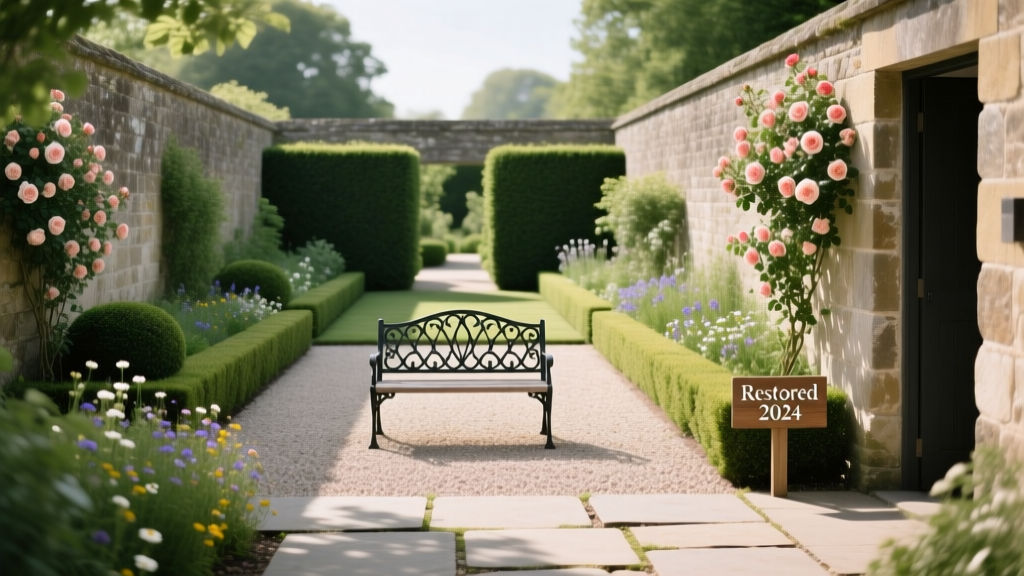
Courtyard Walled Garden Restoration
The gate sticks as you push it. Inside, the courtyard is a quiet box of brick and shade: a cracked slab patio, a tired pot of ivy trying to escape, and a drain that smells faintly after rain. The walls are beautiful, though—old masonry with warmth and texture—yet everything at ground level feels like a problem you inherited. This is the moment most courtyard restorations begin: you can’t “plant your way out” of a layout that doesn’t work, and you can’t furnish your way around bad drainage. The good news is that walled courtyards respond quickly to smart design because they’re small, sheltered, and visually contained. With a clear plan, you can restore structure first, then layer in plants and finishes that make the space feel intentional year-round.
I’m going to walk you through a practical restoration approach I use on real courtyards—measuring, fixing the bones, then designing for light, privacy, and planting depth. We’ll work with specific numbers (so you can actually shop and build), recommend plant varieties that thrive in courtyards, and include DIY alternatives for renters who can’t dig or alter hardscape.
Start With the “Courtyard Audit”: Light, Water, and Use
Before sketching anything, spend one week watching the courtyard like a designer would. Courtyards are microclimates: the walls create wind shelter, amplify heat, and cast hard shadows that move like a sundial.
Measure the space (you’ll use these numbers constantly)
Even small courtyards benefit from accurate dimensions. A typical urban courtyard might be 12 ft x 18 ft (216 sq ft), but I’ve restored everything from a 8 ft x 10 ft nook to a 20 ft x 25 ft shared terrace. Record:
- Overall length/width and door swing clearance
- Wall heights (a 7–9 ft wall changes light dramatically)
- Existing slopes (even a 1%–2% grade matters for drainage)
- Utilities: outdoor tap, drain locations, electrical outlets
Track sunlight hours and reflected heat
Stand in the courtyard at 9am, noon, and 3pm for a few days. Note sun patches. Many walled courtyards get 3–5 hours of direct sun (often in a moving rectangle), even if the sky looks open. This is why “full-sun” plants can struggle and why your wall surfaces matter.
Light is a plant’s fuel, and it’s worth being literal about it. The RHS notes that a plant’s performance is tightly tied to matching it to its light level and exposure (Royal Horticultural Society, 2023).
Confirm where water goes (and where it should go)
If the courtyard has standing water after rain, that’s your first restoration priority. A quick test: pour a 2-gallon watering can near the low point and watch the flow. If water sits longer than 30 minutes on a mild day, plan for one of these:
- Regrading and resetting pavers to a 1% slope toward a drain
- Installing a narrow channel drain (often $120–$300 in materials)
- Switching to permeable gravel with a compacted sub-base (DIY-friendly)
Layout Strategies: Make a Small Box Feel Spacious and Lush
Courtyard restoration succeeds when you stop thinking of it as “a patio with plants” and start treating it as an outdoor room with circulation, storage, and a focal point.
Principle 1: Keep a clear path line (minimum widths that feel good)
Even in tight spaces, movement should be effortless. Aim for:
- 36 inches minimum for a main walkway (comfortable single-file)
- 42–48 inches if two people often pass or you host
- 24–30 inches for secondary “tuck-in” paths to a bench or bin
A simple trick: run the main path slightly off-center. Symmetry can feel stiff in a courtyard; a small shift creates depth and makes the space feel larger.
Principle 2: Build planting volume with “edge depth”
Most courtyards fail because the planting is too thin—tiny pots lined against a wall like a waiting room. Instead, plan a continuous planting zone around two sides with a minimum soil depth. Targets:
- 18–24 inches bed depth for mixed shrubs/perennials
- 24–30 inches depth for a small tree or large shrub
- For containers, use 18–22 inch diameter pots for shrubs; 14–16 inch for perennials
Principle 3: Create one anchor feature (and let it do the talking)
A walled courtyard becomes memorable when there’s one intentional focal point. Pick one:
- A slim wall fountain (sound masks street noise)
- A specimen tree in a large pot
- A bench backed by fragrant climbers
- A simple fire bowl (where allowed)
“Good design is based on evidence of how people use spaces, not on trends.” — Clare Cooper Marcus, landscape architect (Marcus & Francis, 1998)
In practice, this means you decide the courtyard’s primary use first—coffee spot, dining, container vegetables, quiet reading—and then your anchor supports that use.
Three Restoration Scenarios (Real-World Patterns I See Constantly)
Most courtyard projects fall into a few repeatable categories. Match your plan to your constraints instead of fighting them.
Scenario A: The shaded rental courtyard (no digging allowed)
Typical conditions: 8 ft x 12 ft, 2–4 hours sun, strict rules about altering surfaces. The restoration strategy is entirely above-ground:
- Cover ugly paving with interlocking deck tiles (often $3–$7 per sq ft)
- Use tall containers and trellis panels tied to freestanding frames (no wall drilling)
- Add a narrow console table as an “outdoor counter” for potting and serving
Planting focus: shade-tolerant evergreens and foliage textures that read well in low light—think glossy leaves and variegation.
Scenario B: The damp courtyard with failing slabs
Typical conditions: algae on stone, puddles at the door threshold, musty smell. Restoration begins with drainage and slip safety:
- Lift and relay pavers on a corrected slope
- Replace slick stone with textured porcelain pavers (stable, easy to clean)
- Install a narrow gravel strip at wall bases to reduce splashback and staining
This is also where a small water feature can be counterproductive unless drainage is resolved first.
Scenario C: The sunny brick courtyard that bakes in summer
Typical conditions: 6+ hours sun, reflective walls, hot paving. The fix is shade and evapotranspiration:
- Add a pergola or shade sail (DIY kits often $200–$800)
- Increase plant mass with larger containers and a small tree
- Choose light-colored gravel or pavers to reduce heat absorption
A courtyard like this can grow Mediterranean herbs, flowering shrubs, and even compact fruit—if irrigation is consistent.
A Practical Layout Blueprint (Example: 12 ft x 18 ft Courtyard)
Here’s a reliable layout that fits many walled courtyards and feels “designed” without being fussy:
- Define a central sitting pad: a 7 ft x 7 ft area fits a bistro set or two lounge chairs.
- Run a main path: 36 inches wide from the door to the sitting pad, using the cleanest line available.
- Create an L-shaped planting zone: 24 inches deep along the warmest wall and the back wall (beds or trough planters).
- Add vertical structure: install a 6 ft trellis panel on the focal wall or use two freestanding obelisks in large pots.
- Place the anchor: a small tree in a 20–24 inch pot or a wall fountain centered on the back wall.
- Hide utilities: tuck bins behind a slatted screen (18–24 inches deep footprint) and soften with a tall container grass.
For budgeting, assume you’ll spend most on surfaces and large containers first. Plants fill in over time.
Materials and Cost Choices (with DIY Alternatives)
Below is a comparison I use when clients are deciding between a quick refresh and a full restoration. Costs vary by region, but the relative differences hold.
| Element | Budget Option | Mid-Range Option | Higher-End Option | Best For |
|---|---|---|---|---|
| Floor surface (216 sq ft example) | Pea gravel on compacted base ($1.50–$3/sq ft) | Concrete pavers ($4–$8/sq ft) | Porcelain pavers ($10–$18/sq ft) | Drainage fixes, clean look |
| Planters | DIY timber troughs ($60–$120 each) | Fiberglass containers ($90–$250) | Large terracotta/stone ($200–$600) | Renters to long-term owners |
| Vertical screening | Freestanding trellis + zip ties ($40–$120) | Slatted screen panel ($150–$350) | Custom joinery screen ($600–$1,500) | Privacy, hiding bins |
| Irrigation | Hand watering | Soaker hose ($25–$60) | Drip system kit ($80–$200) | Container-heavy courtyards |
One more data point that surprises people: a single quality large container (20–24 inches) with soil can weigh 150–300 lb when saturated. If you’re on a terrace or older slab, confirm load limits or distribute weight with planter feet and spacing.
Plant Selection: Varieties That Thrive in Walled Courtyards
In courtyards, plants must do multiple jobs: look good up close, tolerate reflected heat or shade, and stay proportionate. Think in layers: evergreen structure, seasonal bloom, then ground-level texture.
Evergreen backbone (structure all year)
- Boxwood alternative: Ilex crenata ‘Sky Pencil’ (Japanese holly). Narrow, upright form for tight corners; good for containers; avoids some boxwood pest issues.
- Compact laurel: Prunus laurocerasus ‘Otto Luyken’. Glossy evergreen leaves; handles shade better than many evergreens; use as a low hedge in wider beds.
- Elegant screening: Fargesia robusta ‘Campbell’ (clumping bamboo). Non-running habit makes it more courtyard-friendly; great in large troughs for privacy.
Small trees for courtyards (scale matters)
- Multi-season interest: Amelanchier lamarckii (serviceberry). Spring flowers, edible berries for birds, and strong fall color; tolerates part sun; ideal in a 24-inch container.
- Shaded elegance: Acer palmatum ‘Sango-kaku’ (coral bark Japanese maple). Best in morning sun/afternoon shade; stunning winter stems against brick; protect from hot reflected sun.
- Fragrance and fruit (warmer courtyards): Citrus ‘Meyer’ lemon in a pot. Needs maximum light; plan for overwintering indoors if your climate freezes.
Climbers that soften walls without chaos
- Fragrant and shade-tolerant: Trachelospermum jasminoides (star jasmine). Evergreen in mild climates; thrives with reflected heat; train on wires.
- Reliable bloom: Clematis ‘Étoile Violette’ (viticella type). Tough, long flowering; works well in containers with a shaded root zone.
- For deep shade: Hydrangea anomala subsp. petiolaris (climbing hydrangea). Slow to establish but beautiful; best for owners rather than short-term renters.
Perennials and grasses for texture (courtyard-proof)
- Part shade color: Heuchera ‘Caramel’ or ‘Obsidian’ (coral bells). Great foliage contrast; plant 12–16 inches apart.
- Long bloom in sun patches: Nepeta ‘Walker’s Low’ (catmint). Pollinator-friendly; softens hard edges; space 18–24 inches apart.
- Architectural grass: Calamagrostis ‘Karl Foerster’. Upright, narrow; movement without flopping; space 24 inches apart.
- Evergreen shade groundcover: Epimedium ‘Frohnleiten’. Handles dry shade near walls; delicate spring flowers.
For plant performance, match your watering plan to the reality of containers. The U.S. EPA WaterSense program notes that efficient irrigation and proper scheduling can reduce outdoor water use significantly (U.S. EPA WaterSense, 2024). In a courtyard, a simple drip line on a timer often pays for itself in plant survival alone.
Step-by-Step Restoration Setup (Owner-Friendly Sequence)
Courtyard restorations go smoother when you resist the urge to buy plants first. Use this order so you don’t undo your own work.
- Clear and clean: remove dead pots, weeds, and debris; pressure wash paving if you’re keeping it. (Half-day to 1 day.)
- Fix drainage and slopes: re-lay pavers or install a channel drain if needed; confirm water flows away from the door. (1–3 days DIY; longer with curing.)
- Plan power and water access: decide where hoses, timers, or lighting transformers will live; route neatly along edges.
- Build the structure: install trellises, screens, and large planters before smaller pots. Anchor anything that catches wind.
- Add soil and irrigation: use a high-quality potting mix for containers; for beds, amend with compost. Install drip or soaker hoses now.
- Plant in layers: place the tree first, then evergreens, then perennials/groundcovers; keep plant crowns slightly above soil level.
- Mulch and finish: add 2–3 inches of mulch to beds to reduce splash and evaporation; top-dress containers with fine bark or gravel.
- Light it last: aim for warm LEDs; one uplight on the focal plant and one downlight near the door is often enough.
Maintenance Expectations (So You Don’t Overpromise to Yourself)
A restored courtyard should be easy, not precious. For most courtyard gardens with containers and a small bed, plan on 30–60 minutes per week from April through October, and 15 minutes per week in winter (mostly checking moisture and clearing leaves).
Seasonal task rhythm
- Spring (2–4 hours total): cut back grasses; refresh mulch; feed container plants with slow-release fertilizer; check irrigation lines.
- Summer (weekly): deadhead long bloomers; deep-water containers; watch for aphids in sheltered courtyards.
- Autumn (1–2 hours total): sweep leaves from drains; prune climbers lightly; protect tender pots.
- Winter (as needed): reduce watering; brush snow off evergreens; check that containers aren’t sitting in water.
If you’re time-poor, pick fewer, bigger plants. One small tree, three structural evergreens, and a restrained palette of perennials looks calmer and takes less work than twelve fussy pots.
Budgeting the Restoration: Three Spend Levels That Work
To keep this realistic, here are three common budget paths for a 12 ft x 18 ft courtyard (216 sq ft). Prices vary, but these ranges help you plan.
- Refresh ($500–$1,200): deep clean, new container groupings, trellis screens, fresh soil and mulch, a simple bistro set.
- Restore ($2,000–$6,000): partial surface replacement, improved drainage, 6–10 quality plants including a small tree, drip irrigation kit, lighting.
- Rebuild ($8,000–$20,000+): full hardscape replacement, custom screens/benches, premium planters, built-in irrigation and electrical, mature specimen plants.
DIY alternatives that truly save money (without creating regrets): build timber planters instead of buying large ceramic pots; use gravel and stepping stones instead of full paving; and start with smaller plants but choose good varieties. What doesn’t save money long-term: bargain potting soil, undersized containers, and shade plants placed in the sun patch (or vice versa).
Restoring a courtyard walled garden is really about making the walls work for you—capturing warmth for fragrance, catching light for a focal plant, blocking wind so seating feels comfortable, and controlling water so the space stays clean and usable. Once the layout is right, the planting becomes the satisfying part: you’re not hiding problems anymore, you’re composing a room outdoors. Start with the path and drainage, give yourself one strong anchor, and build lushness at the edges. A courtyard doesn’t need to be big to feel finished—it just needs to be intentional.
Sources: Royal Horticultural Society (RHS), Planting and site considerations, 2023. U.S. Environmental Protection Agency (EPA) WaterSense, outdoor water conservation and irrigation guidance, 2024. Marcus, C.C. & Francis, C., People Places: Design Guidelines for Urban Open Space, Wiley, 1998.