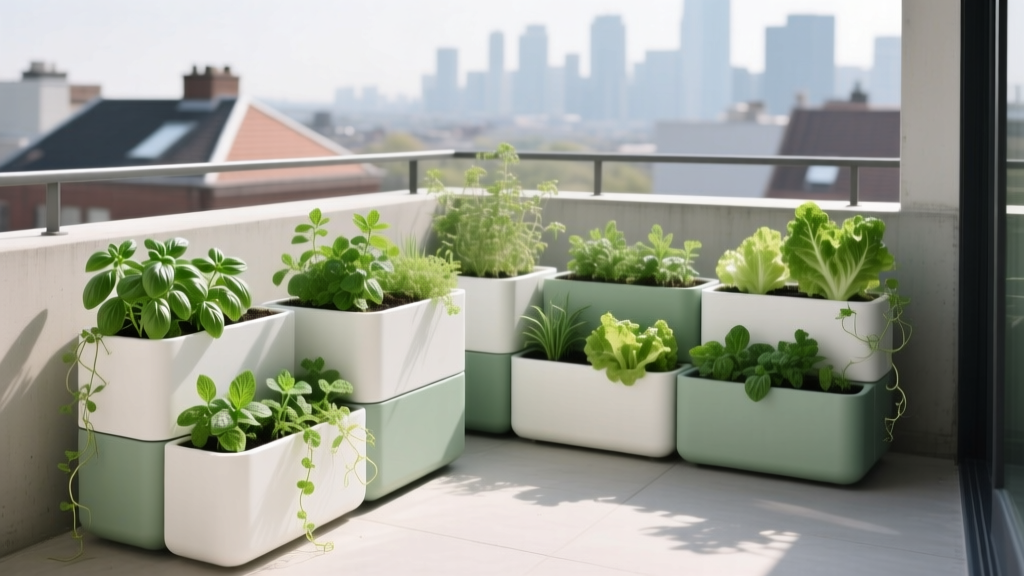
Balcony Self-W Container Garden System
The first time you miss a weekend of watering, it feels personal. You come home on Sunday night, step onto the balcony, and the basil is limp, the tomatoes are sulking, and the potting mix has pulled away from the sides of the containers like a shrinking lakebed. Balconies do that: they’re bright, breezy, and unforgiving. The fix isn’t “try harder.” The fix is a system—one that keeps roots evenly moist, uses vertical space intelligently, and still looks like a designed outdoor room instead of a cluttered plant storage shelf.
This project lays out a self-watering container garden that works on balconies from 4 ft x 8 ft to 6 ft x 12 ft, using a few repeatable modules. You’ll build a layout that respects sunlight patterns, reduces daily chores, and gives you harvests without blocking the view—or violating a rental agreement.
Design principles that make self-watering work on a balcony
Start with load, wind, and water realities
Before you buy a single planter, take 10 minutes to read your balcony like a site plan. Self-watering containers are heavier because they hold a water reservoir. A typical 12-inch self-watering pot can weigh 25–35 lb when saturated; a 24-inch planter can exceed 60 lb. If you’re renting, check your lease and building rules, and when in doubt, keep the heaviest planters close to the building wall (where many balconies are strongest) and avoid clustering all the weight in one corner.
Wind is the other invisible designer. Balconies create wind tunnels; leaves dehydrate faster even if the soil is damp. That’s one reason a steady moisture reservoir matters—but also why you’ll group taller crops behind a permeable windbreak (like a slatted bench or an open trellis) rather than a solid screen that can act like a sail.
Finally: water has to go somewhere. Plan for overflow. Most self-watering containers have a fill tube and an overflow hole; direct that overflow into a saucer or a narrow tray so you don’t drip on neighbors below. In many cities, that’s not just courteous—it’s required by building management.
Think in modules: “anchor,” “rail,” and “vertical” zones
Balcony gardens get messy when every plant is a one-off. Instead, design with three repeatable zones:
1) Anchor planters (floor, against the wall): These are your large self-watering containers (roughly 18–24 inches wide) that hold fruiting plants or a mini-herb cluster. They stabilize the design visually and reduce daily watering to topping up reservoirs.
2) Rail planters (at the perimeter): Rail-mounted or narrow trough-style self-watering planters give you extra growing space without eating floor area. Keep them light—greens and herbs rather than big tomatoes.
3) Vertical supports (trellis or strings): One vertical structure can turn a 6 ft x 10 ft balcony into a highly productive micro-garden by lifting cucumbers, pole beans, or indeterminate cherry tomatoes up and off the floor.
Use sunlight hours as your layout compass
Balcony sun is rarely “full sun all day.” Track direct sun for a day or two (or use a sun-tracking app) and sort your balcony into light bands. For edible crops, these are workable targets:
- 6–8 hours direct sun: tomatoes, peppers, cucumbers, strawberries
- 4–6 hours: basil, parsley, chard, bush beans, compact zucchini varieties
- 3–4 hours: lettuce, arugula, mint (contained), chives
University of Minnesota Extension notes most vegetables need “at least 6 hours of direct sunlight daily” for best production (University of Minnesota Extension, 2020). If your balcony only gets 3–4 hours, don’t fight it—design for greens and herbs, and your self-watering system will still shine because shallow-rooted greens are the first to bolt under moisture stress.
Layout strategies: three proven balcony plans
Layout A: The “Wall Line” for narrow balconies (4 ft x 8 ft)
If your balcony feels like a hallway, keep circulation sacred. Aim for a clear walking lane of 24 inches minimum. Place two anchor self-watering containers (each about 18–20 inches diameter) against the wall, spaced 12 inches apart so leaves have airflow. Add one slim trough planter (24–30 inches long, 6–8 inches wide) along the railing for greens.
Put a trellis panel (about 18 inches wide and 5–6 ft tall) behind one anchor pot to grow something vertical. The trick is choosing a trellis that lets wind pass through—wire grid or bamboo lattice, not a solid sheet.
Layout B: The “Corner Farm” for L-shaped or 6 ft x 10 ft balconies
This plan concentrates weight and irrigation access in one corner, leaving the rest of the balcony open for a chair. Use three anchors in an L: two 20–24 inch self-watering planters and one rectangular self-watering box around 36 in x 16 in. Add a corner trellis that rises to 6 ft and use it for cucumbers or pole beans.
Because all reservoirs are close, topping up is fast. You can also place a slim storage bench nearby to hide fertilizer, pruners, and a watering can for quick reservoir fills.
Layout C: The “Railing Ribbon” for view-first balconies
If your balcony view matters (and it usually does), avoid tall plants at the edge. Keep anchors low and interior; use rail planters for herbs and lettuces that stay below the railing line. Put your vertical crops on the wall side so greenery frames the view rather than blocking it.
One simple rule: nothing taller than 18–24 inches goes on the rail. Tomatoes, even compact ones, belong in an anchor pot with a trellis on the wall side.
Picking the right self-watering container system (and what it costs)
You can buy sleek self-watering planters, build your own sub-irrigated planters (SIPs), or mix both. Here’s how the common options compare for balconies.
| System | Typical size | Reservoir capacity | Best for | Approx. cost (USD) |
|---|---|---|---|---|
| Commercial self-watering pot | 12–20 in diameter | 0.5–2 gal | Herbs, peppers, patio tomatoes | $25–$80 each |
| Self-watering window/rail trough | 24–36 in long | 0.5–1.5 gal | Greens, strawberries, trailing herbs | $20–$60 each |
| DIY SIP (5-gal bucket) | 12 in wide x 15 in tall | ~1 gal | Tomatoes, peppers, eggplant | $8–$20 each (materials) |
| DIY tote SIP | 18–30 gal tote | 3–6 gal | Mixed plantings, high yield in one box | $25–$45 each (materials) |
Budget baseline for a productive balcony system: $150–$350 for 4–6 containers, potting mix, and a trellis. A higher-end, furniture-grade look with branded planters and matching troughs can run $400–$900 depending on size and finish.
One note on potting mix: avoid digging soil from outdoors. Use a lightweight container mix so drainage stays consistent and you don’t overload the balcony. The Royal Horticultural Society emphasizes that good drainage and a quality growing medium are crucial in containers because plants rely entirely on what you provide (RHS, 2021).
Step-by-step setup: build the Balcony Self-W system in a weekend
Plan on 2–4 hours for layout and assembly plus another 1–2 hours for planting. If you’re building DIY SIPs, add time for cutting and fitting parts.
- Map sunlight and wind. Note where you get the strongest direct sun and where gusts hit. Mark the sunniest 3 ft stretch for fruiting crops.
- Choose your modules. For a starter system: two anchor self-watering planters (18–20 in), one rail trough (24–30 in), and one vertical trellis (5–6 ft).
- Dry-fit the layout. Place empty containers first. Keep a 24-inch clear walking lane. Make sure doors swing and you can still sit comfortably.
- Add floor protection. Use a narrow waterproof tray under each anchor or a deck tile platform to keep water and soil contained. If your containers have overflow holes, align them to drain into trays.
- Install the trellis or vertical support. Attach a wall trellis with removable hardware (renter-friendly) or use a freestanding trellis secured to the container.
- Fill reservoirs and wick chambers (if DIY). For DIY SIPs, ensure the wick column is packed firmly so moisture rises reliably.
- Add potting mix. Pre-moisten it lightly so it settles without huge air gaps. Don’t compact hard—roots need oxygen.
- Plant using correct spacing. Tomatoes: 1 plant per 5-gal bucket or 18–20 in pot. Lettuce: 6–8 inches apart. Basil: 8–10 inches apart.
- Water from the top once. This initial soak establishes roots in the upper mix. After that, rely primarily on the reservoir fill tube.
- Mulch lightly. A 1-inch layer of straw or fine bark reduces evaporation—especially important on windy balconies.
Plant selection: varieties that thrive in self-watering balcony containers
Self-watering systems excel when roots have consistent moisture—but container volume still matters. Choose compact, container-bred varieties and match them to pot size.
Fruiting crops (sun lovers, big payoff)
Cherry tomato ‘Sungold’ (indeterminate): High yield and forgiving. Put it in a 5-gallon DIY SIP bucket or a 20-inch self-watering pot with a 6 ft trellis. Indeterminate tomatoes drink heavily; the reservoir reduces blossom-end rot risk that can come from irregular watering.
Patio tomato ‘Tiny Tim’ or ‘Tumbling Tom’: These stay compact and work in a 12–14 inch self-watering pot or rail-adjacent container. Great for the “view-first” layout because they don’t become a leafy wall.
Sweet pepper ‘Lunchbox Red’ or ‘Jingle Bells’: Compact plants, excellent for a 12–16 inch self-watering pot. Peppers like consistent moisture but hate waterlogged roots—self-watering containers help when they’re designed with good aeration.
Cucumber ‘Bush Champion’: A strong candidate for balconies because it’s more compact than vining slicers. Use a 18–20 inch container and a trellis. Cucumbers are fast growers; steady moisture reduces bitterness.
Greens and herbs (high density, fast harvest)
Lettuce ‘Buttercrunch’: Reliable, sweet, and doesn’t demand extreme heat. Plant in a trough at 6–8 inch spacing for a cut-and-come-again harvest.
Arugula ‘Astro’: Quick and productive in cooler shoulder seasons. It appreciates consistent moisture to slow bolting.
Basil ‘Prospera’ (downy mildew resistant): If you’ve ever lost basil overnight to disease, this variety is a smart insurance policy. Give it 8–10 inches and pinch weekly.
Parsley ‘Italian Flat Leaf’: Handles partial sun better than basil and stays tidy in rail planters.
Strawberry ‘Albion’ (day-neutral): Ideal for troughs because it fruits over a long season. Keep crowns above the soil line and let runners spill over the edge for a soft, designed look.
Edible flowers for color (and pollinator pull)
Nasturtium ‘Jewel Mix’: Trails beautifully from rail planters and produces edible blooms. It doesn’t mind slightly leaner soil, which helps keep it from becoming all leaves.
Calendula ‘Pacific Beauty’: Cheerful, compact, and useful for balcony bouquets. Works in a mixed anchor planter with herbs.
“In small spaces, clarity beats quantity. Repeat a few container sizes and plant palettes, and the garden reads as intentional rather than crowded.” — Susan Morrison, landscape designer, as quoted in discussions on small-space design principles (Morrison, 2019)
Three real-world balcony scenarios (and how the system adapts)
Scenario 1: The busy renter with a south-facing 5 ft x 10 ft balcony
You want food, but you travel or work long hours. Use Layout B (Corner Farm) so your routine is simple: check reservoirs twice a week.
Recommended setup: two 20-inch self-watering pots (tomato + pepper), one 36 in x 16 in self-watering box (mixed basil, parsley, lettuce), and a 6 ft corner trellis (cucumber). Expect to top reservoirs every 3–5 days during heat waves and every 5–8 days in mild weather, depending on wind and sun.
Cost target: $250–$450 for purchased planters; $120–$250 if you swap one anchor pot for a DIY 5-gal SIP bucket.
Scenario 2: The windy 4th-floor west-facing balcony (hot afternoons, gusts)
West light is intense and often paired with drying wind. The design move here is a “green baffle”: put taller plants on the wall side and keep the railing low and open.
Recommended setup: one indeterminate cherry tomato in a 5-gal SIP bucket with a trellis, one pepper in a 14–16 in self-watering pot, and two rail troughs for lettuce and arugula (which you can shift into partial shade as summer peaks). Add a lightweight shade cloth that clips to the trellis during heat spikes; even a 30% shade cloth can reduce stress without plunging plants into gloom.
Maintenance note: In high wind, check tie points weekly. Plants can snap at the base if they whip repeatedly.
Scenario 3: The partial-sun balcony (3–4 hours direct light) with strict building rules
If you’re limited on sunlight and can’t drill or hang heavy rail planters, lean into what works: greens, herbs, and strawberries. Use fewer, better containers—each one neat, stable, and easy to remove for inspections.
Recommended setup: three self-watering troughs on the floor against the wall (each 24–30 inches long) planted with lettuce, parsley, chives, and strawberries. Add one compact container of mint, but keep it isolated in its own pot to prevent takeover.
What to skip: large tomatoes. You’ll get leaves and frustration. Put that energy into weekly sowings of greens for continuous harvest.
Budget planning and DIY alternatives that still look designed
If you love the self-watering concept but not the price tag, DIY SIPs are the sweet spot: high performance, low cost, and surprisingly tidy if you standardize materials.
DIY 5-gallon bucket SIP: With two food-grade buckets, a net cup (or perforated container) for the wick, and a fill tube, you can build a reliable self-watering unit for roughly $10–$20 each, depending on what you already have. Paint buckets matte black or charcoal to unify the look, or slip them into inexpensive outer pots for a cleaner finish.
DIY tote SIP (18–30 gallons): Great for renters who want “one big planter” instead of many. Cost is typically $25–$45. A single tote can host one patio tomato plus basil and marigolds, but be disciplined about spacing so airflow stays strong.
Where to spend: quality potting mix and a sturdy trellis. A wobbling support can ruin a season faster than mediocre containers.
Maintenance expectations: what you’ll actually do each week
The promise of self-watering isn’t “no maintenance.” It’s fewer emergencies and more consistency. Plan on 20–40 minutes per week in peak season for a modest balcony system (4–6 containers), plus a slightly longer session every couple of weeks.
Weekly rhythm (growing season)
- Reservoir check and refill: 10–15 minutes, usually 1–2 times per week. In hot spells, you may refill every 2–3 days.
- Prune and tie: 5–10 minutes for tomatoes/cucumbers.
- Harvest: 5–10 minutes (more if you’re cooking).
- Pest scan: 2 minutes—look under leaves for aphids or spider mites, especially in dry wind corridors.
Feeding schedule (because water alone isn’t enough)
Self-watering containers can leach nutrients over time, and heavy feeders (tomatoes, cucumbers) will demand more. Use a slow-release fertilizer mixed into the potting mix at planting, then supplement with a liquid feed every 2–3 weeks once flowering begins. If you prefer organic, worm castings top-dressed monthly plus a diluted fish/seaweed feed works well—but don’t overdo nitrogen or you’ll get lush leaves and fewer fruits.
Seasonal tasks that keep the system clean
Spring: Flush reservoirs once at setup to ensure wicks are functioning and overflow routes are clear.
Mid-summer: Top up mulch and check that fill tubes aren’t blocked by roots. Trim overcrowded herbs to improve airflow.
Fall: Remove spent plants, dump and refresh at least the top 4–6 inches of potting mix in heavy-feeder containers, and sanitize containers with mild soap and water. If you store them outdoors, keep reservoirs empty so freeze-thaw cycles don’t crack plastic.
Winter (optional greens): In mild climates, a sheltered balcony can carry kale, parsley, and chard with slower growth. Self-watering reservoirs are useful here too—plants drink less, so you’ll refill less often.
Finishing touches: making it feel like a designed outdoor room
A balcony garden succeeds when it looks intentional even on a bad plant day. Repeat container colors (two tones max), keep plant heights graduated (low at the edge, higher near the wall), and leave one clear spot for you—because a garden you can sit in is a garden you’ll care for.
If you want a simple designer move: add one non-plant element that matches your interior—an outdoor lantern, a small teak stool, or a slim mat. It signals that the balcony is living space, not just a place where pots happen to live.
Once your self-watering system is in place, you’ll notice the biggest change isn’t only plant health—it’s your relationship to the routine. Instead of daily panic-watering, you’ll do calm, quick check-ins: refill, prune, harvest, enjoy. And when you leave for a long weekend, you won’t come back to that shrinking-lakebed look. You’ll come back to a balcony that kept growing while you were gone.
Sources: University of Minnesota Extension (2020); Royal Horticultural Society (RHS) (2021); Morrison (2019).