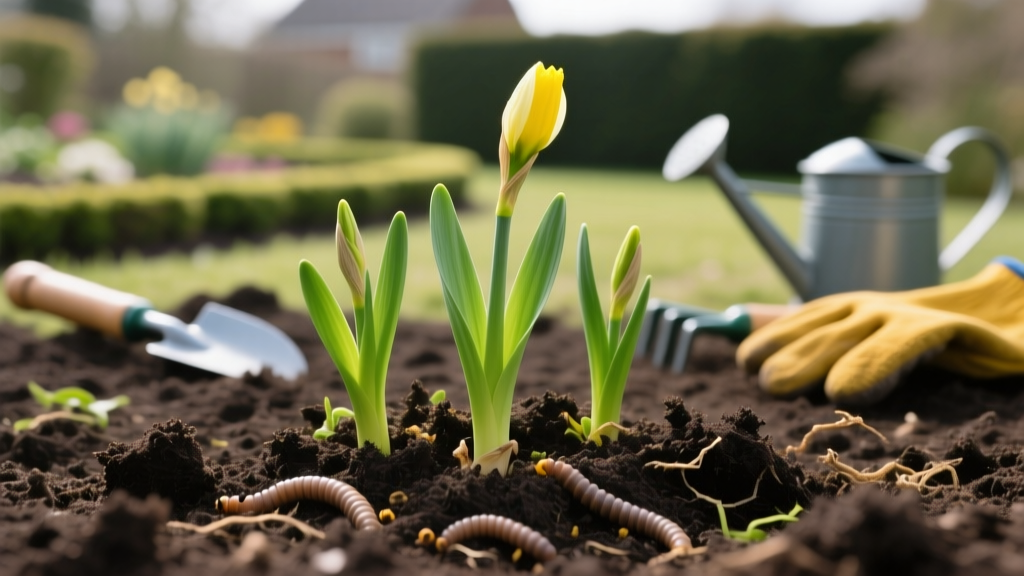
Amending Soil for Thriving Daffodils
Three springs in a row, a neighbor of mine did everything “right” with daffodils—planted bulbs in fall, watered once, waited for the show. Each year the bloom count dropped: first a decent clump, then a few skinny stems, then mostly leaves. When we finally dug a test hole, the truth showed up fast: a tight, gray plug of soil that held water like a sponge for days. The bulbs weren’t “old” or “done.” They were suffocating.
Daffodils (Narcissus) are tough, but they’re not magic. Their success hinges on one unglamorous detail: soil structure. If you get drainage, depth, and nutrition right, daffodils multiply and bloom reliably for years. If you don’t, you get foliage with no flowers, rot, or clumps that slowly shrink. This guide focuses on amending soil the practical way—based on what works in real gardens, not perfect lab conditions.
Start with a quick soil reality check
Before you haul in bags of compost or sand, spend 10 minutes learning what you’re working with. Daffodils want moisture in spring, but they hate sitting wet—especially in summer dormancy.
The 3-minute drainage test (do this before amending)
- Dig a hole about 12 inches wide and 12 inches deep.
- Fill it with water and let it drain completely (this pre-wets dry soil).
- Fill it again and time how long the water takes to drain.
- Good: drains in 1–3 hours.
- Borderline: 3–6 hours (amend and/or plant slightly raised).
- Poor: more than 6 hours (serious amendment and raised planting strongly advised).
Many Extension recommendations emphasize well-drained soil for bulbs; waterlogged conditions are a common trigger for basal rot and bulb failure. Michigan State University Extension notes that bulbs generally require well-drained soils to avoid rotting (Michigan State University Extension, 2020).
Know your soil type without a lab
- Clay-heavy soil: slick when wet, cracks when dry, forms a ribbon when squeezed.
- Sandy soil: gritty, falls apart, drains fast but dries fast.
- Loam: crumbly, holds shape lightly, drains but stays evenly moist.
If you can get a basic soil test, do it. pH and phosphorus levels matter for long-term performance. Many daffodils grow best around pH 6.0–7.0. If your soil is far outside that, amendments won’t reach their full potential.
Soil: the amendment strategy that actually improves bloom and longevity
The goal isn’t just “richer soil.” The goal is air + drainage + steady fertility. Daffodil bulbs need oxygen around them to avoid rot, and they need enough nutrients to rebuild the bulb after flowering.
Target soil structure for daffodils
- Loose to at least 10–12 inches deep so roots can run and water can move.
- Organic matter: aim for roughly 5–10% in mineral soils (enough to improve tilth without turning the bed into a soggy sponge).
- No “bathtub effect”: avoid digging a perfect hole in heavy clay and backfilling with fluffy compost only. Water can collect in the amended pocket and rot bulbs.
“Good soil structure—more than any single fertilizer—determines whether bulbs persist and flower well year after year.” — Royal Horticultural Society guidance on bulbs and soil preparation (RHS, 2023)
How much compost to add (and how to add it)
For most home gardens, compost is the best first amendment—if you use the right amount and mix it properly.
- New bed or major rehab: spread 2–3 inches of finished compost over the area and incorporate it into the top 8–10 inches.
- Already decent soil: 1 inch compost incorporated into the top 6–8 inches is plenty.
Use finished compost, not raw manure. Fresh manures can burn roots and contribute to soft growth and disease.
Clay soil: amend for drainage, not “fluff”
Clay is the most common reason daffodils decline over time. You’ll see lush leaves and disappointing bloom, or bulbs that rot in wet winters.
What works in real clay:
- Compost: 2–3 inches mixed deep (not just a top-dressing).
- Expanded shale, fine pine bark, or leaf mold: add 1–2 inches to improve pore space (bark is especially helpful for long-term structure).
- Plant slightly raised: build the bed up 4–6 inches above surrounding grade if the drainage test failed.
Avoid adding a little sand to clay. Small amounts of sand + clay can behave like mortar. If you’re going to use sand, you’d need large volumes and thorough mixing—impractical in most gardens. In most cases, use compost + structural organic matter instead.
Sandy soil: amend for moisture holding and nutrients
In sandy soil, daffodils can bloom well the first year and then slowly weaken because nutrients leach out and the bulbs don’t rebuild fully.
- Add 2–3 inches compost and incorporate 8–10 inches deep.
- Mulch with 2 inches of shredded leaves or fine bark to reduce moisture swings.
- Feed more consistently (details below) because sandy soils don’t “hold” nutrients.
Raised beds vs in-ground amendment (comparison with real tradeoffs)
If your site stays wet, you have two realistic options: rebuild structure in-ground or switch to a raised bed. Here’s how they compare for daffodils.
| Method | Typical added height / depth | Drainage result | Material volume (per 4' x 8' bed) | Bloom reliability in wet sites |
|---|---|---|---|---|
| In-ground: compost + structural amendment mixed in | Work to 10–12 in deep | Improves if clay isn’t extreme | About 10–16 cu ft compost for a 2–3" layer | Moderate (depends on native soil and slope) |
| Raised bed: imported well-draining mix | 6–12 in raised above grade | High, water sheds away from bulbs | About 16–32 cu ft to fill 6–12" height | High (best fix for consistently soggy yards) |
Comparison analysis: In a chronically wet yard, a 6–12 inch raised bed can outperform deep in-ground amendment because it changes the water table relationship immediately—gravity does the work. In a normal yard with occasional wet spells, working in 2–3 inches of compost and improving structure to 10–12 inches deep is usually enough and far cheaper.
Planting depth, spacing, and timing (where soil amendment meets success)
Soil can be perfect and daffodils can still fail if bulbs are planted too shallow, crowded, or late.
- Timing: Plant when soil cools to about 60°F (16°C) and keeps dropping—often 4–6 weeks before the ground freezes.
- Depth: A good rule is 2–3 times the bulb’s height. For many common daffodils, that’s roughly 6 inches from bulb base to soil surface.
- Spacing: 4–6 inches apart for a full look; wider spacing helps in heavier soils.
Mix amendments throughout the bed, then plant. Don’t put a thick wad of compost only in the planting hole. You want the surrounding soil to drain similarly so water doesn’t pool around bulbs.
Watering: the most common “kindness” that kills bulbs
Daffodils like even moisture during active growth (fall rooting and spring growth), then prefer drier conditions once foliage yellows.
Watering schedule that fits real gardens
- After planting (fall): Water thoroughly once to settle soil. If autumn is dry, give 1 inch of water weekly for 2–3 weeks.
- Spring (growth to bloom): Aim for about 1 inch of water per week from rain/irrigation.
- After bloom: Reduce watering as foliage matures. When leaves yellow, stop regular irrigation unless you’re in severe drought.
Scenario 1: The lawn sprinkler problem
One of the fastest ways to shorten daffodil lifespan is planting them in a lawn that’s watered all summer. Bulbs want summer dryness; constant irrigation invites rot and weakens rebloom.
Fix options:
- Move bulbs to a border bed that stays drier in summer.
- Switch to a lower-water lawn zone (if you control irrigation zones).
- Plant daffodils on a slope or berm where water drains faster.
Light: more sun equals more stored energy (with a few exceptions)
Daffodils perform best with strong spring light. They can handle partial shade, especially under deciduous trees where spring sun is available before leaf-out.
- Best: 6+ hours of sun in spring.
- Acceptable: 3–5 hours (expect fewer blooms over time).
- Tough spots: Dense evergreen shade—foliage grows, flowers fade out.
Scenario 2: Under a big maple (roots + shade)
Under mature trees, the challenge is less about shade and more about competition. Tree roots steal moisture and nutrients.
What works:
- Amend with 2 inches compost worked carefully into the topsoil where possible.
- Water in spring during dry spells: a slow soak to deliver about 1 inch weekly while leaves are green.
- Choose tougher cultivars and plant slightly closer together (4 inches) to get visual impact.
Feeding: support the bulb, don’t force it
Daffodils are not heavy feeders, but they do need enough nutrients to rebuild the bulb after flowering. Overfeeding—especially with high nitrogen—can push leaves at the expense of flowers.
Best fertilizer timing for daffodils
- At planting (optional): If your soil test indicates low phosphorus or potassium, incorporate a balanced slow-release fertilizer into the bed (not directly under bulbs).
- Early spring: Apply a light feeding when shoots are 2–4 inches tall.
- After bloom: A second light feeding can help bulb recharge, especially in sandy soils.
Practical application rates (choose one approach)
- Compost-only approach: Top-dress with 1 inch compost in fall or early spring.
- Granular balanced fertilizer: Use something like 5-10-10 or 10-10-10 at label rates; a common garden rate is around 1–2 lb per 100 sq ft, watered in well. (Always follow your product label.)
Extension guidance commonly emphasizes fertilizing bulbs at planting and/or in spring, while avoiding excessive nitrogen that promotes leaves over flowers. For example, University of Minnesota Extension discusses the importance of proper bulb planting and soil conditions for flowering success (University of Minnesota Extension, 2022).
Common problems tied to soil (and how to fix them fast)
If daffodils aren’t thriving, the symptoms usually point straight to a soil or moisture issue. Here are the most common ones I see.
Troubleshooting: “Leaves but no flowers”
Symptoms: Plenty of foliage each spring, few or no blooms, stems shorter each year.
- Likely causes:
- Too much shade (less than 4–5 hours of spring sun)
- Summer watering (lawn irrigation)
- Nitrogen-heavy fertilizer
- Bulbs overcrowded (not divided for 4–6 years)
- Fix:
- Improve sun exposure if possible (even moving bulbs 6–10 feet to a brighter edge can help).
- Stop summer irrigation over bulbs, or relocate them.
- Top-dress 1 inch compost and use a lower-nitrogen feed in early spring.
- Lift and divide clumps after foliage yellows; replant at 6 inches deep with 4–6 inches spacing.
Troubleshooting: Bulbs rotting or disappearing
Symptoms: Gaps in the planting, mushy bulbs, foul smell when dug, weak or missing shoots.
- Likely causes:
- Poor drainage (water sits longer than 6 hours in the hole test)
- Heavy clay “bathtub effect” around planting holes
- Overwatering in fall or summer
- Fix:
- Switch to a raised bed 6–12 inches high or plant on a berm.
- Amend broadly: incorporate 2–3 inches compost plus 1–2 inches pine bark fines or expanded shale.
- Replant only firm bulbs; discard soft ones.
Troubleshooting: Yellowing leaves early in spring
Symptoms: Leaves emerge, then yellow from tips or overall, growth stalls.
- Likely causes:
- Waterlogged cold soil (roots can’t function well)
- Nutrient deficiency in sandy soil (especially after wet winter)
- Root competition under trees
- Fix:
- Check drainage and correct structure; raise the planting area if needed.
- Apply a light early-spring feeding when shoots are 2–4 inches tall and water in.
- Add 2 inches compost as a top-dress and keep moisture even during active growth.
Troubleshooting: Flopping stems and smaller flowers
Symptoms: Stems bend or flop, flowers smaller than expected, especially after rain.
- Likely causes:
- Too much nitrogen
- Too much shade
- Bulbs planted too shallow (less than 5–6 inches)
- Fix:
- Stop high-nitrogen feeding and switch to compost plus a balanced or lower-N fertilizer.
- Lift and replant at proper depth in fall.
- Thin competing plants that shade daffodils in spring.
Three real-world soil amendment case studies (what I’d do in your shoes)
Scenario 3: Heavy clay backyard with winter puddles
What you see: Daffodils emerge unevenly, some rot, and clumps shrink.
What works: Don’t fight standing water with small tweaks.
- Build a raised bed or berm 6–10 inches high in the daffodil area.
- Use a coarse, well-draining mix: native soil + 2–3 inches compost + 1–2 inches pine bark fines.
- Plant at 6 inches deep, and keep mulch to 2 inches max so the bed warms in spring.
Scenario 4: Sandy front bed that looks great year one, then fades
What you see: Good blooms the first spring, then fewer flowers, thinner stems.
- Incorporate 2–3 inches compost to 10 inches deep.
- Mulch with 2 inches leaf mold to reduce drying.
- Feed lightly in early spring and again after bloom (especially if rain is frequent and nutrients leach).
Scenario 5: Daffodils in a lawn strip along the driveway
What you see: Leaves every year, but blooms dwindle; mower pressure starts early.
- Stop mowing that strip until foliage yellows naturally—usually 6 weeks after bloom.
- Reduce summer irrigation in that zone if possible.
- If lawn watering can’t change, lift bulbs after yellowing and relocate to a border bed with better summer dryness.
Step-by-step: amending and planting a daffodil bed that lasts
- Pick the site: spring sun (aim for 6 hours), avoid low spots that puddle.
- Run the drainage test: if it’s over 6 hours, commit to raising the bed.
- Loosen the soil: work to 10–12 inches deep across the whole area.
- Add organic matter: incorporate 2–3 inches compost (less if soil is already rich and loose).
- Correct structure for your soil:
- Clay: add 1–2 inches pine bark fines/expanded shale
- Sandy: add compost + maintain 2 inches mulch
- Plant bulbs: typically 6 inches deep, 4–6 inches apart, pointed end up.
- Water once deeply: then only as needed in a dry fall.
- Mulch lightly: 1–2 inches to buffer temperature and moisture without keeping the soil cold and wet.
If you remember one principle, make it this: daffodils forgive poor feeding far more than they forgive poor drainage. Build a bed that sheds water, holds moderate moisture in spring, and dries down in summer, and you’ll get the kind of clumps that look better every year—without babying them.
When your soil is right, daffodils become the easiest “perennial” you’ll ever plant. And the nicest part is you’ll know it’s working long before bloom time: in late winter and early spring, the shoots come up evenly, the leaves are thick and upright, and the whole planting looks confident—like it plans to stick around.