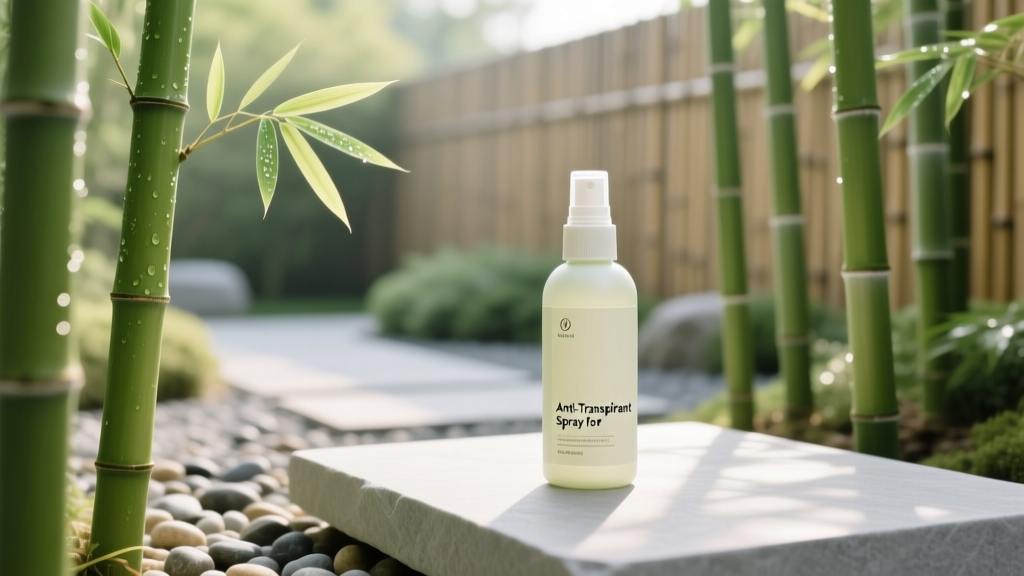
Anti-Transpirant Spray for Bamboo
The call usually comes after a windy weekend: “My bamboo looked fine on Friday, and now the leaves are curling and turning tan. I watered yesterday—what happened?” If you’ve seen bamboo go from lush to crispy in a few days, you’ve witnessed a simple mismatch: the roots can’t keep up with leaf water loss. Hot sun, dry air, and wind pull moisture out of bamboo faster than its roots can replace it—especially right after planting, after dividing a clump, or when a container dries out.
Anti-transpirant sprays (also called anti-desiccants) can be a useful stopgap in those moments. They’re not magic, and they’re not a substitute for correct watering and siting, but used strategically they can reduce water loss long enough for bamboo to re-root, recover from stress, or ride out a weather event. I’ll walk you through exactly when to use them, how to apply them, and what to fix first so you’re not spraying your way around a bigger problem.
One surprising fact: anti-transpirants can reduce transpiration significantly, but they can also reduce photosynthesis and cooling if misused. That’s why the “right time and place” matters more than the brand.
How anti-transpirants work (and why bamboo reacts strongly)
Bamboo leaves lose water through tiny pores called stomata. In heat, wind, or low humidity, water loss accelerates. Bamboo also has a lot of leaf surface area relative to its root mass after planting or division, so it can desiccate quickly.
Most home-garden anti-transpirants fall into three categories:
- Film-forming polymers/resins that create a thin coating over the leaf (the classic “anti-desiccant” approach).
- Wax-based coatings that slow moisture loss but may also reduce gas exchange if applied heavily.
- Stomatal regulators (less common for home use) that influence stomatal opening; these are trickier and not my first recommendation for bamboo.
Research consistently shows anti-transpirants can reduce water loss, but performance varies with product type, weather, and plant condition. Penn State Extension notes that anti-desiccant sprays are primarily useful for reducing winter burn and transplant shock when roots can’t supply enough water (Penn State Extension, 2023). The University of California ANR also discusses how coatings may reduce water loss while potentially affecting leaf gas exchange, so application timing and plant stress level matter (UC ANR Publication, 2019).
“Anti-desiccants can reduce water loss from leaves, but they are not a substitute for proper watering and site selection; their best use is short-term protection during transplanting or severe drying conditions.” — Penn State Extension (2023)
Real-world scenarios: when anti-transpirant spray is actually worth using
Scenario 1: Newly planted bamboo during a heat wave
You planted a 5-gallon bamboo and three days later temperatures jump to 95°F with wind. Roots are still exploring the soil; leaves keep losing water. In this case, a single anti-transpirant application can buy you 7–21 days of reduced water loss (product-dependent), while you keep soil moisture steady.
Scenario 2: Dividing and transplanting a clumping bamboo
After division, you’ve reduced root mass and disturbed fine feeder roots. Even if you watered well, the plant may wilt in afternoon sun for 1–2 weeks. Anti-transpirant can reduce leaf loss and tip burn while new roots form—especially if the division had to be smaller than ideal.
Scenario 3: Container bamboo that dries too fast on a patio
Pots heat up, wind whips around corners, and bamboo transpires heavily. If you can’t move the pot or shade it immediately, a spray can help reduce scorching while you correct the real issue: pot size, watering frequency, and exposure.
Scenario 4: Winter desiccation (evergreen bamboo in cold wind)
In many climates, bamboo leaves keep transpiring on sunny winter days, but frozen or cold soil limits uptake. Anti-desiccants are commonly used on broadleaf evergreens for this reason, and bamboo can benefit in similar conditions—especially in exposed sites.
Before you spray: fix the basics (watering, soil, light)
If bamboo is failing because it’s chronically dry, root-bound, or planted in the wrong spot, anti-transpirant is a bandage. Use it as a short-term tool while you correct the fundamentals below.
Watering: the make-or-break factor
Bamboo is not a bog plant, but it does best with consistent moisture—especially during establishment. The goal is deep watering that wets the root zone, then letting the top inch or two begin to dry before watering again (in ground). Containers are a different story and often need daily attention in summer.
How much to water (with concrete targets)
- New in-ground bamboo (first 6–8 weeks): aim for about 5–10 gallons per plant per watering, 2–3 times per week, adjusting for soil and weather.
- Established in-ground bamboo: deep soak about 1 inch of water per week total (rain + irrigation), increasing to 1.5–2 inches during prolonged heat/wind.
- Container bamboo: water until at least 10–20% drains out the bottom. In hot spells above 90°F, expect watering daily and sometimes twice daily for small pots.
Tip from the field: Don’t guess—check. Push a finger 2–3 inches into the soil. If it’s dry at that depth, water. For containers, lift the pot; light pots need water.
How anti-transpirant fits into watering
Sprays reduce leaf water loss, but they don’t hydrate the plant. If you spray a dry bamboo and skip watering, you’ll often see temporary improvement followed by continued decline. Water first, then spray the same day once foliage is dry and temperatures are moderate.
Soil: moisture-holding, but not suffocating
Bamboo likes a soil that holds moisture evenly yet drains well. Compacted clay can suffocate roots; pure sand dries too fast. The sweet spot is a loam amended for structure.
Practical soil targets
- Organic mulch depth: 2–4 inches (keep mulch 2 inches away from culms to prevent rot issues).
- Compost incorporation at planting: mix 20–30% compost by volume into the backfill if your native soil is poor (avoid creating a “bathtub” in heavy clay—widen the planting area instead).
- Ideal pH range: many bamboos perform best around pH 5.5–7.0.
If your bamboo is in a pot, soil choice matters even more. Use a high-quality potting mix with bark fines and perlite/pumice for drainage. Avoid dense “garden soil” in containers—it collapses and holds too little air.
Light and heat: sun is fine, but wind is the silent killer
Many bamboos tolerate full sun, but full sun + wind + low humidity is when you see rapid leaf edge burn and curling. If you’re in a hot inland climate, afternoon shade can make bamboo dramatically easier to keep attractive.
What to aim for
- Light: bright shade to sun, but in hot regions give 4–6 hours of sun with shade after 2–3 pm.
- Wind protection: a fence, hedge, or windbreak reduces leaf desiccation more reliably than any spray.
- Heat events: above 90–95°F with wind, plan on extra irrigation and temporary shade cloth (30–40% shade) if leaves are scorching.
Feeding: don’t push soft growth when the plant is stressed
Fertilizer won’t fix drought stress, and heavy nitrogen can make things worse by pushing tender growth that loses water fast. For bamboo, think steady and moderate.
A practical feeding schedule
- Spring: apply a balanced slow-release fertilizer (for example, something in the neighborhood of 10-10-10 or a lawn-type formulation used sparingly) when soil warms and new shoots begin.
- Early summer: a light second feeding if growth is pale or slow.
- Late summer/fall: avoid high nitrogen within 6–8 weeks of first frost in cold climates; it can encourage late tender growth.
My rule: if the bamboo is wilting midday or showing crispy tips from drought, hold fertilizer until watering and root function are back on track.
Anti-transpirant products and methods: what actually differs
Not all approaches are equal. Some gardeners reach for anti-transpirant when they’d be better off using shade cloth or simply moving a container out of wind.
| Method | What it does | Typical duration | Best use case | Tradeoffs |
|---|---|---|---|---|
| Anti-transpirant spray (film-forming) | Coats leaf surface to slow moisture loss | ~7–21 days (weather dependent) | Transplant shock, heat/wind event, winter desiccation | Can reduce photosynthesis/cooling if overapplied; needs reapplication after heavy rain or new leaf flush |
| Shade cloth (30–40%) | Reduces solar load and leaf temperature | As long as installed | Heat waves, patio containers, exposed sites | Requires setup; can reduce growth rate if left too long |
| Windbreak (fence, temporary screen) | Reduces drying wind and turbulence | Permanent/seasonal | Windy corners, winter burn sites | Takes space/materials; may change microclimate |
| Deep watering + mulch (2–4 inches) | Stabilizes root-zone moisture | Ongoing | All bamboo, especially new plantings | Overwatering risk in heavy soils if drainage is poor |
A comparison with real numbers: spray vs shade vs “just water more”
Here’s what I see repeatedly in gardens during a hot, windy spell (92–98°F, low humidity) with recently planted bamboo. These numbers aren’t lab results—they’re practical expectations from many seasons of troubleshooting:
- Method A: Increase watering only — You may reduce leaf curl within 24–72 hours, but if wind is strong, leaf tip burn often continues because the plant can’t cool itself fast enough.
- Method B: Water + 30–40% shade cloth — Often the fastest visible improvement; new scorch slows within 1–3 days. Works especially well for containers and west-facing walls.
- Method C: Water + anti-transpirant spray — Leaf curl often improves within 2–5 days; new scorch slows, but existing brown tips stay brown. Most useful when you can’t provide shade or wind protection quickly.
The most reliable combination in harsh sites is water + mulch + wind reduction. Spray is what I add when the weather is extreme or the plant is newly disturbed and I need a short-term safety net.
How to apply anti-transpirant spray on bamboo (step-by-step)
Application is where most people go wrong: they spray at midday, coat the leaves too heavily, or treat a plant that’s already severely dehydrated.
Best timing
- Spray in the early morning when temperatures are 50–75°F and the plant is not heat-stressed.
- Avoid spraying if the next day is forecast above 85–90°F and the bamboo is already wilting—water and shade first.
- Choose a calm day; wind makes coverage uneven and increases drift.
Steps for good coverage without suffocating the plant
- Hydrate first: Water the root zone deeply the day before or the morning of application.
- Clean the foliage if dusty: A gentle hose rinse the day before helps the film adhere evenly. Let leaves dry fully.
- Mix carefully: Follow label rates exactly. More is not better—over-application is a common cause of dull, stressed foliage.
- Spray evenly: Coat both upper and lower leaf surfaces to a light, even sheen—no dripping.
- Let it set: Give it 4–6 hours without rain or overhead irrigation.
- Reassess: If stress conditions continue, consider reapplying after 10–14 days (or per label), especially after heavy rain or when new leaves appear.
Where people get into trouble
- Spraying during peak heat: Leaves can overheat because the coating reduces evaporative cooling.
- Spraying drought-stressed plants and skipping irrigation: The plant still needs water in the root zone.
- Repeated heavy applications: Leads to dull leaves, reduced vigor, and sometimes more leaf drop.
Common problems anti-transpirant can (and can’t) help with
Problem: Leaf curl and “taco leaves” in afternoon
What it usually means: Water stress from heat/wind, or a root system that’s still establishing.
What to do:
- Deep water to moisten soil 8–12 inches down.
- Add 2–4 inches of mulch to stabilize moisture.
- If the next 7–10 days are forecast hot and windy, apply anti-transpirant in the morning.
- For containers, move out of wind and off hot surfaces (concrete can cook pots).
Problem: Brown leaf tips and edges (scorch)
What it usually means: Dry air + inconsistent watering; sometimes excess salts from fertilizer or hard water.
What to do:
- Improve watering consistency; avoid letting pots dry to the point of wilting.
- Leach containers once a month in summer: run water through the pot so at least 20–30% drains out for several minutes to flush salts.
- Use anti-transpirant only as a temporary buffer during extreme weather—don’t rely on it to fix chronic scorch.
Problem: Leaves look gray-green, dull, or “plastic” after spraying
What it usually means: Too heavy a coating, applied in heat, or repeated too frequently.
What to do:
- Stop reapplying.
- Gently rinse foliage after a few days (if product label allows) and focus on shade + watering.
- Next time, apply a lighter coat and spray in cooler conditions.
Problem: Yellowing leaves after stress event
What it usually means: Root stress (too wet or too dry), transplant shock, or natural leaf turnover after a weather swing.
What to do:
- Check soil moisture: soggy soil plus yellowing suggests poor drainage—hold irrigation and improve aeration.
- If soil is dry, water deeply and mulch; anti-transpirant may help if wind/heat continues.
- Hold fertilizer until new healthy growth appears.