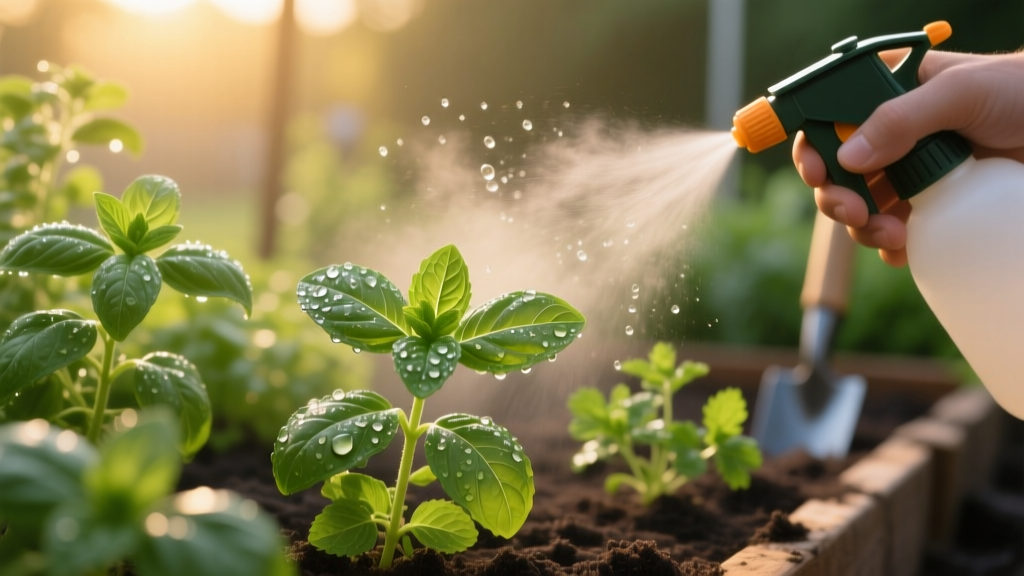
Fulvic Acid Foliar Spray for Herbs
You know the moment: your basil is lush and green in the morning, then by late afternoon it looks tired—leaves a little pale, edges curling, growth stalled. You water, you fertilize, you move the pot… and nothing changes. A surprising fix for this kind of “stuck” herb growth isn’t more NPK at the roots—it’s a tiny, well-timed foliar spray that improves nutrient movement and stress tolerance. That’s where fulvic acid earns its place in a home gardener’s toolkit.
Fulvic acid isn’t a fertilizer by itself. Think of it more like a delivery helper: it can chelate (bind) nutrients, improve uptake, and support plant metabolism—especially when plants are under heat, transplant shock, or micronutrient lockout. Used correctly, a foliar spray can nudge herbs back into active growth fast. Used carelessly (wrong dilution, hot sun, mixed with the wrong products), it can spot leaves or waste your time.
This guide sticks to practical, repeatable methods that work for container herbs, raised beds, and indoor grow setups—along with real troubleshooting for the common “I sprayed and now my leaves look weird” situations.
What fulvic acid does (and what it doesn’t)
Fulvic acid is a fraction of humic substances—smaller molecules than humic acid, more soluble across a wider pH range, and generally more active in foliar applications. When sprayed on leaves, fulvic acid can:
- Improve micronutrient availability (especially iron, manganese, zinc) by chelation.
- Support nutrient movement within the plant during stress.
- Improve tolerance to heat and drought stress (not a magic shield, but a real nudge).
- Help when root uptake is limited (cold soil, compacted mix, overwatered pots).
What it won’t do:
- Replace nitrogen for heavy feeders like basil—plants still need actual nutrients.
- Fix chronic low light indoors.
- Undo salt buildup in a pot without leaching and better watering practices.
Fulvic acid gets discussed in extension and soil science circles mainly as part of humic substances and soil organic matter management. For foliar use, the most important takeaway is this: it’s a “small dose, right timing” input. More is not better.
“Foliar-applied nutrients can correct deficiencies quickly, but rates and timing matter—applications during hot, dry conditions increase the risk of leaf injury.” — University of Minnesota Extension (2023)
Real-world scenarios where fulvic foliar sprays shine
Here are three situations I see constantly with home herb growers—each one is a good candidate for fulvic foliar spray (paired with the right basic care).
Scenario 1: Container basil that stalls in midsummer heat
Symptoms: growth pauses, leaves get slightly lighter green, edges curl, the pot dries fast, and fertilizer “does nothing.” In high heat (above 85°F / 29°C), roots slow down and nutrient uptake gets patchy. A light fulvic foliar spray in the evening can help basil move micronutrients and rebound, but you still need consistent moisture and some shade during peak heat.
Scenario 2: Indoor herbs under LEDs with minor chlorosis
Symptoms: parsley and mint look “washed out,” especially new growth; veins stay greener than the tissue (classic iron/manganese uptake issue). Indoors, the root zone can be cool (65°F / 18°C or lower), slowing uptake even if nutrients are present. Foliar feeding is a fast bridge while you correct root-zone temperature and watering.
Scenario 3: Raised-bed oregano and thyme after heavy rain
Symptoms: growth slows, leaves dull, and you see minor yellowing after a week of soggy soil. Waterlogged soil reduces oxygen, roots underperform, and nutrients get locked up. A gentle foliar spray can help the plant function while you improve drainage and let the bed dry to a healthier rhythm.
Watering: the make-or-break partner to foliar sprays
If you spray fulvic acid on an herb that’s chronically thirsty or constantly waterlogged, you’ll get disappointing results. Get watering steady first—then fulvic acid becomes a useful boost instead of a band-aid.
Containers (most kitchen herbs)
- Water when the top 1 inch of potting mix is dry (finger test beats schedules).
- Water thoroughly until you get runoff; then empty saucers within 15 minutes.
- In summer, small pots may need water every 1–2 days; large pots often every 2–4 days.
Raised beds and in-ground herbs
- Aim for 1 inch of water per week total (rain + irrigation), adjusted for heat/wind.
- Water early morning so foliage dries quickly—this matters because foliar sprays also keep leaves wet for a period.
When to spray relative to watering
For best uptake, spray when plants are hydrated but leaves are dry:
- Water at the soil level in the morning.
- Spray in the evening (or early morning) when temperatures are 55–75°F (13–24°C).
- Avoid spraying within a few hours of overhead watering or rain.
Soil and potting mix: prevent the “lockout” fulvic is often asked to solve
Fulvic acid is frequently used because herbs show deficiency symptoms even when gardeners are “feeding.” That’s often a root-zone problem: pH drift, salt buildup, compacted mix, or poor drainage.
Potting mix targets for common herbs
- Basil, parsley, cilantro: moisture-retentive but airy mix; consistent watering; moderate feeding.
- Thyme, oregano, rosemary, sage: sharper drainage, less frequent watering, lighter feeding.
If you’re growing in containers, refresh or amend potting mix every 12–18 months. Old mix compacts and holds salts—both of which reduce nutrient uptake.
For pH: most herbs prefer slightly acidic to neutral soil. If your soil is drifting far outside pH 6.0–7.0, micronutrients can become less available. A simple soil test is worth it if problems repeat.
Extension programs consistently recommend soil testing before chasing nutrient issues with additives. See the general guidance on soil testing and nutrient management from Penn State Extension (2022) and similar state programs.
Light: fulvic can’t out-spray poor sun
Herbs are sunlight plants. You can foliar spray all season, but if light is insufficient, you’ll still get weak stems, pale leaves, and slow regrowth.
- Outdoor sun herbs (most): target 6–8 hours of direct sun.
- Indoor under LEDs: aim for 12–16 hours of quality light daily, with the light positioned close enough to avoid stretch (follow your fixture’s hanging height; many common panels land in the 12–18 inch range above herbs).
If you’re only getting 3–4 hours of sun on a windowsill, choose mint, chives, and lemon balm—and accept slower growth. Basil typically struggles indoors without strong supplemental light.
Feeding: how to use fulvic foliar spray correctly
This is where most gardeners either overdo it or mix it with incompatible products. Keep it simple. Fulvic acid is best as a low-rate, repeated application—especially during stress windows.
Choosing a fulvic product (what to look for)
- A product labeled for foliar use (not just soil drench).
- Clear concentration information (percentage or grams per liter).
- Clean ingredient list (avoid mystery blends if you’re troubleshooting plant issues).
Because labels vary widely, always default to the label rate if it’s specific to herbs/vegetables. If the label is broad, these home-garden ranges are generally conservative and safer for tender leaves.
Practical dilution rates (home garden ranges)
For most herbs, start low and step up only if plants respond well:
- Gentle maintenance spray: 1–2 mL liquid fulvic concentrate per 1 liter of water (or roughly ¼–½ tsp per gallon, depending on product concentration).
- Stress recovery (heat/transplant): 2–4 mL per 1 liter (about ½–1 tsp per gallon).
If your product is a powder, measure by label guidance; common rates fall around 0.5–1 gram per liter for foliar spraying, but powders vary a lot—don’t guess.
Timing and frequency (what works in real gardens)
- Spray early morning or evening when leaves won’t sun-scald.
- Apply every 10–14 days during active growth, or weekly for 2–3 sprays during stress recovery.
- Stop spraying 3–5 days before harvest if you don’t plan to wash herbs (I wash regardless).
How to spray for best coverage (step-by-step)
- Mix your solution with clean water. If your tap water is very hard, use filtered or rainwater.
- Add fulvic acid to water (not the other way around) and agitate gently.
- Use a fine mist sprayer and coat tops and undersides of leaves until just before drip.
- Let leaves dry with good airflow. Avoid closing herbs into a humid indoor corner right after spraying.
Method A vs Method B: foliar spray compared to soil drench
| Method | Typical home rate | When you’ll notice changes | Best for | Main risk |
|---|---|---|---|---|
| Fulvic foliar spray | 1–4 mL per 1 L water (every 10–14 days) | Often 3–7 days for color/stress improvement | Heat stress, micronutrient chlorosis, slow uptake in cool/wet roots | Leaf spotting if sprayed in sun or too strong |
| Fulvic soil drench | 2–5 mL per 1 L water (every 2–4 weeks) | 1–3 weeks (subtler, longer-term) | Root zone support, transplanting, improving nutrient efficiency in soil | Overwatering containers; leaching nutrients if drenched too often |
Comparison analysis in plain terms: foliar is faster when the plant is “stuck,” but soil drenches are steadier for long-term root performance. If you’re seeing symptoms in new leaves (like iron chlorosis), foliar usually responds quicker because you bypass the root bottleneck.
Common problems (and how fulvic spray fits in)
Let’s talk about the issues herb growers actually face—plus what to do the same day you notice them.
Problem: Pale new growth on basil/parsley (interveinal chlorosis)
What you see: new leaves look yellowish while veins stay greener.
Most common causes: iron or manganese uptake limited by cool roots, high pH, overwatering, or salt buildup.
What to do:
- Check watering: let the top 1 inch dry before watering again.
- Move containers to warmer nights if temps are below 60°F (16°C).
- Spray fulvic at 2 mL per liter in the evening, repeat in 7 days.
- If symptoms persist, use a chelated iron foliar at label rate—fulvic helps, but it isn’t iron by itself.
Problem: Leaf burn or spotting after spraying
What you see: brown freckles, scorched patches, or crispy edges within 24–48 hours.
Most common causes: sprayed in strong sun, too concentrated, mixed with soap/oils, or leaves stayed wet too long in heat.
What to do:
- Rinse foliage with plain water within 2–4 hours if you catch it early.
- Remove the worst leaves; don’t strip more than 20–30% of foliage at once.
- Next time: cut rate in half and spray only below 75°F (24°C), in shade or evening.
Problem: Herbs taste “off” or smell muted
What you see: basil smells less pungent; mint seems bland; cilantro lacks punch.
Most common causes: too much nitrogen, too little light, harvesting too lightly, or plants kept too wet.
Where fulvic fits: it’s not a flavor additive. But if you’re correcting a nutrient imbalance (especially micronutrients), the plant can return to better metabolic function.
What to do:
- Increase light to 6–8 hours sun outdoors or 12–16 hours under LEDs.
- Back off high-N fertilizer for 2 weeks.
- Use a gentle fulvic foliar spray at 1 mL per liter once, then reassess.
Troubleshooting by symptom (quick diagnosis)
Symptom: Droopy leaves midday, pot is wet
- Likely cause: roots oxygen-starved (overwatering, compacted mix).
- Fix today: stop watering; improve airflow; consider repotting with added perlite or a fresh mix.
- Fulvic use: wait until plant is stable; then a 1–2 mL/L foliar spray can support recovery.
Symptom: Tiny leaves and slow regrowth after harvest
- Likely cause: low light or insufficient feeding.
- Fix today: move to more sun; feed with a balanced fertilizer at ½ strength every 7–10 days for basil/parsley.
- Fulvic use: spray every 14 days to improve efficiency, but don’t skip real nutrients.
Symptom: White residue on leaves after spray dries
- Likely cause: hard water minerals or too strong a mix.
- Fix today: wipe or rinse leaves; switch to filtered/rainwater for foliar sprays.
- Fulvic use: keep to the lower end: 1 mL/L.
Mixing fulvic acid with other products (what I do and what I avoid)
Gardeners love “tank mixes,” but herbs have tender foliage. If you’re experimenting, do a jar test and a leaf test first.
Generally compatible (still test first)
- Seaweed/kelp extracts at low label rates
- Most micronutrient foliar feeds (iron, zinc) at label rates
Use caution
- Soaps, oils, neem: can increase leaf burn risk, especially above 75°F (24°C)
- Calcium products: may precipitate depending on formulation and water hardness
Simple safety routine
- Mix a small amount and spray one stem or 3–5 leaves.
- Wait 48 hours.
- If no spotting, proceed with the full plant.
Common herb-specific tips (because not all herbs react the same)
I treat soft, leafy herbs more gently than woody Mediterranean types.
Basil
- Responds quickly to foliar sprays; don’t spray in hot sun.
- Use 1–2 mL/L routinely; 3–4 mL/L only for short stress windows.
Parsley & cilantro
- Prone to micronutrient chlorosis in cool roots; foliar helps.
- Keep spray intervals around 10–14 days; don’t keep leaves wet overnight indoors.
Mint
- Usually vigorous; if mint looks weak, check root crowding and watering first.
- Use low rate: 1 mL/L to avoid leaf spotting.
Rosemary, thyme, oregano, sage
- Less is more. These prefer leaner conditions.
- Use 1 mL/L occasionally, mainly after transplanting or weather swings.
Common problems that look like nutrient issues (but aren’t)
Before you blame “deficiency,” rule these out. Extension resources repeatedly emphasize that misdiagnosis is a top reason gardeners over-fertilize. For practical home diagnostics, see University of California Agriculture and Natural Resources guidance on plant problem diagnosis (UC ANR, 2020) and general nutrient management principles from Penn State Extension (2022).
- Spider mites indoors: stippling, dusty leaves, fine webbing—sprays won’t fix the pest problem.
- Rootbound mint/basil: frequent wilting despite watering—repotting fixes it faster than foliar feeding.
- Cold nights: basil sulks below 55°F (13°C); warmth fixes it.
A practical 2-week fulvic spray plan (that doesn’t overcomplicate your life)
If you want a dependable routine, here’s a schedule I’ve used for mixed herb containers when plants hit a summer slowdown.
- Day 1 (evening, 60–75°F / 16–24°C): Spray fulvic at 2 mL/L until leaf surfaces are evenly coated.
- Day 3: Check for spotting or improvement in color/turgor. Adjust watering if the pot is drying too fast or staying soggy.
- Day 7 (evening): Repeat at 2 mL/L only if plants responded well.
- Day 10–14: Return to a gentle maintenance rate (1 mL/L) or stop if growth is strong again.
Pair that with one sensible feeding at the roots (especially for basil and parsley): a balanced liquid fertilizer at ½ label strength once during the two weeks. That combination—steady root nutrition plus a modest foliar assist—tends to outperform either one alone in home setups.
Once your herbs are back to steady growth, you should be able to lean more on good basics: consistent watering, enough sun, and a light hand with fertilizer. Fulvic acid is the kind of tool you’ll appreciate most when plants are stressed, the weather is swinging, or you’re trying to correct a minor nutrient hiccup without blasting your herbs with heavy salts.
If you only remember one thing: spray lightly, spray cool, and let good growing conditions do most of the work. That’s how fulvic stays a quiet helper instead of another bottle that ends up forgotten on the shelf.