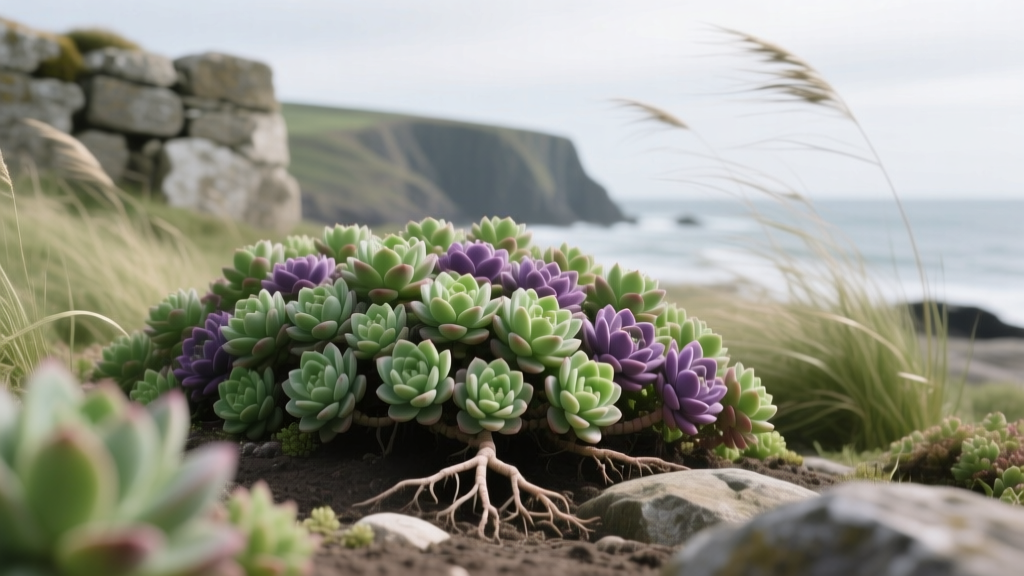
Stabilizing Sedum in Windy Locations
The first time I watched a mature sedum flop in a stiff breeze, I thought I’d overwatered. The plant looked lush, the stems were heavy with buds, and then—one afternoon of gusts—half the clump leaned outward like a slow-motion collapse. Here’s the surprise: sedum can be drought-tough and still fail spectacularly in wind, especially right as it’s putting on weight (buds, flowers, rainwater caught in foliage) or growing in rich soil that encourages soft, tall stems.
If you garden on a hill, an open corner lot, a coastal yard, or anywhere wind funnels between buildings, stabilizing sedum is less about “staking” and more about smart plant culture: how you water, what you feed, how you prune, and how you anchor roots. This guide walks through practical fixes that actually hold up in real yards—along with what I’ve learned the hard way about what doesn’t.
Know what you’re stabilizing: creeping sedum vs. upright sedum
| Sedum type | Common examples | Typical height | Wind issue you’ll see | Best stabilization approach |
|---|---|---|---|---|
| Creeping/groundcover sedum | Sedum spurium, S. album, S. rupestre | 2–6 inches | Mats lift, edges peel back, shallow roots dry out fast | Pin roots with grit/topdress, improve root contact, temporary mesh in extreme sites |
| Upright “autumn joy” type (often now Hylotelephium) | ‘Autumn Joy’, ‘Matrona’, ‘Herbstfreude’ | 18–30 inches | Stems splay open, flop after rain/wind, center breaks | Lean, early pruning, moderate feeding, ring supports, divide/replant |
Most “wind flop” complaints are about upright sedums (Hylotelephium). Creeping sedums usually stay low, but in very exposed sites they can lose root contact as wind dries the top layer or physically lifts loose mats.
Wind doesn’t just push—it's dehydrating and destabilizing
Wind stress is a double hit: it physically moves stems and it strips moisture from leaves and soil. Even though sedum is drought-adapted, constant drying can keep roots shallow and weak. When a storm hits, shallow roots and soft growth are the perfect recipe for splaying and snapping.
“Plants in windy locations experience higher transpiration and often require more frequent irrigation until established, even if they are considered drought tolerant.” — Colorado State University Extension Fact Sheet (2019)
That’s the key phrase: until established. The stabilization game is won in the first season and in early summer growth management.
Light: full sun is good, but wind + shade can make sedum leggy
Upright sedums are sturdier in full sun—think 6–8 hours daily. In partial shade, stems stretch, tissues are softer, and wind has more leverage. If your windy location also has afternoon shade (common on the north/east side of fences), you’ll see flopping much earlier.
Practical fixes for light-related flopping
- Move the plant (best option): relocate in spring when shoots are 2–4 inches tall.
- Open up light: prune overhanging shrubs to add even 1–2 more hours of direct sun.
- Rotate containers: if your sedum is in a pot, rotate weekly so it doesn’t lean toward one light direction and develop a weak base.
In the windiest spots, I’d rather give sedum full sun and a bit of lean soil than half shade and rich soil. Shade plus fertilizer makes “beautiful” growth that behaves like a sail.
Soil: the fastest way to stronger stems is to stop pampering the roots
Sedum stability starts underground. In wind, you want a broad, well-anchored root system. That comes from a soil that drains fast but still lets roots explore rather than sit in a soft, wet pocket.
Target soil conditions (numbers that matter)
- Drainage: water should infiltrate 1 inch in under 30 minutes in a simple percolation test (a small dug hole filled with water).
- pH: sedum tolerates a range, but aim for 6.0–7.5 for best nutrient availability.
- Amendment depth: improve the top 8–10 inches of bed soil for upright sedums so roots anchor broadly.
A soil recipe that resists wind flop
For upright sedum in a bed, I like this blend in the planting zone:
- 60–70% native soil (don’t replace it entirely—roots need to grip the real ground)
- 20–30% mineral drainage material (expanded shale, decomposed granite, or coarse sand—avoid fine play sand)
- 10% compost (yes, only 10%—too much compost makes stems lush and weak)
For creeping sedum on slopes or berms, topdress with 1/2 inch of small gravel or grit after planting. It pins stems, reduces moisture loss at the surface, and encourages rooting along the nodes.
As North Carolina State University Extension notes, succulents generally need sharp drainage and are prone to rot in wet soils—so improving drainage is not just about stability, it’s basic survival. (NC State Extension, 2022)
Watering: drought-tolerant doesn’t mean “never water,” especially in wind
I see two common watering mistakes in windy gardens: people either water too little (so roots stay shallow and plants tip) or water too often (so growth is soft and lush, and stems flop). The right approach is deep, spaced watering that trains roots downward.
Deep-watering schedule that builds anchoring roots
Use this as a starting point, then adjust for your soil and weather:
- Weeks 1–2 after planting: water every 3–4 days, soaking the root zone to about 6 inches deep.
- Weeks 3–8: water every 7–10 days if there’s no rain; aim for roughly 1 inch of water per week total (rain + irrigation).
- After establishment (next season): in beds, water during dry spells only—typically every 2–3 weeks in summer if there’s been no meaningful rainfall.
For containers, the rules change because wind whips moisture out of pots fast. Expect to water a pot in a windy, sunny spot every 4–7 days in summer, sometimes more during heat waves.
How to tell if watering is causing flopping
- Soft, bright-green, tall stems + frequent irrigation = too much water (or too much nitrogen).
- Short, tight growth but plant leans and lifts at the base = too little deep watering early on; roots never anchored.
- Cracking soil + droopy lower leaves on a windy ridge = water is evaporating before soaking in; switch to slow watering (drip or soaker) for 45–60 minutes.
Feeding: the quickest path to floppy sedum is nitrogen
If you want stout sedum stems, keep feeding modest. Sedums are not heavy feeders, and excess fertility—especially nitrogen—produces fast, weak growth. This is one of those “hard-won” lessons: the sedum that looks best in June can be the one that falls apart in August.
Feeding guidelines (simple and safe)
- In-ground plants: topdress with 1/2 inch compost in spring, or use a slow-release fertilizer at 1/2 the label rate.
- Containers: a diluted liquid feed at 1/4 strength once in late spring is usually enough.
- Avoid: high-nitrogen lawn fertilizers drifting into sedum beds—this is a common cause of sudden flopping near turf edges.
University of Minnesota Extension emphasizes matching fertilizer to plant needs and avoiding excessive nitrogen that drives leafy growth at the expense of structure and resilience (University of Minnesota Extension, 2023).
Physical stabilization methods that work (and the ones that disappoint)
Sometimes culture isn’t enough—especially in coastal wind or on exposed slopes. Here are stabilization methods I trust, with real-world expectations.
Method A: Early-season “Chelsea chop” (best for upright sedum)
This is the single most effective, low-fuss way to prevent wind flop in upright sedums.
- When stems reach 8–12 inches tall (usually late May to mid-June), cut back by 1/3 to 1/2.
- Make cuts just above a set of leaves.
- Water normally; do not compensate with extra fertilizer.
Result: shorter plants, thicker stems, more branching. Bloom time may be delayed by 1–3 weeks, but you’ll get a tighter dome that resists wind and heavy rain.
Method B: Ring supports or discreet staking
Use supports early, not after the plant splays. Once stems bend, they rarely straighten cleanly.
- Place a peony ring or low grid support when shoots are 6–8 inches tall.
- Choose a ring 2–4 inches wider than the clump so the plant grows through it naturally.
- In very windy sites, use 3 stakes around the plant and a soft tie in a loose triangle—don’t cinch stems tight.
Method C: Strategic wind buffering (often overlooked)
You don’t need to block all wind; you want to break its force.
- Add a permeable windbreak (lattice, open fencing, shrubs) at a distance of about 2–5 times its height upwind for the best “calm zone.”
- Avoid solid walls right next to plants—wind can tumble over and create turbulence that’s worse than open exposure.
Method D: Gravel mulch + pinning for creeping sedums
- Topdress with 1/2 inch of pea gravel or 1/4–3/8” crushed stone.
- Press loose mats into soil and pin with U-shaped landscape pins every 8–12 inches for the first month in extreme wind corridors.
Comparison analysis: which method buys you the most stability?
| Stabilization method | Typical height reduction | Flop reduction in storms | Time cost | Best use case |
|---|---|---|---|---|
| Chelsea chop (cut back 1/3–1/2 at 8–12") | 6–12 inches less by bloom | High (often prevents splaying entirely) | 10–15 minutes/plant | Upright sedum in open beds, heavy rain + wind areas |
| Ring support installed at 6–8" tall | 0 inches (support, not size control) | Medium–High (contains splay) | 5–10 minutes/plant | Show gardens, where you want full height and neat form |
| Reduce feeding + lean soil | 2–8 inches less (varies) | Medium (stiffer stems) | Low ongoing | Chronic floppers due to rich beds or lawn runoff |
| Windbreak (permeable barrier) | 0 inches | Medium (site dependent) | High (installation) | Coastal yards, hilltops, wind tunnels between buildings |
If I can only pick one tactic for upright sedum, I pick the early cut-back. If I can pick two, I add a ring support installed early.
Three real-world scenarios (and what actually works)
Scenario 1: Coastal garden—salt wind and sandy soil
Coastal wind dries plants constantly, and sand drains so fast that new plantings struggle to anchor. The sedum might not rot, but it can “skate” on shallow roots.
- Do: water deeply every 5–7 days for the first 6–8 weeks to push roots down.
- Do: add 10–20% compost plus mineral grit to improve root hold without making the soil spongy.
- Do: use a permeable windbreak and plant in its protection zone.
- Don’t: over-fertilize to “help it take off”—that creates lush, breakable growth.
Scenario 2: Hilltop or berm—plants look fine until a thunderstorm
On high ground, wind is stronger and rain often comes sideways. Upright sedum heads catch water, becoming top-heavy.
- Do: Chelsea chop at 8–12 inches to shorten and branch stems.
- Do: use a ring support set early if storms are routine in your region.
- Do: keep compost to a light topdress (1/2 inch) rather than digging in large amounts.
Scenario 3: Container sedum on a windy balcony
Balconies create gusty turbulence, and pots dry unevenly. A tall sedum in a lightweight container can literally tip over.
- Do: use a heavier pot (ceramic, thick resin) and aim for a minimum base width of 12–14 inches for tall varieties.
- Do: add weight in the bottom without blocking drainage—use a thin layer (1 inch) of gravel only if the pot has strong drainage holes.
- Do: water thoroughly until it runs out the bottom; repeat only when the top 2 inches of mix are dry.
- Don’t: use saucers that keep roots wet in windy cool weather—rot plus wind is a losing combo.
Common problems in windy sedum plantings (and how to fix them)
Problem: Stems splay outward (“donut shape” in the middle)
Likely causes: rich soil, excess nitrogen, too much shade, no early pruning, heavy rain/wind on tall stems.
Fix:
- Next spring, do a Chelsea chop at 8–12 inches.
- Install a ring support at 6–8 inches tall.
- Stop fertilizing for a season; topdress compost only (1/2 inch).
- If the clump is old and woody, divide in spring into 3–5 pieces and replant with space for airflow.
Problem: Plant leans and the whole crown lifts after gusts
Likely causes: shallow rooting from frequent light watering, loose soil, planting too high, or slope erosion.
Fix:
- Press the crown back into firm soil and topdress with grit (1/2 inch) to pin stems.
- Switch to slow deep irrigation: soaker hose for 45–60 minutes once weekly for a month.
- In severe sites, use 2–3 landscape pins to hold the crown steady temporarily.
Problem: Stems snap at the base during wind + rain
Likely causes: overly tall, lush growth; weak stems; late-season storms; sometimes borer or rot damage weakening tissues.
Fix:
- Cut broken stems cleanly; sedum often resprouts from nodes.
- Reduce irrigation frequency; avoid feeding.
- Plan for next season: Chelsea chop + early ring support.
- Check the base for mushy tissue (rot). If present, improve drainage and avoid wet mulch piled against stems.
Problem: Creeping sedum mats peel up or develop dead patches at the edges
Likely causes: wind desiccation at soil surface, poor soil contact, planting on loose mulch, extreme heat reflection from stone.
Fix:
- Press stems into soil and topdress with 1/2 inch gravel to encourage rooting.
- Water lightly but more often for 2–3 weeks to re-root edges (every 4–5 days in hot, windy weather), then taper back.
- Trim dead sections and replant cuttings; sedum cuttings root easily when pinned down.
Seasonal maintenance plan for wind-stable sedum
Early spring (as shoots emerge)
- Clean up last year’s stems before new growth reaches 2–3 inches.
- Divide crowded upright clumps every 3–5 years for vigor and better airflow.
- Set ring supports early (shoots 6–8 inches).
Late spring to early summer
- Do the Chelsea chop at 8–12 inches if wind flop is a recurring problem.
- Keep feeding modest; skip nitrogen-heavy products.
- Water deeply but not frequently—train roots down.
Late summer to fall
- Enjoy blooms, but watch after heavy rains; gently lift and tuck splayed stems into the ring if needed.
- In hurricane-prone or stormy areas, you can proactively reduce sail by trimming flower heads by 2–4 inches before a major event.
Winter
- In cold climates, leave seed heads for winter interest and cut back in spring.
- Check for frost heave in windy, exposed beds; re-firm lifted crowns on the first mild day above 40°F.
When to replace or rethink sedum placement
Sometimes the site is the problem, not your technique. If you’ve tried leaner soil, early pruning, and support—and the plant still flops badly—consider switching to a shorter cultivar or using sedum where wind can’t get its full leverage. In the most exposed beds, I’ve had better long-term luck with creeping sedums, low grasses, and other ground-huggers that don’t act like sails.
Windy gardens teach you to value sturdy growth over fast growth. Sedum will meet you halfway if you stop pushing it with rich soil and constant water, give it sun, and use one timely cut to shape it. Once you’ve seen a properly managed clump hold its dome through a thunderstorm, you’ll never go back to the “let it grow and hope” method.
Sources: Colorado State University Extension Fact Sheet (2019); NC State Extension (2022); University of Minnesota Extension (2023).