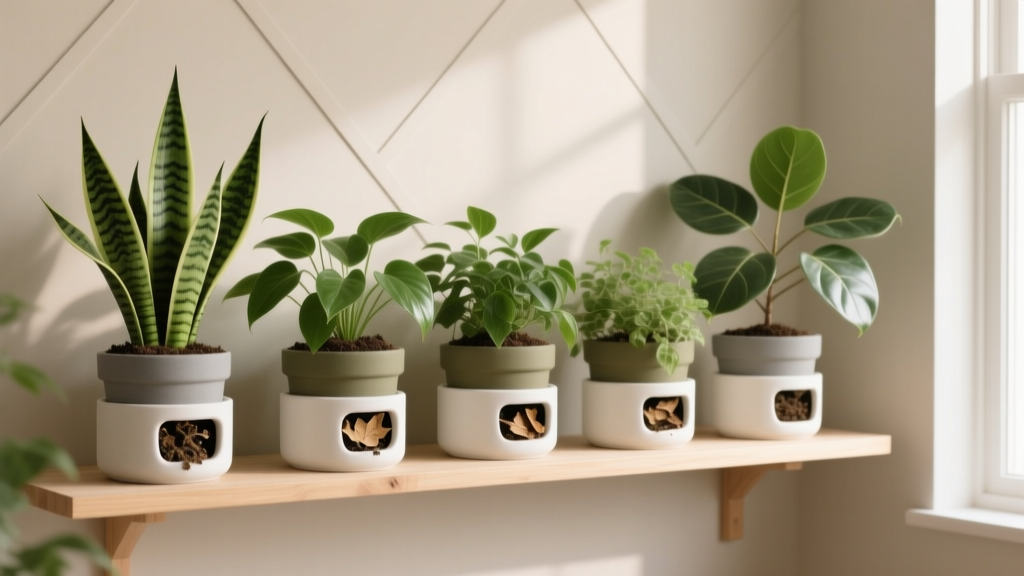
How to Compost Around Indoor Plants Safely
The first time most people try “composting indoors,” it happens by accident: a banana peel tucked into a pot “to feed the plant,” a scoop of backyard compost mixed into a houseplant, or a countertop compost pail that starts smelling like a dumpster two days later. Then the fungus gnats arrive. Leaves yellow. Your living room turns into a tiny biology lab—one you didn’t ask for.
You absolutely can use compost around indoor plants safely. The trick is understanding what compost is (a living, microbe-rich material), what indoor conditions do to it (slow drying, warm temps, limited airflow), and how to apply it in ways that feed plants without inviting pests, rot, or odors.
This guide is written the way I explain it to friends: practical steps, clear numbers, and a few “don’t do what I did” lessons. We’ll cover watering, soil, light, feeding, common problems, and real-life scenarios—so you can compost with confidence inside a home, apartment, or office.
First: What “Composting Around Indoor Plants” Actually Means
There are two safe approaches people tend to blend together:
- Using finished compost as a soil amendment or top-dressing for houseplants (my go-to for most homes).
- Composting in the same room (like vermicomposting or a sealed bokashi bin), then using the finished product later.
What you generally don’t want is burying fresh kitchen scraps directly in houseplant pots. Indoors, the balance of air, microbes, and drainage is different than outdoors, and scraps often ferment, attract pests, and create sour pockets that damage roots.
“Immature compost can compete with plants for nitrogen and may contain organic acids that injure seedlings and roots.” — Cornell Waste Management Institute (2021)
That one sentence explains a lot of the “I tried compost and my plant got worse” stories.
Safety Checklist: Before Compost Goes Near Your Indoor Plants
If you only remember one thing, remember this: indoors, use compost that is finished, screened, and used sparingly.
How to tell compost is finished
- Smell: earthy, like forest soil—not sour, ammonia-like, or “garbage-y.”
- Look: dark brown, crumbly; no recognizable food pieces.
- Heat: stable at room temperature. Outdoor piles often heat above 55–65°C (131–149°F) when active; finished compost does not. (US EPA composting basics describes active compost heat ranges and the importance of finished compost; US EPA guidance, 2023.)
- Time: most backyard compost needs 3–6 months to finish, longer if neglected or in cold seasons.
Screen it (this is pest prevention)
Run compost through a 1/4 inch (6 mm) screen before it comes inside. This removes sticks, clumps, and unbroken bits that can mold or harbor fungus gnat breeding zones.
Pasteurization (optional, but helpful in gnat-prone homes)
If you’ve battled fungus gnats before, consider lightly pasteurizing compost you plan to use indoors:
- Moisten compost so it’s damp like a wrung-out sponge.
- Spread 2–3 inches deep in a foil pan.
- Heat to 71°C (160°F) for 30 minutes (use an oven thermometer).
- Cool completely, then store sealed.
This isn’t always necessary, but it can reduce insect eggs and molds. Don’t bake it hotter “to be safe”—overheating can create unpleasant odors and change the compost chemistry.
Soil: How to Use Compost Without Suffocating Roots
Most indoor plant failures with compost come down to one thing: compost is denser and water-holding compared to many houseplant mixes. Great outdoors. Risky in a pot with limited air exchange.
Mixing ratios that work indoors
Use these as starting points:
- General houseplants (pothos, philodendron, spider plant): 10–20% compost by volume in the potting mix.
- Thirsty, fast growers (peace lily, monstera in bright light): up to 25% compost if the mix also includes chunky aeration (bark/perlite).
- Cacti/succulents: keep compost at 0–10%. They prefer a leaner, faster-draining mix.
- Seedlings/propagation: 0–10% compost; young roots are more sensitive to salts and “hot” compost.
If you’re repotting, blend compost with a base potting mix rather than filling a pot with straight compost. Straight compost compacts over time and can hold too much water for most indoor roots.
Top-dressing (my favorite low-risk method)
If you want compost benefits with minimal risk, top-dress:
- Scratch the top 1 inch of potting mix lightly with a fork.
- Add a thin layer of screened compost: 1/4 to 1/2 inch is plenty for most houseplants.
- Water gently to settle it.
Top-dressing improves microbial life and adds slow nutrition without drastically changing drainage.
A simple comparison: compost use methods indoors
| Method | Typical Amount | Best For | Main Risk | Odor/Pest Risk (1–5) |
|---|---|---|---|---|
| Top-dressing finished compost | 1/4–1/2 inch layer | Routine feeding, low disturbance | Gnats if overwatered | 2 |
| Mixing into potting soil | 10–25% by volume | Repotting, long-term nutrition | Compaction, slow drying | 3 |
| Burying fresh scraps in pots | “A few peels” (not recommended) | Almost never indoors | Rot, odor, flies, root damage | 5 |
| Worm castings (vermicompost) | 1–2 tbsp per 6" pot or 10–20% mix | Gentle feeding, sensitive plants | Overuse can still slow drainage | 1–2 |
Watering: Compost Changes Your Schedule (So Adjust It)
Compost holds moisture. That’s a feature outdoors and a trap indoors if you keep watering on your old schedule.
Rule of thumb: expect 20–40% longer dry-down
In many homes, adding compost means the pot stays wet longer. Instead of watering every 7 days, you might be watering every 10 days. Don’t water by calendar—water by soil feel.
The “knuckle test” and a better test
- Quick test: stick your finger in to your first knuckle (~1 inch). If it’s damp, wait.
- Better test: use a wooden chopstick. Push it to the bottom of the pot, wait 10 seconds, pull it out. If it comes out dark/damp with soil stuck, the bottom is still wet.
How to water compost-amended houseplants safely
- Water slowly until you get 10–20% runoff from the drainage holes.
- Empty the saucer after 10 minutes. Don’t let compost-rich mixes sit in water.
- If the pot is still heavy and cool after several days, increase airflow or light before you water again.
That “cool, heavy pot” is often your earliest warning sign of a root-rot setup.
Light: Stronger Light = Safer Compost Use
Light drives growth, and growth burns water. Compost plus low light is where people get into trouble: the plant isn’t using much water, but the compost keeps the pot wet.
Practical light guidance
- Bright indirect light (near an east or bright north window): compost top-dressing and 10–20% mixing usually behaves well.
- Low light (several feet back from windows): keep compost minimal (1/4 inch top-dress or 10% in mix) and be conservative with watering.
- Under grow lights: aim for 10–12 hours daily if you’re trying to keep plants actively growing through winter. Compost is easier to manage when plants aren’t stalled.
Feeding: Compost Is Food, But Not a Full Meal Plan
Finished compost provides a slow release of nutrients and improves soil biology, but it’s not always enough for heavy feeders like monsteras in bright light or indoor citrus. It also varies widely—one batch can be mild, another surprisingly salty.
For indoor plants, I treat compost as a base, then supplement lightly as needed.
Simple feeding schedule that works
- Spring through early fall: top-dress with 1/4 inch compost every 8–10 weeks.
- Winter (short days): reduce to once every 12–16 weeks or pause if growth stops.
- If using liquid fertilizer too: cut label rate in half and apply every 4 weeks during active growth.
Watch the plant. Compost isn’t a license to “feed, feed, feed.” Overfeeding indoors often shows up as leaf tip burn and crusty soil.
Compost tea indoors: proceed carefully
People love compost tea, but indoors it can be messy and smelly if made incorrectly. If you do it, keep it simple:
- Use 1/2 cup finished compost in a mesh bag per 1 gallon of water.
- Steep 12–24 hours, stir occasionally, then use immediately.
- Don’t store it at room temperature for days; use it the same day to avoid odors and microbial swings.
For many houseplant keepers, worm castings as a top-dress are easier and cleaner than tea.
Common Problems (and Fixes That Actually Work)
If compost use goes sideways indoors, it usually shows up in a few predictable ways. Here’s the troubleshooting I lean on most.
Symptom: fungus gnats hovering around pots
What’s happening: gnats breed in consistently moist organic material—especially top layers that never dry.
Fix it:
- Let the top 1–2 inches dry between waterings (most houseplants tolerate this fine).
- Top-dress with a dry barrier: 1/2 inch of coarse horticultural sand or fine pumice can reduce egg-laying.
- Use yellow sticky cards to catch adults.
- Drench with BTi (mosquito bits) solution weekly for 3 weeks to break the life cycle.
University of Minnesota Extension notes fungus gnats thrive in moist potting media and recommends allowing media to dry and using BTi where needed (University of Minnesota Extension, 2022).
Symptom: sour smell from the pot or compost container
What’s happening: anaerobic conditions—too wet, too compact, not enough oxygen.
Fix it:
- Stop watering until the pot dries significantly.
- Increase airflow (a small fan on low, not blasting the plant).
- If the smell persists, unpot and check roots. Trim black/mushy roots and repot in a chunkier mix with 20–30% perlite or orchid bark.
- For indoor compost bins: add dry carbon (shredded paper/cardboard) and keep moisture like a wrung sponge.
Symptom: white fuzzy mold on compost top-dress
What’s happening: saprophytic fungi decomposing organic matter. Usually harmless, but it signals the surface is staying wet.
Fix it:
- Gently scrape off the top 1/4 inch and discard.
- Switch to a thinner top-dress next time (1/4 inch).
- Water less frequently, and avoid misting the soil surface.
Symptom: leaf tips brown, crusty soil surface
What’s happening: salts building up from compost, fertilizer, or hard water.
Fix it:
- Leach the pot: run clean water through the soil equal to 2–3× the pot’s volume (do this in a sink or tub).
- Let it drain fully.
- Pause fertilizer for 4–6 weeks, and use compost more sparingly.
Symptom: yellowing leaves, slow growth after adding compost
What’s happening: could be overwatering (most common), or nitrogen tie-up if compost wasn’t fully finished.
Fix it:
- Check moisture at the bottom of the pot (chopstick test). If wet, dry it down and increase light.
- If compost was immature and you suspect tie-up, repot into fresh mix and top-dress later with truly finished compost.
- Use a light, balanced fertilizer at 1/2 strength once, then reassess in 2 weeks.
Real-World Scenarios: What Works in Actual Homes
Here are situations I see constantly—plus exactly what I’d do.
Scenario 1: Small apartment, no balcony, you want to recycle food scraps
Best method: bokashi or vermicompost, not an open pile.
- Bokashi: use a sealed bucket; drain “tea” per manufacturer timing and dilute heavily (many recommend around 1:100) before using on non-edible ornamentals. Keep the bucket closed to prevent odor and flies.
- Worm bin: keep bedding damp, not wet. Feed small amounts—think 1–2 cups scraps at a time until the system proves stable.
How to use the product: worm castings are especially indoor-friendly. Top-dress 1–2 tablespoons for a 6-inch pot or mix in 10–20% at repotting.
Scenario 2: You brought “black gold” compost in from the yard and now you have gnats
What likely happened: the compost was fine outdoors but carried gnat eggs, springtails, or simply held too much moisture once it was in a warm home.
My fix plan:
- Stop top-dressing immediately and remove the compost layer if it’s thick.
- Let pots dry to at least the top 2 inches.
- Use sticky traps and BTi weekly for 3 weeks.
- Next time, screen compost to 1/4 inch and consider pasteurizing before bringing it indoors.
Scenario 3: You’re growing herbs indoors and want compost for better flavor and growth
Herbs indoors are tricky because they want bright light and fast drainage. Compost can help, but only in modest amounts.
- Use compost at 10–15% in the potting mix, with plenty of perlite or bark for air.
- Keep lights on 12–14 hours daily if you don’t have a sunny window.
- Harvest regularly to encourage new growth (new growth uses water, reducing soggy soil risk).
If herbs stay leggy and slow, adding more compost won’t fix it—add more light.
Composting in the Same Room as Houseplants: Odor and Pest Control
If your goal is to compost near indoor plants (kitchen corner, laundry room, mudroom), the biggest issue is maintaining a compost system that doesn’t attract fruit flies or smell.
Countertop scrap container rules (so it doesn’t turn nasty)
- Empty every 2–3 days, sooner in hot weather.
- Rinse and dry the container weekly.
- Keep it cool—avoid storing next to a radiator or in direct sun.
- Sprinkle a handful of dry carbon (shredded paper) in the bottom to absorb moisture.
Where to place indoor composting systems
- Keep bins away from direct heat sources.
- Aim for room temperatures around 18–24°C (65–75°F) for stable worm activity and less odor swing.
- Don’t place a worm bin directly under delicate houseplants that hate disturbance—fruit fly outbreaks tend to happen when bins are overfed.
Step-by-Step: Safest Way to Start Using Compost on Indoor Plants
If you’re cautious (smart), start with this process. It’s slow, but it keeps you out of trouble.
- Choose 1–2 “test plants” that are vigorous (pothos, tradescantia, spider plant).
- Use screened, finished compost only.
- Top-dress lightly: 1/4 inch max.
- Adjust watering: wait until the top 1–2 inches are dry.
- Watch for 21 days (gnat life cycles and moisture problems show up fast).
- Scale up gradually once you know how your home’s light and humidity affect dry-down.
This approach may feel conservative, but indoor plant care rewards people who move in small steps.
Feeding vs. Potting Mix Quality: Don’t Ask Compost to Fix Bad Drainage
A last hard-won lesson: compost can’t compensate for a pot with no drainage, a potting mix that has broken down into sludge, or a plant sitting in low light. If you’re adding compost to “revive” a struggling plant, first make sure the fundamentals are right:
- A pot with a drainage hole (non-negotiable for most houseplants).
- A mix with air pockets (add perlite or bark if the mix is heavy).
- Light that matches the plant’s needs.
- Watering based on soil moisture, not habit.
Once those basics are solid, compost becomes a gentle, reliable ally—one that builds resilience over time rather than offering a quick jolt.
If you want the cleanest indoor experience, start with worm castings or a thin top-dress of screened compost, keep the surface on the drier side, and let your plants tell you how fast they’re actually using water in your space. After a month or two, you’ll have your own rhythm—and compost will feel less like a risky experiment and more like a quiet upgrade to your indoor garden.
Sources: Cornell Waste Management Institute (2021); University of Minnesota Extension fungus gnat guidance (2022); US Environmental Protection Agency composting basics and process temperatures (2023).