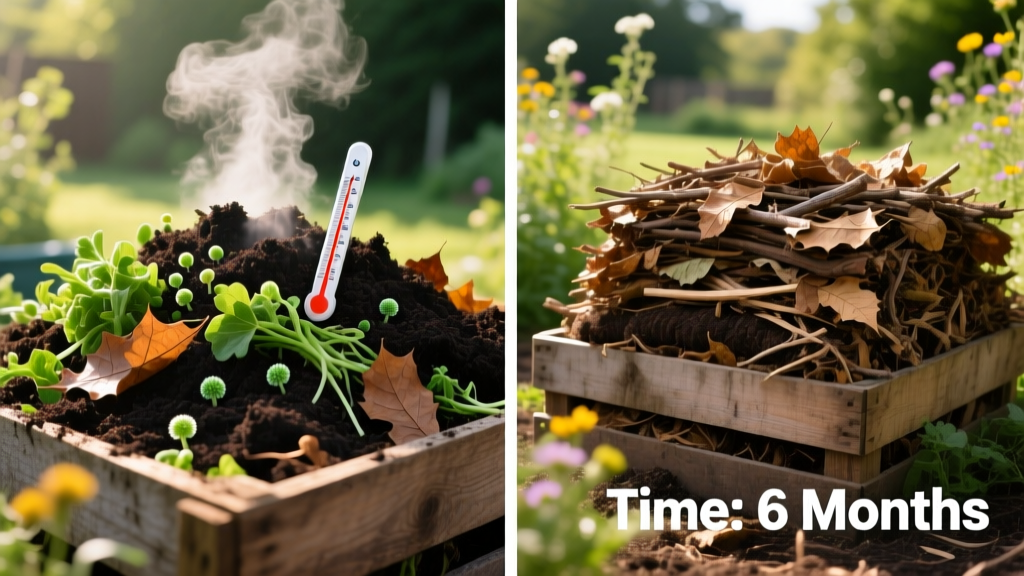
Hot vs Cold Composting: Which Method Produces Better Soil in Less Time
Two Paths to Black Gold
Every gardener needs compost, but not every gardener has the same time, space, or energy to invest. Hot composting produces finished compost in 18-21 days but demands daily attention. Cold composting takes 6-12 months but requires almost no effort. Both produce excellent compost — the choice depends on your schedule and goals.
Hot Composting (Berkeley Method)
How It Works
Microbes generate heat (130-160F) as they break down organic matter. At these temperatures, weed seeds and pathogens are destroyed. The pile must be large enough (minimum 3x3x3 feet) to retain heat and turned regularly to redistribute materials and introduce oxygen.
Materials and Ratios
| Browns (Carbon) | Greens (Nitrogen) | C:N Ratio Target |
|---|---|---|
| Dry leaves, straw, cardboard | Kitchen scraps, grass, manure | 25-30:1 |
| Sawdust (untreated), wood chips | Coffee grounds, fresh clippings | Too much brown = slow |
| Shredded newspaper | Seaweed, green plant trimmings | Too much green = smelly |
Step-by-Step
- Build the entire pile at once (minimum 27 cubic feet)
- Layer greens and browns, water each layer as you build
- Wait 4 days (pile heats to 140-160F)
- Turn every 2 days for 14-18 days total
- Check temperature with a compost thermometer — if below 120F after turning, pile is nearly done
Cold Composting (Passive Method)
How It Works
Add materials as you have them. No turning, no temperature monitoring, no ratios. Nature does all the work. The downside: weed seeds and some pathogens survive. The upside: zero effort.
What to Add
- Kitchen scraps (buried under browns to avoid flies)
- Yard waste (leaves, grass, prunings)
- Cardboard, paper, straw
- Avoid: meat, dairy, oils, pet waste
Comparison
| Factor | Hot Composting | Cold Composting |
|---|---|---|
| Time to finish | 18-21 days | 6-12 months |
| Effort | High (daily turning, monitoring) | Minimal (add and forget) |
| Kills weed seeds | Yes (130F+) | No |
| Kills pathogens | Yes | No |
| Space needed | 3x3x3 feet minimum | Any size |
| Winter operation | Difficult (pile freezes) | Continues slowly |
| Nutrient retention | Higher (fast lock-in) | Some nitrogen loss |
Hybrid Approach
Start a hot pile when you have enough materials. Once finished, maintain a cold pile for daily kitchen scraps. This gives you fast compost for spring planting and a steady supply year-round.
Final Thoughts
Hot composting is a weekend project that produces months of fertilizer. Cold composting is a lifestyle habit that slowly builds soil. Most successful gardeners do both — hot for planned garden prep, cold for daily waste recycling.