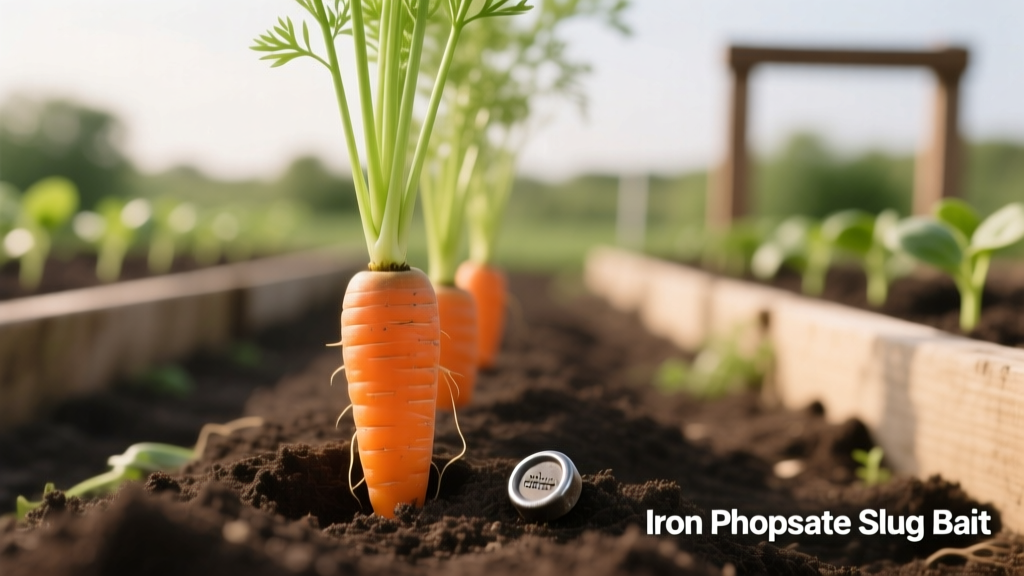
Iron Phosphate Slug Bait Safe for Carrots
You walk out at dawn to check your carrot bed and see it: a neat row of feathery tops, but the soil surface is scribbled with silvery slime trails. You tug one carrot to “see how they’re doing” and find a shallow gouge at the shoulder—like someone took a tiny melon baller to it. That’s classic slug work, and it’s maddening because carrots look fine above ground until they’re suddenly not. The good news is that iron phosphate slug bait is one of the few slug controls that can be both effective and compatible with edible gardens—including carrots—when you use it correctly.
I’ve used iron phosphate baits in carrot beds for years, especially during wet springs when the slugs seem to multiply overnight. But “safe” doesn’t mean “scatter it like birdseed and forget it.” This guide covers what iron phosphate does, how to apply it around carrots, what to watch for, and how to stack the odds in your favor with watering, soil prep, and timing.
Is iron phosphate slug bait actually safe for carrots?
For home gardens, iron phosphate slug bait is widely considered one of the safer options for use around edible crops compared with older-style metaldehyde baits. Iron is a plant nutrient, and iron phosphate baits are designed to target slugs and snails when eaten. After feeding, pests typically stop feeding and retreat, so you often won’t find piles of dead slugs on the surface.
That said, “safe” has boundaries:
- Use only products labeled for edible gardens and follow the label rate.
- Don’t apply directly onto carrot foliage or into the carrot crown area where pellets can lodge.
- Store bait securely; even lower-toxicity baits should be kept away from kids and pets.
Iron phosphate is recommended by multiple university extension programs for slug and snail control in gardens. For example, Oregon State University Extension lists iron phosphate baits as a lower-risk option for slug management in home gardens (Oregon State University Extension, 2019). The University of California Agriculture and Natural Resources notes iron phosphate baits as effective and generally safer around pets and wildlife than metaldehyde, though labels still matter (UC ANR, 2020).
“Iron phosphate baits can be effective against slugs and snails and are considered less hazardous to pets and wildlife than metaldehyde baits when used according to the label.” — UC IPM/UC ANR guidance (2020)
Three real-world carrot-and-slug scenarios (and what actually works)
Scenario 1: Spring rains, heavy soil, and slug damage at the carrot shoulder
This is the most common one: clay or clay-loam soil holds moisture, carrot shoulders sit close to the surface, and slugs rasp shallow cavities into the top third of the root. Iron phosphate bait helps, but you’ll get much better results if you also:
- Keep the bed surface drier at night by watering early (more on that below).
- Mulch lightly with something that doesn’t create a slug hotel (avoid thick, wet leaf mats).
- Pull any boards, stones, or dense weeds right beside the row—prime daytime hiding spots.
Scenario 2: Raised bed carrots with perfect soil… and slugs anyway
Raised beds drain better, but slugs still cruise in from nearby groundcover, compost piles, or the shady side of a fence. In this case, the best strategy is to treat the perimeter rather than pepper the entire bed. A bait “ring” plus a couple of boards used as traps (checked in the morning) can knock populations down fast.
Scenario 3: You used bait, but damage continues
This is where gardeners get discouraged. Usually one (or more) of these is happening:
- You applied bait right before a heavy rain and it broke down quickly.
- The slug pressure is extreme and you need repeat applications.
- Most of the damage is from cutworms or wireworms, not slugs (different symptoms).
- You’re watering in the evening, keeping the bed wet all night.
How to apply iron phosphate bait in carrot beds (step-by-step)
Always follow the label for your specific product, but here’s the practical approach I use for carrots. The goal is to intercept slugs on their nightly route, not to bury pellets where they’ll dissolve or end up stuck to roots at harvest.
- Time it for slug activity. Apply in late afternoon or early evening when slugs start moving. If you irrigate, do it in the morning so the surface is less wet by nightfall.
- Clear hiding places first. Remove dense weeds, low boards, and thick debris within 2–3 feet of the bed edge.
- Apply to soil, not plants. Sprinkle pellets on the soil surface around the row, not on carrot tops. Aim for a light, even distribution.
- Focus on the perimeter and hot spots. Concentrate pellets along bed edges, shady corners, and near irrigation emitters—where slugs congregate.
- Reapply after heavy rain or irrigation events. If you get more than 0.5 inch of rain in a day, check the bait. Many pellets soften and disappear faster in wet conditions.
How much bait? Labels vary, but a common home-garden guidance is to apply thinly—pellets spaced a few inches apart—not in piles. If your label gives a rate per square feet (some do), use that rate rather than guessing. More bait does not equal better control; it often just feeds mold and wastes money.
Iron phosphate vs. other slug controls (with real tradeoffs)
When carrots are involved, you’re balancing effectiveness, food-garden safety, and practicality. Here’s a straightforward comparison of common methods.
| Method | How it works | Effect on slugs | Risks/downsides | Best use case |
|---|---|---|---|---|
| Iron phosphate bait | Ingested bait stops feeding | Good control with repeat timing | Can break down in heavy rain; must follow label | Edible beds, especially perimeter treatment |
| Metaldehyde bait | Neurotoxic to slugs/snails | Often fast kill | Higher pet/wildlife risk; not ideal around kids/pets | Situations requiring strong knockdown (use extreme care) |
| Beer traps | Attracts and drowns slugs | Moderate; can attract more slugs | Needs frequent cleaning; messy; variable results | Small beds, monitoring, light pressure |
| Hand-picking at night | Physical removal | High if consistent | Time-consuming; requires repetition | Short-term “reset” when pressure is high |
| Copper tape/barriers | Discourages crossing | Good prevention | Must be continuous and clean; pricey | Raised beds and containers |
If you want a clean comparison in practice: in my beds, iron phosphate plus morning watering and one weekly night patrol for 2 weeks consistently reduces damage more than beer traps alone. Beer traps catch slugs, but they don’t protect carrots across an entire bed the way perimeter baiting can.
Watering carrots to reduce slug pressure (without stunting roots)
Slugs thrive in consistently damp surfaces. Carrots, on the other hand, do best with steady moisture deeper in the root zone—not a swampy crust on top every night.
Watering schedule that favors carrots (and disfavors slugs)
- Water in the morning, ideally before 10 a.m. Morning irrigation gives the surface time to dry before slugs start moving after dusk.
- Soak deeper, less often once seedlings are established. Aim to moisten soil down about 6 inches for young carrots and 8–10 inches as they bulk up.
- Typical weekly water need: about 1 inch of water per week (rain + irrigation) is a common target for many vegetable beds; adjust for heat, wind, and soil type.
Troubleshooting watering-related issues
Symptom: Carrot roots split.
Likely cause: Dry spell followed by heavy watering or rain.
Fix: Keep moisture even. Use a rain gauge and irrigate to make up the difference instead of alternating drought and flood.
Symptom: Slug damage increases after you “watered more.”
Likely cause: Evening watering keeps the top layer wet all night.
Fix: Switch to morning watering. If you must water late, keep it targeted (drip lines) and avoid wetting the entire bed surface.
Soil prep for carrots that also helps with slugs
Carrots want loose, stone-free soil. Slugs want cover, moisture, and hiding spots. You can improve carrot shape and reduce slug habitat with the same moves.
Best soil conditions (numbers that matter)
- Soil pH: aim for 6.0–7.0 for carrots.
- Bed depth: loosen soil to at least 10–12 inches for full-length varieties.
- Thin seedlings: final spacing of 2–3 inches between plants helps airflow and reduces damp pockets at the surface.
Soil practices that quietly reduce slug pressure
- Keep the surface crumbly, not cloddy. Big clods create slug caves. A light raking after rain (once soil isn’t sticky) can break up shelter spaces.
- Use compost thoughtfully. Compost is great, but thick, wet layers can shelter slugs. Incorporate compost into the top few inches rather than leaving a soggy blanket on the surface during peak slug season.
- Avoid heavy, fresh mulches right at germination. Carrots germinate slowly, often 10–21 days. During that window, you want the surface moist—but not covered in slug-friendly debris.
Light and temperature: carrot growth that outruns pest damage
Carrots do best in full sun, but they’ll tolerate partial sun. Slug issues tend to be worst in beds that stay shaded and damp for long stretches.
- Sun: aim for 6+ hours of direct light for stronger tops and quicker bulking.
- Ideal temps: carrots are happiest in cool conditions, roughly 60–70°F. Slugs are also active in cool, damp weather, which is why spring and fall carrot crops can be slug magnets.
If your carrots are in a dim corner, consider trimming back nearby plants or moving fall carrots to a brighter bed. Faster growth means less time for slugs to scar roots before harvest.
Feeding carrots: avoid fertilizer choices that invite trouble
Overfeeding—especially with high nitrogen—gives you lush tops and disappointing roots. It can also create a denser, damper canopy near the soil surface where slugs like to hide.
Practical feeding approach
- Start with compost: mix in 1–2 inches of finished compost before sowing if your soil is low in organic matter.
- Go easy on nitrogen: if using an organic fertilizer, choose something balanced or slightly lower in N. Follow bag rates; more is not better.
- Don’t fertilize heavily mid-season unless a soil test indicates a need.
If you’ve been feeding with something nitrogen-heavy and your carrot tops are thick like parsley but roots are thin, ease off. Better root development also means less surface cracking and fewer entry points for pests.
Common carrot problems that look like slug damage (and how to tell)
Slugs leave irregular rasp marks, shallow cavities, and slime trails. But not every root blemish is a slug. Correct ID saves a lot of wasted effort.
Slug damage
- What you see: shallow, scooped-out areas; rough rasping; slime trails on soil or mulch.
- Where: carrot shoulder near soil line, or on exposed root tips in loose soil.
- Most common when: cool, wet weather; dense groundcover; evening watering.
Wireworms
- What you see: narrow, round holes bored into the carrot, sometimes deeper than slug scars.
- Where: anywhere along the root.
- Clue: no slime trails; damage looks like drilling rather than rasping.
Cutworms
- What you see: seedlings severed at the base, often overnight.
- Where: at soil line on young plants.
- Clue: plants topple; not root gouges on mature carrots.
Troubleshooting: symptoms and fixes (fast, specific, realistic)
Problem: “I sprinkled iron phosphate, but I still see slugs the next day.”
What’s happening: Iron phosphate often causes slugs to stop feeding and retreat. You may still see some activity while the population declines.
Fix:
- Give it 3–5 days and reassess damage, not just slug sightings.
- Reapply if pellets are gone after rain or heavy irrigation (follow label).
- Add a second tactic for 7–10 days: night hand-picking or board traps to reduce adults fast.
Problem: “My pellets disappear overnight.”
What’s happening: Rain, irrigation, and sometimes sowbugs/earwigs will break down or move pellets.
Fix:
- Switch to perimeter placement and sheltered spots (under plant canopy edges, not in open runoff zones).
- Apply on a dry afternoon when you expect at least 24 hours without heavy rain if possible.
Problem: “I’m finding bait pellets mixed in when I harvest carrots.”
What’s happening: Pellets were applied too close to crowns or incorporated into soil by cultivation.
Fix:
- Keep bait on the surface and away from the row center—think “guard ring,” not “seasoning.”
- Avoid hoeing pellets into the bed; cultivate first, then bait.
Problem: “Carrot tops look fine, but roots are scarred and ugly.”
What’s happening: Slugs often feed on the root shoulder just below the surface where you won’t notice until harvest.
Fix:
- Start control early—when carrots are pencil-thick, not when they’re nearly ready.
- Gently hill a thin layer of soil over exposed shoulders to reduce access (don’t bury crowns deeply).
Best practices that make iron phosphate work better (stacking your odds)
Iron phosphate is a tool, not a magic spell. Here’s the “master gardener” routine that brings the best results in carrot beds.
1) Monitor like you mean it
- Check at dusk or after dark with a flashlight for 5 minutes twice a week during wet spells.
- Look for slime trails and fresh rasping on exposed shoulders.
2) Combine baiting with habitat cleanup
- Pull weeds and thin carrots to improve airflow.
- Lift boards, pots, and edging near the bed—anything that stays damp underneath.
3) Water for carrots, not for slugs
- Morning watering, deeper soak, less nighttime surface moisture.
- Use drip lines or soaker hoses to avoid wetting the entire bed surface.
4) Time applications to pressure
Slug pressure usually spikes in cool, wet stretches—often spring and early fall. I typically apply bait when:
- I see fresh slime trails 2 nights in a row, or
- Weather forecast calls for several damp days and carrots are at the “baby root” stage.
Common sense safety notes (especially with kids and pets)
Even when a bait is considered lower risk, it should still be handled carefully:
- Keep bait in its original container and store it up high and dry.
- Don’t broadcast pellets on paths where pets investigate.
- Clean up spills immediately.
Extension guidance consistently emphasizes reading the label and using baits responsibly. Oregon State University Extension (2019) and UC ANR/UC IPM (2020) both point home gardeners toward iron phosphate as a generally safer option than metaldehyde, but neither suggests careless use—and neither should you.
A simple, reliable slug plan for carrots (my go-to routine)
If you want a plan you can actually follow without turning your garden into a chemistry set, this is it:
- Before sowing: loosen soil 10–12 inches, remove clods and stones, mix in 1–2 inches compost.
- At germination: keep surface evenly moist, but water early. Avoid thick mulch until seedlings are up and thinned.
- When seedlings are 2–3 inches tall: thin to 2–3 inches apart; clear weeds and debris.
- At first sign of slime trails: apply iron phosphate bait around the perimeter and known hiding zones, late afternoon.
- For the next 10 days: do two quick night checks; hand-pick obvious slugs and reset any board traps.
- After heavy rain (>0.5 inch): inspect and reapply bait if needed (per label).
Carrots reward steadiness. If you stay on top of moisture, keep the bed surface from staying wet all night, and use iron phosphate bait as a targeted barrier instead of a blanket, you can grow clean, sweet roots even in slug-heavy neighborhoods. The first time you harvest a full row and don’t find those ugly shoulder gouges, you’ll realize it wasn’t about one product—it was about timing, placement, and making the bed a little less welcoming to the midnight munchers.