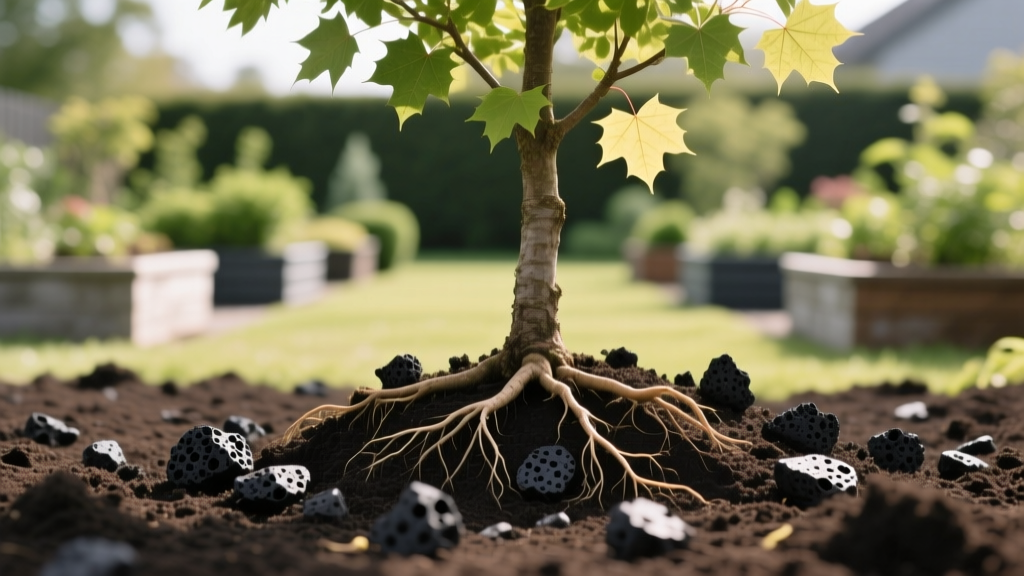
How Biochar Improves Soil for Maple Trees
You plant a maple, water it faithfully, and it still sulks: pale leaves in July, crispy edges by August, and a trunk that barely seems to grow. I’ve seen this play out countless times—especially in newer subdivisions where the “soil” is really compacted subsoil with a thin layer of topsoil on top. Here’s the surprising part: you can do everything “right” above ground and still lose the fight below ground if your soil can’t hold water, air, and nutrients in the root zone. Biochar, used correctly, can be a quiet game-changer for maples because it improves soil structure and nutrient-holding capacity without acting like a harsh fertilizer.
That said, biochar is not magic dust. If you dump raw biochar into a planting hole and walk away, you can actually make things worse for a season. The wins come when you match biochar to your soil, charge it with nutrients, and apply it at practical rates. This is the “master gardener” version—what works in real yards with real budgets and real maples.
What biochar actually does in maple tree soil (and what it doesn’t)
Biochar is charcoal made for soil. It’s porous, stable carbon that can last for decades. Think of it like a long-lived sponge-and-condo complex for water, nutrients, and microbes. Those pores hold moisture and provide habitat for beneficial organisms, while the surfaces hold onto nutrients so they don’t wash away.
University-backed field research supports the broad idea that biochar can improve soil physical properties and nutrient retention, but results depend heavily on soil type, biochar source, and application rate. For example, Cornell Cooperative Extension notes that biochar can increase water-holding capacity and cation exchange capacity (CEC) in certain soils, especially sands, but advises careful use and “charging” to avoid nutrient tie-up (Cornell Cooperative Extension, 2022). Washington State University Extension also emphasizes that biochar performance varies and that it’s most useful as a soil conditioner rather than a fertilizer replacement (WSU Extension publication, 2020).
“Biochar is best thought of as a soil conditioner—its biggest benefits are improved nutrient retention and water-holding capacity, particularly in coarse-textured soils.”
—Cornell Cooperative Extension (2022)
What it doesn’t do: it won’t fix a buried root flare, girdling roots, or a maple planted in constant shade. It won’t “acidify” soil reliably (most biochars are neutral to alkaline). And it’s not a substitute for deep watering in the first two establishment years.
Real-world scenarios where biochar helps maple trees
Scenario 1: New construction clay that turns to brick in summer
Clay isn’t always “bad,” but compacted clay is brutal. Roots need oxygen. Biochar, blended into the top layer (not just the hole), can improve aggregation—helping clay crumble instead of sealing. Pair it with compost and, if possible, core aeration around the drip line. In this situation, biochar is most helpful for getting air and water moving through the top 6–8 inches where feeder roots live.
Scenario 2: Sandy soil where water and fertilizer disappear overnight
This is where biochar shines. Sandy soils drain fast and have low CEC, so nutrients leach easily. Biochar’s surface charge and pore space can increase nutrient retention and moisture storage. I’ve seen newly planted red maples (Acer rubrum) go from constant wilt in afternoon heat to holding steady between waterings once the root zone had compost + charged biochar worked in.
Scenario 3: Chlorosis (yellow leaves with green veins) in high-pH yards
Many maples—especially red maple and Japanese maple—struggle in alkaline soils because iron becomes less available. If your soil pH is already high (7.5+), adding an alkaline biochar can worsen chlorosis. In these cases, biochar can still be used, but you need to choose a lower-ash biochar, apply at the low end of rates, and focus on iron availability strategies (chelated iron drenches, organic matter, and avoiding over-liming).
Soil first: testing, texture, and picking the right biochar rate
If you do one “grown-up” thing for your maple tree, do a soil test. It tells you pH, organic matter, and key nutrients. Many university labs provide recommendations for woody plants. Collect soil from 6–8 spots under the canopy area, 4–6 inches deep, mix, and send a composite sample.
Here are practical targets for many landscape maples:
- Soil pH: 5.5–6.8 is a sweet spot for nutrient availability (species dependent).
- Organic matter: Aim for 3–5% in the topsoil.
- Mulch depth: 2–3 inches, kept 3–6 inches away from the trunk.
How much biochar to use (numbers that work in home landscapes)
For maples, I prefer conservative rates. Most home soil problems are solved by improving the whole root zone gradually, not by stuffing amendments into the planting hole.
- Established trees: Work 0.25–0.5 inch of biochar (by depth) into the top 3–6 inches of soil in a ring from 2 feet from the trunk out to the drip line, if you can do so without damaging major roots. If digging isn’t practical, topdress and let soil life pull it down over time.
- New plantings: Blend biochar into the backfill only if you also blend it into the surrounding soil area. Keep it to 5–10% by volume of the amended zone. Avoid creating a “pot effect” where roots circle in a rich pocket.
- Container-grown Japanese maples: Use 5% biochar by volume in potting mix at most, and only pre-charged. Too much can push pH up and dry the mix faster.
Always “charge” biochar before it touches maple roots
Fresh biochar can temporarily tie up nitrogen and nutrients as it equilibrates. Charging fills those pore spaces with nutrients and biology so it starts helping right away.
Two reliable charging methods:
- Compost charge: Mix biochar with finished compost at a 1:1 ratio by volume. Moisten until it feels like a wrung-out sponge. Let it sit 2–4 weeks, turning weekly.
- Fertilizer/tea charge: Soak biochar in a bucket with water plus a nitrogen source (for example, fish emulsion at label rate) for 24–72 hours, then drain and mix with compost or soil. This is faster, but compost charging tends to be gentler and more microbe-friendly.
Comparison: biochar vs compost vs “just fertilizer” for maple soil improvement
These are all tools, but they behave very differently. Here’s a practical comparison with real, usable numbers and expectations.
| Approach | Typical home rate | What improves most | How long it lasts | Risks if misused |
|---|---|---|---|---|
| Charged biochar (soil conditioner) | 5–10% by volume in amended zone, or 0.25–0.5" topdress worked into 3–6" | Water retention (esp. sand), nutrient holding (CEC), soil structure | Years to decades (very stable carbon) | N tie-up if uncharged; pH increase if high-ash biochar; dusty application hazard |
| Finished compost | 1–2" topdress annually under canopy (not against trunk) | Microbial activity, gradual nutrients, structure over time | Months to a couple years (breaks down) | Over-application can build phosphorus; can hold too much moisture at trunk if piled |
| Granular fertilizer only | Follow label; often 0.5–1.0 lb N per 1,000 sq ft per year split | Short-term growth response | Weeks to months | Salt stress, forcing weak growth, increased pest issues, leaching in sandy soils |
In practice, the “best” strategy for most maples is mulch + compost + a modest amount of charged biochar, then fertilizer only if a soil test or growth symptoms support it.
Watering maples when biochar is part of the plan
Biochar can help soil hold water, but it won’t replace good watering habits—especially during establishment. New maples fail most often from inconsistent watering: soggy one week, bone dry the next.
Newly planted maple watering schedule (first 2 years)
- Week 1–2: Water every 2–3 days, applying enough to wet the root ball and surrounding soil (often 5–10 gallons per watering for a 5–10 gallon nursery tree).
- Week 3–12: Water 1–2 times per week depending on heat and soil type.
- Year 1 summer: Aim for about 1 inch of water per week total (rain + irrigation), delivered as slow soakings, not daily sprinkles.
- Year 2: Deep water during dry spells—when the top 2–3 inches of soil are dry beneath mulch.
Biochar-amended sandy soil often lets you stretch the interval between soakings by a day or two, but you still need to check moisture. Push your finger through the mulch and into the soil; if it’s dry and powdery at 2 inches, water.
Heat and drought reality check
When daytime highs are consistently above 85°F, maples in full sun (especially Japanese maples) can scorch even in “good” soil. Biochar helps by buffering moisture swings, but it can’t prevent leaf scorch if roots are shallow, mulch is missing, or reflected heat from pavement bakes the site.
Light: matching maple type to the yard (biochar can’t fix shade or scorch)
Light drives water demand. A red maple in full sun drinks more than the same tree in bright afternoon shade.
- Red maple (Acer rubrum): Full sun to part shade. In hot inland climates, afternoon shade reduces scorch.
- Sugar maple (Acer saccharum): Prefers cooler conditions; struggles with heat and compacted soils. Give it morning sun and protection from reflected heat.
- Japanese maple (Acer palmatum): Best with dappled light or morning sun/afternoon shade; leaf scorch is common in intense sun and wind.
If you’re trying to grow a laceleaf Japanese maple in a blazing west-facing bed beside a driveway, biochar won’t save you. Start with the right siting, then improve the soil.
Feeding: how biochar changes fertilizer strategy for maples
Biochar can reduce nutrient losses—especially nitrogen and potassium in sandy soils—so you can often fertilize less aggressively once the soil biology and organic matter improve.
When to fertilize (timing matters)
- Best window: Early spring as buds swell, or late fall after leaf drop (for some slow-release products).
- Avoid: Heavy nitrogen in late summer. It can push tender growth that doesn’t harden off before cold snaps.
A practical feeding approach
- Start with a soil test. If phosphorus is already high, skip phosphorus-heavy fertilizers.
- Use compost first. Topdress 1 inch of finished compost under mulch in spring.
- If growth is weak: Use a slow-release, tree-appropriate fertilizer at label rate. For many yards, that’s a single spring feeding, not monthly applications.
- If you use biochar: Prefer charging it with compost rather than adding extra fertilizer “because biochar is there.” Overfeeding is still overfeeding.
One more nuance: if your biochar is alkaline and your soil pH is already high, choose fertilizers that won’t push pH higher, and focus on micronutrient availability.
Common problems maples face—and how biochar fits in
Maple troubles are often blamed on “bugs” when the real cause is root stress. Biochar helps most with the slow-burn issues: compaction, drought swings, and nutrient leaching. Here are the problems I see most in home landscapes.
Troubleshooting: leaf scorch (brown edges, crispy tips)
Symptoms: Leaf margins turn brown; scorch often worse on the sun/wind side. Common in July–August.
Most likely causes: Heat + wind, inconsistent moisture, shallow roots, compacted soil, too much reflected heat.
What to do:
- Deep water: apply 10–20 gallons slowly over the root zone for young trees during heat waves.
- Add 2–3 inches of mulch out to the drip line, keeping it off the trunk.
- If soil is sandy, incorporate charged biochar + compost in a broad ring to improve water retention.
- Don’t prune heavily during peak heat; you’ll remove the tree’s own shade.
Troubleshooting: chlorosis (yellow leaves with green veins)
Symptoms: New leaves yellow; veins stay green. Often shows in spring/early summer.
Most likely causes: High pH limiting iron/manganese availability, poor drainage/compaction, root damage.
What to do:
- Test soil pH. If it’s 7.5+, avoid high-ash biochar and avoid lime.
- Apply chelated iron as a soil drench per label directions (fastest cosmetic improvement).
- Increase organic matter with compost; organic acids can help nutrient availability over time.
- Use biochar lightly (5% by volume or less) and only charged; consider a biochar known to be nearer neutral pH.
Troubleshooting: slow growth and sparse canopy
Symptoms: Short shoots, small leaves, thin canopy, poor fall color.
Most likely causes: Root restriction, girdling roots, buried root flare, compacted soil, drought stress, nutrient deficiency.
What to do:
- Check the root flare. If it’s buried, gently remove excess soil/mulch until the flare is visible.
- Probe for compaction. If you can’t push a screwdriver into moist soil easily, you’ve got compaction.
- Topdress annually: 1 inch compost + 0.25 inch charged biochar, then mulch.
- If soil test shows low nitrogen, apply a slow-release fertilizer in early spring.
Troubleshooting: wet feet (yellowing, leaf drop, dieback in low spots)
Symptoms: Leaves yellow, drop early; branch tips die back; soil stays soggy for days.
Most likely causes: Poor drainage, heavy clay, downspout discharge, overwatering.
What to do:
- Redirect downspouts away from the root zone.
- Stop frequent shallow watering; switch to occasional deep soakings only when needed.
- Use compost and modest biochar to improve soil structure, but recognize limits—biochar won’t “drain” a bathtub clay site.
- If the area stays wet for 48–72 hours after rain, consider regrading, a drain solution, or a more flood-tolerant tree choice.
Step-by-step: applying charged biochar around an established maple (without harming roots)
This is the method I’ve used in real gardens when I want improvement without risking major root damage.
- Measure your area: Mark a ring starting 24 inches from the trunk and extending toward the drip line.
- Prep your blend: Mix charged biochar with finished compost at 1:1 by volume.
- Apply as a topdress: Spread the blend 0.5–1 inch thick over the soil surface (under existing mulch or after pulling mulch back).
- Gently incorporate (optional): If the soil is loose and roots are not near the surface, lightly rake into the top 1–2 inches. Don’t dig deep with a spade under a tree.
- Mulch: Replace mulch to a depth of 2–3 inches.
- Water in: Soak the area to settle amendments and activate microbes.
Repeat once per year for 2–3 years rather than trying to “fix” everything in a weekend. Maples respond to steady, gentle improvement.
Choosing biochar that won’t cause headaches
Biochar quality varies a lot. For maples, especially in suburban soils that already run alkaline, I’m picky.
- Look for: Low-dust, screened biochar; documentation of feedstock and production; a listed pH (ideally near neutral if your soil is already high pH).
- Avoid: Unknown-source char from treated lumber or contaminated waste streams.
- Safety note: Wear a dust mask when handling dry biochar and dampen it before spreading. Fine particles are irritating to lungs and eyes.
What you should expect after adding biochar (timing and realistic results)
With compost-charged biochar, you can see better moisture consistency in the first growing season—especially in sandy soil—because the root zone doesn’t swing as wildly between drenched and desert-dry. Structural improvements in clay are slower; you’re building aggregation and biology over time.
A realistic timeline:
- Weeks 2–8: Soil stays evenly moist a bit longer; mulch bed looks healthier; earthworm activity may increase.
- Season 1: Less midday wilt, slightly better leaf size and color if water stress was the main limiter.
- Season 2–3: More noticeable canopy density and shoot growth if compaction and nutrient leaching were addressed consistently.
If nothing improves by the end of the second season, I stop blaming soil amendments and start looking hard at: planting depth, girdling roots, irrigation coverage, and site issues like reflected heat or poor drainage.
Biochar works best as part of a “whole root zone” habit: mulch every year, compost when needed, water deeply during drought, and don’t force growth with heavy nitrogen. Do that, and most maples settle in and start acting like the shade trees we planted them to be—calm, steady, and beautiful without constant rescue missions.
Sources: Cornell Cooperative Extension biochar guidance (2022); Washington State University Extension biochar publication (2020).