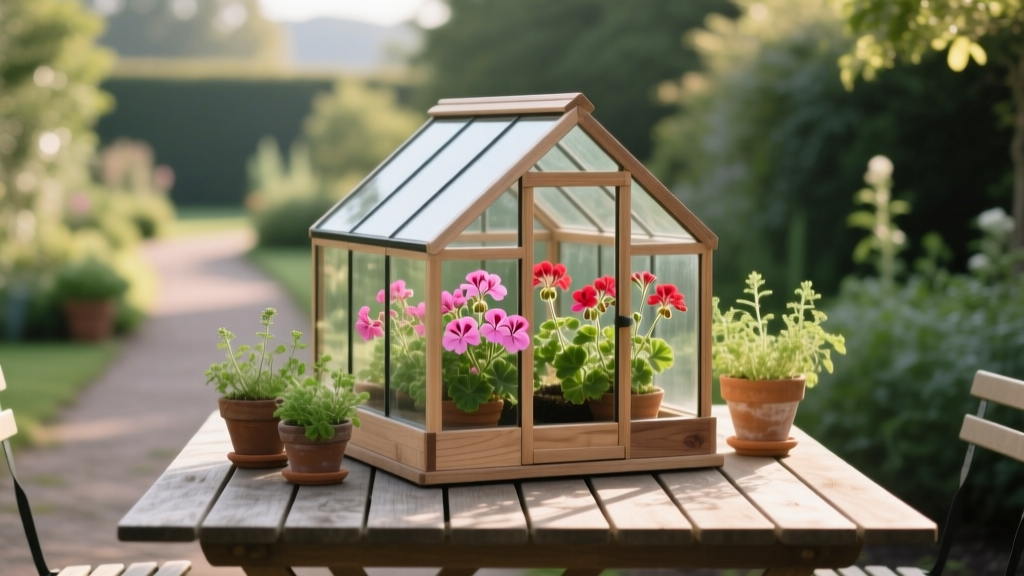
How to Build a Mini Greenhouse for Geraniums
You bring your geraniums (Pelargonium) inside before the first frost, feeling pretty pleased… and two weeks later they’re dropping leaves, stretching toward a dim window, and sulking in cold nighttime drafts. Or worse: you overwinter them in a garage and discover mushy stems from damp, stagnant air. Geraniums aren’t hard to keep—what they hate is inconsistency. A mini greenhouse solves the winter problem by giving you control over three things that matter most: temperature, light, and airflow.
This article walks you through building a practical mini greenhouse specifically suited to geraniums—plus how to run it day-to-day (watering, soil, light, feeding) and how to troubleshoot the most common issues. I’ll include real measurements, real operating targets, and a few field-tested setups for different homes.
Before You Build: What Geraniums Actually Need in Winter
Geraniums overwinter best when you keep them in a stable “cool-bright” zone rather than a hot, dry living room corner. Most home problems come from the plant being pushed into two extremes: too dark (leggy, pale, leaf drop) or too wet and cold (rot, fungus gnats, mold).
- Temperature target: 55–65°F (13–18°C) for active growth with good light; 45–55°F (7–13°C) if you’re keeping them on the dry side and letting growth slow.
- Minimum safe range: avoid sustained temperatures below 40°F (4°C) in a humid enclosure—cold + damp is where rot takes off.
- Light: bright window light plus supplemental LED is often necessary in winter. Many geraniums perform best with 12–14 hours of light indoors.
- Humidity: aim for moderate (around 40–60%). Too high with low airflow invites botrytis and mold.
These targets line up with standard extension guidance for overwintering tender perennials and managing indoor plant environments (University of Minnesota Extension, 2023; NC State Extension, 2022).
Mini Greenhouse Options: Pick the Structure That Fits Your Space
There isn’t one “right” mini greenhouse. The best one is the one you can actually keep stable and ventilated. Here’s a comparison of three common approaches with numbers that matter (cost, capacity, and temperature behavior).
| Mini Greenhouse Type | Typical Size/Capacity | Best For | Temp Stability | Approx. Cost (USD) | Notes for Geraniums |
|---|---|---|---|---|---|
| Clear storage tote “prop box” | 18–30 gal; 4–8 small pots (4") | Cuttings + small plants | High humidity, can overheat quickly | $10–$25 | Great for rooting, but must vent daily; not ideal for big pots. |
| Wire shelving + plastic cover (zip-up) | 24" x 18" footprint; 12–20 pots (4–6") | Overwintering several geraniums | Moderate; easy to ventilate | $50–$140 | My go-to: easy airflow management and room for lights. |
| Cold-frame style mini greenhouse (outdoor) | 3' x 2' to 6' x 3' | Mild winters, sunporch, protected patio | Swings more; needs venting & frost protection | $80–$250+ | Works if nights stay above ~40°F; add thermal mass and venting. |
Build #1: The Shelving-Unit Mini Greenhouse (Most Practical for Home Geraniums)
If you want something that holds multiple plants, allows airflow, and gives you room for a light fixture, a wire rack with a clear cover is hard to beat.
Materials List
- Wire shelving unit, roughly 4-tier, 18" x 24" (or similar)
- Clear zippered greenhouse cover sized for the rack
- LED grow light(s): ideally 30–60 watts actual draw total for a rack this size
- Timer for lights (cheap plug-in timer works)
- Small clip-on fan (4–6") for airflow
- Drip trays or cafeteria trays for each shelf
- Thermometer/hygrometer (one per greenhouse is enough)
- Optional: heat mat for cuttings, set to 70–75°F (21–24°C)
Step-by-Step Assembly
- Place the rack in a bright location. Near a south or west window is ideal. Leave 4–6 inches behind the unit so the cover isn’t pressed against a cold wall.
- Install trays first. This saves your floors and keeps watering tidy. If you bottom-water, the trays become your “watering station.”
- Mount the lights under each shelf. Keep the light 8–12 inches above the geranium canopy. If plants stretch, lower the light or increase hours.
- Add the fan. Aim it across, not directly at foliage. Run it on low for 15 minutes every hour or even continuously on the lowest setting.
- Zip on the cover—then immediately plan ventilation. Keep the front zipper cracked 1–3 inches most days. If humidity climbs above 60–65% with cool temps, vent more.
- Put the thermometer/hygrometer at plant height. Check it morning and evening for the first week to learn your “microclimate.”
Operating Targets (Daily “Rules of Thumb”)
- Day temperature: 60–70°F (15–21°C) if lighting is strong
- Night temperature: 50–60°F (10–15°C) is fine; avoid damp + cold
- Light schedule: 12–14 hours on a timer
- Humidity: keep 40–60% with regular venting + airflow
“Good air circulation is one of the simplest ways to prevent many common indoor plant diseases—especially when humidity is elevated.” — University of Minnesota Extension (2023)
Build #2: The Clear Tote “Micro-Greenhouse” for Geranium Cuttings
This setup shines when you’re rooting cuttings in late summer or early fall, or when you want to keep a few small plants compact and protected. The trade-off is heat buildup and stale air if you forget to vent.
What to Use
- Clear tote: 18–30 gallons
- Small pots (3–4") or cell trays
- Perlite + potting mix blend (details below)
- Optional: seedling heat mat set to 72°F (22°C)
How to Set It Up
- Drill or melt 6–10 ventilation holes (1/4") along the upper sides of the tote.
- Place a shallow tray inside to catch drips.
- Insert cuttings, then lightly mist the inside walls (not the leaves constantly).
- Vent daily for 10–20 minutes. If condensation is heavy and persistent, increase venting or add a tiny fan nearby.
Note: A tote greenhouse can easily hit 85–95°F (29–35°C) in direct sun even when the room is cool. Bright shade is safer than a sunny sill for this setup.
Build #3: Small Outdoor Cold Frame for Geraniums (Only for Mild Winters)
If you live where winter nights rarely drop below 40°F (4°C), an outdoor cold frame can keep geraniums going longer and reduce indoor crowding. You’ll still need to manage venting and occasional frost protection.
Practical Specs
- Frame height: at least 18–24 inches so foliage isn’t pressed against cold plastic/glass
- Vent opening: you want a lid you can prop open 2–6 inches on warm days
- Thermal mass: 1–2 gallon jugs of water inside can reduce night swings
On sunny winter days, cold frames can overheat fast. If inside temps rise above 75°F (24°C), vent immediately. This is a place where a cheap max/min thermometer pays for itself.
Soil: The Mix That Prevents Rot and Keeps Growth Steady
Most geranium failures in mini greenhouses trace back to soil that stays wet too long. You want a mix that drains fast, holds some moisture, and doesn’t collapse into a soggy brick by January.
A Reliable Geranium Potting Mix
- 2 parts quality potting mix
- 1 part perlite (or pumice)
- Optional: a small handful of fine bark for extra structure
Use pots with drainage holes—non-negotiable. In enclosed setups, I prefer slightly smaller pots that dry in a reasonable time (a 6" pot for a medium geranium rather than an oversized 10" that stays wet for a week).
Light: Keeping Geraniums Stocky Instead of Leggy
Light is the difference between a compact plant that blooms and a spindly plant that limps to spring. Window light alone is often not enough from November through February in many climates.
Practical Light Targets
- Duration: 12–14 hours/day under LEDs
- Distance: keep LED fixtures 8–12 inches above the canopy (adjust based on plant response)
- Rotation: rotate pots once a week if relying heavily on window light
Case: If your geraniums are on a windowsill and still stretching, don’t just water less and hope. Add a simple LED bar and bring it close enough to matter. Spacing the light too far away is the #1 reason “grow lights didn’t work” in home setups.
Watering: The Skill That Makes or Breaks a Mini Greenhouse
Inside a mini greenhouse, pots dry more slowly because humidity is higher and air movement is reduced. That’s a good thing—until it becomes a root-rot factory. The goal is a wet-dry rhythm, not constant dampness.
How Often to Water (Realistic Ranges)
- In a bright, heated room with a fan: often every 5–10 days
- In a cool room (50–60°F / 10–15°C): often every 10–21 days
- For dormant-ish plants kept cool and dry: sometimes every 3–4 weeks (light sips, not deep soaks)
A Simple Watering Method That Works
- Lift the pot. If it feels light and the top 1" is dry, it’s probably time.
- Water thoroughly until you get runoff, then empty trays after 15 minutes.
- Don’t mist geranium foliage as a routine. High humidity on leaves invites botrytis.
Case: If you’re using a tote greenhouse for cuttings, you may water very little at first—humidity does the heavy lifting. But you must vent daily to prevent soft, rotting stems.
Feeding: How to Fertilize Without Forcing Weak Winter Growth
Geraniums can be fed lightly in winter if they’re under good light and staying in the 60–70°F range. If conditions are cool and dim, heavy feeding just produces pale, soft growth that attracts pests.
Practical Feeding Schedule
- If you have strong LED light and active growth: feed at 1/4 strength every 3–4 weeks.
- If light is mediocre or temps are cool: skip feeding until you see strong new growth, then start light.
A balanced fertilizer works fine (for example, something in the general range of 10-10-10 or 20-20-20, diluted). Extension recommendations for container plants commonly emphasize avoiding excess fertilizer under low light (NC State Extension, 2022).
Common Problems Inside Mini Greenhouses (and What to Do)
Small enclosed spaces magnify small mistakes. Here are the issues I see most often, with specific symptoms and fixes.
Problem 1: Yellow Leaves + Soggy Soil (Root Stress)
- Symptoms: older leaves yellowing, limp stems, soil staying wet >7–10 days, sometimes a sour smell
- Likely causes: low temperature + high humidity, oversized pot, no airflow, heavy mix
- Fix:
- Open vents (zipper cracked 2–4 inches) and run a fan daily
- Let soil dry further between waterings
- If severe, unpot and inspect roots; trim mushy roots and repot into a faster-draining mix (add 30–40% perlite)
- Move plants to 55–65°F (13–18°C) if possible
Problem 2: Gray Mold (Botrytis) on Leaves or Stems
- Symptoms: fuzzy gray growth, collapsing flower stalks, spotting on older leaves, especially in cool damp air
- Likely causes: humidity above ~65% + poor airflow + dead leaves left on the plant
- Fix:
- Remove affected leaves and any fallen debris immediately
- Increase airflow (fan on low, vent more)
- Water in the morning so surfaces dry by night
- Avoid wetting foliage; water soil level only
Problem 3: Leggy, Pale Growth (Not Enough Light)
- Symptoms: long internodes, leaning toward light, fewer blooms, pale leaves
- Likely causes: light too weak or too far away; short day length
- Fix:
- Add LED lighting and run 12–14 hours
- Lower the light to 8–12 inches above foliage
- Pinch tips back lightly to encourage branching (don’t scalp the plant in midwinter)
Problem 4: Fungus Gnats (Tiny Flies Around Pots)
- Symptoms: small black flies when you water; larvae damage can stunt plants
- Likely causes: constantly moist top layer of soil
- Fix:
- Let the top 1–2 inches of soil dry between watering
- Use yellow sticky traps to catch adults
- Bottom-water when possible and empty trays after 15 minutes
- If infestation is heavy, consider a biological drench (BTi) following label directions
Problem 5: Sticky Leaves, Webbing, or Distorted New Growth (Pests)
Geraniums indoors can pick up aphids, whiteflies, spider mites, and mealybugs—especially in warm, still air.
- Symptoms: sticky residue (honeydew), tiny webs, curled tips, little white “cotton” tufts
- Fix:
- Isolate the plant immediately (mini greenhouses can spread pests fast)
- Rinse foliage with lukewarm water, then treat with insecticidal soap or horticultural oil (follow label)
- Repeat treatments every 5–7 days for 2–3 rounds
- Increase airflow and avoid overfeeding (lush growth attracts pests)
Three Real-World Setups (and How to Run Each One)
Scenario 1: Apartment Gardener, One Bright Window, Limited Space
Use a 2–3 shelf rack greenhouse or a single-tote setup for cuttings.
- Run an LED bar 13 hours/day
- Vent the cover daily; keep humidity under 60%
- Water sparingly—expect 10–14 days between waterings in winter
Scenario 2: Cool Basement or Mudroom (50–60°F / 10–15°C)
This is a great environment if you add light and keep water conservative.
- Prioritize airflow: fan on low, vents cracked
- Keep soil on the dry side; water about every 2–3 weeks depending on pot size
- Feed rarely until spring—maybe once every 4–6 weeks at 1/4 strength if growth is steady
Scenario 3: Mild-Winter Patio or Sunporch with a Cold Frame
If winter nights hover above 40°F (4°C), you can keep geraniums outside longer with protection.
- Vent on sunny days when temps exceed 75°F (24°C) inside the frame
- Add water jugs for thermal mass and cover with frost cloth on cold snaps
- Expect slower growth; water lightly every 2–4 weeks
Comparison Analysis: Humidity-Heavy Tote vs Ventilated Rack Greenhouse
Here’s the practical trade-off with real outcomes you can expect.
- Tote micro-greenhouse: humidity often sits 70–90% if closed. Great for rooting cuttings, but higher risk of mold and stem rot unless you vent daily. Best when you’re actively paying attention.
- Rack greenhouse with fan + venting: humidity more commonly runs 40–65% depending on your room. Better for maintaining established geraniums in pots over months. Lower disease pressure because airflow is easier.
If your goal is overwintering mature plants until spring bloom, the rack greenhouse is usually the steadier performer. If your goal is multiplying favorite cultivars from cuttings in late summer, the tote wins—just don’t treat it like a sealed terrarium.
Routine Maintenance: The Weekly Checklist That Prevents Problems
Mini greenhouses succeed when you do a little maintenance on a schedule instead of reacting to a crisis.
- Twice a week: check moisture by lifting pots; look under leaves for pests
- Once a week: remove yellow leaves; rotate pots; wipe up spills; check max/min temps
- Every 2–4 weeks: lightly pinch tips if plants stretch; feed only if growth is active
- Anytime: if you see mold, increase ventilation first—don’t reach for sprays as your main fix
Spring Transition: Don’t Cook Your Plants on the Way Out
When days lengthen, your mini greenhouse can heat up fast—especially if it’s near a sunny window. Start venting more aggressively as spring light increases. If you’re moving plants outdoors, harden them off over 7–10 days: shade first, then morning sun, then longer exposure. Geranium leaves grown indoors can sunburn in a single bright afternoon.
Once nighttime temperatures outdoors are consistently above 50°F (10°C), most geraniums are ready to live outside again. At that point, you’ll find your mini greenhouse earns its keep one more time—perfect for holding cuttings, starting annuals, or giving early spring plants a protected jump.
Sources: University of Minnesota Extension (2023) indoor plant disease prevention and air circulation guidance; NC State Extension (2022) houseplant care principles for light, watering, and fertilization in indoor environments.