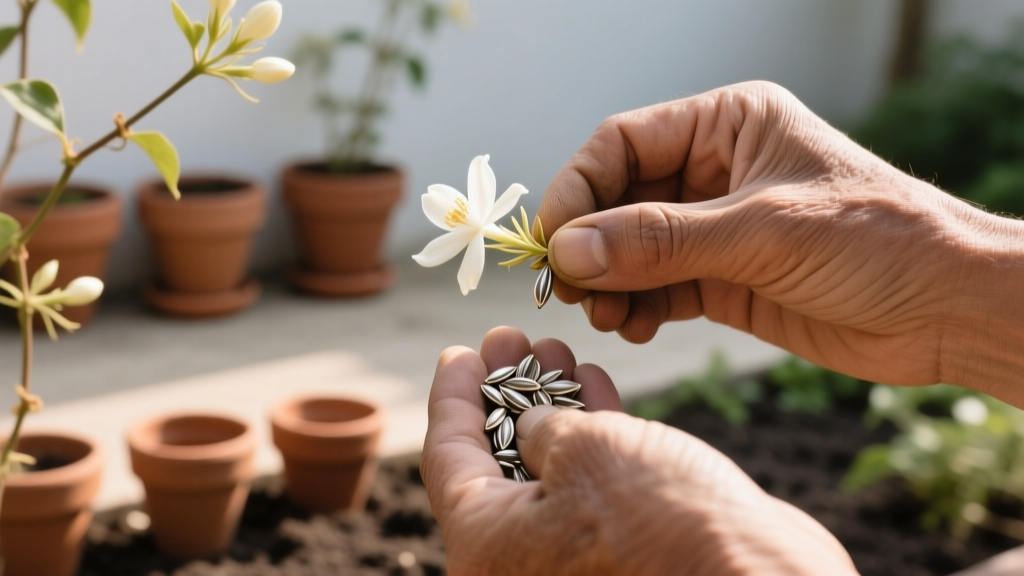
Saving Seeds from Jasmine for Next Season
The first time I tried to save “jasmine seeds,” I waited all summer for pods that never showed up. The vine flowered like a champ, perfumed the patio, and then… nothing to collect. That little disappointment is common, and it’s the first hard truth about seed-saving from jasmine: many jasmine plants in home gardens either don’t set seed reliably, set seed only under certain conditions, or aren’t even “true jasmine” in the first place.
Still, when you do get viable seed, saving it is satisfying and surprisingly useful—especially if you’re trying to produce lots of plants, experiment with breeding, or you live where cuttings don’t overwinter well. This guide walks you through how to tell if you can get seed, how to harvest and store it correctly, and how to keep the parent plant healthy enough to produce pods in the first place.
Before You Start: Are You Growing a Jasmine That Makes Seeds?
Gardeners lump a lot of fragrant plants under “jasmine.” True jasmine is usually in the Jasminum genus (like Jasminum officinale or J. sambac). But “star jasmine” is actually Trachelospermum jasminoides, a different genus that still makes seed pods but behaves differently.
Also, many ornamental jasmines are grown from cuttings, and some cultivated forms have reduced fertility. Pollination can be the limiting factor, too—especially indoors, on screened porches, or where you’re growing a single plant with no compatible partner.
Quick reality check: seed vs. cutting
If you want a clone of your plant (same flower form, fragrance, vigor), cuttings are the reliable path. Seed-grown plants can vary—sometimes a lot. That’s not a bad thing, but it’s different.
| Propagation Method | Best For | Time to New Plant | Success Rate (Typical Home Conditions) | Same as Parent? |
|---|---|---|---|---|
| Saving seed | Making many plants; experimenting; species jasmine | 6–16 weeks to transplant-size (varies by species) | 30–70% germination if fresh and properly cleaned | No (genetic variation likely) |
| Stem cuttings | Keeping exact cultivar traits | 3–8 weeks to rooted cutting | 60–90% with warmth and humidity | Yes (clone) |
| Layering | Low-effort propagation outdoors | 8–20 weeks to rooted section | 70–95% if kept evenly moist | Yes (clone) |
What Seed Pods Look Like (So You Don’t Miss Them)
Jasmine seed is usually produced in berries or pods depending on the species. True jasmines often form small berries that darken as they ripen. Star jasmine forms long, narrow paired pods (follicles) that look like slender green beans at first, later turning brown and splitting when dry.
Here’s the practical rule: if the “fruit” isn’t changing color and firming up after bloom, it’s probably not developing seed. If it swells, then slowly ripens over weeks, you’re on the right track.
Timing you can plan around
- Pollination to harvest: often 6–12 weeks after flowering for many jasmine relatives, but it varies by species and weather.
- Harvest window: when pods/berries are fully mature but before they shatter and drop seed—especially important for star jasmine pods that split suddenly in dry weather.
Light: How to Get Flowers (and Then Seeds)
No flowers means no seeds. Most jasmines need strong light to bloom well. Outdoors, that usually means at least 6 hours of sun. In hot inland climates, morning sun with afternoon shade can reduce stress without sacrificing bloom.
- Outdoor target: 6–8 hours sun for best flowering.
- Indoor target: a bright south or west window; rotate the pot weekly so buds develop evenly.
- Temperature for blooming: many jasmine types bloom best when days sit around 65–85°F (18–29°C).
If your plant is leafy but stingy with flowers, it’s often a light issue first, fertilizer second.
Watering: The Balance That Makes Pods Possible
Seed production takes steady energy. If the plant cycles between drought stress and soaking wet soil, it may drop flowers, abort pods, or produce empty seed.
Outdoor in-ground jasmine
Water deeply, less often. For established plants in average loam, aim for roughly 1 inch of water per week from rain and irrigation combined during active growth. In sandy soils or during heatwaves, you may need more frequent watering.
Container jasmine
Pots dry fast. A good working method is to water when the top 1–2 inches of potting mix feels dry. Water until you see steady drainage, then empty the saucer so roots don’t sit in water.
Real-world scenario #1: The “vacation wilt” that ruins seed set
You leave for a week in July, the pot dries hard, and when you return the plant drops buds and any tiny pods. If you’re serious about seed, set up:
- a drip emitter on a timer (even 10–15 minutes every other day can stabilize moisture), or
- a deep watering right before leaving plus a temporary shade cloth to cut transpiration.
Soil: Fertile, Draining, and Slightly Acidic Wins
Jasmine wants soil that holds moisture but drains well. Heavy clay that stays wet can lead to root stress and fewer flowers.
- In-ground soil texture: amend clay with compost and (if needed) fine bark to improve drainage.
- Potting mix: use a high-quality mix plus 10–20% perlite for air space.
- pH sweet spot: around 6.0–7.0 for most jasmines.
Many extension resources emphasize the basics: good drainage and avoiding waterlogged conditions. That’s not just about avoiding rot—healthy roots are what support flowering and fruit set.
Citation note: North Carolina State Extension’s plant information resources describe jasmine culture emphasizing sun to partial shade and well-drained soil (NC State Extension Plant Toolbox, 2023). Similarly, University of Florida IFAS gardening guidance repeatedly stresses matching irrigation and drainage to the plant’s needs to prevent decline (UF/IFAS Extension publications, 2020).
Feeding: Don’t Overdo Nitrogen If You Want Seeds
Here’s the common mistake: heavy feeding, especially with high nitrogen, can push lush leafy growth at the expense of flowers (and therefore seed). Think “steady and modest,” not “more is better.”
Practical feeding schedule
- Early spring: top-dress with 1–2 inches of compost, or apply a balanced slow-release fertilizer.
- Before bloom (late spring): a light feeding with a balanced fertilizer (for example, something like 5-5-5 or similar).
- After first flush of bloom: if the plant is pale or growth stalls, feed lightly again—don’t keep dumping fertilizer all season.
If you’re container-growing and watering frequently, nutrients leach faster. In that case, half-strength liquid fertilizer every 2–4 weeks during active growth is usually enough.
“Seed set is easiest when the plant is growing steadily—no big swings in drought, flooding, or excess nitrogen. Consistency is what keeps flowers from aborting and fruits from dropping.”
—A practical rule taught in many Master Gardener trainings and seed-saving workshops
How to Get Seeds: Pollination and Pod Development
If you’re not seeing pods, pollination is the bottleneck more often than gardeners expect.
Hand-pollination (especially useful indoors)
- Go out in the morning when flowers are freshly open.
- Use a small, clean artist’s brush or cotton swab.
- Gently transfer pollen from the anthers to the stigma (you’re basically “being a bee”).
- Repeat for 3–5 mornings during peak bloom for better odds.
For some jasmines, cross-pollination improves results. If you have two plants (or a neighbor has one), you’ll often see more pods when both are blooming at the same time.
Real-world scenario #2: Plenty of flowers, zero pods on a screened porch
Screened spaces are great for keeping pests out—but they keep pollinators out, too. Hand-pollinate, or move the pot outside for a few hours a day during bloom if temperatures are in the safe range (roughly 60–85°F) and it’s not in blasting wind.
Harvesting Jasmine Seeds Without Losing Them
Harvest timing is everything. Too early and seeds are immature and weak. Too late and pods split, or berries drop and disappear into mulch.
Signs seeds are ready
- Pods: turn from green to tan/brown and begin to feel papery; seams may start to open.
- Berries: shift to a darker, mature color (often purple-black) and soften slightly.
Harvest method (pods that split)
- When pods start to brown, slip a small paper bag or organza drawstring bag over the pod cluster.
- Tie it loosely so air can circulate.
- Check every 2–3 days. When the pod splits, the seed falls into the bag instead of the garden.
Harvest method (berries)
- Pick fully ripe berries into a small cup.
- Mash gently with a little water.
- Separate seed from pulp, then rinse through a fine sieve.
Cleaning, Drying, and Storing for Next Season
Clean seed stores longer and resists mold. Dry seed stays alive. Don’t rush this part.
Drying targets you can actually use
- Spread seeds in a single layer on a coffee filter or paper plate.
- Dry indoors out of direct sun at about 65–75°F (18–24°C).
- Give it 7–14 days until seeds feel hard and don’t dent with a fingernail.
Storage that preserves viability
- Store in a paper envelope inside an airtight jar (paper buffers moisture; jar stabilizes humidity).
- Label with species/plant, location, and date.
- Keep cool and dark—ideally around 35–45°F (2–7°C) in a refrigerator if you have space.
Seed longevity varies widely by species and storage conditions. A good habit is to sow jasmine seed the following season rather than letting it sit for years.
Starting Saved Jasmine Seed Next Season
Some jasmine-related seeds germinate readily; others are slow and irregular. Plan for patience and sow extra—if you want six plants, sow 12–18 seeds.
Step-by-step sowing
- Soak seeds in room-temperature water for 12–24 hours (helps with hydration).
- Fill a seed tray with sterile seed-starting mix.
- Sow seeds about 1/4 inch (6 mm) deep (or just barely covered if very small).
- Keep evenly moist (not soggy). A humidity dome helps, but vent daily to prevent fungus.
- Provide warmth: a heat mat set to about 75°F (24°C) speeds germination for many subtropicals.
- Give bright light as soon as sprouts appear; aim for 12–14 hours under grow lights if indoors.
For germination timing, expect anywhere from 2 weeks to 3 months, depending on species and freshness. If nothing happens after a month, don’t dump the tray—keep it lightly moist and warm a while longer.
Real-world scenario #3: Seeds sprout, then collapse overnight
If seedlings keel over at the soil line, that’s classic damping-off. It’s fast and discouraging, but preventable:
- Use sterile seed-starting mix (not garden soil).
- Bottom-water so stems stay drier.
- Remove humidity dome once most seeds sprout.
- Provide airflow (a small fan on low is enough).
Common Problems That Stop Jasmine From Making Good Seed
Problem: Lots of buds, buds fall off
- Likely causes: drought stress, sudden heat spike, overfertilizing with nitrogen, or moving the pot repeatedly.
- Fix: water consistently (check moisture every 2–3 days in hot weather), pause high-nitrogen feeding, and stop relocating the plant once buds form.
Problem: Flowers, but no pods/berries
- Likely causes: lack of pollinators, incompatible plant, or indoor/screened growing conditions.
- Fix: hand-pollinate for 3–5 days during peak bloom; grow a second plant for cross-pollination if possible; get the plant outside during bloom when weather allows.
Problem: Pods form, then shrivel or drop
- Likely causes: irregular watering, heat stress, or nutrient imbalance.
- Fix: aim for steady moisture; add a light compost top-dress; avoid heavy feeding after pods start forming.
Problem: Stored seeds mold in the packet
- Likely causes: seeds weren’t fully dry or stored in a humid spot.
- Fix: dry for a full 7–14 days; store in paper inside an airtight jar; add a small packet of silica gel if you live in a humid climate.
Pests and Diseases That Interfere With Flowering and Seed Set
Seed saving goes smoother when the plant isn’t fighting pests. Jasmine commonly deals with aphids, spider mites, mealybugs, and scale—especially indoors or in warm, sheltered spots.
Aphids on new growth
- Symptom: curled tips, sticky honeydew, ants climbing stems.
- Action: blast with water; follow with insecticidal soap, applied in the evening, repeating every 5–7 days for 2–3 rounds.
Spider mites in hot, dry weather
- Symptom: fine webbing, stippled leaves, dull coloration.
- Action: increase humidity around the plant, rinse leaf undersides, and avoid letting pots dry bone-hard. Mites love drought-stressed plants.
Scale or mealybugs
- Symptom: waxy bumps on stems, leaf yellowing, sticky residue.
- Action: dab individuals with 70% isopropyl alcohol on a cotton swab; repeat weekly until cleared.
On the disease side, root issues from poor drainage are the big one. If the plant is chronically wilted despite watering, check the roots—healthy roots are firm and pale; rotting roots are dark and mushy.
Comparison Analysis: Bagging Pods vs. Open Harvest (Real Numbers)
If you’ve ever lost star jasmine seed to a windy afternoon, you’ll appreciate this. Here’s what I typically see in home gardens when pods are allowed to mature naturally versus bagged before they split.
| Harvest Approach | Seed Loss Risk | Labor | Typical Yield from 10 Mature Pods | Best Use |
|---|---|---|---|---|
| Open harvest (watch and pick) | High (pods can shatter in 1–2 days of dry heat) | Low up front, high monitoring | Often 3–6 pods’ worth recovered (30–60%) | When you can check daily |
| Bagging pods (paper/organza) | Low (seed caught when pods split) | Moderate (set bags, check occasionally) | Often 8–10 pods’ worth recovered (80–100%) | When you’re busy or weather is erratic |
Those yield ranges reflect the simple reality that pods don’t wait for your schedule. Bagging is the highest-return habit you can adopt if your jasmine makes split-prone pods.
Pruning and Timing: Don’t Cut Off Next Season’s Seed Potential
Pruning at the wrong time can remove flowering wood. If you prune hard right before bloom, you reduce flowers; if you prune while pods are forming, you can knock them off.
- Best practice: do major shaping right after a bloom flush, not right before it.
- When saving seed: keep pruning light once buds appear; focus on tying and supporting stems instead.
Notes on Safety and Expectations
Some jasmine relatives have sap that can irritate sensitive skin. If you’re harvesting a lot of pods or cleaning sticky fruit pulp, gloves are a smart idea. Also, don’t be discouraged if seed set is spotty the first year—pollination and plant maturity matter. Many vines settle in and produce better after they’ve had a full season in the ground.
For deeper regional guidance on jasmine growth habits and site requirements, extension resources like NC State Extension’s Plant Toolbox (2023) are excellent for cross-checking your light and soil assumptions. For plant health and irrigation best practices that reduce stress-related bud drop, UF/IFAS Extension publications on woody ornamentals and irrigation management (2020) are worth a look—stress management is seed saving’s quiet backbone.
If you do everything “right” and still get no seed, take that as information: your particular jasmine may be sterile, not compatible with itself, or simply reluctant in your conditions. In that case, switch goals—enjoy the fragrance, take a few cuttings in late spring, and treat any seeds you do get as a bonus rather than the only plan.
But when you finally hear that dry pod crack open in its little bag and you pour out a pile of next year’s plants, it feels like winning a small, fragrant lottery—one you can keep repeating as long as you keep the plant steady, sunny, and just a bit on the hungry side rather than overfed.