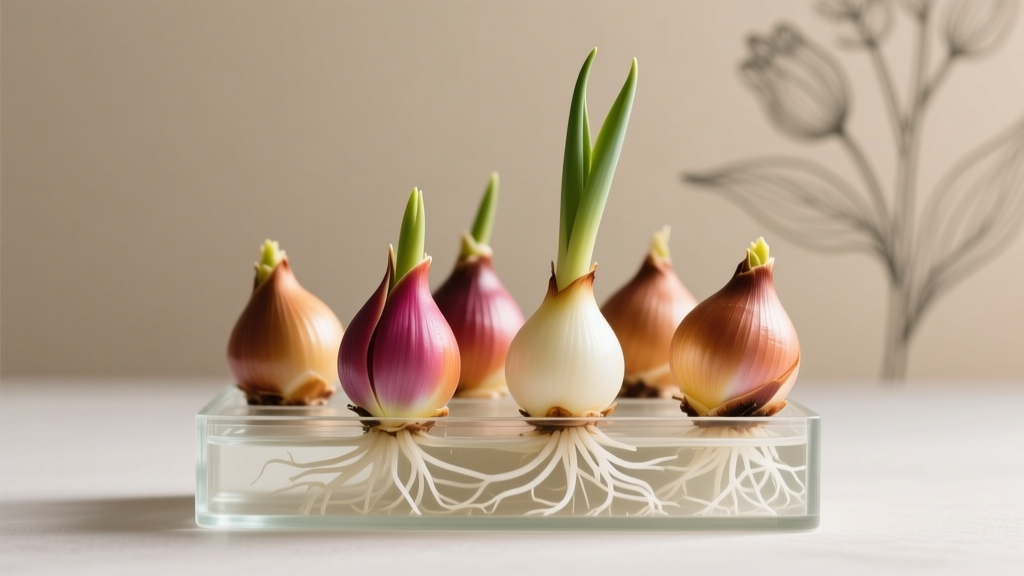
Best Rooting Hormone for Tulips
You set tulip bulbs in fall like you always do. Spring arrives… and you get patchy growth: a few strong stems, a few weak ones, and some empty spots where bulbs never showed. The first instinct is to blame “bad bulbs” or cold weather. But a lot of the time, the real problem is simpler: the bulb never made a healthy root system before winter locked the soil up.
Here’s the surprising part: rooting hormones rarely help tulips the way they help cuttings. Tulips aren’t trying to “root from a wound” like a rose cutting—they’re trying to build a new root plate from the basal plate of a bulb. Still, there are situations where a rooting aid can be useful: replanting after bulb damage, forcing indoors, salvaging dried bulbs, or working in marginal soils that delay rooting. This guide will tell you what actually works, what’s mostly hype, and how to get reliable roots the old-fashioned way: moisture, temperature, and planting depth.
Rooting hormone and tulips: what it can (and can’t) do
Rooting hormones (usually auxins like IBA—indole-3-butyric acid—or NAA—naphthaleneacetic acid) are designed to stimulate adventitious roots on cuttings. Tulip bulbs already contain the tissues needed to produce roots; they just need the right conditions. That’s why the “best rooting hormone for tulips” is often not a hormone at all—it’s correct planting timing, consistent soil moisture, and cool soil temperatures.
That said, a mild auxin product can help in a few specific cases by encouraging faster root initiation on stressed bulbs, particularly if the basal plate is partially compromised or the bulb has been stored too warm and dried down.
“For spring-blooming bulbs, success is largely determined by rooting before severe winter conditions; bulbs must establish roots in autumn to support spring growth.” — University of Minnesota Extension (2021)
Extension advice consistently emphasizes rooting conditions over additives. For example, Michigan State University Extension notes that most fall-planted bulbs initiate rooting soon after planting when soil temperatures cool, and that root growth is strongly tied to soil temperature and moisture rather than fertilizer or stimulants (Michigan State University Extension, 2020).
Comparison: Which rooting hormone (or root aid) makes sense for tulips?
Use this table as a practical “what’s worth your time” filter. These are common products and approaches home gardeners reach for.
| Product/Method | Active ingredient | Best use case for tulips | How to apply | Reality check |
|---|---|---|---|---|
| Powder rooting hormone | IBA ~0.1% (typical) | Salvaging slightly damaged basal plates; forcing bulbs in pots | Light dusting on the basal plate only (avoid coating entire bulb) | Small benefit at best; helps only if conditions are already right |
| Liquid rooting concentrate | IBA/NAA (varies) | Soak for dried bulbs before potting/forcing | Very dilute solution; brief dip or quick rinse | Easy to overdo; too strong can stress tissues |
| Seaweed/kelp extract | Hormone-like compounds + micronutrients | Transplant stress support; container forcing | Water in at label rate after planting | Gentle and safer than auxins; won’t replace proper chilling |
| Mycorrhizal inoculant | Beneficial fungi species | Long-term soil health; mixed perennial beds | Dust in planting hole | Not a quick fix; tulips are often short-lived in many gardens anyway |
| No product: correct moisture + temperature | — | Nearly all normal fall planting | Plant at proper depth, water once, keep evenly moist until freeze | Most reliable “rooting booster” there is |
Three real-world scenarios: when a rooting hormone helps (and when it doesn’t)
Scenario 1: Fall planting in heavy clay that stays wet
If your soil is sticky, slow-draining clay, adding rooting hormone won’t fix the real issue. In wet clay, bulbs rot before they root. Your best “rooting aid” is drainage: raised beds, grit, and careful watering. In this scenario, skip hormone and focus on soil structure.
Scenario 2: Forcing tulips indoors (pots, fridge, garage)
When you force tulips, you’re compressing their natural schedule. A gentle kelp drench after planting can support root activity, but the big lever is chilling and cool rooting time. If you try to force without adequate chill, no hormone will save it.
Scenario 3: You received bulbs late and they look a bit shriveled
Late-shipped bulbs (or bargain bags) sometimes arrive slightly dehydrated. This is one of the few times a cautious rooting aid can be worthwhile: rehydration plus a mild root stimulant can help them get going—if they aren’t moldy or soft.
Planting for roots first: timing, depth, temperature
Tulips want to root in cool soil, then rest, then surge in spring. For most climates, aim to plant when soil temperatures are consistently around 45–55°F (7–13°C). That’s often 4–6 weeks before the ground freezes hard.
- Planting depth: About 6–8 inches deep for most standard tulips (measured from bulb base), or roughly 3× the bulb’s height.
- Spacing: 4–6 inches apart for bedding impact; up to 8 inches for naturalizing styles.
- Orientation: Pointy end up; if unsure, plant on its side—tulips can correct themselves, but it costs energy.
These numbers aren’t fussy trivia. Shallow bulbs are more likely to heave during freeze-thaw cycles, and heaved bulbs often break new roots or never establish them well.
If you’re going to use a rooting hormone: do it safely
For tulips, restraint matters. A heavy coating of powder can trap moisture on the basal plate and invite rot. Think “barely there,” not “breaded cutlet.”
Step-by-step: using powder rooting hormone on tulip bulbs
- Inspect bulbs: discard any that are soft, oozing, or smell sour. Slight papery dryness is fine.
- Focus on the basal plate: that’s the flat bottom where roots emerge.
- Dust lightly: tap a pinch of powder into a dish, touch the basal plate to it once. You want a thin film, not a crust.
- Plant immediately: don’t let treated bulbs sit in a bag—condensation is the enemy.
- Water once: moisten the planting area to settle soil around the bulb.
Step-by-step: rehydrating slightly shriveled bulbs (late shipment)
- Place bulbs in a cool spot (40–50°F) for 24 hours to acclimate.
- If they’re noticeably shriveled but still firm, you can do a brief soak: 30–60 minutes in cool water. Don’t soak overnight—extended soaking increases rot risk.
- Plant the same day into well-drained soil or potting mix.
Forcing note: many forcing mixes are peat/coir-based and can be hard to rewet. Pre-moisten your mix until it feels like a wrung-out sponge, not mud.
Watering for strong roots (outdoors and in containers)
Roots form when the bulb senses consistent moisture and cool temperatures. Too dry and rooting stalls; too wet and basal rot starts.
Outdoor beds: the simple watering rule
- At planting: water deeply once—enough to moisten the soil to the planting depth (6–8 inches).
- After planting: only water again if the top 2 inches of soil are dry and you haven’t had rain in 7–10 days.
If fall is wet where you live, you may not water again at all. In rainy climates, excess watering is one of the main reasons tulips fail.
Containers: more frequent, but still not soggy
Pots dry out faster and also fluctuate in temperature more. After planting:
- Water until you see a little come out the drainage holes.
- Then water again only when the top 1 inch is dry.
During chilling (garage/fridge/cold frame), check moisture every 2 weeks. The goal is barely moist, never saturated.
Soil: the real “rooting hormone” for tulips
Tulips root best in soil that drains quickly but holds a little moisture—think crumbly, not sticky. A classic tulip failure is planting into beautiful-looking, rich soil that stays wet.
Target soil conditions
- Drainage: water should not pool for more than 2–3 hours after a heavy rain.
- pH: roughly 6.0–7.0 is a comfortable range for bulbs.
- Amendments for clay: add 1–2 inches of compost and (better yet) sharp grit or coarse sand in moderation, mixed through the top 8–10 inches.
Avoid dumping high-nitrogen manure in the planting zone. It can push soft growth and increase rot risk. If you want to feed, do it lightly and at the right time (more on that below).
Light: the part people forget until it’s too late
Tulips need strong spring sun to recharge the bulb for next year. If your bed is shaded by late-leafing trees (maple, linden) you might get decent flowers once, then smaller blooms the next year.
- Best: full sun in spring (at least 6 hours).
- Acceptable: bright half-day sun, especially in warmer climates where a bit of afternoon shade helps blooms last longer.
Light doesn’t influence initial rooting much in fall, but it absolutely affects bulb recovery after flowering—which is why some gardeners think bulbs “didn’t root” when the real problem was low energy the previous season.
Feeding tulips: what actually helps roots and repeat bloom
Tulips are not heavy feeders, but they respond to balanced nutrition—especially phosphorus and potassium for root and bulb development. Many gardeners overdo nitrogen, which makes lush leaves and disappointing flowers.
Practical feeding schedule
- At planting (optional): incorporate a small amount of bulb fertilizer into the soil, not touching the bulb. Follow label rates; more is not better.
- In spring: feed when shoots are 2–4 inches tall with a balanced slow-release fertilizer (something in the neighborhood of 5-10-10 or similar).
- After bloom: skip fertilizer if foliage is healthy; focus on letting leaves yellow naturally for 6 weeks after flowering.
For evidence-based fertilizer guidance, extension programs consistently recommend moderate fertilization and avoiding excess nitrogen for bulbs (University of Illinois Extension, 2022).
Common problems that get blamed on “bad rooting hormone”
When tulips fail, the temptation is to add products. Most failures trace back to water, temperature, critters, or bulb quality. Here are the usual suspects, with straight fixes.
Troubleshooting: symptoms and solutions
Symptom: Bulbs never emerge (empty spots)
- Likely causes: bulbs rotted in wet soil; squirrels/voles; bulbs planted too shallow; bulbs dried out before planting.
- What to do:
- Dig one spot and inspect: if you find mush, improve drainage and plant deeper next time.
- If you find tunnels or missing bulbs, use hardware cloth cages or gravel topping, and plant a bit deeper (8 inches for large bulbs).
- Store bulbs cool and dry before planting (ideally 50–60°F, airy, out of sun).
Symptom: Short stems, small flowers
- Likely causes: bulbs too small; insufficient chilling; too much shade; drought during spring growth.
- What to do:
- Buy bulbs labeled by size (larger circumference bulbs generally perform better).
- For warm-winter climates, pre-chill bulbs at 35–45°F for 10–14 weeks (keep away from ripening fruit, which releases ethylene).
- Ensure at least 6 hours of spring sun.
- Water in spring if rainfall is low: aim to keep the root zone lightly moist during active growth.
Symptom: Leaves emerge, but buds abort or never form
- Likely causes: bulbs were stored too warm; bulb stress from drought; disease; frost damage to developing bud.
- What to do:
- Buy from reputable suppliers with proper cold storage.
- Mulch lightly (1–2 inches) after the ground cools to stabilize temperatures (don’t smother).
- Remove and discard severely affected bulbs; don’t compost diseased material.
Symptom: Bulb base looks brown/soft; roots are stubby or absent
- Likely causes: basal rot (often from overly wet soil); heavy hormone coating trapping moisture; planting into cold, saturated ground.
- What to do:
- Stop using rooting powder as a “dip and coat.” If you use it, dust lightly.
- Plant in better-drained soil or raise the bed 4–6 inches.
- Plant when soil is cool but not waterlogged—avoid planting right before a week of heavy rain.
Method comparison with real numbers: hormone vs no hormone (what changes in practice)
Here’s a grounded way to think about it. For tulips, the biggest controllable factors are planting depth, moisture, and temperature. If those are wrong, a hormone won’t compensate. If those are right, a hormone might give a modest bump in rooting speed for stressed bulbs—but it’s usually not dramatic in an outdoor bed.
- Method A (no hormone): plant at 6–8 inches, soil at 45–55°F, water once, then leave alone unless dry. This produces reliable rooting in typical fall conditions.
- Method B (light hormone dusting on basal plate): same as A, but add minimal IBA powder. Potential benefit: slightly faster root initiation on borderline bulbs (late, a bit dry, or mildly damaged basal plate).
- Method C (forcing with kelp drench): pot bulbs, chill at 35–45°F for 10–14 weeks, keep mix barely moist, optional kelp watering once after planting. Biggest benefit: gentler support during container stress, not “magic roots.”
If you want a repeatable home-garden test, try this: plant 10 bulbs with no hormone and 10 bulbs with a light basal-plate dusting, same bed, same depth, same watering. In spring, compare emergence rate and stem strength. In most decent soils, you’ll see little difference. In a forcing setup or with compromised bulbs, you may see a small improvement in uniformity.
My go-to recommendations (what I’d do in my own garden)
If a friend asked me for the “best rooting hormone for tulips,” here’s my honest answer after years of planting—and replanting—beds that didn’t behave.
- For normal fall planting in decent soil: use no rooting hormone. Put your effort into depth, drainage, and watering once at planting.
- For slightly dried bulbs planted late: skip heavy hormone. Do a brief 30–60 minute rehydration (if still firm), then plant well-drained. If you insist on a product, use a very light dusting of IBA on the basal plate only.
- For forcing indoors: prioritize chilling: 10–14 weeks at 35–45°F. If you want a gentle booster, kelp extract is low-risk, but it’s optional.
- For wet clay sites: don’t waste money on hormone. Fix drainage, raise the bed, or grow tulips in containers where you control the mix.
Rooting hormones have their place in propagation. Tulips just aren’t the crop where they carry the whole load. Give the bulb cool soil, air around the roots, and steady moisture—not swampy, not bone dry—and it will do what it’s built to do. Most of the “secret sauce” is getting them rooted before winter shuts the door.
Sources: University of Minnesota Extension (2021); Michigan State University Extension (2020); University of Illinois Extension (2022).