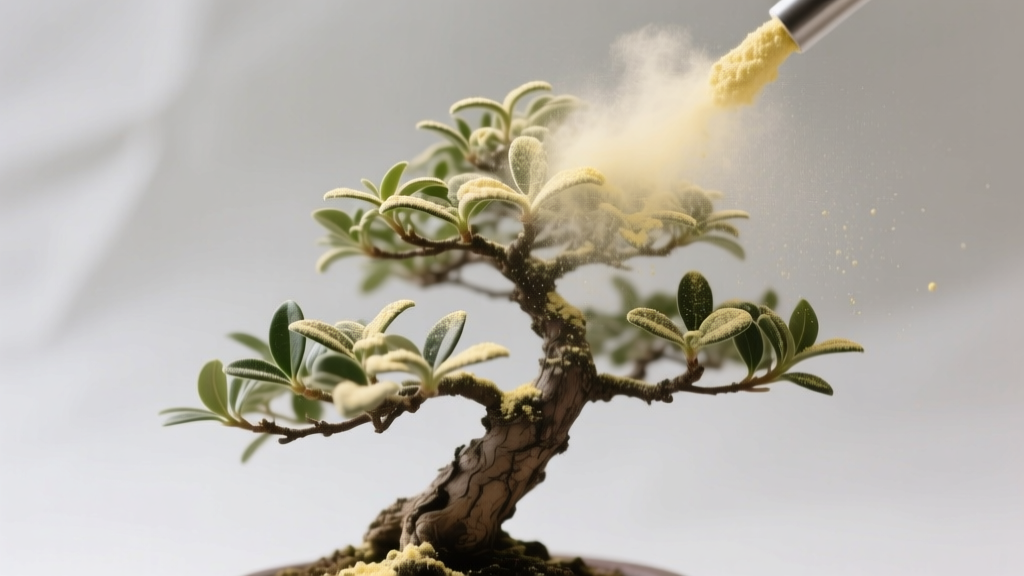
Sulfur Dust for Powdery Mildew on Bonsai
You spot it in the morning light: a pale, floury haze on the newest leaves of your bonsai, like someone dusted it with baking powder overnight. By the time you grab your phone for a picture, a few leaves are already curling at the edges. Powdery mildew moves fast on bonsai because the canopy is tight, airflow is limited, and stressed trees don’t have extra energy to spare. Sulfur dust can work brilliantly—but only when you use it at the right time, at the right temperature, and with bonsai-specific restraint.
I’ve used sulfur for decades on everything from roses to fruit trees, and bonsai is its own game. The pot is small, roots are close to the surface, foliage is compact, and a heavy hand can do more harm than the fungus. This guide walks you through exactly when sulfur dust makes sense, how to apply it safely, and how to adjust watering, soil, light, and feeding so mildew stops coming back.
What you’re fighting: powdery mildew on bonsai (and why sulfur works)
Powdery mildew is a group of fungi that coats leaves and young stems with a white/gray powder. Unlike many fungal diseases, it doesn’t need wet leaves to infect—high humidity plus poor air movement is often enough. On bonsai, you’ll see it first on:
- Soft new growth (spring flush, post-pruning shoots)
- Shaded interior foliage
- Leaves close to the soil surface in crowded pots
Sulfur is a classic contact fungicide. It doesn’t “heal” damaged tissue, but it inhibits spore germination and slows fungal growth on the surface. The key is coverage and timing—sulfur is preventive-to-early-curative, not a last-minute rescue.
University recommendations still list sulfur as a reliable powdery mildew tool. For example, the UC Statewide IPM Program notes sulfur as an effective option for powdery mildew management when used correctly and under suitable temperatures (UC ANR IPM Program, 2023). Michigan State University Extension also emphasizes that sulfur can suppress powdery mildew but must be applied under label-safe temperature ranges to prevent plant injury (Michigan State University Extension, 2022).
“Sulfur is most effective when applied before disease is severe; thorough coverage is essential, and applications during high temperatures can cause phytotoxicity.”
— UC Statewide IPM Program guidance on powdery mildew management (UC ANR IPM, 2023)
Three real-world bonsai mildew scenarios (and what actually works)
Scenario 1: Indoor ficus bonsai with mildew near a sunny window
Yes, indoor trees can get powdery mildew—especially when nights are cool, days are warm, and airflow is poor. Sulfur dust indoors is a bad fit because you don’t want sulfur particles in living spaces and it can be irritating. In this case, focus on airflow, spacing, and a safer indoor-labeled spray (like potassium bicarbonate), and reserve sulfur for outdoor use.
Scenario 2: Outdoor maple bonsai after a heavy prune (spring or early summer)
This is the classic bonsai mildew setup: tender regrowth, dense branching, and humidity. Sulfur dust can be excellent here if you apply it early—when you see the first faint patches, not when every leaf is white. Combine sulfur with thinning for airflow and careful nitrogen control.
Scenario 3: Juniper bonsai with “white dust” that isn’t mildew
Junipers often fool people. White haze might be dust, spider mite webbing, or residue from hard water. Before you treat, do a quick check: wipe a leaf with a damp cotton swab. Powdery mildew smears like flour; mite webbing stretches; mineral residue feels gritty and doesn’t smear much. Sulfur won’t fix minerals, and it’s not the first pick for mites.
Before you dust: confirm it’s powdery mildew
Get this right and you save yourself a lot of frustration. Look for these signs:
- True powdery mildew: white/gray powdery patches, often on upper leaf surfaces; wipes off and leaves green tissue beneath (at least early on).
- Advanced mildew: leaf distortion, yellowing, premature drop, reduced vigor.
- Not mildew: mineral spots (ring-shaped), spider mites (stippling + webbing), mealybugs (cottony clumps in nodes).
Quick test: Mist a small area with water. Mildew often looks temporarily “gone” when wet, then reappears as it dries. Minerals don’t vanish the same way.
How to use sulfur dust on bonsai safely (step-by-step)
First, choose the right product: use a horticultural sulfur labeled for plants (often “dusting sulfur” or “wettable sulfur”). Follow the label—bonsai are plants, but they’re more sensitive because of their confined root zone and dense canopy.
Temperature and timing rules (these numbers matter)
- Apply when air temperatures are between 55–80°F (13–27°C). Damage risk rises as temperatures climb.
- Avoid applying if temperatures are expected to exceed 85°F (29°C) within 24 hours. Many sulfur labels warn against hot-weather use.
- Apply in early morning when leaves are dry and wind is calm.
- Reapply every 7–10 days during active mildew pressure (or per label), especially after strong growth flushes.
- Do not use sulfur within 14 days of applying horticultural oil or neem oil (common label precaution to prevent leaf burn).
Dusting method that works on bonsai (without overdoing it)
You’re aiming for a light, even film—not a thick coat. Bonsai foliage is tight, so it’s easy to cake sulfur into crotches and buds.
- Isolate the tree outdoors or in a well-ventilated area. Keep pets and kids away.
- Remove the worst leaves first: Snip off heavily infected leaves (especially those curled and shaded inside the canopy). Bag them—don’t compost indoors.
- Dry foliage only: Don’t dust wet leaves; it clumps and gives uneven coverage.
- Use a hand duster or small sieve: Hold it 8–12 inches (20–30 cm) from the canopy and apply a light “fog.”
- Rotate the pot: Dust from 3–4 angles so you reach the interior canopy.
- Tap, don’t pile: If you can see yellow sulfur sitting in heaps on leaf tips, you used too much. Gently tap branches to knock excess off.
Personal safety: Wear gloves and a dust mask/respirator rated for particulates, plus eye protection. Sulfur is low toxicity but irritating in dust form. And don’t apply on windy days—bonsai benches are usually tight spaces.
Sulfur dust vs other mildew options (with practical tradeoffs)
Sulfur is a solid tool, but it’s not the only one. Here’s how it compares with common home-gardener options for bonsai.
| Method | Best use timing | Typical reapplication interval | Heat risk | Notes for bonsai |
|---|---|---|---|---|
| Sulfur dust | Preventive to early infection | 7–10 days | Higher (avoid >85°F / 29°C) | Great outdoors; can cake in dense canopies if overapplied |
| Wettable sulfur (spray) | Preventive to early infection | 7–10 days | Higher (same temperature cautions) | Better coverage than dust; avoid runoff soaking the bonsai soil |
| Potassium bicarbonate | Early to moderate infection | 5–7 days | Low | Useful indoors/outdoors; can spot leaves if mixed too strong |
| Horticultural oil/neem oil | Light infection; preventative film | 7–14 days | Moderate to high (burn risk in heat/sun) | Do not combine near sulfur (separate by ~14 days) |
Comparison analysis with actual data: If you’re treating during a mild spring spell (say 70°F/21°C highs), sulfur dust every 7–10 days can keep new growth clean. In a hot stretch (90°F/32°C highs), potassium bicarbonate every 5–7 days is usually safer than sulfur, because sulfur phytotoxicity risk climbs above about 85°F/29°C. For bonsai, avoiding leaf burn is often more important than chasing the strongest fungicide.
Watering: stop feeding mildew with your habits
Powdery mildew doesn’t need free water on leaves, but the conditions created by inconsistent watering absolutely matter. Stressed bonsai (too dry, then soaked) push weak, sappy growth that mildews easily.
Watering rules that reduce mildew pressure
- Water early in the day so the canopy dries quickly and humidity around the tree drops before evening.
- Aim for soil-moist, not soggy: If the top 1/2 inch (1–1.5 cm) is dry, water thoroughly until water drains from the bottom.
- Avoid constant misting in still air. Misting raises humidity around the canopy—great for mildew.
- Keep foliage dry when possible: Water the soil surface, not the leaves, unless you’re intentionally rinsing spores off in the morning with strong airflow afterward.
Troubleshooting watering-related symptoms
- Symptom: mildew flares 2–3 days after watering
Likely cause: tree sits in a humid pocket; canopy stays still and damp-air trapped
Fix: move to brighter exposure, add a small fan (indoors), and thin interior shoots - Symptom: leaves scorch after sulfur application
Likely cause: applied during heat or strong sun; tree was drought-stressed
Fix: water well the evening before (not right before dusting), apply at cooler temps, give bright shade for 24–48 hours
Soil and potting: airflow at the roots matters too
Most mildew management talk focuses on leaves, but bonsai soil can be part of the cycle. Waterlogged, fine-textured soil keeps humidity higher around the lower canopy and weakens the tree.
What you want in bonsai soil when mildew is a recurring issue
- Fast drainage with stable structure (pumice, lava rock, akadama or similar bonsai aggregates)
- No mucky organic collapse that stays wet and sour
- Clean surface: remove algae/moss mats temporarily if they keep the soil surface constantly damp
Repot timing: Don’t repot a weak, mildewed tree just because you’re frustrated. If the soil is clearly broken down and staying wet, repot at the species-appropriate time (often early spring for deciduous trees, when buds swell). After repotting, keep the canopy airy and avoid heavy nitrogen until you see strong, healthy growth.
Light and airflow: the non-negotiable mildew fix
If you only dust sulfur but keep the bonsai in a stagnant, shaded corner, mildew will return. Powdery mildew thrives in bright shade and high humidity—exactly the microclimate inside a crowded bonsai bench.
Practical airflow upgrades
- Space pots: leave at least 4–6 inches (10–15 cm) between canopies when possible.
- Raise the tree: set pots on benches so air moves underneath (not on solid ground against a wall).
- Thin the interior: remove crossing shoots and overly dense interior leaves—especially on maples and elms.
- Sun exposure: give more morning sun (gentler, dries dew quickly). Avoid harsh afternoon sun right after sulfur if temperatures are high.
Case note: shaded patio bonsai
I’ve seen mildew disappear without any fungicide when a tree moved from a covered patio (bright shade, stagnant air) to a spot with 3–4 hours of morning sun and open breezes. The fungus wasn’t “killed,” but it stopped winning the daily conditions battle.
Feeding: nitrogen is often the hidden trigger
If your bonsai gets powdery mildew every year, look hard at your fertilizer routine. High nitrogen pushes soft, susceptible growth—exactly what mildew likes.
A mildew-smart feeding approach
- Pause high-nitrogen fertilizer when mildew appears.
- Switch to a balanced or lower-N feed until the tree is clean and growing steadily.
- Use smaller, more frequent doses: for liquid fertilizers, many growers use 1/4 to 1/2 strength weekly during active growth rather than a heavy hit (always follow your product label; bonsai species vary).
Concrete timing tip: If you dust sulfur today, wait 48 hours before feeding heavy liquids that might rinse residues into the soil surface and create clumps on leaves. Keep foliage dry and focus on root-zone feeding.
Common problems when using sulfur dust on bonsai (and how to fix them)
Problem: Leaf burn or bronzing after dusting
Symptoms: tan/brown patches, scorched edges, dull bronzing—often appearing within 24–72 hours.
Most common causes:
- Applied when temperatures were too high (near or above 85°F/29°C)
- Applied in strong sun or on drought-stressed foliage
- Sulfur used too heavily, especially in dense canopies
- Oil was applied recently (within ~14 days)
Fix:
- Move tree to bright shade for 2–3 days
- Water appropriately (don’t flood a stressed root system)
- Do not reapply sulfur; switch to a non-sulfur option if treatment is still needed
- Remove badly burned leaves once the tree stabilizes (don’t strip everything at once)
Problem: Mildew keeps returning even after sulfur
Symptoms: leaves look clean for a week, then new white patches appear on fresh growth.
Likely causes:
- Coverage was incomplete (interior canopy missed)
- Applications spaced too far apart during high pressure
- Airflow/light conditions still favor mildew
- Excess nitrogen driving tender growth
Fix (tight, practical plan):
- Thin interior shoots (target 10–20% canopy opening, species-dependent)
- Reapply sulfur at 7-day intervals during the active flush (if temperatures allow)
- Move to morning sun + breezes
- Reduce nitrogen for 2–3 weeks
Problem: Yellow sulfur residue on leaves looks messy
Symptoms: cosmetic yellow film, especially on dark leaves (ficus, elm) and needles.
Reality: A light film is normal. Heavy residue means overapplication.
Fix: After the mildew cycle breaks, you can gently rinse foliage in the morning (strong airflow afterward). Don’t rinse immediately after dusting—you’ll remove the protective layer before it does its job.
Species notes: not every bonsai reacts the same
Different bonsai species vary in mildew susceptibility and sulfur sensitivity. A few practical observations:
- Japanese maple (Acer palmatum): prone to mildew in warm, humid conditions; responds well to airflow + early sulfur, but leaves can scorch in heat.
- Chinese elm (Ulmus parvifolia): can mildew in still air; generally tolerant, but dense canopies need thinning.
- Crabapple (Malus): mildew-prone; sulfur can help, but sanitation and spacing are critical because fruit-tree diseases stack up quickly.
- Ficus (indoor): improve airflow and light first; avoid sulfur dust indoors.
A simple 14-day action plan when you first notice mildew
If you want something you can follow without overthinking, this is a solid starting rhythm for outdoor bonsai when temperatures cooperate.
- Day 1 (cool morning, 55–80°F / 13–27°C): remove heavily infected leaves, thin crowded interior shoots, dust sulfur lightly and evenly.
- Days 2–6: water early; avoid misting; hold back nitrogen; increase spacing and morning sun.
- Day 7: inspect new growth. If you see fresh spots, re-dust sulfur (or switch methods if temps are trending above 85°F/29°C).
- Days 8–13: keep airflow high; don’t let the tree swing from bone-dry to soaking wet.
- Day 14: reassess. If the tree is clean, stop treatment and maintain airflow/light. If still active, rotate to an alternate product class to reduce stress and improve control.
When not to use sulfur dust (and what to do instead)
Sulfur is useful, but there are times I skip it:
- Hot weather: if highs are consistently above 85°F (29°C), choose potassium bicarbonate or a labeled biofungicide and focus on airflow.
- Recent oil sprays: wait at least 14 days after horticultural oils (or follow your labels precisely).
- Indoor trees: avoid dusting sulfur in living spaces; improve airflow/light and use indoor-appropriate controls.
- Severely stressed bonsai: if the tree is already struggling (root issues, drought stress), focus on recovery and gentle sanitation first.
Common bonsai grower mistakes that keep mildew alive
- Overcrowding the bench: mildew loves the still, humid pocket between pots.
- Feeding through a mildew outbreak: pushing soft growth while trying to “treat” is like adding kindling during a fire.
- Waiting too long to act: sulfur shines early; once the canopy is coated, you’ll need sanitation plus repeated treatments.
- Dusting like you’re seasoning a steak: a light film is enough—bonsai is about restraint.
Powdery mildew on bonsai is frustrating mostly because it feels personal—these are trees we shape and watch daily. The good news is that mildew is usually less about finding a miracle product and more about stacking small advantages: a little more light, a little more space, less nitrogen, steadier watering, and a well-timed sulfur dusting when conditions are right. Do that, and you’ll see the newest leaves harden off clean and strong—the point where mildew stops being a seasonal crisis and becomes a minor maintenance note.
Sources: UC Statewide Integrated Pest Management Program (UC ANR IPM), Powdery Mildew management guidance (2023). Michigan State University Extension, Powdery mildew control notes including sulfur use and temperature cautions (2022).