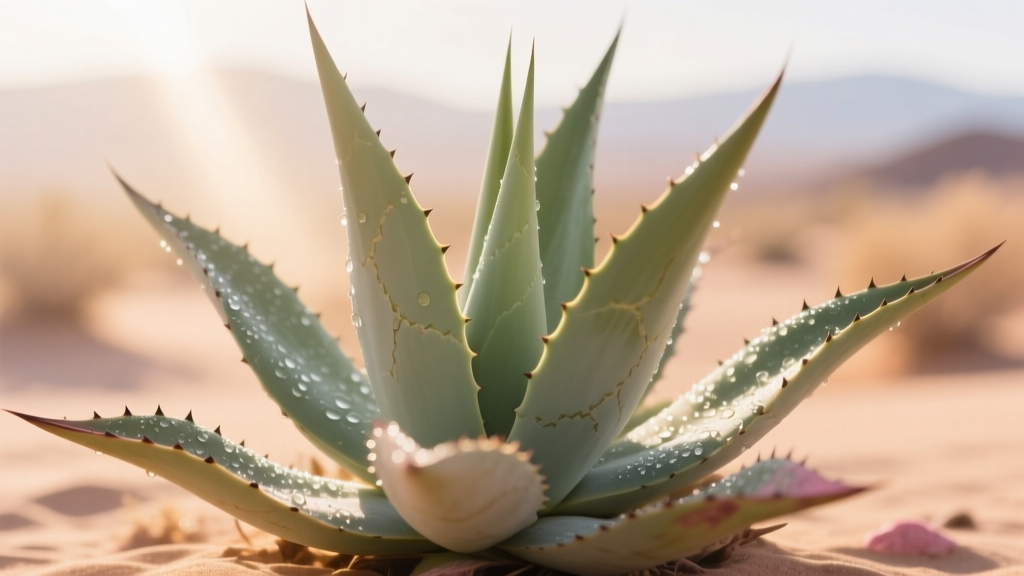
Managing Heat Stress in Agave
Last July, a neighbor hauled a perfectly good agave to the curb—leaf tips crisped, a few pale patches, and a soft spot near the base. “It got cooked,” she said. The funny thing? The plant wasn’t dying from “too much sun” in the way most people think. It was dying from a chain reaction: hot reflected light off a wall, a shallow watering habit that never reached the roots, and a pot that turned into an oven by 3 p.m. Agaves are built for heat, but even desert-tough plants have a breaking point when heat and drought stack up the wrong way.
Heat stress in agave is usually fixable if you catch it early—and preventable if you set the plant up right. Below is how I handle heat waves with agaves in real yards: containers, new transplants, slopes, and those brutal “bakes from below” spots near concrete and rock mulch.
What heat stress looks like (and what it’s telling you)
Agave symptoms can be confusing because the plant stores water and reacts slowly. A heat event today might show up as damage 7–21 days later. Here are the most common heat-stress signals and what they usually mean.
Common symptoms
- Leaf bleaching or pale patches on the sun-facing side (often sunscald after a sudden heat spike or rapid exposure increase).
- Crispy brown tips/edges (chronic dehydration, salty water buildup, or hot wind).
- Wrinkling or “accordion” leaves (water deficit; the plant is pulling stored water from leaves).
- Soft base, sour smell, or leaf pull-out (rot—often triggered when people panic-water in extreme heat and the crown stays wet).
- Stalled growth for weeks (a protective slowdown; not always a problem if the plant is otherwise firm).
One key idea: agaves tolerate high air temperatures better than they tolerate hot roots. In containers or in tightly packed soils, root-zone temperatures can climb well above the air temperature, and that’s when stress turns into real injury.
“Most heat damage we diagnose in arid-land succulents is tied to root-zone stress—overheated containers, reflected heat, and irrigation practices that don’t recharge the full root profile.” — Cooperative Extension horticulture guidance for desert landscapes (University of Arizona Cooperative Extension, 2020)
Heat stress thresholds: when you should intervene
Agaves can handle 100°F (38°C) days when established in the ground, but heat waves push conditions past “normal desert summer.” I start heat-management steps when:
- Forecast highs exceed 105°F (40.5°C) for 2+ days, especially with hot nights above 80°F (27°C).
- Container surface is too hot to touch for more than 3 seconds by mid-afternoon.
- A newly planted agave (installed within the last 6 months) is in full afternoon sun.
- The plant sits within 4 feet of reflective surfaces (south/west walls, metal fencing, bright gravel, concrete).
These are practical triggers, not scare tactics. The goal is to prevent permanent scarring and avoid the “panic watering → rot” loop.
Watering strategies that actually cool the plant (without causing rot)
When agaves struggle in heat, most home gardeners either under-water (frequent sips) or over-water (big soaking too often). The sweet spot is deep, timed irrigation that recharges the root zone, then allows it to dry down.
Deep soak vs. frequent splash: what works better in heat
For established in-ground agaves during extreme heat, I prefer a deep soak early in the day, then leave the crown dry. For containers, I water thoroughly until runoff, then manage pot temperature and airflow.
| Method | Typical schedule during 105–115°F (40–46°C) | Water amount (home scale) | Best for | Common failure |
|---|---|---|---|---|
| A) Deep soak | Every 7–14 days (in-ground, established) | 2–5 gallons per plant, applied slowly around the drip line | Established landscape agaves | Watering too close to the crown, causing rot |
| B) Frequent light watering | Every 1–3 days | 0.25–1 gallon near the base | Rarely ideal (only for very sandy soils + new transplants) | Shallow roots + salt buildup + heat stress persists |
| C) Deep soak + temporary shade | Deep soak every 7–10 days plus shade for 10–21 days | 2–5 gallons + shade cloth | Heat wave rescue, sunscald prevention | Shade too dense, plant stays damp/cool and risks fungus in humid climates |
Step-by-step: how to water an agave during a heat wave
- Water early: aim for 5–9 a.m.. Evening watering can leave soil warm and wet overnight, which is rough on roots.
- Keep the crown dry: apply water in a ring 6–12 inches away from the base for small agaves, farther out for large ones.
- Go slow: use a low-flow hose or drip so water penetrates 8–12 inches deep instead of running off.
- Check depth: after watering, use a soil probe, long screwdriver, or a moisture meter to confirm moisture reached depth.
- Wait for dry-down: don’t water again until the top 2–4 inches are dry and the plant shows mild thirst (slight wrinkling), not collapse.
Extension recommendations for desert-adapted landscapes consistently emphasize deeper, less frequent irrigation over daily sprinkling. For example, University of California Agriculture and Natural Resources notes that deep watering encourages deeper rooting and improves drought performance (UC ANR guidance, 2021).
Three real-world watering scenarios (and what I’d do)
Scenario 1: New transplant in-ground, planted 3 weeks ago, temps 108°F (42°C). New roots haven’t colonized the soil yet, so the plant can’t access deep moisture.
- Water every 4–7 days for the first heat wave, 1–2 gallons applied slowly.
- Add temporary shade cloth (30–40%) on the west side for 2–3 weeks.
- Skip fertilizer until you see new leaf growth.
Scenario 2: Mature agave near a south-facing stucco wall, leaf bleach appears. This is often reflected heat + sudden heat spike.
- Deep soak: 3–5 gallons at the drip line every 10–14 days during the heat spell.
- Install a temporary shade screen between 2–6 p.m. for 10–14 days (not directly touching the leaves).
- Consider replacing bright gravel with darker, larger rock or adding a small companion shrub to break reflection.
Scenario 3: Container agave on a patio, pot feels scorching, plant wrinkles fast. Containers heat up and dry out dramatically.
- Move the pot so it gets morning sun and afternoon shade for 7–14 days.
- Water thoroughly until runoff, then again only when mix is dry at least 2 inches down.
- Insulate the pot: place it inside a slightly larger pot with an air gap, or shade the pot itself (not the plant).
Soil and potting mix: the root-zone is where heat stress starts
Agaves don’t need “rich soil.” They need fast drainage and air around roots. Heat stress gets worse when roots are oxygen-starved, because hot, wet soil is a perfect storm for rot organisms.
In-ground soil fixes
- Heavy clay? Plant on a mound 6–12 inches high and at least 18–24 inches wide. This keeps the crown above soggy zones and improves airflow.
- Amend sparingly: mix in coarse mineral material (pumice, decomposed granite, expanded shale) rather than lots of compost.
- Mulch choice matters: bright gravel can increase reflected heat. In extreme sites, a layer of coarse organic mulch 1–2 inches thick can cool soil—just keep it back from the crown by 3–6 inches.
Container mix that handles heat
A good agave potting mix for hot summers holds enough moisture to bridge heat spikes but dries quickly enough to prevent rot. A reliable home blend by volume:
- 50% cactus/succulent mix (base)
- 25% pumice or perlite
- 25% crushed lava rock or coarse grit
Use a pot with a real drain hole (not a pebble tray “drainage layer,” which doesn’t help). In severe heat, unglazed terracotta breathes but can dry too fast; thick ceramic buffers heat but can trap moisture. Choose based on your climate and how often you can check moisture.
Light management: sun tolerance changes with timing, exposure, and heat reflection
Agaves love sun, but “full sun” is not one thing. Full sun in coastal California is different than full sun in Phoenix, and different again next to a heat-reflecting wall.
When to provide temporary shade
Use shade as a short-term tool, not a permanent crutch (unless you’re growing a species that naturally prefers protection). Provide temporary shade when:
- Temps exceed 110°F (43°C) and the plant is in a container.
- You see fresh bleaching on new growth (new leaves are more vulnerable).
- A plant was recently moved from partial shade to full sun.
How to shade without creating new problems
- Use 30–40% shade cloth rather than 60–80% (too dark encourages weak growth).
- Position it to block afternoon sun (usually west/southwest), not morning sun.
- Keep shade cloth 6–12 inches away from leaves for airflow.
- Plan for 10–21 days of shade during the worst heat, then taper off.
Sunscald often shows up as a pale, parchment-like patch that later turns tan. That tissue won’t turn green again, but you can stop it from spreading by stabilizing water and reducing peak exposure.
Feeding and growth: don’t push agaves during extreme heat
Heat-stressed agaves don’t need a “boost.” Fertilizer can actually make things worse by pushing tender growth that dehydrates faster and burns more easily.
Practical feeding rules
- Skip fertilizer when highs are above 100°F (38°C) for extended periods.
- If you fertilize at all, do it in spring or early summer before the worst heat: a light application of a balanced, slow-release fertilizer at 1/2 the label rate.
- In containers, flush salts: every 6–8 weeks in summer, water until you get strong runoff for 30–60 seconds (if your mix drains well). This helps prevent tip burn from salt accumulation.
High salts plus heat is a common “mystery” issue. Leaf tips brown, the plant wrinkles, and gardeners add more fertilizer—making it worse.
Common heat-related problems (and how to fix them)
Problem: Sunscald (bleached patches)
Symptoms: White or pale yellow patches on the sun-facing side; later turns tan and dry. Usually shows up after a heat spike or sudden exposure increase.
What to do:
- Provide temporary afternoon shade for 10–14 days.
- Deep water (don’t mist leaves): 2–5 gallons in-ground depending on plant size.
- Do not cut off damaged leaves unless they’re collapsing or harboring pests; agaves reuse leaf resources.
Problem: Crown or base rot after “rescue watering”
Symptoms: Soft, squishy base; leaves pull out easily; sour smell; dark, wet tissue at the core.
What to do immediately:
- Stop watering for 7–14 days (longer if humid or soil stays wet).
- Improve airflow and keep water away from the crown.
- If in a pot, unpot and inspect roots. Trim black/mushy roots with sterile pruners.
- Dust cuts with sulfur or a dry fungicide labeled for ornamentals, then let the plant callus for 48–72 hours before repotting in dry mix.
Prevention: Water the soil, not the rosette. In humid regions, agaves need sharper drainage and more spacing than people expect.
Problem: Leaf tip burn and edge crisping
Symptoms: Brown tips and margins, often uniform across multiple leaves. Sometimes paired with white crust on soil surface (salts).
Likely causes: chronic underwatering, high-salt irrigation water, or fertilizer salts concentrating in hot weather.
Fix:
- Switch from frequent sips to deep watering on a longer interval.
- Flush container soil every 6–8 weeks during summer.
- If using municipal water, consider occasional rainwater or filtered water for sensitive container plants.
Problem: Agave snout weevil and stressed plants
Symptoms: Sudden collapse, oozing at base, “fermented” smell; sometimes you’ll see larvae in the crown. Heat-stressed plants can be more vulnerable because they’re slower to respond and already compromised.
Action:
- Remove and dispose of severely infested plants promptly (don’t compost).
- Keep the area clean of rotting agave tissue.
- In regions where agave snout weevil is common, consult local extension recommendations for preventive treatments and timing. (Texas A&M AgriLife Extension, 2022, notes regional outbreaks and emphasizes early detection and sanitation.)
Troubleshooting by symptom: quick diagnosis you can use in the yard
If leaves are wrinkling but still firm
- Most likely: thirst (especially in containers or new transplants).
- Do this: deep water early morning; check again in 48 hours. If wrinkling improves, you were simply under-watering.
- Avoid: daily small watering that keeps roots shallow and hot.
If the center (spear) looks okay but outer leaves scorch
- Most likely: sunscald or reflected heat.
- Do this: add afternoon shade; water deeply on schedule; reduce reflected heat (move pot, add screen, change mulch).
If the center is soft or smells bad
- Most likely: crown rot (sometimes following overwatering in heat).
- Do this: stop watering, improve drainage, and consider unpotting or surgical cleanup if container-grown.
Heat-wave preparedness: set your agave up before summer hits
The best time to manage heat stress is May, not mid-August. A few small moves make an outsized difference.
Pre-season checklist
- Adjust irrigation: test run your drip or soaker and confirm coverage reaches the plant’s root zone, not just the crown.
- Refresh top-dressing: keep mulch/gravel 3–6 inches away from the agave base.
- Stabilize containers: move pots so they’re shaded from the west, or shade the pot itself.
- Acclimate sunlight: if moving an agave into brighter sun, do it over 2–3 weeks (a few hours more sun every few days).
Comparison analysis: temporary shade vs. extra watering (what changes the outcome?)
When homeowners call me during a heat wave, they usually ask one of two questions: “Should I water more?” or “Should I shade it?” The practical answer is often “some of both,” but not equally.
- Extra watering alone can help if the plant is simply dry, but it won’t stop sunscald if leaf tissue is overheating daily. And if you overdo it, you can trigger rot.
- Temporary shade directly lowers leaf surface temperature and reduces transpiration demand. In many yards, adding 30–40% afternoon shade for 10–21 days prevents new damage even if old scars remain.
Here’s the practical takeaway: if you’re facing 110°F (43°C) days with reflected heat, shade is the safer first lever. Pair it with deep, correctly placed irrigation (not crown watering) to keep roots functional.
Three “hard lessons” I’ve learned with agaves in extreme heat
Case 1: The rock-mulch oven. A client installed a young agave in black gravel against a west wall. Air temp was 106°F (41°C); the gravel surface was far hotter. The plant bleached in 10 days. We swapped the immediate ring around the plant to a cooler organic mulch layer (1–2 inches, kept back from the crown), added a temporary shade panel, and adjusted watering to a slow deep soak every 7 days for a month. It stopped deteriorating and pushed new leaves the next season.
Case 2: The “daily sip” drip line. Another yard had drip emitters running 10 minutes daily. The soil stayed damp at the surface and bone dry below. The agave wrinkled and crisped anyway. We changed to longer run time but less often (enough to wet 8–12 inches deep), and the plant recovered without any fertilizer.
Case 3: The patio container meltdown. A beautiful variegated agave in a dark nursery pot sat on concrete. The pot overheated and roots cooked. The fix was not more water—it was moving the pot to morning sun, slipping it into a larger light-colored pot with an air gap, and repotting into a more mineral mix. After that, watering frequency dropped and the plant held firmness through the next heat spell.
When damage is permanent—and what to do next
Some heat damage is cosmetic. Bleached patches won’t re-green. Crisped tips won’t “heal.” If the plant is firm at the base and producing a healthy center, you can simply keep it stable and let new growth outgrow the scars.
- Leave functional leaves in place; they still photosynthesize even if scarred.
- Remove only leaves that are mushy, collapsing, or harboring pests.
- Be patient: agaves are slow. A stressed plant might take 1–3 months to look better, and a full seasonal cycle to regain vigor.
If your summers routinely hit 110–115°F (43–46°C) and you’re fighting reflected heat, consider relocating the agave in early fall when nights cool (or rethinking the site). The most successful agaves I see are not “tougher plants”—they’re plants placed where roots can breathe and leaves aren’t blasted by reflected heat every afternoon.
Get the watering deep and correctly placed, keep the root zone airy, and use temporary shade like a tool instead of a crutch. Do that, and most agaves will ride out heat waves with nothing more than a few scars—and a little attitude.