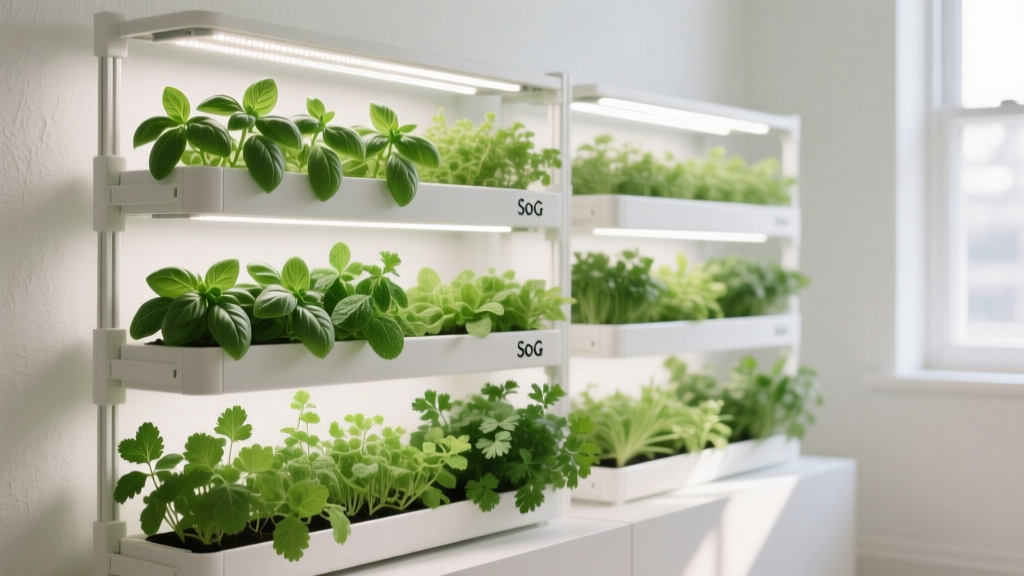
Screen of Green Setup for Herb Gardens
Last summer I watched a neighbor baby a dozen basil plants in a raised bed—watering daily, feeding weekly—and still end up with floppy stems, shaded-out lower leaves, and a harvest that was mostly “top tufts.” The problem wasn’t effort. It was structure. Herbs grow fast, and in tight spaces they compete for light the same way tomatoes do: the top wins, the bottom sulks. A simple screen (the “Screen of Green,” or ScrOG) turns that chaos into an organized, high-yield herb canopy you can actually reach, trim, and keep productive for months.
A Screen of Green setup is basically a horizontal trellis that you train stems through so the growing tips spread out like a tabletop. Instead of one plant reaching for the sky, you get many evenly lit tips across the screen. This is especially useful for soft-stemmed culinary herbs (basil, mint, lemon balm, oregano) and even some woody ones when they’re young (rosemary, thyme) as long as you don’t force brittle stems.
What a Screen of Green looks like for herbs (and why it works)
For herb gardens, ScrOG isn’t about extreme plant manipulation—it’s about gentle training and consistent harvesting. You’re creating a flat, sun-catching canopy that:
- Improves light penetration so lower leaves stay productive.
- Increases airflow to reduce powdery mildew and leaf spot.
- Makes pruning/harvesting simpler (you see every tip).
- Uses vertical space efficiently in small beds, patios, and indoor setups.
Think of it like laying out the branches of a fruit tree on an espalier—only quicker, softer, and easier to reset if you change your mind.
Best herbs for ScrOG training
Not every herb loves being bent and woven. Use the screen on herbs with flexible stems and strong regrowth after cutting:
- Excellent: basil, mint, lemon balm, oregano, marjoram, shiso, cilantro (short window), dill (young and gentle)
- Works with care: sage (young stems), rosemary (young stems only), thyme (more as a support than weaving)
- Skip weaving: chives, parsley (use a light support ring instead), lavender (too woody)
Build the screen: materials, measurements, and layout
You don’t need fancy gear. You need a stable frame, a grid, and a way to adjust height. For most home herb setups, a screen height of 8–12 inches above the soil is the sweet spot—low enough to train early, high enough to weed and water.
Recommended dimensions (3 practical setups)
- Raised bed (4 ft x 4 ft): one screen at 10 inches high, grid spacing 3–4 inches.
- Patio container (24–30 inch wide trough): small screen at 8–10 inches high, grid spacing 3 inches.
- Indoor grow tent shelf (2 ft x 4 ft): screen at 8 inches high, grid spacing 2–3 inches for tighter control under LEDs.
Grid spacing matters. Too wide and stems slip through without support; too tight and you’ll fight the net every time you harvest. For basil and mint, 3-inch squares are easy to work with.
Materials that hold up outdoors
- Frame: 1x2 cedar strips, PVC, or metal conduit
- Grid: nylon trellis netting, coated wire mesh, or jute twine (replace yearly)
- Fasteners: zip ties, stainless staples, or outdoor screws
If you’re gardening where summers hit 90°F+ regularly, skip cheap plastic netting that becomes brittle in sun. Coated wire mesh lasts longer but is harder on tender stems—use plant ties where stems touch.
Step-by-step: installing a herb ScrOG screen
- Set posts first. Put corner stakes or frame legs in place so the screen won’t wobble during pruning. Wobble is what snaps stems.
- Measure height. Start at 8–12 inches above soil level for most herbs.
- Attach the grid. Pull it taut—sagging netting makes training messy and shades pockets.
- Plant spacing. For basil: 8–12 inches between plants. For mint: one plant per container, or use a root barrier in beds.
- Wait for the right stage. Start training when stems are 6–8 inches tall and flexible.
“Pinching and training keeps plants in a vegetative, branching mode—more tips, more harvestable growth.” — Iowa State University Extension, publication on basil pruning and pinching (2020)
Light: getting an even canopy (outdoors and indoors)
ScrOG is a light-management tool. Outdoors, aim for a location with 6–8 hours of direct sun for basil, oregano, and rosemary. Mint and lemon balm tolerate 4–6 hours and actually appreciate afternoon shade in hot climates.
Outdoor light tricks that make ScrOG work
- Orient the screen north–south if possible, so both sides get sun across the day.
- Keep the canopy level. Any stem that rises above the rest steals light—tuck it back under.
- Don’t overcrowd. Dense canopies invite mildew, especially when nights are cool (55–65°F) and days are warm.
Indoor lighting targets (simple numbers)
If you’re growing herbs under LEDs, keep the tops roughly 12–18 inches from the light (follow your fixture’s guidance), and run herbs for 14–16 hours per day for steady growth. A screen helps you keep all tips at the same distance from the light, which is the whole game indoors.
Soil: the root zone that supports constant harvesting
ScrOG-trained herbs get cut often, which means roots need consistent moisture and oxygen. The biggest mistake I see is using heavy, water-holding soil that turns into a swamp under dense growth.
For containers, use a high-quality potting mix with added perlite. For beds, build a loose, compost-amended loam. A soil pH around 6.0–7.0 suits most culinary herbs.
Container mix recipe (reliable and forgiving)
- 60% potting mix (peat/coir-based)
- 30% compost
- 10% perlite or pumice
This blend drains well but holds enough moisture for frequent regrowth. If you’re growing rosemary or thyme, bump drainage further by increasing perlite to 20%.
Bed prep that prevents “screen swamp”
If your herb bed stays wet after rain, fix that before you add a screen. Once the canopy fills in, evaporation slows and the soil can stay damp too long. Aim for soil that drains within 2–4 hours after a thorough watering. If it stays soggy longer, add compost, coarse sand (sparingly), or consider a raised mound.
Soil testing is worth it when you’re feeding and harvesting heavily. Many extension offices recommend soil tests every 2–3 years for home gardens (University of Minnesota Extension, 2023).
Watering: steady moisture without inviting mildew
ScrOG makes the canopy dense, which is great for yield and terrible for sloppy watering. Wet leaves under a screen don’t dry quickly, and that’s how you end up with basil leaf spot or fuzzy mildew on mint.
How much to water (containers vs beds)
- Containers: Water until you get runoff, then stop. In warm weather (80–90°F), expect to water every 1–2 days once the screen fills in.
- Raised beds/in-ground: Target about 1 inch of water per week total (rain + irrigation), adjusted for heat and wind. This aligns with common extension guidance for vegetable and herb beds (Colorado State University Extension, 2022).
Use drip irrigation or a soaker hose under the canopy. If you hand-water, water early—think 7–10 a.m.—so any splashed leaves dry fast.
Three real-world watering scenarios (and what to do)
Scenario 1: Patio trough in full sun. Your screen is thriving, but the pot dries out daily. Solution: add a 1–2 inch mulch layer (straw or fine bark), and consider a drip line on a timer set for short runs (for example 5–10 minutes) in the morning. Check moisture with a finger test: top 1 inch dry = water.
Scenario 2: Raised bed with clay soil after storms. Herbs look perky, then suddenly yellow and stall. Solution: stop watering, pull mulch back temporarily, and aerate carefully with a hand fork outside root crowns. Long-term: add organic matter and raise the planting area; avoid screens that trap humidity until drainage improves.
Scenario 3: Indoor herbs under LEDs. Growth is fast, but fungus gnats appear. Solution: let the top 1–2 inches of mix dry between waterings, bottom-water when possible, and use yellow sticky traps. Gnats love constantly wet media, which is common when gardeners “top off” little bits daily.
Feeding: nutrients for repeat harvests (without ruining flavor)
Herbs don’t need heavy feeding, but ScrOG-trained herbs are essentially in a constant “regrow” cycle. If you keep cutting without replacing nutrients, leaves get smaller and pale, and basil turns thin and tired.
Simple feeding schedule that works
- Compost: Top-dress beds with 1/2 inch compost every 4–6 weeks during peak season.
- Containers: Use a balanced liquid fertilizer at 1/2 strength every 10–14 days, or a slow-release organic fertilizer mixed in at label rates.
- Flavor note: Overfeeding nitrogen can make basil lush but less aromatic. Keep it moderate—steady, not heavy.
If you see deep green leaves but weak aroma, ease up on nitrogen and increase light exposure (or thin the canopy). Aroma is often a light-and-stress story, not a “more fertilizer” story.
ScrOG training and pruning: how to fill the screen without breaking plants
This is where the yield comes from. You’re not just supporting growth—you’re directing it.
Training basics (the gentle method)
- Top early. When basil has 4–6 true leaves, pinch above a node to force branching.
- Tuck, don’t tug. Guide stems sideways under the screen and let the tip pop up in the next square.
- Train weekly. Spend 5–10 minutes once a week tucking fast growers (basil, mint).
- Harvest like you mean it. Cut above a node to keep branching. Don’t just pluck single leaves all season—this leads to bare stems.
How full should the screen be before you let it grow up?
For herbs, I like to fill about 70–80% of the screen area before letting tips rise above it by a few inches. That gives you an even canopy while still allowing enough vertical growth for strong leaves.
Comparison: Screen of Green vs stakes/cages for herbs
Stakes and small cages help, but they don’t redistribute light the way a screen does. Here’s how the methods compare in typical home conditions.
| Method | Typical canopy height | Light distribution | Airflow risk | Best use case |
|---|---|---|---|---|
| Screen of Green (ScrOG) | 8–18 in above soil (trained flat) | High (even, many tips) | Medium if overcrowded; manageable with thinning | Small spaces, intensive harvesting, indoor LEDs |
| Single stake per plant | 18–36 in (upright growth) | Medium (top-heavy) | Low to medium | Mixed beds, easy access, less training time |
| Small tomato cage | 18–30 in | Medium | Medium (foliage can clump inside) | One big basil, outdoor pots, windy patios |
If your goal is steady weekly harvest from a small footprint, ScrOG usually wins. If your goal is “set it and forget it,” a stake is simpler—but you’ll harvest mostly from the top and you’ll prune more often to keep plants from flopping.
Common problems (and the fixes that actually work)
Dense herb canopies are productive, but they magnify small mistakes. Use the symptoms below like a quick diagnostic.
Problem: Powdery mildew on mint or lemon balm
- Symptoms: White, dusty coating on leaves; leaves yellow and drop in shaded areas.
- Likely causes: Poor airflow, crowded screen, overhead watering, cool nights (55–65°F) with humid days.
- Fix:
- Thin the canopy: remove some interior stems to create “windows.”
- Water at soil level only; morning watering.
- Harvest aggressively: cut back up to 1/3 of the plant to reset airflow.
Problem: Basil leaves with dark spots / rapid yellowing
- Symptoms: Dark lesions, yellow halos, leaves dropping from lower canopy.
- Likely causes: Leaf spot diseases encouraged by wet foliage and dense growth.
- Fix:
- Remove affected leaves and discard (don’t compost if disease is active).
- Switch to drip/soaker watering; avoid splashing.
- Increase spacing or reduce plant count under one screen.
Problem: Flowering (bolting) before the screen fills
- Symptoms: Basil sends up flower spikes; cilantro and dill bolt quickly.
- Likely causes: Heat stress, inconsistent watering, or plants left unpinched.
- Fix:
- Pinch flower spikes immediately to push leaf growth.
- Keep soil evenly moist; don’t let containers dry hard.
- For cilantro/dill, accept their short cycle: plan successive sowings every 2–3 weeks rather than forcing long training.
Problem: Stems snapping during training
- Symptoms: A trained stem kinks and breaks at the screen line.
- Likely causes: Training too late (stems woody), screen too low, rough handling, or cold-stiff stems.
- Fix:
- Train when stems are 6–8 inches tall and flexible.
- Do training in late morning when plants are hydrated and pliable.
- Raise the screen to 12 inches for woody herbs or use soft ties instead of weaving.
Three case setups I recommend (pick the one that matches your garden)
Case 1: The “kitchen door” patio herb screen. Use a 24–30 inch trough with basil and oregano, plus one separate pot for mint (always separate). Install an 8–10 inch high screen. Expect daily checks in hot weather and harvest every 7–10 days. This setup shines when you cook often and want quick snips without trampling a bed.
Case 2: The raised-bed pizza garden. In a 4x4 ft bed, run one screen and plant basil at 10–12 inch spacing, tuck in young rosemary at corners with its own tie support (don’t weave older rosemary). Add drip irrigation under the canopy. Top-dress compost every 4–6 weeks. You’ll get a broad, even basil canopy that’s easy to harvest in armfuls.
Case 3: The indoor winter herb shelf. Use a 2x4 ft tray of containers under LEDs with a screen at 8 inches. Keep the canopy flat so all tips stay within 12–18 inches of the light. Run lights 14–16 hours. Feed lightly every 10–14 days. This is how you avoid leggy winter basil and keep mint from turning into a lanky mess.
Quick maintenance rhythm (what to do weekly)
- Weekly (5–10 minutes): tuck fast growers back under the screen; harvest tips that rise above the canopy.
- Every 2 weeks: check for mildew/leaf spot, thin crowded squares, and clean out dead leaves under the canopy.
- Monthly: refresh compost/top-dress, check net tension and fasteners, and reassess spacing if airflow is tight.
Keep a small pair of snips right by the garden. ScrOG works best when you harvest a little and often—small corrections prevent big problems.
Once you’ve run a screen for a season, it’s hard to go back. You stop fighting floppy basil, you stop losing lower leaves to shade, and you get a canopy that behaves—organized, reachable, and generous. Set it up once, train it a little each week, and you’ll be cutting clean, leafy sprigs long after your old “top tuft” plants would have given up.
Sources: Iowa State University Extension (2020); Colorado State University Extension (2022); University of Minnesota Extension (2023).