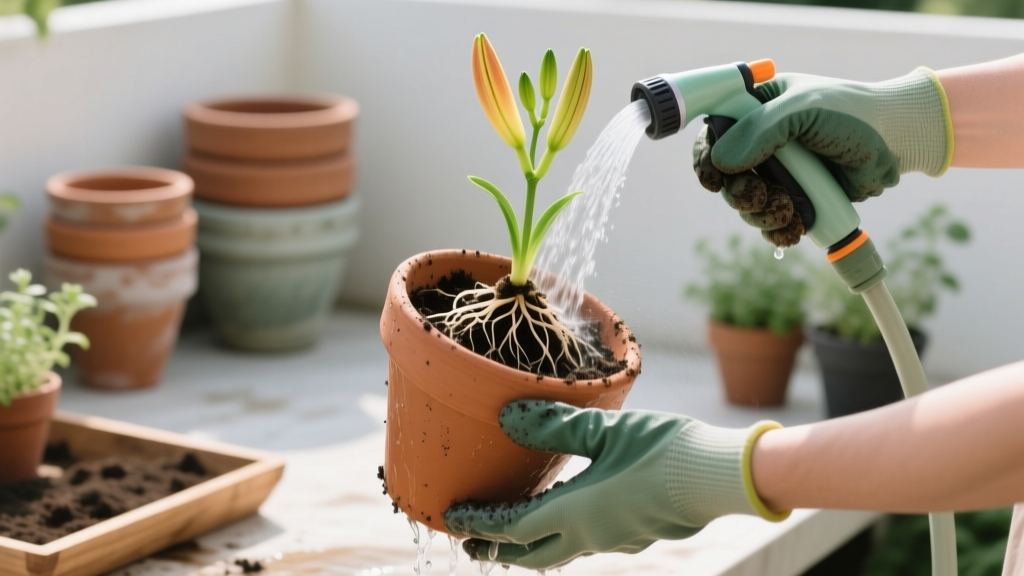
How to Clean Pots Before Repotting Daylilies
You set aside a Saturday for repotting daylilies. The clumps are divided, the new potting mix is ready, and then you notice it: last year’s pot has a crusty white ring, a little green film near the drainage holes, and a smell that’s… not soil. Most gardeners shrug, dump in fresh mix, and plant anyway. That’s how you carry salt buildup, algae, fungus gnats, and even lingering disease right into your “new start.”
Daylilies (Hemerocallis) are tough, but dirty pots can still slow them down—especially in containers where roots can’t escape problems. Cleaning your pots properly takes 10–20 minutes, and it’s one of the highest-return habits you can build into repotting day.
What you’re really removing (and why daylilies care)
Before we get to the scrub brush, it helps to name the enemies. Daylilies tolerate a lot, but containers magnify small issues into big ones.
- Mineral salts from fertilizer and hard water: show up as white crust (efflorescence). This can burn root tips and mess with water uptake.
- Algae and biofilm (green slime): holds moisture at the pot surface and invites fungus gnats.
- Pathogens that hitchhike in old soil film: certain fungi and bacteria persist in damp residues.
- Insect eggs and larvae (especially fungus gnats): commonly live in the top 1–2 inches of old potting mix.
A practical reminder from extension guidance on cleaning tools applies to pots too: remove debris first, then disinfect—disinfectants don’t work well through dirt. North Carolina State Extension notes that sanitizers are far more effective on pre-cleaned surfaces (NCSU Extension, 2022).
“Sanitizers and disinfectants are much less effective when used on dirty surfaces; clean first, then disinfect.” — Extension sanitation guidance adapted for garden equipment (NCSU Extension, 2022)
Quick checklist: supplies that actually help
You don’t need a chemistry lab. Here’s what I keep on hand for pot-cleaning day:
- Stiff brush (dish brush or nylon scrub brush)
- Bucket or tote (at least 3–5 gallons)
- Unscented household bleach (5–6% sodium hypochlorite) or 3% hydrogen peroxide
- White vinegar (5% acidity) for mineral deposits
- Rubber gloves and eye protection
- Old butter knife or plastic scraper for crusty rims
- Clean water for rinsing
Step-by-step: the master gardener method (clean, then disinfect)
This process works for plastic, ceramic, glazed pots, and most nursery containers. For unglazed terracotta, see the terracotta note below—porous pots need a little extra time.
1) Dump, knock, and dry-scrape (2–5 minutes)
- Dump old potting mix into yard waste (don’t compost if you suspect disease).
- Tap the pot to dislodge stuck roots and soil.
- Use a plastic scraper to remove thick crust on the rim and inside wall.
Real-world case #1: If you’re repotting daylilies that had weak growth last season and you see a heavy white ring inside the pot, assume salts. Salt buildup is more common when you fertilize often in containers or water with hard water.
2) Wash with soap and water (5 minutes)
Fill a bucket with warm water and a squirt of dish soap. Scrub the entire pot, including:
- Inside walls (where salt rings form)
- Drainage holes (where algae and eggs hide)
- Pot rim and outer bottom (where disease splash can linger)
Rinse well. This washing step is not optional—clean surfaces let disinfectants work.
3) Choose your “problem solver” soak (10–30 minutes)
Pick one option based on what you’re dealing with. Don’t mix chemicals.
Option A: Bleach disinfecting soak (best for disease reset)
Use a 10% bleach solution: 1 part bleach to 9 parts water. Soak pots for 10 minutes, then rinse thoroughly and air-dry.
This concentration aligns with common extension sanitation recommendations for garden tools and surfaces when used properly on cleaned items (NCSU Extension, 2022).
- Timing: 10 minutes is plenty; longer isn’t better and can degrade some plastics.
- Rinse: Rinse until you no longer smell bleach.
- Dry: Let pots air-dry completely—drying helps finish the job.
Option B: Hydrogen peroxide (best for quick turnaround and lighter disinfection)
Use 3% hydrogen peroxide straight from the bottle or diluted 1:1 with water for large soaks. Contact time: 10 minutes. Rinse lightly and allow to dry.
When I use it: If I’m turning pots around quickly or working indoors where bleach odor is a headache.
Option C: Vinegar soak (best for mineral crust, not a disinfectant)
For salt crust and hard-water scale, soak the pot in 1:1 white vinegar and water for 30–60 minutes. Scrub again, then rinse.
Important: Vinegar helps with deposits but doesn’t reliably disinfect plant pathogens. If you suspect disease, do vinegar first (for crust), then wash/rinse, then bleach.
4) Special note for terracotta (porous pots)
Unglazed terracotta acts like a sponge. It holds salts and moisture deep in the walls.
- Soak in 1:1 vinegar solution for 60 minutes.
- Scrub, rinse, then disinfect with a 10% bleach soak for 10 minutes.
- Air-dry for 24 hours if possible before replanting.
Real-world case #2: If your daylily pot is terracotta and the plant dried out constantly last year even when you watered, salts may have built up in the pot walls. That makes the pot “thirstier” and can irritate roots. A long vinegar soak often improves performance noticeably.
Method comparison: bleach vs peroxide vs vinegar (with real numbers)
| Method | Mix ratio | Contact time | Best for | Watch-outs |
|---|---|---|---|---|
| Bleach soak | 1:9 (10% solution) | 10 minutes | Reset after disease, general disinfection | Must pre-clean; can fade fabrics; rinse well; don’t mix with vinegar/ammonia |
| Hydrogen peroxide | 3% straight or 1:1 dilution | 10 minutes | Light disinfection, indoor work, quicker odor-free turnaround | Less effective through grime; more expensive per gallon |
| Vinegar soak | 1:1 with water | 30–60 minutes | Mineral crust, hard-water scale | Not a true disinfectant for pathogens; still needs scrubbing |
Comparison analysis (practical takeaway): If you can only do one method and you’re not dealing with heavy crust, bleach (10% for 10 minutes) gives the most reliable disease-reset per minute of effort. If crust is your main issue, vinegar is more effective than bleach at dissolving deposits, but it won’t substitute for disinfection. Peroxide is the “clean enough, fast enough” option for routine repotting when you’ve already scrubbed well.
Repotting success depends on more than clean pots
Cleaning is the foundation. After that, daylilies reward you when you match watering, soil, light, and feeding to container life. This is where many repots go sideways: fresh pot, same old habits.
Soil: choose a mix that drains fast but doesn’t dry out in a day
Daylilies like moisture, but they hate staying soggy. In containers, use a quality potting mix—never garden soil.
- Base mix: 2 parts high-quality potting mix + 1 part pine bark fines (or orchid bark) for air space.
- Optional: Add 10–20% perlite if your mix feels heavy.
Aim for a potting mix that drains freely: if you water and it takes more than 60 seconds to start draining out the bottom, your mix may be too dense or the drainage holes are blocked.
Pot size tip with a number: For a typical divided fan, a 10–12 inch diameter pot is a sweet spot. Oversized pots stay wet too long; undersized pots dry too fast.
Light: give them enough sun to flower well
In containers, daylilies bloom best with plenty of light.
- Target: 6+ hours of sun for strongest flowering.
- Hot climates: Afternoon shade can prevent stress and crispy leaf tips.
Real-world case #3: If your daylily grew leaves but didn’t bloom last year, don’t only blame fertilizer. In pots, lack of sun is a common culprit—especially on patios where walls and railings cast shade half the day.
Watering: the container rhythm that keeps roots healthy
Right after repotting, daylilies need consistent moisture to re-root—but not waterlogged mix.
Right after repotting (first 7–10 days)
- Water thoroughly until water drains from the bottom.
- Then water again only when the top 1 inch of mix feels dry.
Summer routine (once established)
In warm weather, many potted daylilies need watering every 2–4 days. In heat waves above 90°F (32°C), daily watering isn’t unusual for smaller pots.
Technique that prevents problems: Water in the morning. Evening watering + warm nights is a recipe for fungus gnats and soggy roots.
Winter routine
Daylilies in pots still need occasional moisture, but far less. Water when the mix is dry several inches down and temperatures are above 40°F (4°C). Avoid soaking cold, dormant pots repeatedly.
Feeding: enough to bloom, not so much you build salt crust again
Overfeeding is one of the reasons pots get that white ring in the first place.
- At planting: Mix in a slow-release fertilizer labeled for containers, following the label rate (don’t “round up”).
- During growth: If using liquid fertilizer, feed at 1/2 strength every 3–4 weeks from spring through midsummer.
- Stop time: In most climates, stop feeding about 6–8 weeks before your first expected frost so plants can slow down naturally.
Salt management number: Once a month in the growing season, “leach” the pot by watering deeply until at least 15–20% of the water runs out the drainage holes. That flushes accumulating salts instead of letting them cement to the pot wall.
General extension fertilizer guidance for ornamentals emphasizes following label directions and avoiding over-application that can damage roots (University of Florida IFAS Extension, 2020).
Common problems (and how pot cleaning ties into them)
When you see issues after repotting, it’s tempting to blame transplant shock alone. Sometimes it is. But many post-repotting problems trace back to dirty pots, poor drainage, or salts.
Troubleshooting: symptoms and fixes you can do today
Symptom: White crust on soil surface or pot rim
- Likely causes: Fertilizer salts, hard-water minerals, not enough drainage runoff.
- Fix: Scrape crust off. Leach the pot with a deep watering that produces 15–20% runoff. Reduce liquid feeding to 1/2 strength. If severe, repot into fresh mix and clean the pot with vinegar + scrub.
Symptom: Fungus gnats (tiny black flies), especially indoors or on shaded patios
- Likely causes: Wet mix staying wet, algae/biofilm in drainage areas, old pot residue.
- Fix: Let the top 1–2 inches dry between waterings. Bottom-water less often. Clean saucers. Use yellow sticky traps. If severe, drench once with BTI (mosquito dunk water) per label.
Symptom: Daylily fans stall—no new growth 2–3 weeks after repotting
- Likely causes: Roots stayed too wet (low oxygen), pot too large, cold weather, or salt burn.
- Fix: Check drainage holes for blockage. Make sure potting mix is airy. Move to brighter light and warmer conditions (daytime 60–75°F / 16–24°C helps). Avoid fertilizing until you see new growth.
Symptom: Leaf tips brown and crispy
- Likely causes: Underwatering, hot wind, high salts, or sudden full sun exposure.
- Fix: Water deeply in the morning; consider afternoon shade in extreme heat. Flush salts with a leaching watering. Trim tips for looks—daylilies don’t mind.
Symptom: Crown feels soft or smells off
- Likely causes: Rot from soggy mix or contaminated residue, especially if a pot sat wet for weeks.
- Fix: Unpot immediately. Cut away mushy tissue with a clean knife. Replant into fresh mix in a cleaned, disinfected pot. Water lightly until recovery.
Three repotting-day scenarios (what I’d do in each)
Scenario 1: You reused last year’s pot and the daylily “never thrived”
If last season’s growth was weak and you see salt rings, do the full reset:
- Vinegar soak 1:1 for 30–60 minutes to dissolve crust
- Wash, rinse, then bleach soak 10% for 10 minutes
- Repot into fresh mix and leach monthly to prevent a repeat
Scenario 2: You’re dividing a big clump and don’t have enough pots
You can rotate a few pots through the cleaning station while you work:
- Set up two buckets: one soapy wash bucket, one disinfecting bucket.
- As soon as a pot is emptied, wash/scrub and drop it into disinfectant for 10 minutes.
- Rinse and air-dry while you prep the next division.
This “assembly line” keeps you moving and prevents the temptation to plant into half-clean pots.
Scenario 3: You’re repotting on a balcony and can’t dump bleach water anywhere
Use hydrogen peroxide and physical cleaning:
- Scrub extremely well with soapy water.
- Spray or soak with 3% hydrogen peroxide for 10 minutes.
- Rinse in a small amount of water and pour the rinse into a utility sink (not onto prized plants).
You can also lay pots in the sun to dry fully—UV and drying help reduce microbial survival on clean surfaces.
Safety notes (because repotting day should end with flowers, not a rash)
- Never mix bleach with vinegar (or ammonia). Rinse between steps.
- Wear gloves and eye protection when scrubbing crust and handling disinfectants.
- Work in ventilation. Bleach fumes build up fast in a garage.
- Label your buckets so nobody mistakes disinfectant for “wash water.”
Small habits that prevent dirty pots next time
Cleaning is easier when pots don’t get out of hand. These habits keep container daylilies healthier and reduce salt rings and slime.
- Water to runoff occasionally (aim for 15–20% drainage) to flush salts.
- Empty saucers after watering—standing water feeds algae and gnats.
- Top-dress lightly with fresh mix each spring instead of repeated heavy liquid feeding.
- Store empty pots dry. Damp, stacked pots are algae incubators.
Repotting daylilies is supposed to feel like progress—fresh soil, more room, better blooms. Clean pots are what make that reset real. Scrub first, choose the right soak for the problem you actually have, and then give your daylilies the container basics they need: a fast-draining mix, strong light, deep watering with occasional leaching, and moderate feeding. Do that, and you’ll notice the difference by the time the first flush of scapes shows up.
Sources: North Carolina State University Extension sanitation guidance for cleaning/disinfecting surfaces and tools (NCSU Extension, 2022); University of Florida IFAS Extension fertilizer best practices for ornamentals and avoiding over-application (UF/IFAS Extension, 2020).