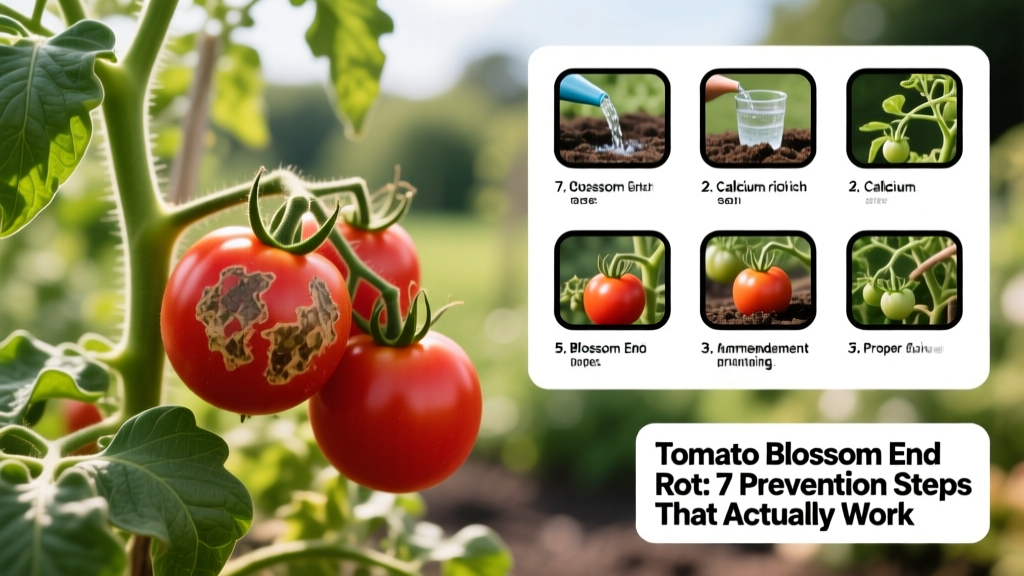
Tomato Blossom End Rot: 7 Prevention Steps That Actually Work
What Causes Blossom End Rot?
Blossom end rot appears as a dark, sunken spot on the bottom of tomatoes. Despite the name, it's not caused by a pathogen — it's a physiological disorder linked to calcium deficiency in the developing fruit. However, the real culprit is usually inconsistent watering, which prevents calcium uptake.
Step 1: Test Your Soil Calcium Levels
Before planting, test your soil for calcium. Most garden soils have adequate calcium, but it may not be available to plants if the pH is too low (below 6.0). Aim for a pH between 6.2 and 6.8 for optimal calcium availability.
Step 2: Maintain Consistent Moisture
The single most important prevention step is keeping soil moisture consistent. Tomatoes need about 1-1.5 inches of water per week. Use a soaker hose or drip irrigation to deliver water directly to the root zone. Mulch with 2-3 inches of straw to reduce evaporation.
Step 3: Add Calcium Supplements if Needed
If your soil test shows low calcium, add gypsum (calcium sulfate) at planting time. Apply 1-2 tablespoons per plant, worked into the soil around the root zone. Avoid lime unless your pH also needs raising.
Step 4: Avoid Over-Fertilizing with Nitrogen
Excess nitrogen promotes rapid leafy growth at the expense of fruit development. Fast-growing plants demand more calcium than the roots can supply. Use a balanced fertilizer (5-10-10) rather than high-nitrogen formulas.
Step 5: Choose Resistant Varieties
Some tomato varieties are more susceptible to blossom end rot than others. Roma and paste tomatoes are particularly prone. If BER is a recurring problem, try varieties like Celebrity, Mountain Pride, or Jet Star, which show better resistance.
Step 6: Water Deeply and Regularly
Water deeply 2-3 times per week rather than daily light watering. Deep watering encourages strong root systems that can access calcium deeper in the soil profile. Morning watering is best to reduce disease pressure.
Step 7: Remove Affected Fruit Promptly
Once a fruit shows blossom end rot, it won't recover. Remove affected fruit immediately to redirect the plant's energy to healthy developing tomatoes. The plant will produce new, healthy fruit if you correct the underlying issue.
Quick Recovery Timeline
After implementing these steps, you should see improvement within 1-2 weeks. New fruit set after correction should develop normally. Remember: consistency is the key — both in watering and in soil management.