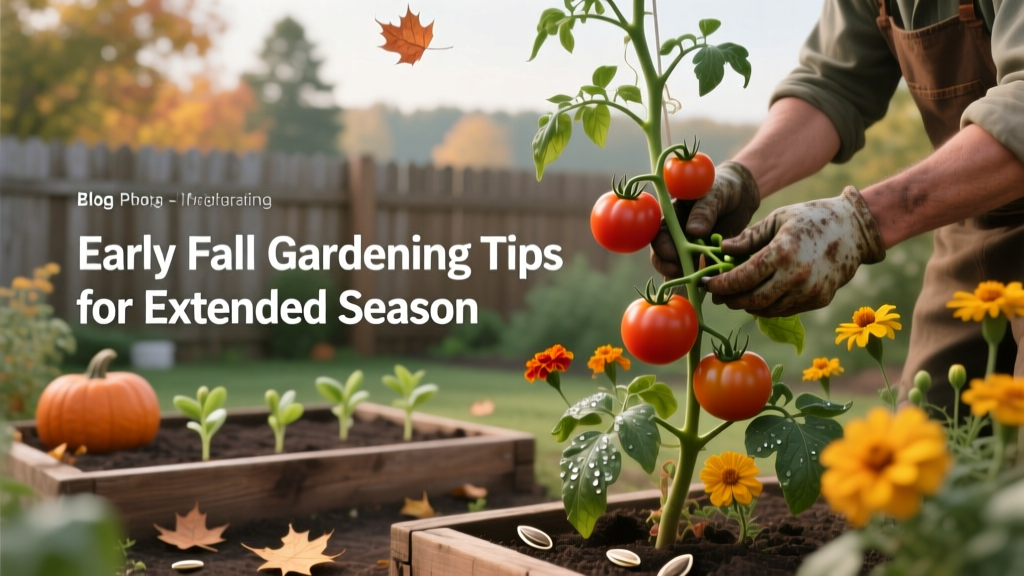
Early Fall Gardening Tips for Extended Season
Early fall is the hinge point of the garden year: days are still warm enough to grow, but nights start dropping fast. If you act in the next 2–4 weeks, you can harvest longer, root new plants before winter, and set next spring up for fewer weeds and better soil. Wait until the first hard frost warning hits, and you’ll be protecting plants instead of gaining weeks of growth. Use this guide like a working checklist—do the high-impact jobs first, then move down the list.
Keep three numbers in your head right now: your average first frost date, the nighttime lows that trigger plant stress, and the soil temperature needed for rooting. Many warm-season crops slow sharply when nights fall below 55°F, while many cool-season crops thrive when daytime highs are 60–75°F. Garlic and many perennials root best when soil is still around 50–60°F—often a brief window in early-to-mid fall.
Priority 1: What to Plant Now (fast wins for an extended harvest)
If you want more food this year, planting is the most time-sensitive early-fall task. Aim to sow or transplant 6–10 weeks before your average first frost for most fall vegetables, then use row covers to buy additional time. For reference, gardeners in USDA Zone 3–4 might hit first frost around Sept 10–25, Zone 5 around Oct 1–15, Zone 6 around Oct 10–25, Zone 7 around Oct 20–Nov 10, and Zone 8 often Nov 10–Dec 10 (local variation is significant—check your town’s NOAA normals).
Plant cool-season greens and roots (sow now, harvest through frost)
These crops handle light frosts (and taste better after a chill). In many gardens, you can keep harvesting under protection until nights consistently hit 25–28°F.
- Spinach: Sow 6–8 weeks before first frost; germination is best when soil is under about 75°F. Use shade cloth for the first week if your afternoons are still hot.
- Arugula, mustard greens, mizuna: Sow 4–6 weeks before first frost for baby leaves; succession sow every 10–14 days.
- Radishes: Sow 3–6 weeks before first frost (fast varieties can size up in 25–35 days).
- Turnips and beets: Sow 6–10 weeks before first frost; thin promptly to prevent disease and woody roots.
- Carrots: Sow 10–12 weeks before first frost for full-size roots; keep seedbed evenly moist until germination.
Timing tip: If your first frost is October 15, the first week of September is prime for sowing beets, turnips, and spinach. If you’re already inside the 4-week window, shift to baby greens and radishes and plan to use row cover.
Transplant brassicas (but only if you can keep them watered)
Early fall transplants can be remarkably productive because soil is warm while air is cooler. If you can supply steady moisture for 10–14 days, you can set out:
- Broccoli, cauliflower, cabbage: Transplant 8–10 weeks before first frost (earlier is better for heading crops).
- Kale, collards: Transplant 6–8 weeks before first frost; these are the most forgiving and can often be harvested well past first frost.
Plan on using insect netting or floating row cover immediately after transplanting to block cabbage worms and flea beetles. Extension recommendations consistently emphasize exclusion as a top tactic for fall brassicas. For example, University of Minnesota Extension notes floating row covers can prevent insect access to susceptible crops (University of Minnesota Extension, 2020).
Plant fall cover crops (your best “do something once” improvement)
Cover crops are the underrated early-fall power move. They protect soil from erosion, suppress winter weeds, and build organic matter.
- Oats: Sow about 6–10 weeks before your hard freeze; winter-kills in colder zones, leaving an easy mulch.
- Cereal rye: Sow from late summer into fall; very cold-hardy and ideal if your goal is spring weed suppression.
- Crimson clover: Best where winters are moderate (often Zones 6–8) and you want nitrogen fixation.
“Cover crops can reduce soil erosion, increase soil organic matter, improve water infiltration, and suppress weeds.” — USDA NRCS, Cover Crops (USDA NRCS, 2011)
Quick reality check: If you’re behind schedule, rye is the most forgiving late option. If you’re in a short-season area (Zones 3–4), oats are often easier because they winter-kill and don’t require spring termination.
Plant spring-blooming bulbs and garlic (timed by soil temperature)
Early fall is when you lock in spring flowers and next year’s garlic—both depend more on soil temperature than calendar date.
- Garlic: Plant when soil cools to about 50–60°F (often 2–4 weeks before the ground freezes). Many extension guides recommend fall planting so cloves root before winter dormancy (Penn State Extension, 2022).
- Tulips, daffodils, crocus: Plant when nights consistently dip into the 40s°F and soil begins cooling; in warm climates, bulbs may need pre-chilling.
Mulch garlic after planting once soil cools further—usually after a few nights around 32–35°F—so you don’t create a warm, rodent-friendly bed too early.
Priority 2: What to Prune (and what not to touch yet)
Early fall pruning mistakes can cost blooms and increase winter damage. The goal right now is targeted sanitation, not reshaping the garden.
Prune only for health and safety
- Remove dead, diseased, or broken branches any time you notice them (sanitize tools between cuts).
- Cut out tomato and squash vines that are clearly failing from blight or mildew and remove them from the garden (don’t compost if disease is active).
- Lightly tidy herbs like basil to push a final flush, but stop heavy cutting if nights are consistently below 50°F.
Hold off on these common fall pruning impulses
- Don’t prune spring-flowering shrubs (lilac, forsythia, many hydrangeas) now—you’ll remove next year’s buds.
- Avoid hard pruning of roses in early fall in colder zones; it can trigger tender new growth right before freezes.
- Skip heavy pruning on fruit trees now; major pruning is typically a dormant-season job to reduce disease risk and stress.
If you must reduce size (storm damage, walkway clearance), keep cuts minimal and wait for dormancy for major structural work.
Priority 3: What to Protect (buy weeks of harvest and prevent overwintering problems)
Protection isn’t just for cold. Early fall is when insects, fungal spores, and rodents position themselves for winter. A few smart moves now reduce next spring’s pressure.
Frost protection thresholds that matter
Use these triggers to decide when to cover:
- At 40°F: Bring houseplants in gradually; check for hitchhiking pests before moving them indoors.
- At 36–38°F: Cover tender crops (basil, peppers, eggplants) with fabric row cover overnight.
- At 32°F: Expect frost in low spots; harvest tomatoes that are turning and cure them indoors.
- At 28°F: Many tender crops are done; cool-season crops continue under cover.
- At 25°F: Even hardy greens need protection for continued harvest (double row cover or low tunnel).
Actionable setup: Install hoops now (before the first frost alert) so covers go on in minutes. Anchor fabric with boards or landscape staples—early fall winds can do more damage than the cold.
Low tunnels vs. frost cloth vs. cloches (what works when)
| Protection Method | Best For | Realistic Temperature Buffer | Watch Outs |
|---|---|---|---|
| Floating row cover (lightweight) | Greens, brassicas, carrots | ~2–4°F | Needs good sealing at edges; can tear in wind |
| Frost cloth (heavier) | Peppers, late tomatoes, fall lettuce | ~4–8°F | Must be supported over tall plants; remove/vent on warm days |
| Low tunnel (hoops + cover) | Extended harvest beds | ~5–10°F (more with double layer) | Humidity buildup increases disease; vent midday |
| Cloches (bottles, domes) | Single plants, small transplants | ~3–7°F | Overheats easily in sun; remove caps midday |
Early fall pest and disease prevention (don’t let problems overwinter)
Late-season infestations are next year’s first outbreak if you ignore them. Focus on sanitation and prevention.
- Powdery mildew (squash, cucumbers): Remove heavily infected leaves to improve airflow; water at the base only. If vines are collapsing, pull and dispose—don’t leave mildew-laden foliage in place.
- Tomato blights: Remove infected foliage immediately. Clean up fallen leaves and fruit; many blight pathogens persist in debris. Rotate tomatoes away from that bed next year.
- Cabbage worms and loopers: Use insect netting/row cover as a barrier on fall brassicas; hand-pick weekly if you’re uncovered.
- Squash bugs: Remove egg clusters from leaf undersides; clear vines after harvest so adults don’t shelter in debris.
- Slugs: As nights cool and dew increases, slugs surge. Pull back mulch from seedlings, water in the morning, and use traps or iron phosphate baits as needed.
For many home gardens, the single most effective fall disease prevention step is removing infected plant material rather than “letting it ride” until frost. Research and extension guidance consistently emphasize sanitation as a key part of integrated pest management (IPM) in vegetable systems (Cornell Cooperative Extension IPM resources, 2021).
Protect perennials and shrubs the right way (mulch timing matters)
Mulching too early can keep soil warm and encourage pests. Mulch after a few hard frosts have cooled the ground—often after nights are regularly near 25–30°F in colder zones.
- Newly planted perennials: Keep watered weekly until the ground begins to freeze; roots grow in cool soil even when tops slow down.
- Strawberries: Renovate and thin early; apply straw mulch after several frosts but before deep freezes.
- Evergreens: Water deeply before the ground freezes if rainfall is low; winter wind desiccation is a common cause of browning.
Priority 4: What to Prepare (set up spring success now)
These jobs don’t feel urgent until they are. Early fall is when you can still work comfortably, soil is workable, and you have time to do it right.
Soil: test, amend, and mulch strategically
If you do one “future-you will thank you” task, do a soil test. Many labs need lead time; send samples in early fall so results return before the ground freezes.
- Soil testing: Sample now; adjust pH based on recommendations. Lime often takes months to fully react, making fall an ideal time to apply.
- Compost: Apply a 1–2 inch layer to empty beds, then cover with leaves or a cover crop to prevent nutrient loss.
- Leaves as mulch: Shred first; whole leaves mat and shed water. A 2–4 inch shredded layer is a reliable winter blanket for beds and around perennials.
Bed turnover: clean, label, and rotate
Early fall cleanup prevents overwintering pests and makes spring faster.
- Remove spent crops promptly; don’t leave diseased plants standing.
- Label beds with what grew where this year; rotation is much easier when you don’t rely on memory.
- Rotate families: move tomatoes/peppers/eggplants (Solanaceae), brassicas, cucurbits, and onions/garlic to different beds next year when possible.
Tools and irrigation: service now, not on the first freeze
- Sharpen pruners and loppers; disinfect blades after disease work.
- Drain hoses before nights dip below 32°F to prevent cracking fittings.
- Blow out or drain irrigation lines in colder zones (often Zones 3–6) before a hard freeze event.
Early Fall Timeline: a working schedule you can follow
Use this as a general pacing guide and adjust based on your first frost date and USDA zone. If you don’t know your frost date, look it up today—every action below is easier with that anchor.
| When | Do This | Why It Matters |
|---|---|---|
| Weeks 10–8 before first frost | Sow carrots; transplant broccoli/cabbage; start cover crop planning | Longer-maturing fall crops need the runway |
| Weeks 8–6 before first frost | Sow beets/turnips; sow spinach; install hoops for row covers | Prime window for cool-season growth and fast protection later |
| Weeks 6–4 before first frost | Sow radishes and salad greens; begin garlic bed prep; increase slug patrols | High success rate and quick harvests; pests shift with dew and cooling nights |
| Weeks 4–2 before first frost | Cover tender crops on cold nights; harvest and cure onions/squash; remove diseased vines | Prevents crop loss and reduces overwintering disease inoculum |
| At first frost warning (near 32°F) | Bring in houseplants; protect peppers; pick tomatoes at breaker stage | Prevents avoidable damage; ripening continues indoors |
Regional Scenarios: adjust these tips to your real conditions
Early fall doesn’t behave the same way everywhere. Use the scenario closest to your garden, then plug in your local frost date.
Scenario 1: Short-season cold zones (USDA Zones 3–4)
If your first frost commonly arrives by Sept 10–25, your strategy is “harvest protection + fast crops.” Skip long bets.
- Plant: radishes, arugula, baby spinach, and quick Asian greens; consider transplants of kale rather than direct seeding.
- Protect: set up low tunnels now; be ready to cover when nights hit 36–38°F.
- Prepare: sow oats as a cover crop early; it will establish fast and winter-kill cleanly.
In these zones, garlic planting often lands in late September to early October, but go by 50–60°F soil temps and your typical ground-freeze timing.
Scenario 2: Temperate zones with a long, usable fall (USDA Zones 5–7)
With first frost often between Oct 1–Nov 10, you can run two tracks: keep summer crops going under cover while pushing cool-season beds hard.
- Plant: succession sow lettuce and spinach every 10–14 days until about 4 weeks before frost; transplant broccoli and cabbage early.
- Protect: row cover brassicas immediately for insect control; switch to frost protection as nights cool.
- Prepare: soil test + compost application now; plant garlic as soils cool (often mid-Oct in Zone 6, later in Zone 7).
Humidity and dewy mornings are common in these zones—vent low tunnels midday to reduce foliar disease pressure.
Scenario 3: Warm fall and mild winter areas (USDA Zones 8–10)
If your first frost is late (or you rarely freeze), early fall is prime planting season—not shutdown season. Your biggest limitation may be lingering heat.
- Plant: start cool-season crops as soon as daytime highs settle closer to 85°F or lower; use shade cloth for germination if afternoons are still hot.
- Protect: focus less on frost and more on caterpillar pressure and fungal cycles after rain events.
- Prepare: bulbs may need chilling; garlic varieties should match mild winters (ask local extension or nurseries for adapted types).
In warm zones, cover crops like clover can thrive all winter, but you’ll need a plan to terminate them before spring planting.
Early Fall Checklists (printable-style tasks)
48-hour checklist (do these first)
- Look up your average first frost date and count back 6–10 weeks.
- Direct sow at least one fast crop: radish or arugula.
- Install hoops or stakes so row cover can go on in minutes.
- Remove any plants showing severe blight/mildew; bag and discard.
- Check irrigation coverage; plan 10–14 days of steady moisture for fall transplants.
Next 2 weeks checklist
- Succession sow greens every 10–14 days (stop based on frost countdown).
- Start cover crops on beds you won’t replant this fall.
- Prepare garlic bed (weed-free, composted, good drainage).
- Scout weekly for cabbage worms, slugs, and mildew; respond early.
- Begin storing stakes, cages, and unused drip lines so they’re not buried in leaves later.
Before the first frost warning checklist
- Stage frost cloth/row cover where you can grab it fast.
- Harvest mature winter squash before repeated cold rains; cure in a warm, dry spot.
- Bring in houseplants when nights approach 40°F; inspect for scale, mites, and fungus gnats.
- Drain hoses if a 32°F night is forecast.
Early fall rewards gardeners who act on a calendar and a thermometer, not on tradition. Plant the quick cool-season crops now, protect vulnerable beds before you need to, and clean up disease pressure before it settles in for winter. If you keep one eye on frost forecasts and another on soil temperature, you can stretch harvests, strengthen perennials, and roll into spring with cleaner beds and richer soil.
Sources: USDA Natural Resources Conservation Service (NRCS) Cover Crops guidance (2011); Penn State Extension garlic planting guidance (2022); University of Minnesota Extension floating row cover guidance (2020); Cornell Cooperative Extension Integrated Pest Management resources (2021).