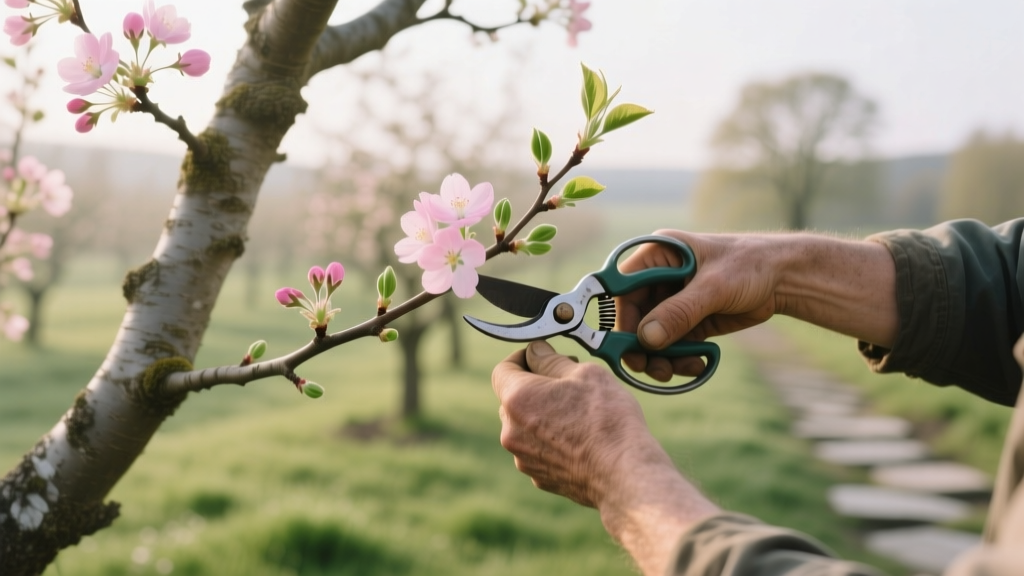
Spring Fruit Tree Care and Pruning
Spring moves fast in the orchard. Buds swell, sap rises, and a week of warm afternoons can push bloom right into the path of a late freeze. The opportunity is just as real: a few well-timed pruning cuts, a clean spray schedule, and early nutrition can set you up for stronger structure, better light, fewer pests, and higher-quality fruit. Use this guide like a working almanac—prioritize the jobs that protect this year’s crop first, then circle back to planting and longer-term improvements.
Key spring triggers to watch: daytime highs consistently above 50°F, nighttime lows flirting with 28°F during bloom, and soil temperatures hitting 45–50°F for new plantings. In many regions, the “last frost date” (often between April 10 and May 20 depending on USDA zone and elevation) is the line between routine care and emergency protection.
Do This First: Week-by-Week Spring Priorities
Print this timeline and tape it in the shed. Adjust by 1–4 weeks depending on your USDA hardiness zone and local bloom timing.
- Weeks 1–2 (late winter into very early spring): Finish dormant pruning, remove mummies/cankered wood, clean tools, apply dormant oil if needed when temps are safe.
- Weeks 3–5 (bud swell to tight cluster/pink): Begin disease prevention (apple scab, peach leaf curl where applicable), set up frost protection gear, check irrigation.
- Weeks 6–8 (bloom): Protect blossoms from frost; avoid insecticides during pollinator hours; thin flowers/fruitlets in some crops after petal fall.
- Weeks 9–12 (petal fall into early fruit set): Start codling moth/plum curculio monitoring, maintain sanitation, adjust fertility if growth is weak.
What to Prune Right Now (and What to Leave Alone)
Late dormant pruning window (most pome and stone fruits)
For many home orchards, the best structural pruning happens in late winter through early spring—after the coldest weather but before full bloom. A practical target is when daytime temperatures are routinely above 40°F and you can comfortably work outside, but buds are still tight. In USDA zones 6–7, that’s often late February through March. In zones 4–5, it’s commonly March into early April. In zones 8–9, you may be finishing by February.
Priority pruning goals: open the canopy to light, reduce disease pressure through airflow, and keep fruiting wood reachable. Keep cuts clean and purposeful; fruit trees respond better to a few decisive removals than dozens of nibbles.
Apple and pear (pome fruits): structure first
Apples and pears tolerate late dormant pruning well. Focus on:
- Remove dead/diseased wood back to healthy tissue.
- Eliminate vertical “water sprouts” in the interior.
- Thin crowded limbs to reduce shade and humidity (a driver of scab and fire blight problems).
- Maintain a central leader (most apples/pears) or a modified leader, keeping the top narrower than the bottom.
Timing note: In fire blight-prone areas, avoid heavy nitrogen early and avoid aggressive pruning during active growth if you’ve had a history of blight. Many extension recommendations emphasize sanitation and prompt removal of infected strikes during the growing season as key management tools (see citations below).
Peach, nectarine, apricot: prune for light and renewal
Peaches and nectarines fruit on one-year-old wood, so spring pruning is about renewing fruiting shoots and keeping the canopy open. If you didn’t prune hard enough in late winter, you’ll feel it at thinning time.
- Open center (vase) shape: remove the center leader; keep 3–5 main scaffolds.
- Cut out last year’s exhausted fruiting wood and encourage strong new shoots.
- Remove limbs that shade the center—peaches need sun to color and resist disease.
Temperature threshold: Avoid pruning when wood is brittle from extreme cold; a practical rule is to prune after the worst sub-10°F weather is past (common in colder zones).
Cherry and plum: lighter spring cuts, big pruning after harvest
Sweet cherry and some plums can be more prone to disease entry from wet-season pruning. In rainy spring climates, keep spring pruning minimal—remove dead wood, broken branches, and obvious crossing limbs—then do more structural work during dry weather after harvest when feasible.
What not to prune in early spring
- Don’t shear fruit trees like hedges. It triggers dense, weak regrowth and shading.
- Don’t top trees indiscriminately. Reduce height through thinning cuts to a lower outward branch, not stub cuts.
- Don’t prune during a wet spell if you can wait 48–72 hours for drying—especially important for disease-prone species in maritime climates.
“Pruning cuts are wounds; time them when the tree can seal them quickly and when disease pressure is low.”
—Common guidance across university orchard management programs, emphasizing dry conditions and appropriate seasonal timing.
Quick pruning checklist (take this outside)
- Disinfect pruners between visibly diseased cuts (70% alcohol wipes work well).
- Remove: dead, broken, diseased, rubbing, and inward-growing branches.
- Thin crowded limbs to create “windows” of light through the canopy.
- Keep scaffold branch angles wide (use spreaders if needed).
- Step back every 5–10 minutes; stop when the shape is clear and open.
What to Protect: Frost, Sunscald, and Early-Season Setbacks
Blossom frost protection: act before the cold arrives
If your forecast shows 28°F or lower during bloom, treat it as a crop-threatening event. Damage depends on stage: swollen bud is hardier than open bloom; small fruitlets are often very sensitive. Your job is to slow heat loss and/or add heat.
Practical frost tools for home orchards:
- Frost cloth or old sheets over small trees (secure to the ground to trap heat). Put covers on before sunset; remove in the morning once temps rise above 32°F.
- Water as thermal mass: thoroughly wet soil the day before a frost—moist soil holds more heat than dry soil.
- String lights (incandescent) under a cover for small trees can add a few degrees (use outdoor-rated cords and avoid LED-only strings for heat).
- Sprinkler frost protection can work but is tricky at home scale; improper use can worsen damage if water stops before temps rise.
Sunscald and bark injury (late cold snaps)
Warm spring sun followed by freezing nights can injure trunks, especially on young trees and thin-barked species. If you’ve had repeated freeze-thaw cycles, consider trunk protection:
- White trunk paint (50/50 white interior latex paint and water) on the southwest side reduces temperature swings.
- Tree guards also help with rodent injury but remove or loosen them as growth begins to prevent moisture trapping.
What to Prepare: Sanitation, Tools, and Orchard Floor
Sanitation that pays off all season
Spring sanitation isn’t glamorous, but it’s one of the highest-return tasks you can do in an hour.
- Pick up and discard mummified fruit in trees and on the ground (a reservoir for brown rot and other diseases).
- Rake out last year’s leaves under apples if scab was a problem; leaves carry overwintering spores.
- Remove cankered twigs and dispose of them—don’t chip diseased wood for mulch.
Tool prep and spray readiness
When buds break, you won’t have time to hunt for a clean sprayer nozzle.
- Sharpen pruners and loppers; a sharp tool makes smaller wounds that heal faster.
- Calibrate your sprayer and label measuring cups.
- Keep a simple log (date, product, rate, weather, target pest/disease).
What to Plant: New Fruit Trees, Bare-Root Timing, and Early Training
Planting window by soil temperature and frost timing
Spring is prime time for bare-root fruit trees because roots establish before summer stress. Aim to plant when soil is workable and consistently above 45°F (many growers use 50°F as a “ready to grow” signal). In colder zones, this may be April; in warmer zones, February–March.
Rule of thumb: plant 2–4 weeks before your average last frost date if the soil is workable, or as soon as bare-root stock arrives and you can dig. Container trees can go in later, but avoid planting into cold, saturated soil.
Planting checklist (do it once, do it right)
- Choose varieties matched to your USDA zone and chill-hour needs (especially peaches, apples, cherries in warm-winter regions).
- Dig a wide hole; keep the root flare visible—don’t bury the trunk.
- Water in deeply at planting; eliminate air pockets.
- Mulch 2–4 inches deep, kept a few inches away from the trunk.
- Stake only if needed; remove or loosen ties within the year.
Early training cuts for new trees
Newly planted fruit trees need structure from day one.
- Apples/pears: head the leader at planting height if you need to set scaffold height; select future scaffolds and remove competitors.
- Peaches: head the whip to encourage an open center and strong scaffolds.
Spring Pest and Disease Prevention (Target the First Infection Cycle)
Spring is when many orchard problems start. The goal is not constant spraying—it’s breaking the early cycles with timing and sanitation.
Apple scab, pear scab: start at green tip
If you had scab last year, assume spores are present. Preventive protection is most effective starting around bud break (“green tip”) and continuing through primary infection periods in spring rains. University programs commonly emphasize early-season protection and sanitation as key steps for scab management.
Fire blight (apples/pears): manage vigor and monitor bloom
Fire blight risk rises with warm, humid bloom weather. Keep trees from surging with nitrogen early, prune for airflow, and remove overwintered cankers when seen. During the season, remove strikes promptly by cutting well below visible symptoms and disinfecting tools.
Peach leaf curl: prevention is mostly before buds open
Once leaves are distorted, it’s too late for that season. If you’re in a leaf curl region (common in cooler, wet springs), the effective window is dormant to very early bud swell. If you missed it, focus on keeping the tree vigorous (water, mulch, avoid overcropping) and plan next winter’s spray timing.
Brown rot (stone fruits): sanitation plus bloom/fruit protection
Remove mummies and infected twigs. Brown rot pressure jumps in wet bloom weather and again near ripening, but spring sanitation and an open canopy reduce humidity and improve spray coverage.
Codling moth, plum curculio, and early fruit pests: start with monitoring
At petal fall and just after, set traps (codling moth) and begin scouting fruitlets for crescent scars (plum curculio in many eastern/central regions). Thinning and sanitation reduce hiding places, and timely controls are far more effective than late reactions.
Pollinator timing: Avoid insecticides during bloom whenever possible. If you must treat, follow label directions and apply when bees are not foraging (often dusk), and never spray open flowers.
Monthly Schedule (Adjust by Zone and Bloom Timing)
| Month | Primary Focus | Critical Timing Numbers | What to Do |
|---|---|---|---|
| February | Dormant pruning, sanitation | Work when >40°F; avoid extreme cold below 10°F | Prune apples/pears; light prune stone fruits in dry spells; remove mummies; service sprayer |
| March | Bud swell protection, early disease prevention | Watch 50°F days; prep for 28°F frost events | Finish pruning; apply dormant oil when label temps allow; clear leaf litter under apples if scab was bad |
| April | Bloom management, frost readiness | Last frost often Apr 10–May 10 (region-dependent); protect at 28°F | Cover small trees on cold nights; avoid insecticides during bloom; begin scab/blight monitoring based on weather |
| May | Petal fall, fruit set, early pest scouting | Remove covers when >32°F; thin after fruit set | Start traps; thin heavy sets; irrigate if dry; mulch maintenance; monitor for leaf diseases |
Regional and Real-World Scenarios (Adjust Your Spring Playbook)
Scenario 1: Cold-winter, late-spring regions (USDA zones 3–5; Upper Midwest, Interior Northeast, higher elevations)
Your biggest spring challenge is delayed work followed by sudden heat. Dormant pruning may extend into early April, but avoid pruning during severe cold. Expect bloom to be compressed—meaning frost risk is concentrated.
- Prioritize: pruning completion before bud break; frost cloth ready before the first warm week triggers bloom.
- Timing anchor: last frost can land as late as May 15–May 25 in many zone 4 pockets.
- Actionable tip: keep trees slightly on the dry side before a forecast frost, then water soil thoroughly the day before the event to increase thermal storage (avoid waterlogged conditions).
Scenario 2: Maritime/wet-spring climates (Pacific Northwest, coastal Northeast; many USDA zones 7–9 coastal)
Wet spring weather increases disease pressure and makes pruning cuts slower to dry. Your success hinges on canopy openness and timing around dry windows.
- Prioritize: sanitation, thinning cuts for airflow, and careful timing of preventive sprays for scab/brown rot during rain cycles.
- Timing anchor: wait for a 48–72 hour dry stretch to do major pruning when possible.
- Actionable tip: keep mulch pulled back from trunks to reduce crown moisture and rodent habitat.
Scenario 3: Warm-winter regions (USDA zones 8–10; parts of the South, Gulf Coast, low desert with winter chill constraints)
Your spring starts early, and the bigger limitation may be insufficient chill hours for certain varieties. Bloom can come early (sometimes February), and heat arrives fast, stressing new plantings.
- Prioritize: variety selection (low-chill cultivars), early planting, and irrigation readiness before the first hot spell.
- Timing anchor: plant bare-root as soon as you can work the soil; don’t wait for a “classic” spring that may not come.
- Actionable tip: whitewash young trunks to prevent sunscald and borer attraction during sudden heat spikes.
High-Impact Checklists (Use These on a Weekend Work Session)
One-hour orchard reset
- Pick up mummies and fallen fruit; dispose in trash, not compost.
- Rake last year’s leaves under apples if scab was present.
- Walk each tree and flag dead/diseased limbs for removal.
Half-day pruning and training session
- Prune apples/pears for structure (remove crowded, vertical, inward growth).
- Prune peaches for open center and renewal wood.
- Check branch angles; add spreaders or soft ties to widen narrow crotches.
- Remove rootstock suckers and trunk sprouts.
Frost night readiness kit
- Frost cloth/sheets + clips or weights
- Outdoor extension cords and safe light source (if used)
- Thermometer at blossom height
- Plan for removal next morning when temps exceed 32°F
Research-Backed Notes You Can Trust
University and extension guidance consistently emphasizes timing, sanitation, and targeted prevention. Two useful references to keep bookmarked:
- Utah State University Extension notes that dormant oils are used to manage overwintering insects and mites and must be applied according to label temperature and plant stage restrictions (Utah State University Extension, 2019).
- Texas A&M AgriLife Extension discusses the importance of pruning timing and technique for strong structure and productivity in fruit trees, reinforcing removal of dead/diseased wood and training for light penetration (Texas A&M AgriLife Extension, 2020).
- Cornell Cooperative Extension materials on apple scab management emphasize sanitation and early-season preventative strategies to reduce primary infection (Cornell Cooperative Extension, 2018).
Practical takeaway: spring success is rarely about one “magic” product. It’s about getting the timing right—especially around bud break, bloom, and the first warm rainy stretches.
Finish Strong: The Next 10 Days
If you only have one good stretch of weather, use it to lock in the essentials. Here’s a tight, actionable plan:
- Day 1–2: Sanitation sweep (mummies, leaf litter, cankered twigs). Clean and sharpen tools.
- Day 3–5: Complete dormant pruning on apples/pears; do necessary cuts on stone fruits during dry weather.
- Day 6: Set traps (as appropriate) and refresh your spray log sheets; check sprayer calibration.
- Day 7–10: Prep frost protection materials and monitor forecasts closely as buds approach bloom—act when 28°F is predicted during bloom.
Once bloom hits, your job shifts from cutting wood to protecting flowers, supporting pollination, and preventing the first infection cycle. Stay ahead of the forecast, keep the canopy open, and treat each week as a narrow window—because in spring, it is.