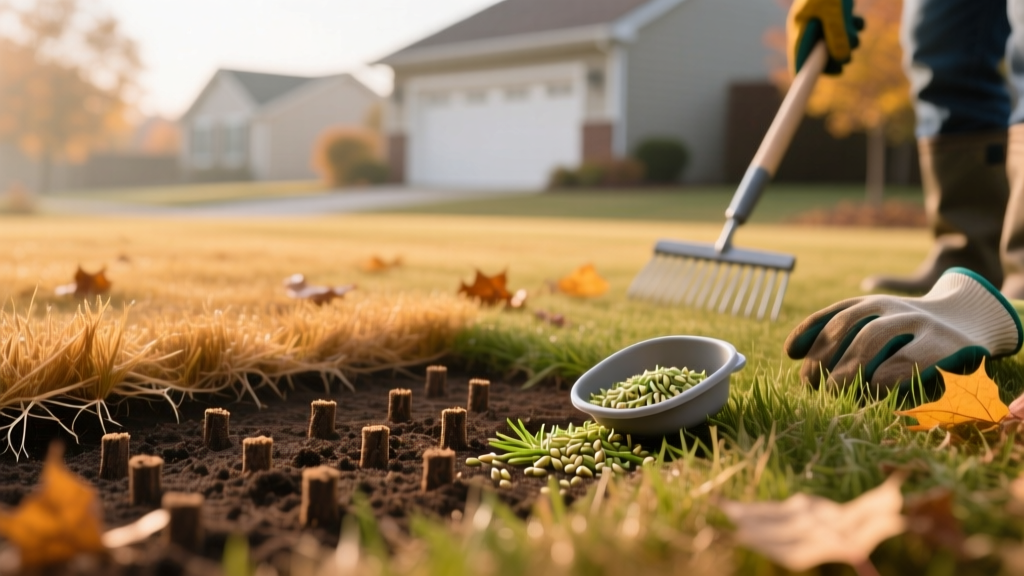
Fall Lawn Care: Overseeding and Aeration
Fall is the narrow window when your lawn can actually get ahead of next year’s weeds, drought stress, and thin spots. Soil is still warm enough for quick germination, nights are cooler so seedlings don’t fry, and many warm-season weeds are winding down. If you aerate and overseed on time—then water correctly for the first 21 days—you can build a thicker turf that crowds out winter annual weeds and rebounds faster next spring.
The key is timing: most cool-season grasses need 45–60 days before your average first frost to establish. Aim to seed when soil temperatures are 50–65°F (perfect for cool-season grass germination) and daytime highs are generally 60–75°F. In many regions that means late August through early October, but the “right now” moment depends on your USDA hardiness zone and your first frost date.
Priority 1: What to plant (overseed) — the fastest way to thicken turf
Overseeding is not just “throwing seed down.” The wins come from matching seed to region, ensuring seed-to-soil contact, and watering like you mean it. If you do only one fall lawn task, do this—especially if your lawn is thin, patchy, or weed-prone.
Best overseeding window by region (use these numbers)
Use your local average first frost date, then back up 6–8 weeks (45–60 days) for seeding. Concrete benchmarks:
- Upper Midwest / Northern tier (USDA Zones 3–5): target Aug 15–Sept 15. Many areas see first frost around Sept 25–Oct 10.
- Mid-Atlantic / Ohio Valley / parts of the West (Zones 5–7): target Sept 1–Oct 1. First frost often Oct 10–Nov 1.
- Transition zone (Zones 6–8): target Sept 15–Oct 15 for tall fescue; earlier is better if summer lingered.
- Pacific Northwest (mild, wet fall; Zones 7–9): seed Sept through mid-Oct if soils aren’t waterlogged.
- Warm-season lawns (Bermuda, zoysia, St. Augustine; Zones 7–10): don’t overseed with the same grass in fall; focus on recovery and weed prevention. If you overseed for winter color (ryegrass), do it with intent and understand spring transition challenges.
For extra precision, watch soil temps. Many extension services recommend seeding cool-season lawns when soil temps drop to the 50–65°F range (often early fall), because germination is reliable and disease pressure is lower than in summer.
Choose the right grass seed (and avoid common mismatches)
Cool-season lawns (most of Zones 3–7 and higher elevations):
- Tall fescue: best for the transition zone (Zones 6–8), sun-to-part shade, and lower irrigation tolerance. Excellent fall performer.
- Kentucky bluegrass: spreads to repair; slower germination, so seed earlier in the fall window.
- Perennial ryegrass: fast germination for quick cover; often blended with fescue/bluegrass.
- Fine fescues: shade, lower fertility, and lower mowing; good for low-input areas.
Warm-season lawns (many of Zones 7–10): focus on mowing, fertilization timing, and weed control instead of cool-season overseeding unless you intentionally want winter color.
Seeding rates and the “thin lawn” reality check
Most homeowners under-seed and then wonder why the lawn still looks sparse. Use the label rate for overseeding (not “new lawn” rates) and buy enough seed to cover the square footage. If your lawn is more dirt than grass, treat it as renovation: aerate, dethatch if needed, topdress lightly, and use a heavier seeding rate.
For practical expectations: perennial ryegrass can show in 5–10 days, tall fescue in 7–14 days, and Kentucky bluegrass can take 14–30 days depending on temperature and moisture.
Step-by-step: overseed for germination, not hope
- Mow low: 1.5–2 inches for most cool-season lawns. Bag clippings if thick.
- Core aerate first (details below) so seed can drop into holes and soil contact improves.
- Spread seed in two directions (north-south, then east-west) for even coverage.
- Rake or drag lightly to settle seed into the soil surface. Good seed-to-soil contact beats heavy topdressing.
- Apply starter fertilizer only if needed based on a soil test; otherwise use a modest, balanced feeding. Avoid excessive nitrogen that can increase disease.
- Water correctly: keep the top 1/2 inch of soil consistently moist until germination, then taper.
Watering timeline (the difference-maker for the first 3 weeks)
- Days 1–10: water 2–4 times/day for short bursts (5–10 minutes) to keep the surface moist. Adjust for wind and sun.
- Days 11–21: water once/day longer (15–25 minutes) to start encouraging deeper roots.
- After day 21: shift to 2–3 deep waterings/week, aiming for roughly 1 inch/week total (including rain), depending on soil type and weather.
Don’t guess—use a rain gauge or tuna can to measure output. Fall breezes can dry seedbeds faster than you expect even when days are cooler.
“For best results, seed at the proper time for your area and ensure good seed-to-soil contact by core aerating or raking—germination depends on moisture at the soil surface.” — Extension turfgrass guidance summarizing establishment principles (e.g., Michigan State University Extension, 2020)
Priority 2: What to prepare (aeration, soil correction, and mowing strategy)
Aeration is your fall “reset button” for compacted soil, heavy thatch, and weak rooting. If you notice puddling, hard soil, or thin turf in high-traffic paths, aeration should move to the top of your list—especially before overseeding.
Core aeration: when and how to do it
Core aeration removes plugs and creates channels for air, water, and seed. Spike aerators punch holes but don’t remove soil, and they can worsen compaction in some soils. For most lawns, core aeration is the better fall tool.
- Timing: same window as overseeding—ideally early fall with 6–8 weeks before first frost.
- Soil moisture: aerate when soil is moist but not muddy. A good benchmark is 1–2 days after a soaking rain or irrigation.
- Passes: 1–2 passes for average lawns; 2 passes for compacted clay or high-traffic areas.
- What to do with plugs: leave them. They break down quickly and help redistribute soil microbes and organic matter.
Extension turf programs consistently recommend fall aeration for cool-season lawns because grass is actively growing and can recover quickly while weed pressure declines (e.g., Purdue University Extension turf recommendations, 2018).
Soil test and amendments (do this once, benefit for years)
If you haven’t done a soil test in the last 3 years, fall is a smart time. Correcting pH and nutrient imbalances improves seedling vigor and winter hardiness.
- pH correction: lime takes time to react—fall applications can influence next spring.
- Phosphorus: only apply if a soil test indicates need (many regions restrict P due to water quality concerns).
- Organic matter: on heavy clay, a light topdress (1/4 inch) of compost after aeration can help, but keep it thin to avoid smothering seedlings.
Mowing strategy after overseeding
Keep mowing—just do it correctly. Letting grass get tall shades seedlings and encourages disease.
- First mow: when new grass reaches 3–3.5 inches, mow down to about 2.5–3 inches.
- Blade: sharp. Dull blades yank seedlings and fray tips (more disease entry points).
- Fall height: maintain most cool-season lawns around 2.5–3.5 inches through fall. Avoid scalping going into winter.
Priority 3: What to prune (mostly “don’t”—focus on lawn edges and traffic control)
Fall lawn care isn’t about pruning in the traditional shrub sense, but it is about reducing stress and damage while seedlings establish.
Edge cleanup and traffic pruning
- Re-edge beds and sidewalks before seeding so you don’t disturb seedlings later.
- Prune back overhanging groundcovers that shade thin turf and stay wet (a recipe for fall fungal issues).
- Reroute foot traffic: seedling areas need protection. Put up temporary stakes or a simple string line for 3–4 weeks.
Leaf management: mulch early, remove when heavy
Leaves are not automatically bad—until they are. A light layer can be mulched with the mower. A heavy layer blocks light and traps moisture, encouraging disease.
- Rule of thumb: if you can’t see at least 50% of the grass blades, rake/blow and remove or compost.
- Seedling areas: be stricter. Seedlings can smother quickly under wet leaves.
Priority 4: What to protect (seedlings, winter weeds, pests, and disease)
Fall brings a different set of lawn problems than summer. Your goal is to protect new seedlings and set up the lawn to resist winter annual weeds and snow-season diseases.
Weed prevention: pre-emergent timing matters (and can conflict with seeding)
The big fall weed story is winter annuals (like annual bluegrass and chickweed) germinating as temperatures cool. But most pre-emergent herbicides will also prevent grass seed germination.
- If you are overseeding: skip standard pre-emergent unless the label specifically allows use at seeding (rare and product-specific). Instead, focus on density, mowing, and proper fertility.
- If you are NOT overseeding: consider a fall pre-emergent timed when soil temps drop into the 70°F to 55°F range depending on target weed; local extension alerts are the best guide.
- Post-emergent broadleaf control: early fall is often effective on many perennial broadleaves when they are moving carbohydrates to roots—but keep herbicides off brand-new seedlings until they’ve been mowed 2–3 times (check label).
For crabgrass specifically: it’s a summer annual that dies with frost, so fall is not the time for crabgrass pre-emergent; fall is about preventing the next wave of cool-season weeds and thickening turf.
Disease watch: cool nights + wet leaves = fungal pressure
Common fall disease risks include dollar spot lingering in low-nitrogen turf, leaf spot issues during establishment, and in snow-prone regions, setting the stage for snow mold.
- Avoid night watering: irrigate early morning so foliage dries quickly.
- Don’t over-fertilize nitrogen late in fall; lush growth can increase some disease risks and reduce hardiness.
- Keep mowing and remove heavy leaves to improve airflow.
- Snow mold prevention: in Zones 3–5 (and snowbelt microclimates), avoid piling leaves or snow on turf, and don’t let grass go into winter excessively tall. Some regions consider a late-fall fungicide in high-value lawns with a history of snow mold—best decided with local extension guidance.
Insect pests: fall is grub season in many areas
If your lawn peels back like carpet or you see skunks/raccoons digging, check for grubs. Fall is when damage becomes obvious because roots are being eaten and the turf is less able to recover.
- Scout: cut a 1-square-foot section and look in the top 2–3 inches of soil.
- Thresholds vary: damage potential depends on grass health and species; your local extension threshold is best.
- Timing: “curative” grub treatments work best when grubs are small—often late summer to early fall. If you wait until late fall when grubs are large, control is harder and less effective.
For science-based guidance on lawn insects and timing, refer to university turf insect resources (e.g., University of Minnesota Extension turfgrass insect recommendations, 2019; Ohio State University Extension grub management notes, 2021).
Monthly schedule: what to do and when (adjust for frost date)
Use this as your working timeline; slide it earlier in Zones 3–5 and later in Zones 7–8 based on your first frost date and soil temperatures.
| Timeframe | Top priority tasks | Targets & thresholds |
|---|---|---|
| Late Aug (Weeks 1–2) | Core aerate; overseed northern lawns; begin watering plan | Seed when soil is ~50–65°F; plan for 45–60 days before first frost |
| Early–Mid Sept (Weeks 3–5) | Overseed most cool-season lawns; mow regularly; leaf watch begins | Germination check at 5–14 days (rye/fescue); keep surface moist |
| Late Sept–Early Oct (Weeks 6–8) | Transition-zone seeding window; shift watering deeper; spot repair bare patches | First mow when seedlings hit 3–3.5 inches |
| Mid–Late Oct (Weeks 9–11) | Leaf management; final aeration only if early enough; reduce irrigation as temps drop | Keep turf visible; remove leaves if >50% blade coverage is blocked |
| Nov (Weeks 12+) | Final mow before winter; cleanup; store equipment; avoid traffic on frosty turf | Stop seeding when you’re inside 4 weeks of first frost (poor establishment odds) |
Three real-world scenarios (so you can act on your actual lawn)
Most lawns don’t fit the “textbook” picture. Here’s how to adjust based on common regional and site conditions.
Scenario 1: Northern lawns with early frosts (USDA Zones 3–5)
If you’re in a short growing season, the fall window closes fast. Treat Aug 15–Sept 15 as prime time. Kentucky bluegrass needs earlier seeding because it can take up to 30 days to germinate in cool weather. If you miss the window, consider dormant seeding later (after consistent cold) rather than seeding too late and losing seedlings to frost heaving.
Priority stack:
- Aerate + overseed early
- Keep seedlings moist for 2–3 weeks
- Leaf removal to prevent smothering
- Final mow before snowfall; avoid tall, matted turf to reduce snow mold risk
Scenario 2: Transition zone heat hangover (USDA Zones 6–8)
In the transition zone, the lawn often limps through summer and needs fall to recover. Tall fescue is usually the workhorse here. If September is still hot (highs in the 80s°F), you can still seed, but you must be disciplined with watering and avoid midday irrigation that can encourage disease. Aim for the moment daytime highs ease toward 75°F and nights are consistently cool.
Extra tips for transition-zone success:
- Consider improved tall fescue cultivars for heat and disease tolerance.
- Don’t push heavy nitrogen during early establishment; steady growth is better than lush growth.
- Watch for brown patch in warm, humid early fall—water early morning only.
Scenario 3: Pacific Northwest fall rains and moss pressure (USDA Zones 7–9)
In maritime climates, the challenge is less drought and more saturated soil, shade, and moss. Aeration can help oxygenate soil, but avoid tearing up wet ground. Seed in September when soil is still warm enough for germination, and improve light and drainage where possible (prune tree canopies selectively and reduce compaction).
To reduce moss recurrence:
- Address shade and drainage first; moss is a symptom.
- Maintain adequate fertility (thin, low-nitrogen turf is moss-prone).
- Keep leaves off—moss thrives in consistently damp, shaded turf.
Scenario 4: Warm-season lawns (Bermuda/zoysia) facing fall slowdown (USDA Zones 7–10)
Warm-season grass is heading toward dormancy as nights cool. Heavy aeration and aggressive seeding of cool-season turfgrass generally isn’t the main fall play unless you’re intentionally overseeding with annual ryegrass for winter color (common on some Bermuda lawns). For most home lawns, focus on:
- Reducing compaction lightly if needed (avoid major stress late).
- Managing winter weeds with correctly timed pre-emergent (only if you’re not seeding).
- Keeping mowing consistent until growth slows.
- Avoiding late nitrogen pushes that delay dormancy and increase winter injury risk.
Fast checklists (printable mindset)
Overseeding checklist (do these in order)
- Measure lawn square footage and buy the right amount of seed
- Pick seed matched to your region (fescue/bluegrass/rye blend as appropriate)
- Mow to 1.5–2 inches and remove heavy clippings
- Core aerate (1–2 passes)
- Broadcast seed in two directions
- Lightly rake/drag for seed-to-soil contact
- Water 2–4x/day (short) until germination, then taper
- First mow at 3–3.5 inches with a sharp blade
- Hold off herbicides until seedlings have been mowed 2–3 times (label-dependent)
Aeration checklist
- Flag sprinkler heads and shallow utility lines
- Aerate when soil is moist, not muddy
- Prefer core aeration over spikes for compaction relief
- Leave plugs on the surface to break down
- Combine with overseeding the same day for best seed placement
Timely reminders that prevent the most common fall failures
Don’t seed too late. If you’re inside 4 weeks of your average first frost, seedlings may germinate but won’t establish roots fast enough to survive winter stress. If you missed the window, shift to leaf cleanup, soil testing, and plan a spring patch plan—or consider dormant seeding after consistent cold sets in.
Don’t let the seedbed dry out. Fall air can be dry and windy. The top 1/2 inch must stay moist until germination, even if the afternoons feel mild.
Don’t smother new grass with leaves. Mulch light leaf fall; remove heavy mats promptly. Seedlings can die under a wet layer in a week.
Don’t mix standard pre-emergent with overseeding. Most pre-emergents block grass seed from sprouting. If weed prevention is critical and you must seed, consult label-allowed options and local extension guidance for safe timing.
Do schedule around your weather. Aerate and seed right before a stretch of mild weather. Ideal conditions are daytime highs around 60–75°F, cool nights, and no heavy downpours that wash seed.
Fall lawn care rewards decisive action: aerate to open the soil, overseed to thicken turf, water with discipline for the first three weeks, then keep mowing and clearing leaves so seedlings can harden off. Do it on schedule—6–8 weeks before frost—and you’ll feel the payoff next spring when your lawn greens up thicker and cleaner with fewer weeds trying to move in.
Sources: Michigan State University Extension turfgrass establishment guidance (2020); Purdue University Extension turf recommendations for cool-season lawns (2018); University of Minnesota Extension turf insect management resources (2019); Ohio State University Extension grub management notes (2021).