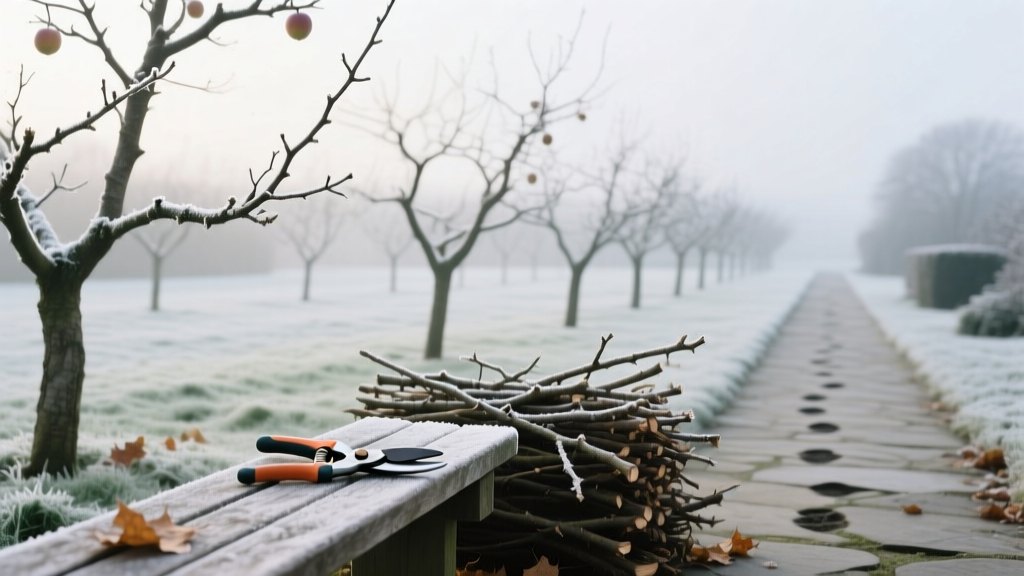
Winter Garden: Pruning Dormant Fruit Trees
Winter pruning is the kind of job that rewards the gardener who moves first. Every week you wait after buds begin to swell is a week you lose the clean visibility of a leafless canopy—and a week you risk cutting off fruiting wood you meant to keep. The opportunity window is real: prune when your trees are fully dormant, when daytime temperatures are safely above freezing, and before sap flow and bud break accelerate. In many climates, that’s a 4–8 week stretch between the coldest weather and early spring growth. Use it.
This seasonal guide prioritizes what to do right now: what to plant, what to prune (with step-by-step cuts), what to protect (from cold, sunscald, and pests), and what to prepare for spring. Timing and thresholds are included so you can act on the next mild day, not “someday.”
Priority 1: What to prune right now (dormant fruit trees)
Best timing window (use these temperature and calendar triggers)
Use the tree and the thermometer—not just the calendar.
- Prune after the coldest stretch has passed, but while trees are still dormant. In many regions, that’s late January through early March.
- Avoid pruning when air temperatures are below 20°F (-6°C)—cold wood can be brittle and prone to splitting.
- Ideal pruning day: a dry day with temperatures above 32°F (0°C) for a few hours, and preferably 40–55°F (4–13°C) so you’re not rushing.
- Finish most dormant pruning 2–4 weeks before typical bud break in your area. (If your apples bud in early April, aim to finish by early to mid-March.)
- Stone fruits (peach, nectarine, apricot, sweet cherry): in colder/wetter areas, prune later in dormancy, often late February through March, to reduce disease pressure.
Extension guidance generally supports dormant pruning as the standard practice for many fruit trees. For example, Washington State University Extension emphasizes pruning during dormancy for structure and productivity (WSU Extension, 2020). Penn State Extension also highlights dormant pruning as the primary annual pruning period for many deciduous fruit trees (Penn State Extension, 2022).
“Dormant pruning invigorates growth, helps develop strong structure, and improves light distribution in the canopy—key factors for fruit size and quality.” — Summary of common extension recommendations for deciduous fruit tree pruning (e.g., Penn State Extension, 2022; WSU Extension, 2020)
Before you cut: a 10-minute canopy assessment
Stand back and decide what you’re building. A good winter prune is not “shorten everything.” It’s a series of purposeful removals that create light, airflow, and strength.
- Identify your training system: central leader (most apples/pears), open center (many peaches/plums), modified leader (some pears/apples), spindle systems (high-density).
- Look for problems first: dead wood, rubbing limbs, narrow crotch angles, water sprouts, suckers, and branches shading the interior.
- Set your annual goal: maintain height for picking, renew fruiting wood, and keep scaffolds spaced with good angles (roughly 45–60° where possible).
Step-by-step winter pruning sequence (do it in this order)
Follow this order so you don’t over-prune and so your cuts solve the biggest issues first.
- Remove dead, diseased, and damaged wood (3 D’s). Cut back to healthy wood; if disease is present, remove well below symptoms.
- Remove suckers and water sprouts. Cut flush at their origin—don’t leave stubs.
- Eliminate rubbing/crossing branches. Keep the better-positioned limb and remove the other at the branch collar.
- Open the canopy for light and airflow. Thin whole branches rather than “heading” everything back.
- Shape and manage height with selective heading cuts (sparingly) and by reducing to outward-facing laterals.
Rule of thumb: remove no more than 25–30% of the canopy in one winter for mature trees. Young trees may take a bit more structural pruning, but avoid “lion-tailing” (stripping interior laterals and leaving tufts at branch ends).
Crop-by-crop pruning notes (apples, pears, peaches, plums/cherries)
Apples (USDA Zones 3–8): focus on light and renewal
Most apples bear on spurs that remain productive for years, so winter work is about keeping spur-bearing wood well-lit and renewing crowded areas.
- Preferred structure: central leader (or tall spindle in high-density plantings).
- Thin crowded limbs rather than heading the whole canopy.
- Remove steep, upright limbs competing with the leader; keep wide-angled scaffolds.
- Renew older spur zones by removing a few aging branches back to younger laterals each year.
Pears (Zones 4–9): prune lighter; manage vigor
Pears can respond to heavy winter pruning with strong upright regrowth. Keep cuts moderate.
- Go lighter than apples; rely on thinning cuts to reduce crowding.
- Watch fire blight history: if your area has frequent fire blight, plan for strict sanitation and consider saving major cuts for dry weather windows.
Peaches & nectarines (Zones 5–9): prune hard for annual fruiting wood
Peaches fruit on one-year-old wood. Winter pruning is how you keep that young wood coming.
- Preferred structure: open center (vase) with 3–4 main scaffolds.
- Remove gray, weak, shaded shoots; keep healthy one-year shoots (often reddish) spaced along scaffolds.
- Aim for “replacement” wood: each year, leave shoots that will fruit and shoots that will become next year’s fruiting wood.
- In wet/cool regions, prune later (late dormancy) to reduce canker and dieback risks.
Plums & cherries (Zones 4–9): caution in wet winter climates
In areas with rainy winters (Pacific Northwest, coastal Northeast), pruning can open infection courts for bacterial canker and related diseases. Many growers delay major pruning until late winter or even after bloom during dry spells. If you must prune now, keep it minimal: remove dead/damaged wood and obvious hazards.
Tool care and sanitation (don’t skip this in winter)
Winter is when disease spores and bacteria can still move on tools, especially if you’re cleaning up cankers, blight strikes, or dead wood. University guidance often recommends disinfecting tools when working around known disease. A practical approach:
- Sharpen first: sharp pruners make clean cuts that heal better.
- Disinfect between trees if you had disease last season, especially fire blight or canker.
- Use 70% isopropyl alcohol wipes/spray (fast, effective, and doesn’t corrode like bleach solutions can).
- Make proper cuts at the branch collar; avoid flush-cutting into the trunk.
Winter pruning checklist (printable)
- Pick a dry day above 32°F (0°C); avoid below 20°F (-6°C)
- Confirm the tree is dormant (buds tight; no green tissue)
- Remove dead/diseased/damaged wood first
- Remove suckers and water sprouts
- Thin crossing/rubbing branches
- Open the canopy (light/air)
- Limit removal to ~25–30% on mature trees
- Sanitize tools if disease is present
- Dispose of diseased prunings (don’t compost if infection is suspected)
Priority 2: What to protect (trees, buds, bark, and overwintering pests)
Prevent winter injury: sunscald, frost cracks, and rodent damage
Winter damage often shows up in spring, when it’s too late to prevent it. If you have young trees (especially apples) or thin-barked species, protect now.
- Sunscald/frost cracks: in Zones 3–6, strong winter sun followed by rapid nighttime drops can damage bark. Consider tree wrap (installed in late fall and removed in spring) or white interior latex paint diluted 50:50 with water on the southwest side of young trunks.
- Rodents (voles, rabbits): keep grass and mulch pulled back 3–6 inches from the trunk; install hardware cloth guards. Check after snowfalls—packed snow can raise rodents up to bark level.
- Deer browsing: use fencing or repellents; winter browsing can remove next year’s fruiting wood quickly.
Dormant oil and disease cleanup: the winter advantage
Winter is prime time to reduce pest pressure before insects multiply. Dormant sprays are not automatic—they’re targeted tools. If you had scale, mite issues, or aphid problems last year, consider a dormant oil application when conditions are right.
- Dormant oil timing: apply when temperatures are above 40°F (4°C) for at least 24 hours and no freeze is expected immediately after. Aim for late dormancy before buds open.
- Targets: scale insects, mite eggs, aphid eggs (varies by crop and region).
- Sanitation: remove mummified fruit, cankered twigs, and leaf litter that harbors disease inoculum.
For region-specific spray decisions and bud-stage timing, defer to local extension programs. As one example, UC IPM provides crop- and pest-specific dormant season guidance, including oils and sanitation approaches (UC IPM, 2021).
Fire blight and canker caution (especially pears and apples)
If you had fire blight last season, winter pruning is a cleanup opportunity—but you must cut well below visible symptoms and disinfect tools frequently. In areas with a history of bacterial canker on stone fruits, avoid making large pruning cuts during prolonged wet periods.
Priority 3: What to prepare (soil, structure, records, and spring readiness)
Map your orchard before leaves hide everything
Winter visibility is perfect for decisions you’ll appreciate in July.
- Tag problems: flag limbs to remove on the next mild day.
- Photograph each tree from two angles; compare year to year.
- Record bud break and bloom dates this coming spring—these become your pruning and spray calendar later.
Soil tests and nutrient planning (do it before spring rush)
If your ground isn’t frozen, winter is a good time to pull soil samples so you’re not guessing with spring fertilization.
- Collect samples when soil is workable; avoid sampling right after fertilizing.
- Plan amendments now so materials are on hand when application windows open.
Mulch and moisture strategy
In cold climates, mulch is for root-zone temperature stability—not for piling against trunks.
- Keep mulch 3–6 inches away from the trunk to prevent rot and rodent hiding.
- In dry winter regions (intermountain West), irrigate on warm spells if soil is dry and unfrozen; drought-stressed trees are more prone to winter injury.
Priority 4: What to plant (limited, but strategic in winter)
Plant bare-root fruit trees: timing by zone and soil conditions
Most fruit trees are planted in late winter or early spring while dormant—especially bare-root stock. The key requirement: soil must be workable (not frozen, not waterlogged).
- Zones 7–9: bare-root planting often works from January to early March, depending on local frost patterns.
- Zones 5–6: often late February to April; aim for planting 2–4 weeks before the average last frost date if soil allows.
- Zones 3–4: typically April to early May as soils thaw; order trees now and store properly until planting time.
If you can’t plant yet, store bare-root trees cool (around 34–40°F / 1–4°C), roots protected from drying, and out of freezing wind.
Order scionwood and rootstocks for grafting season
If you plan to graft, winter is when you secure materials.
- Order rootstocks early; popular sizes sell out by late winter.
- Collect scionwood during full dormancy and store sealed and cool.
Monthly pruning schedule (use as a quick planner)
| Month | Zones 3–5 (colder) | Zones 6–7 (mid) | Zones 8–9 (milder) |
|---|---|---|---|
| December | Inspect for storm damage; delay major pruning if extreme cold persists (below 20°F / -6°C) | Light structural pruning on mild days; remove dead/damaged wood | Begin dormant pruning for apples/pears; monitor for early bud swell |
| January | Prune on warm spells above 32°F (0°C); prioritize hazard limbs | Main dormant pruning window for apples/pears; start peaches late month if weather is dry | Finish major pruning by late month in early-bloom areas; plan dormant oil timing |
| February | Primary pruning month; aim to finish before March warmup accelerates bud swell | Continue pruning; plan dormant oil when >40°F (4°C) and no freeze expected | Shift to late-dormant touch-ups; delay stone fruit pruning if rains are frequent |
| March | Finish pruning 2–4 weeks before bud break; delay stone fruits to late dormancy | Wrap up pruning; watch bud stage closely (green tip to bloom comes quickly) | Most pruning complete; focus on pest prevention and bloom frost planning |
Regional scenarios: how winter pruning changes with your weather
Scenario 1: Cold continental winters (Upper Midwest, interior Northeast, Zones 3–5)
Your biggest limiter is extreme cold and late springs. Prioritize safety and timing.
- Wait out deep freezes: if your area regularly drops to -10°F to -20°F, avoid major pruning immediately after those events. Prune during a stable warming trend.
- Plan for a compressed spring: once temperatures rise, buds can move fast. Try to complete pruning by mid-March in many Zone 4–5 areas, or 2–4 weeks before bud break locally.
- Rodent vigilance: deep snow increases trunk girdling risk—check guards after every major snowfall.
Scenario 2: Wet winter, mild temps (Pacific Northwest/coastal areas, Zones 7–9)
Your challenge is disease pressure and soggy soils.
- Time cuts to dry windows: prune when you can expect 24–48 hours of dry weather after cutting.
- Stone fruits: consider delaying significant pruning until late winter/early spring dry spells to reduce bacterial canker risk.
- Sanitation matters more: remove mummified fruit and cankered twigs—wet winters preserve inoculum.
Scenario 3: Mild winters with early bloom risk (Southeast, parts of Southwest, Zones 7–9)
Your pruning window can be earlier, but late frosts still happen—and early pruning can push growth.
- Finish earlier: many areas should aim to finish dormant pruning by late January to mid-February if buds swell early.
- Avoid overly aggressive pruning on peaches/nectarines if you routinely get late freezes; vigorous regrowth can be more tender.
- Watch chill hours: low-chill varieties may break dormancy quickly after warm spells.
Scenario 4: High elevation and intermountain West (Zones 4–7, big day-night swings)
Winter sun and rapid temperature drops can stress bark and buds.
- Sunscald prevention on young trees is often worth the effort.
- Irrigation on warm spells: if winters are dry and soil is unfrozen, a deep watering can prevent desiccation injury.
- Delay pruning slightly if your site is prone to late hard freezes; keep major cuts closer to late dormancy.
Fast timeline: the next 4 weeks in the winter fruit garden
Week 1 (next mild day above 32°F / 0°C)
- Walk every tree; flag dead wood and crossing limbs
- Check trunk guards and mulch spacing (3–6 inches away from trunk)
- Sharpen tools; set up alcohol wipes/spray for sanitation
Week 2 (first pruning session)
- Prune apples/pears first (structure, thinning cuts)
- Remove suckers/water sprouts
- Dispose of diseased wood; don’t leave cankers in brush piles near trees
Week 3 (second pruning session + sanitation pass)
- Prune peaches/nectarines if your region is dry; otherwise delay to late dormancy
- Re-check canopy light: can you “throw a hat through” parts of the canopy without snagging everywhere?
- Rake up old fruit (“mummies”) and remove them from the orchard area
Week 4 (prep for late dormancy)
- Watch bud stage weekly; once buds swell, switch from major cuts to touch-ups
- Plan dormant oil if last season had scale/mites and your forecast meets thresholds (>40°F / 4°C for 24 hours)
- Order bare-root trees/rootstocks if not already done
Common winter pruning mistakes that cost you fruit
Most pruning regrets happen for predictable reasons—fix them now while it’s easy.
- Topping trees (heading everything back) instead of thinning: leads to a thicket of water sprouts and shaded fruit.
- Leaving stubs: invites dieback and disease; cut at the branch collar.
- Over-pruning pears: can trigger excessive upright growth and delay fruiting.
- Pruning stone fruits too early in wet climates: increases disease risk on fresh cuts.
- Ignoring canopy height: tall trees are harder to spray, thin, and harvest; manage height annually rather than “fixing” it all at once.
Citations and trusted references for your local fine-tuning
For cultivar-, pest-, and climate-specific recommendations, rely on your local extension updates. These sources support the dormant season pruning and winter pest management framework used above:
- Washington State University Extension. (2020). Fruit tree training and pruning resources (dormant pruning emphasis for structure and productivity).
- Penn State Extension. (2022). Pruning and training home orchard fruit trees (dormant pruning as primary annual pruning period; canopy light management).
- University of California Statewide IPM Program (UC IPM). (2021). Dormant season management guidance for common orchard pests (including the use of horticultural oils when conditions are appropriate).
Pick your next dry, above-freezing day and start with the first tree you can see from the house. Winter pruning momentum builds fast: one well-opened canopy makes the next one easier, and by the time spring warmth hits, you’ll be done cutting and ready for bud break—without scrambling under swelling buds and surprise storms.