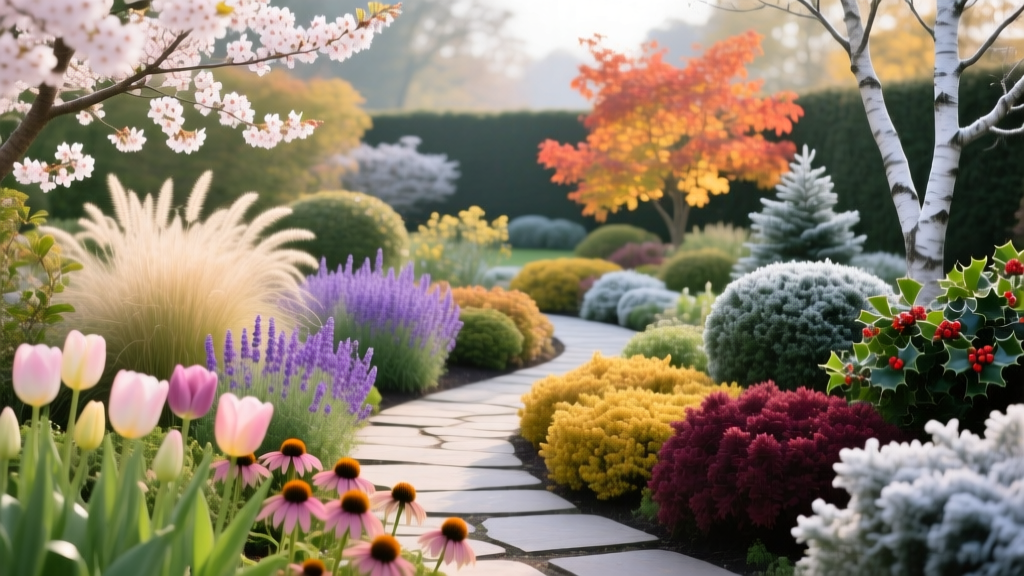
Four-Season Garden Design: Plants That Keep Your Yard Beautiful Year-Round
The Four-Season Garden Philosophy
Most gardens peak for 4-6 weeks in spring or summer and look barren the rest of the year. A four-season garden is designed so that as one group of plants fades, another takes center stage. The result: a landscape that offers visual interest 365 days a year.
Spring Stars (March-May)
Early Spring (March-April)
- Hellebores — Evergreen perennials that bloom in late winter/early spring. Nodding flowers in white, pink, purple. Deer-resistant and drought-tolerant once established.
- Witch Hazel — Fragrant, spidery flowers on bare branches in February-March. Fall foliage is brilliant yellow.
- Bulbs: Snowdrops → Crocus → Daffodils → Tulips (staggered bloom over 8 weeks)
Late Spring (April-May)
- Peonies — Massive, fragrant blooms. Plant in fall for 50+ years of spring beauty. 'Sarah Bernhardt' (pink) and 'Festiva Maxima' (white) are classics.
- Flowering Dogwood — White or pink bracts in April-May, red berries in fall, attractive bark in winter.
- Alliums — Dramatic purple spheres on tall stems. 'Purple Sensation' is the most popular variety.
Summer Showstoppers (June-August)
- Coneflowers (Echinacea) — Daisy-like flowers from June to September. Leave seed heads for winter finches. 'PowWow Wild Berry' blooms all summer without deadheading.
- Hydrangeas — 'Annabelle' (white mopheads), 'Limelight' (chartreuse → pink), 'Endless Summer' (reblooming blue/pink).
- Daylilies — 'Stella de Oro' blooms June-October. Nearly indestructible. Each flower lasts one day but hundreds bloom in succession.
- Russian Sage — Airy blue-purple spires July-September. Drought-tolerant, deer-resistant, pollinator magnet. Cut back in early spring.
- Crape Myrtle — Heat-loving tree with 60-90 days of flowers in white, pink, red, or purple. Exfoliating bark adds winter interest.
Fall Fireworks (September-November)
- Japanese Maple — The king of fall color. 'Bloodgood' turns crimson, 'Osakazuki' blazes orange-red. Multi-season interest with spring color and elegant winter branching.
- Sedum 'Autumn Joy' — Pink flower heads age to rusty copper by November. Leave standing all winter for architectural interest.
- Beautyberry — Electric purple berry clusters in September-October. 'Early Amethyst' is the most prolific. Berries last through November.
- Asters — 'Alma Poetschke' (hot pink) and 'Raydon's Favorite' (lavender) bloom September-October, providing critical late-season nectar for pollinators.
- Ornamental Grasses — Miscanthus, pennisetum, and panicum develop golden plumes and bronze foliage in fall. Leave standing — they create stunning silhouettes against winter skies.
Winter Structure (December-February)
Evergreen Framework
- Boxwood — Classic evergreen hedges. 'Green Velvet' stays compact without shearing.
- Japanese Holly — Fine-textured evergreen that looks like boxwood but more disease-resistant.
- Conifers: Dwarf spruce, juniper, and false cypress provide year-round color in various greens, blues, and golds.
Winter Interest Bark and Branches
- Red Twig Dogwood — Brilliant red stems against white snow. 'Arctic Fire' stays compact at 3-4 feet.
- River Birch — Exfoliating cream-and-cinnamon bark. Multi-stem varieties are most dramatic.
- Harry Lauder's Walking Stick — Contorted branches create sculptural silhouettes in winter.
Winter Bloomers
- Winter Jasmine — Bright yellow flowers on bare green stems in January-February.
- Hellebores — Begin blooming again in late January in zones 5+.
- Witch Hazel — Fragrant February blooms close the loop back to spring.
Design Principles for Year-Round Beauty
- Layer your plantings: Trees → shrubs → perennials → ground covers → bulbs. Each layer peaks at different times.
- 30% evergreen minimum: Evergreen plants provide the "bones" that keep the garden structured when everything else is dormant.
- Leave seed heads and grasses: Don't cut everything back in fall. Dried flowers and grasses provide winter beauty and food for birds.
- Consider bark and branch structure: Plants with interesting bark, colorful stems, or architectural branching earn their place in all four seasons.