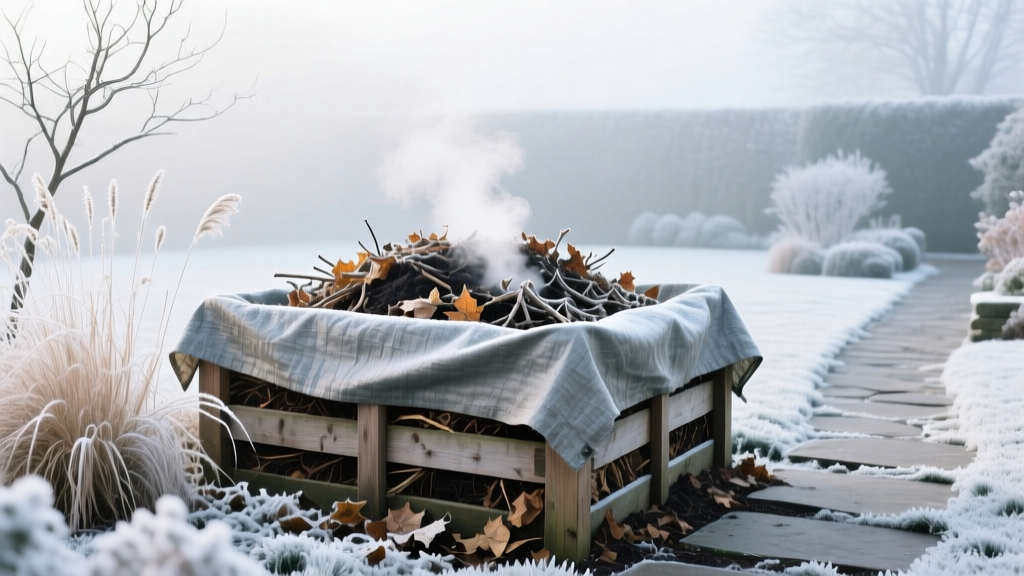
Winter Garden: Compost Pile Management in Cold Weather
The fastest way to lose a compost pile in winter is to treat it like summer: keep adding cold, wet scraps to the top and hope for heat. The opportunity right now—before the next hard freeze or deep snow—is to set your pile up so it either (a) keeps working steadily through cold spells or (b) pauses cleanly without turning into a soggy, smelly mess. Most winter compost problems are preventable in a single focused afternoon: insulate, balance moisture, stockpile browns, and decide whether you’re “hot-composting through winter” or “holding materials until spring.”
This is a practical, do-it-now almanac for winter compost pile management, organized by priority. Use it whether you compost in a bin, a 3-bin system, a tumbler, or a simple heap. Timing references assume typical Northern Hemisphere winter; adjust to your local frost dates and USDA hardiness zone.
Priority 1 (This Week): Protect the pile so it doesn’t turn anaerobic or freeze-solid
Lock in the right moisture level before the next freeze
Compost can keep decomposing at low temperatures, but waterlogged compost turns anaerobic quickly—especially when freeze/thaw cycles collapse pore space. Aim for “wrung-out sponge” moisture. If your pile drips when squeezed, it’s too wet for winter.
- Target moisture: about 40–60% (damp, not dripping).
- Action: Add dry browns (shredded leaves, straw, cardboard) in 2–4 inch layers and mix into the top 12–18 inches.
- Do this before: a forecast low below 25°F (-4°C), when excess water tends to freeze into a dense block.
Quick field test: grab a handful from the middle; squeeze hard. If you get more than a few drops, add browns and fluff. If it crumbles and won’t hold shape, lightly water with warm water on a mild day (above 40°F / 4°C) and cover immediately.
Insulate the active zone
If you want any winter activity, insulation is your leverage. A hot pile can hit 130–160°F (54–71°C) in fall; by January it may hover near ambient unless you reduce heat loss. Build “walls” of carbon around the core.
- For open piles: ring the heap with 12–18 inches of straw bales, bagged leaves, or a thick leaf mulch, then tarp the top.
- For bins: wrap with old carpet, rigid foam, or bubble insulation; keep vents clear.
- For tumblers: expect more temperature swings; put it in a sun-exposed spot out of wind, and add extra browns to prevent wet mats.
“Smaller piles tend to lose heat rapidly; a minimum size of about one cubic yard helps retain heat for active composting.” — University of California Agriculture and Natural Resources (UC ANR), Composting Is Good for Your Garden and the Environment (2012)
Size threshold that matters: If your active pile is smaller than roughly 3 ft × 3 ft × 3 ft (about 1 cubic yard), it can still compost in winter, but it’s far more likely to stall whenever temperatures drop below 32°F (0°C).
Cover for rain/snow control, not airtight sealing
Winter precipitation is the #1 driver of sour compost. Cover the pile to shed rain and snow, but leave some airflow at the sides or edges.
- Best covers: a tarp with gaps at the sides, a lid, or a piece of corrugated roofing.
- Avoid: wrapping the pile tightly in plastic (traps moisture, limits oxygen).
- After heavy snow: brush off the top so meltwater doesn’t soak in during a warm spell above 35–40°F (2–4°C).
Priority 2 (Next 2 Weeks): Prepare inputs—stockpile browns and pre-process greens
Build a “brown bank” before it’s buried
Winter compost succeeds or fails based on your browns supply. Kitchen scraps keep coming; dry leaves don’t. If you haven’t already, stockpile enough browns to last until spring thaw.
- Minimum stockpile: at least 2–3 bags of shredded leaves (or equivalent) per household member for a cold-climate winter.
- Best browns in winter: shredded leaves, shredded cardboard, straw, wood shavings (untreated), dried garden stems chopped to 2–4 inches.
- Storage: keep browns dry under cover (lidded tote, trash can, or tarp).
Shred now if you can. Smaller particles compost faster and won’t form frozen sheets. Leaves run through a mower and stored dry are ideal winter compost currency.
Manage kitchen scraps so they don’t attract pests
Rodents and raccoons learn winter routines. Keep your compost uninteresting to them: reduce scent, bury inputs, and avoid large chunks that persist.
- Chop scraps to under 1–2 inches to reduce time exposed.
- Freeze-thaw pre-treatment: store scraps in a lidded bucket outdoors; freezing breaks cell walls, so decomposition accelerates when the pile warms above 45°F (7°C).
- Bury additions at least 8–12 inches into the pile’s center and cap with browns.
Skip in winter: meat, fish, greasy foods, and dairy—especially when the pile is cold and you can’t rely on sustained high temperatures for breakdown and odor control.
Priority 3 (All Winter): Keep the biology alive—turning strategy, temperature targets, and when to stop
Decide: active hot composting vs. winter holding
There are two successful winter approaches. Problems come from mixing them.
| Winter strategy | Best for | What you do | What to expect |
|---|---|---|---|
| Active (hot) composting | USDA Zones 6–9, or any zone with insulated 1+ cubic yard pile and enough materials | Build/maintain a large pile, balance C:N, turn on milder days | Core can stay above 90–120°F much of winter; compost ready sooner |
| Winter holding | USDA Zones 3–5, small bins, long deep-freeze winters | Layer and cover; minimal turning; store scraps and browns, build “real” hot pile in spring | Pile may freeze; decomposition resumes during thaws and in spring |
Temperature thresholds that guide your next move
Use a compost thermometer if you have one. If you don’t, learn the feel: warm center, no foul odor, and materials slowly collapsing.
- Above 120°F (49°C): Great. Keep covered; don’t over-turn. Turning too often dumps heat.
- 90–120°F (32–49°C): Working. Add small, well-buried inputs; turn only if wet or compacted.
- Below 70°F (21°C) for 7–10 days: Likely stalled. Add nitrogen (greens), rebuild moisture, and insulate—or switch to winter holding.
- Below freezing in the core (< 32°F / 0°C): Pause. Stop turning; keep adding in small buried pockets only if you can fully cap with browns.
Extension guidance consistently emphasizes that composting continues fastest within warm ranges. The U.S. EPA notes that composting is a managed aerobic process where maintaining appropriate conditions (including moisture and aeration) supports decomposition (U.S. Environmental Protection Agency, Composting At Home, 2023).
Turning: do it less, and only when it helps
In winter, turning is a tool for fixing problems (too wet, too compacted, too cold), not a routine. Turn only on a mild day—ideally when daytime highs reach 40–50°F (4–10°C)—so the pile can reheat.
- If the pile is wet/compact: Turn and blend in dry browns. Rebuild with a fluffy structure.
- If the pile smells sour or like ammonia: Turn immediately. Sour = anaerobic; ammonia = too much nitrogen. Add browns and increase aeration.
- If the pile is frozen: Don’t fight it. Chip a small cavity, add scraps, cap heavily with browns, and re-cover.
What to plant (right now): Feed the compost system, not the garden beds
Winter isn’t a primary “planting season” for compost, but you can plant for your compost pipeline. The goal is future carbon and structure.
In mild-winter regions (USDA Zones 8–10): plant cover crops for compostable biomass
If your soil isn’t frozen and you still have open ground, plant cover crops that can be cut for mulch or compost inputs.
- Good choices: cereal rye, oats, vetch, field peas (species depend on your region).
- Timing: sow 4–8 weeks before your average last frost date for best establishment; in many Zone 9 areas, that can still be late winter.
- Management: cut before seed set and either sheet-mulch in place or add to compost in thin layers with browns.
In cold-winter regions (USDA Zones 3–7): start an indoor “brown supply” habit
You can’t plant outdoors, but you can “grow” browns by saving paper products correctly.
- Shred plain cardboard and non-glossy paper; store dry.
- Avoid shiny coatings and heavy inks.
- Rip egg cartons and paper towel tubes into strips so they don’t mat.
What to prune (and how to compost it): Winter pruning waste without pest carryover
Winter pruning generates excellent carbon-rich structure—if it’s handled correctly. The key decision is disease and pest risk.
Compost these pruning materials (after chopping)
- Healthy twigs and small branches chipped or cut to 1–3 inches
- Perennial stems from healthy plants (cut small)
- Dry ornamental grass (mix well; it can mat)
Do NOT compost these in a cold pile
If your pile won’t reliably maintain high heat (sustained above 131°F / 55°C), don’t add disease-prone material that can overwinter.
- Rose canes or leaves with black spot
- Apple/pear leaves with scab
- Anything with obvious moldy lesions, cankers, or heavy insect egg masses
Many plant pathogens survive winter on debris. If you can’t hot-compost, bag and trash the worst material or send it to a municipal compost facility designed for higher-temperature processing.
What to protect: Keep pests out and prevent winter rot
Rodent prevention checklist (do this before snow cover)
- Use a bin with a rodent-resistant base (1/4-inch hardware cloth under and around edges).
- Keep food scraps buried 8–12 inches deep with a thick brown cap.
- Stop adding tempting items (bread, oily foods, meat/dairy).
- Keep the area around the bin clear of tall weeds and boards that create hiding spots.
Fruit fly and gnat suppression (indoor staging area matters)
Winter compost often involves storing scraps until you can access the pile. If fruit flies show up, your compost system is leaking indoors.
- Store scraps in a sealed container.
- Empty every 3–7 days (faster if your kitchen is warm).
- Add a layer of shredded cardboard in the container to absorb liquids.
Prevent “winter slime”: anaerobic rot from saturation
If your pile develops gray, slimy layers and a sour odor, oxygen is missing. Fix it on the next day above 40°F (4°C):
- Peel back the cover and remove any matted top layer.
- Mix in dry browns aggressively until the texture is springy.
- Rebuild with chunky structure (small sticks, coarse browns) at the base to improve airflow.
What to prepare: A winter timeline that matches weather windows
Use this schedule as a working plan. Adjust for your first hard freeze, snow cover, and your average last frost date. (Example frost timing: many Zone 5 gardens see hard freezes by mid-November and a last frost around May 10–20; Zone 8 often sees last frost around March 10–30.)
| Month / Window | Weather cue | Compost actions (priority order) |
|---|---|---|
| Late Nov–Early Dec | Before sustained lows below 25°F (-4°C) | Stockpile browns; insulate pile; set cover; check moisture and correct to wrung-out sponge |
| Mid Dec–Jan | Deep-freeze season; short thaws | Switch to winter holding if core drops below 32°F; add scraps only in buried pockets; keep cap thick and dry |
| Feb | Thaw days above 40°F (4°C) | Turn only if soggy/anaerobic; add browns; rebuild shape; plan spring hot pile location and materials |
| March | More frequent days above 45°F (7°C) | Combine winter holding pile + stored browns; build to at least 1 cubic yard; aim for 130°F+ in core within 72 hours |
72-hour “reboot” plan for a stalled winter pile
If you catch a mild stretch (3 days of highs above 45°F / 7°C), use it to restart activity.
- Day 1: Turn and remix. Add dry browns to correct moisture. Rebuild as a compact mound (not spread out).
- Day 2: Check temperature. If still cold, add a nitrogen boost (fresh greens, coffee grounds in moderation) and mix just the center.
- Day 3: If core reaches 90–120°F, stop turning and keep covered so heat accumulates.
Regional scenarios: What changes in real gardens
Scenario 1: Snowy, long winter (USDA Zones 3–5; sustained subfreezing)
When the ground is frozen and snow persists, your best move is often winter holding. Trying to hot-compost through weeks below 15°F (-9°C) can be frustrating unless you have a large, well-insulated system and steady inputs.
- Best practice: Keep a sealed “scrap bucket” outdoors; layer scraps into the pile during thaws and cap heavily with browns.
- Access tip: Keep a shovel and a tote of browns near the pile so you can open a pocket quickly without exposing the whole core.
- Spring plan: Once daytime highs consistently reach 45–50°F (7–10°C), combine everything into a single large pile and turn to aerate.
Scenario 2: Freeze/thaw, wet winters (USDA Zones 6–7; heavy rain, occasional snow)
This is the compost “danger zone” because waterlogging is constant and temperatures hover near freezing—perfect for anaerobic conditions if covered poorly.
- Priority: rain control. Improve your cover and add structure (coarse browns) so water drains and air stays in the pile.
- Turn timing: only after heavy rain events when temps rebound above 40°F (4°C).
- Material emphasis: more browns than you think you need; keep a 2–4 inch dry cap on top at all times.
Scenario 3: Mild winter with active growth (USDA Zones 8–10; cool-season gardening ongoing)
If your winter days regularly hit 55–65°F (13–18°C), you can keep composting actively. The limiting factors become moisture loss (in dry climates) or pests (where wildlife is active year-round).
- Dry climates: check moisture weekly; water lightly when the center won’t clump.
- Wet climates: keep the cover on; turn only to correct saturation.
- Bonus: use finished compost to top-dress winter vegetables, but keep compost 1–2 inches away from plant stems to reduce rot.
Winter pest and disease prevention: Keep next season’s problems out of the pile
Winter compost is often cooler and slower. That changes what is “safe” to add.
Weed seeds and invasive plants
If your pile won’t sustain high heat, assume many weed seeds survive. Keep seedy weeds out unless you hot-compost and monitor temperatures.
- Temperature target for seed kill: sustained above 131°F (55°C) with good management (turning to move outer material inward).
- Winter reality: many home piles won’t hold that temperature in January.
Overwintering insects
Insect eggs and pupae can overwinter in debris. Don’t add heavily infested plant material to a cold pile. For example, stems with visible egg clusters should be disposed of, not composted.
Sanitation around the compost site
- Rake spilled scraps immediately.
- Keep lids and covers secured against wind.
- Clean tools if you’re moving diseased plant material elsewhere.
For broader best practices on composting management and benefits, the U.S. EPA provides a home composting overview emphasizing balanced materials and proper conditions for aerobic decomposition (U.S. Environmental Protection Agency, 2023). For pile sizing and general composting principles, UC ANR notes the value of sufficient pile volume to retain heat (UC ANR, 2012).
Right-now checklists: 30 minutes, 2 hours, and the next thaw day
30-minute winter compost check (do today)
- Lift the cover and smell: earthy is good; sour/ammonia means fix needed.
- Check the top 6 inches for wet mats; add a dry brown cap if needed.
- Confirm you have at least one bin/tote of dry browns accessible.
- Secure the cover against wind and animals.
2-hour winterization (do before the next cold snap)
- Insulate: add 12–18 inches of leaf/straw insulation around the pile or wrap the bin.
- Correct moisture by mixing in browns through the top 12–18 inches.
- Create a “feed hatch”: a spot where you can open, add, and re-cap quickly.
- Stage tools nearby (shovel, browns tote, tarp clips).
Next thaw day above 40°F (4°C): targeted turning plan
- If it’s wet or smelly: turn once, add browns, rebuild and cover.
- If it’s simply cold but not wet: don’t fully turn; mix only the core and re-insulate.
- Record the core temperature (or note “warm/cool”) and check again in 48–72 hours.
Winter composting is less about constant activity and more about smart control: keep oxygen spaces open, keep excess water out, and keep browns within reach. If your pile freezes, let it—your job is to prevent the freeze from turning into rot. When the first reliable warm stretch arrives (often 2–6 weeks before your last frost date), you’ll be ready to combine winter-held materials into a pile that heats fast and finishes cleanly, right when spring beds start asking for compost.