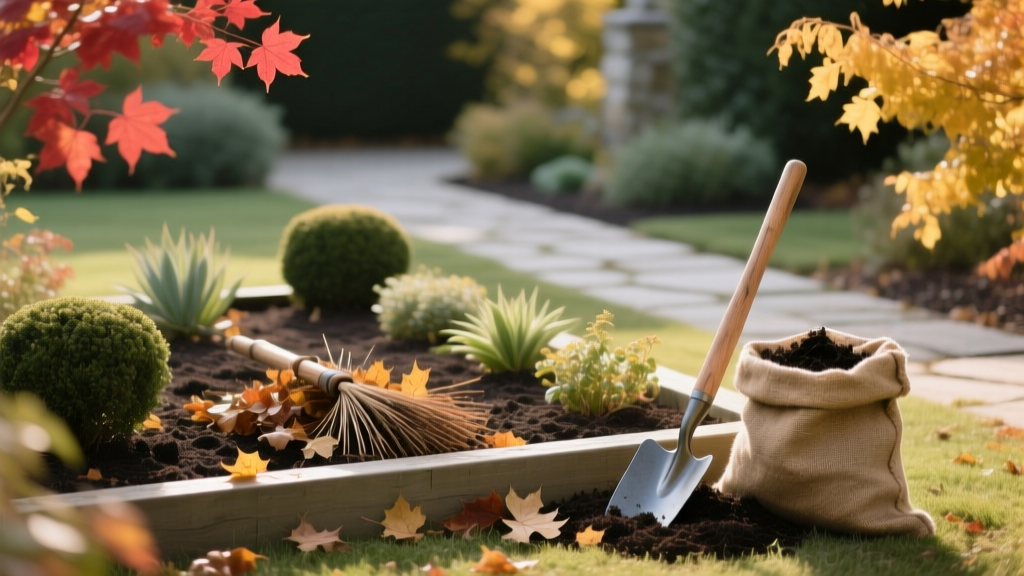
Fall Garden Cleanup and Bed Preparation
The next 4–8 weeks decide how many weeds you pull next spring, how much disease pressure carries over, and whether your soil wakes up loose and fertile—or compacted and depleted. Once nighttime lows settle near 40–45°F and the first hard frost is within 2–6 weeks, plants slow down, pests look for shelter, and your window for “easy wins” opens. A focused fall cleanup now also lets you plant for spring while the soil is still warm enough for roots to grow.
Use this guide like a field schedule: prioritize what stops problems (disease/pests), then what protects perennials and soil, then what sets up next year’s beds. Adjust timing to your average first frost date and USDA hardiness zone. If you don’t know your frost date, look it up by ZIP code—then count backward using the timelines below.
Priority 1: Remove the stuff that causes problems (diseases, pests, weeds)
1) Pull and dispose of diseased plant material (do this first)
Not all “leave the leaves” advice applies to vegetable beds and disease-prone ornamentals. If you had powdery mildew, early blight, late blight, Septoria leaf spot, downy mildew, or viral issues on vegetables, remove the plants promptly. Many pathogens overwinter on infected debris and re-infect next season.
- What to remove: tomato vines with blight or Septoria; squash/cucumber vines with downy mildew; rose leaves with black spot; peony leaves with botrytis; any plant with obvious cankers or extensive spotting.
- Where it goes: bag and trash or municipal hot composting. Avoid home composting disease-heavy material unless you know your pile reaches sustained hot-compost temps.
- Timing trigger: once plants are no longer producing and nights consistently drop under 45°F, do the pull-out and cleanup before extended rains.
“Sanitation—removing infected plant debris—is one of the most effective and least expensive disease management tools available to gardeners.” — General principle emphasized across multiple Extension plant pathology programs
Research/Extension support: Cornell University’s vegetable disease management resources repeatedly stress sanitation and crop rotation to reduce pathogen carryover (Cornell Cooperative Extension, 2020). University of Minnesota Extension also highlights fall cleanup and removal of diseased debris to reduce overwintering inoculum (University of Minnesota Extension, 2019).
2) Cut down and remove annuals and spent vegetables—selectively
Annual flowers and frost-killed vegetables become pest shelter quickly. Pull them after the first light frost (28–32°F) or once they’re clearly declining. Keep a few exceptions:
- Leave standing (optional): sturdy seed heads (coneflower, rudbeckia) for birds; some hollow stems for beneficial insects—but not in or right beside a disease-prone vegetable bed.
- Remove aggressively: any plant that hosted aphids, whiteflies, spider mites, squash bugs, or fungal leaf spots.
3) Weed now while the soil is workable—especially perennials
Fall is prime time for weed control because many perennials move carbohydrates into roots as they prepare for winter. Pull, dig, or smother now to reduce spring outbreaks.
- Highest priority: bindweed, Canada thistle, creeping charlie, quackgrass, bermudagrass (warm-season regions), nutsedge (southern and irrigated beds).
- Do not let these seed: chickweed, henbit, hairy bittercress—common winter annuals that germinate as soon as temperatures cool into the 55–65°F range.
- Timing: target a weekend when the soil is moist but not soggy; aim to finish major weeding 2–3 weeks before the soil begins freezing (Zones 3–5) or before heavy winter rains (Pacific Northwest, Mid-Atlantic).
Fall sanitation checklist (printable)
- Bag and remove disease-heavy leaves and vines
- Pull spent annuals and frost-killed vegetables
- Collect dropped fruit (reduces wasps, codling moth, brown rot carryover)
- Weed aggressively: roots out, not just tops
- Clean cages, stakes, and tools (scrub soil off; disinfect if disease was present)
Priority 2: Protect what you want to keep (perennials, soil structure, beneficial life)
What to prune now (and what to leave until late winter)
Fall pruning mistakes are expensive because cuts can stimulate tender growth or expose plants to winter injury. Use a narrow approach: prune for safety, disease removal, and structural issues—not aesthetics.
Prune now
- Dead, diseased, damaged wood any time you see it.
- Herbaceous perennials with disease (e.g., peonies with botrytis): cut back and remove foliage after a few frosts (28–32°F nights) when leaves are collapsing.
- Berry canes: remove spent canes of summer-bearing raspberries after harvest; thin as needed for airflow.
Delay until late winter/early spring
- Spring-blooming shrubs: lilac, forsythia, azalea—prune right after flowering, not in fall (you’ll remove buds).
- Roses (most types): avoid hard pruning now; instead, tidy and protect.
- Hydrangeas: type matters. Bigleaf (H. macrophylla) buds can be lost to fall/winter pruning; panicle (H. paniculata) is more forgiving—still best pruned late winter.
Protect perennials and shrubs with smart mulching
Mulch is most useful after the ground cools, not while it’s still warm. Apply too early and you may shelter pests and keep soils warm longer, delaying dormancy. Aim to mulch when soil temperatures drop to about 50°F and nights are regularly in the 30s–40s.
- Mulch depth: 2–3 inches for most beds; up to 4 inches for strawberries in colder zones.
- Keep mulch off crowns/trunks: leave 2–3 inches of bare space around stems to reduce rot and rodent damage.
- Best materials: shredded leaves, pine needles, clean straw (for veggie beds), compost topped with leaves.
Extension support: Washington State University Extension notes that mulching helps moderate soil temperature fluctuations and conserve moisture, but placement and timing matter to avoid crown and trunk problems (WSU Extension, 2021).
Protect from rodents and winter sun
As food sources decline, voles and rabbits chew bark and crowns. Winter sun and wind can also crack bark on young trees (southwest injury), especially after warm days followed by sharp freezes.
- Tree guards: install hardware cloth or plastic spiral guards by the time nighttime lows hit 35–40°F. Extend guards a few inches into the soil.
- Water before freeze: give shrubs and evergreens a deep watering when the top few inches are dry and before the ground freezes—especially in Zones 3–6.
- Anti-desiccant sprays: consider for broadleaf evergreens (rhododendron, holly) in windy, exposed sites; apply on a dry day above 40°F.
Priority 3: Plant what benefits from fall timing (garlic, bulbs, cover crops, perennials)
What to plant right now
Fall is for roots. Soil remains warmer than air well into autumn, so plants can establish even when tops go dormant. Use these timing rules to hit the sweet spot.
Garlic and shallots
- Target planting window: 2–4 weeks before your ground typically freezes (Zones 3–6) or 3–6 weeks before your first hard frost where soils don’t freeze hard (Zones 7–9).
- Soil temp cue: aim for 45–55°F soil temperatures for strong rooting without excessive top growth.
- Depth: 2–3 inches deep in cold zones; 1–2 inches in warmer zones; mulch after planting.
Spring-flowering bulbs (tulips, daffodils, crocus, allium)
- Plant after: nighttime lows consistently below 50°F.
- Plant before: the ground freezes; bulbs need root time. In many areas this is mid-September to late November, depending on zone.
- Tip: daffodils and alliums are less attractive to squirrels than tulips; consider mixing to reduce digging pressure.
Cover crops for vegetable beds
Cover crops protect soil from erosion, suppress winter weeds, and add organic matter. Choose based on your frost timing.
- Oats/peas: great for beginners; often winter-kill after hard freezes around 10–20°F (varies), leaving easy spring mulch.
- Cereal rye: reliable overwintering option for colder climates; terminate in spring before it gets too tall.
- Crimson clover: good nitrogen fixer in many regions; establishment is key—seed while soil is still warm.
Extension support: USDA SARE cover crop resources emphasize matching cover crop species to planting windows and regional winter survival for best results (SARE, 2020).
Perennials, trees, and shrubs
In many regions, fall planting is ideal for perennials and woody plants—if you can water consistently until freeze or rains take over.
- Best window: plant at least 6 weeks before the ground freezes (Zones 3–6), or once daytime highs drop below 80°F in hot-summer climates.
- Zones 8–10: fall through winter is often prime planting season; avoid planting right before heat rebounds.
Priority 4: Prepare beds for spring (soil, compost, layout, infrastructure)
Soil testing and amendments (do this before you add “random compost”)
If you only do one planning step, do a soil test. Fall is ideal because labs are less backed up than spring, and you can apply amendments that need time to react.
- When: any time the soil is workable; aim for September–November in most climates.
- Targets: pH, organic matter, phosphorus, potassium; note any recommendations for lime or sulfur.
- Timing for lime: fall applications give months to adjust pH before heavy spring feeding.
Compost: add it, but don’t till excessively
Add 1–2 inches of finished compost to vegetable and annual beds. If you already have decent soil structure, avoid deep tilling—just top-dress and let winter moisture and soil life incorporate it. In compacted beds, use a broadfork to loosen without flipping layers.
- Top-dress rate: 1 inch over 100 sq ft ≈ 0.3 cubic yards.
- Compost quality: mature, earthy, no sour smell; avoid compost with lots of viable weed seeds.
Sheet mulching for new beds
Fall is the easiest time to start a new bed because cardboard and mulch can sit all winter. Mark the bed, mow low, water, lay plain cardboard (no glossy print), then 4–6 inches of leaves/wood chips. By spring, you’ll have plantable soil with far less digging.
Clean and store supports, irrigation, and tools
This prevents spring scrambling and reduces disease carryover.
- Tomato cages/stakes: scrub off soil; disinfect if you had blight/leaf spot issues (follow label directions for any disinfectant used).
- Soaker hoses/drip: drain and store where they won’t crack; in freezing climates, do this before the first hard freeze (28°F).
- Mower/leaf tools: sharpen blades now; clean decks to reduce rust and disease spread.
Timing you can use: a month-by-month schedule
| Timing window | What to do | Key thresholds | Notes |
|---|---|---|---|
| Early fall (6–8 weeks before first frost) | Soil test; start cover crops; remove diseased foliage; major weeding | Day highs often 65–80°F | Best time to establish cover crops; weeds pull easier after rain |
| Mid fall (4–6 weeks before first hard frost) | Plant shrubs/perennials; order bulbs/garlic; clean beds as crops finish | Night lows 45–50°F | Prioritize anything needing rooting time |
| Late fall (2–4 weeks before ground freeze) | Plant garlic; plant bulbs; apply mulch after cooling; protect trunks | Soil near 45–55°F; first hard frost 28°F | Mulch after soil cools to reduce vole habitat and crown rot |
| After first hard frost / pre-freeze | Final cleanup; drain irrigation; water evergreens; rodent checks | Several nights 28–32°F | Don’t leave fruit, dense weeds, or debris piles near trunks |
Regional scenarios: adjust the plan to your climate
Scenario 1: Upper Midwest / Northern New England (USDA Zones 3–5)
Your season can shut down fast. If your average first frost is around September 20–October 10, prioritize disease cleanup and soil protection early. Aim to finish garlic planting by mid-October (many locations) and get mulch down after the ground cools but before hard freezes lock you out.
- Don’t wait for everything to “look dead”—remove disease debris as soon as beds clear.
- Use winter-kill covers (oats/peas) if you want easy spring management.
- Strawberries: mulch when temps are consistently in the 20s at night and plants are dormant; avoid smothering too early.
Scenario 2: Mid-Atlantic / Ohio Valley (USDA Zones 6–7)
You often get a long, productive fall with intermittent warm spells. That’s great for planting—but it also means pests can linger. If your first frost is often October 15–November 10, you can stagger cleanup: remove diseased crops immediately, keep healthy cool-season crops going, and prep empty beds as they open.
- Watch for late-season mildews on cucurbits—remove promptly after production drops.
- Plant garlic typically late October into early November when soil cools.
- Leaf management: shred leaves and use as mulch/compost ingredient; don’t let thick mats sit on crowns.
Scenario 3: Pacific Northwest (USDA Zones 7–9, wet winters)
Your biggest enemy in fall is prolonged moisture, not extreme cold. If heavy rains arrive in October–November, cleanup becomes disease prevention for the next 6 months.
- Prioritize airflow: remove dense, mildewed foliage; keep beds free of mats that stay wet.
- Mulch carefully: use coarse materials (shredded leaves mixed with wood chips) to avoid slimy layers.
- Consider raised beds or adding compost to improve drainage; avoid walking on wet soil to prevent compaction.
Scenario 4: Warm-winter South (USDA Zones 8–10)
Fall cleanup is less about “shutting down” and more about resetting for cool-season growing. Many pests don’t die back hard, so sanitation matters even more.
- Remove crop residue quickly to reduce whiteflies, mites, and fungal carryover.
- Soil solarization is off-season-dependent, but fall is excellent for adding compost and establishing beds for winter vegetables.
- Garlic timing: often later (November into December) depending on local heat; plant when soil is consistently below 70°F for better establishment.
Pest and disease prevention that pays off next spring
Stop overwintering insects with targeted cleanup
Many common garden pests overwinter in plant debris, mulch layers, or nearby weeds.
- Squash bugs: remove cucurbit vines and nearby debris right after harvest; don’t leave boards or thick mulch right beside squash beds.
- Codling moth / apple pests: pick up dropped apples and remove “mummy fruit” from trees to reduce carryover.
- Aphids and whiteflies: pull spent annuals and vegetables; control winter weeds that act as hosts.
Reduce fungal disease carryover with spacing and rotation planning
Fall is when you can look at your beds honestly: where was airflow poor, where did leaves stay wet, where were plants crowded?
- Rotate plant families next year (e.g., tomatoes/peppers/eggplant to a different bed than last year).
- Improve airflow by adjusting trellis positions now while you can still move posts and supports.
- Keep leaves from matting on crowns—especially in ornamental beds with powdery mildew history.
When to leave leaves (and when not to)
Leaves are valuable organic matter, but context matters. Use shredded leaves as mulch in ornamental beds and under shrubs—especially where you did not have serious disease issues. In vegetable beds with known disease problems, keep leaf mulch thinner and avoid burying visibly infected material.
Fast timelines: what to do this weekend vs. next month
This weekend (highest leverage)
- Remove and dispose of diseased plants and leaves
- Weed aggressively (get roots)
- Collect fallen fruit and clear debris around trunks
- Start a compost top-dress on empty beds (1–2 inches)
Within 2 weeks
- Seed cover crops in open vegetable beds
- Order/prepare garlic and bulbs; prep planting rows
- Install tree guards if rodents are active
Within 4 weeks (or 2–4 weeks before ground freeze)
- Plant garlic and spring bulbs when nights cool
- Mulch perennials after soil cools (~50°F soil)
- Drain irrigation before the first hard freeze (28°F)
Bed-by-bed cleanup checklist (use it as you clear space)
- Bed cleared: pull crop residue; remove string/trellis ties
- Disease check: any spotting, mildew, cankers? Bag and remove
- Weed pass: dig perennial weeds; rake annual seedlings
- Soil step: broadfork if compacted; top-dress compost
- Cover step: seed cover crop or apply leaf mulch 2–3 inches
- Label step: note what grew here (rotation planning)
Fall cleanup isn’t about making the garden look bare—it’s about removing the handful of materials that cause next year’s biggest setbacks, then locking in protection and fertility while nature does the heavy lifting. If you hit sanitation early, time mulch correctly, and plant what needs cool soil to root, you’ll feel the payoff the first warm week of spring: fewer weeds, fewer diseases, and beds that are ready to plant instead of ready to fix.