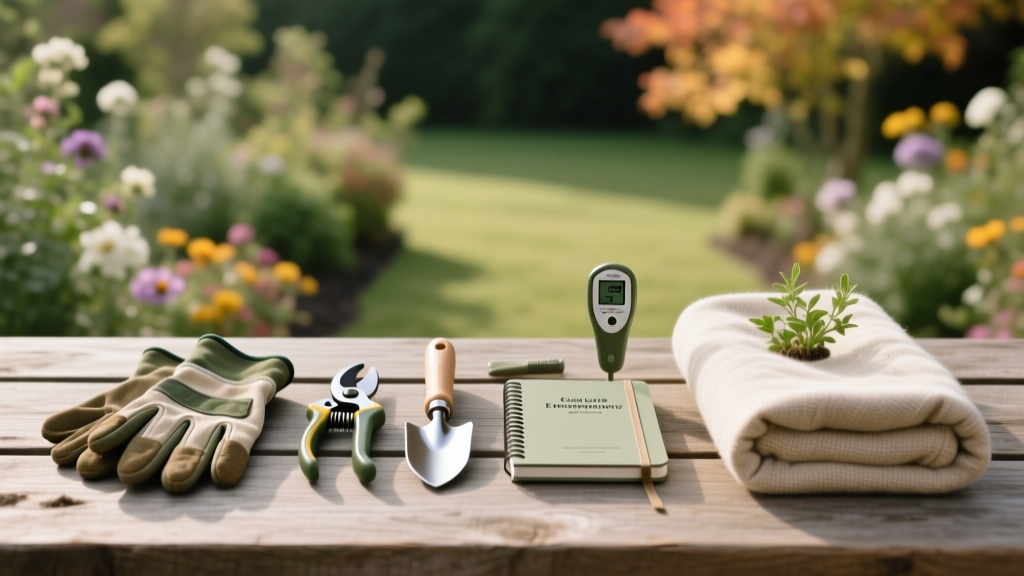
Seasonal Garden Emergency Kit Essentials
When the forecast flips from “mild” to “watch,” you don’t have time to hunt for frost cloths, sharpen pruners, or remember where you stored the hose washer kit. The most productive gardens aren’t the ones with perfect weather—they’re the ones with a ready-to-go seasonal emergency kit. Think of it as your rapid-response system for heat spikes, surprise frosts, wind events, downpours, pest outbreaks, and irrigation failures.
This guide is organized by priority: what to plant, what to prune, what to protect, and what to prepare—so you can act this week. Timing matters, so you’ll see concrete thresholds (like 28°F hard freezes and 32°F light frosts), calendar windows (like “2 weeks before average first frost”), and temperature triggers (like sustained 85–90°F heat). Use USDA hardiness zones to tailor your kit to your climate, and build a small “grab bin” you can carry to any bed in minutes.
Priority 1: What to Plant (fast wins you can still get in the ground)
Emergency kits aren’t only for disasters—they’re for seizing short weather windows. After a heat wave breaks or after a rain settles dust, you can plant immediately if your seeds, labels, and row cover are ready.
Quick plant list by temperature and frost timing
Use these triggers: Plant cool-season crops when daytime highs settle below 75°F and nighttime lows regularly dip under 55°F. Plant warm-season crops when soil is at least 60°F (and ideally 65°F+) and nights stay above 50°F.
- 2–4 weeks before average first frost date: sow spinach, arugula, radishes, turnips, Asian greens; transplant lettuce starts under shade cloth if days still hit 80°F.
- 6–8 weeks before first frost: sow carrots, beets, kale, collards; start quick brassicas where you can protect with row cover.
- After a heat event ends (temps drop from 90s to 70s): direct-sow cilantro and dill; they bolt quickly in heat but thrive in the “cool-down window.”
- After a heavy rain (soil workable, not sticky): plug in cover crops—oats/peas for quick biomass, or crimson clover in milder zones where winterkill isn’t guaranteed.
Emergency planting essentials to keep stocked: fast-germinating seed packets (radish, arugula, mustard), a dibber, pre-cut labels, waterproof marker, extra cell packs, and a small bag of sterile seed-starting mix for patch repairs.
Regional scenario: short-season northern gardens (USDA zones 3–5)
If your average first frost arrives early (often September 15–October 10 depending on location), treat row cover and low tunnels as planting tools, not just protection. Keep wire hoops (or PVC) and a 0.5–1.0 oz floating row cover in your kit so you can sow greens up to 2 weeks later than you otherwise could.
Regional scenario: mild-winter coastal and southern gardens (USDA zones 8–10)
In warmer zones, the “emergency” is often prolonged heat. Keep shade cloth (30–50%), extra irrigation parts, and insect exclusion netting ready so you can establish fall crops while days still hit 85–95°F. Here, your emergency planting window may be late September through November, not August.
Priority 2: What to Prune (safety, disease prevention, storm readiness)
Pruning is often the difference between manageable cleanup and a disease cascade after wet weather. The emergency kit angle: have the right tools clean, sharp, and staged, so you can prune in the brief dry window between storms.
Do-now pruning that prevents breakage and disease
- Remove damaged limbs immediately (cracked, hanging, rubbing). Make clean cuts to the branch collar; avoid leaving stubs.
- Thin dense interior growth on tomatoes and vining crops to improve airflow after humid spells (especially when nights stay above 60°F and leaves stay wet into morning).
- Deadhead and remove diseased foliage from ornamentals before a rain event to reduce spore spread.
Keep in your kit: hand pruners, loppers, a pruning saw, nitrile gloves, a small spray bottle of disinfectant (70% isopropyl alcohol is commonly used), a sharpening tool, and a roll of flagging tape to mark limbs to remove when conditions are safer.
“Most plant disease problems require moisture. Reducing the time leaves remain wet—by spacing, pruning, and watering early—can significantly reduce outbreaks.” — University of Minnesota Extension, plant disease management guidance (updated resources commonly emphasize leaf-wetness duration)
Timing rule: prune and trellis on a dry day when foliage is dry to the touch—ideally 24 hours after rain or overhead irrigation. If a storm is forecast, prioritize removing weak, loaded branches and re-staking top-heavy plants 48 hours before high winds arrive.
Regional scenario: hurricane and tropical storm belts
In the Gulf and Atlantic coastal regions, your “pruning emergency” often happens ahead of wind. Keep soft ties, extra stakes, and a small spool of jute twine. Avoid heavy canopy removal right before extreme heat returns; instead, reduce wind sail: secure tall plants, remove fruit-laden branches likely to snap, and harvest ripe produce early.
Priority 3: What to Protect (frost, heat, wind, rain, wildlife, pests)
Protection is where a seasonal emergency kit pays for itself. The goal is not perfection—it’s preventing irreversible losses (frozen blossoms, sunscald, root suffocation, broken stems, pest explosions).
Frost and freeze: thresholds that matter
Know these numbers: A 32°F night can damage tender annuals; a 28°F hard freeze can kill many warm-season crops. If your forecast shows 36–40°F with clear skies and calm winds, radiational cooling can still drop garden low spots below freezing by dawn.
- When a light frost (32°F) is forecast: cover tender crops before sunset with floating row cover, sheets, or frost blankets. Anchor edges tightly.
- When 28°F is forecast: double-layer protection (row cover + plastic over hoops, keeping plastic off leaves). Add gallon jugs of water under the tunnel to store heat.
- Morning-after rule: uncover once temperatures rise above 40°F to prevent overheating on sunny days.
Extension-backed note: Floating row covers can provide several degrees of frost protection depending on fabric weight and conditions; universities commonly recommend using covers to trap heat from the soil overnight. For practical frost protection strategies, see Oregon State University Extension guidance on frost and plant protection (OSU Extension, 2019).
Heat waves: when to deploy shade and change irrigation
If forecasts show 3+ consecutive days above 90°F (or above 85°F for cool-season crops), act as if it’s an emergency. Heat damage happens fast: blossom drop on tomatoes/peppers, bitter cucumbers, bolting greens, and sunscald on fruit.
- Deploy 30–50% shade cloth over lettuces, spinach, cilantro, and young transplants.
- Switch to morning watering and aim for deep soaking rather than frequent sips.
- Mulch immediately (2–3 inches) to stabilize soil moisture and temperature.
Kit additions for heat: shade cloth with clips, extra hose washers, drip repair couplers, a pressure regulator (for drip), and a soil thermometer. If you’re on timers, keep spare batteries and a manual bypass fitting.
Downpours and flooding: oxygen is the emergency
After 1–3 inches of rain in a short window (or any ponding that lasts more than 6 hours), roots are at risk from low oxygen. Your emergency response is drainage, not fertilizer.
- Open channels to move water away from crowns (especially for peppers, tomatoes, rosemary, lavender).
- Pause feeding until soil drains and plants resume normal turgor.
- Scout for splashed-soil disease spread on lower leaves; remove soil-splattered foliage.
Wildlife and wind: fast physical barriers
Storms and seasonal transitions often push wildlife pressure higher—deer browsing, rabbits clipping seedlings, squirrels digging. Keep barrier materials ready so you can fence in a bed in one trip.
- Deer: lightweight posts + netting (or fixed fencing where allowed).
- Rabbits: 2-foot hardware cloth skirt at bed edges.
- Wind: spare stakes, tomato clips, soft ties, and a roll of horticultural tape.
Pest and disease prevention you can do this week
Prevention is an emergency task when weather flips. Warm days plus cool nights and heavy dew are prime time for foliar diseases; late-season pests can surge when plants are stressed.
- Powdery mildew watch: common on squash and cucumbers when days are warm and nights are cool. Improve airflow, avoid overhead watering, remove heavily infected leaves.
- Tomato blight risk: rises with prolonged leaf wetness. Stake plants, prune lower leaves, mulch to prevent splash, and water at the base. Cornell University’s vegetable resources emphasize moisture management and sanitation as key to reducing foliar disease pressure (Cornell Cooperative Extension, 2020).
- Aphids/whiteflies on fall brassicas: keep insect netting in your kit; check undersides of leaves twice weekly. A strong water spray early can prevent population buildup.
Do not wait until you see heavy damage. Build a “scouting loop” into your weekly routine: check new growth, leaf undersides, and fruit clusters every 3–4 days during warm spells.
Priority 4: What to Prepare (your grab-and-go kit + seasonal timeline)
Your emergency kit should be one tote plus a couple of bundled items (row cover, shade cloth, hoops). The goal is speed: you can respond in 10 minutes to a frost alert or irrigation leak.
The core seasonal garden emergency kit (pack this today)
Grab tote essentials:
- Hand pruners + loppers + folding saw
- Nitrile gloves + heavier work gloves
- 70% isopropyl alcohol (spray bottle) for tool wipe-down
- Soft ties, twine, tomato clips, zip ties
- Plant labels + paint marker
- Soil thermometer
- Headlamp (sunset comes early in fall; power outages happen in storms)
- First-aid basics (bandages, antiseptic wipes, tweezers)
Bundled “deployables” (store next to the tote):
- Floating row cover (0.5–1.0 oz) + clamps
- Shade cloth (30–50%) + clips
- Hoops or wire supports (pre-cut to bed width)
- Plastic sheeting for rain/freeze (use carefully—vent by day)
- Mulch (straw or shredded leaves) staged in bags
Irrigation repair pouch:
- Hose washers, quick-connects, repair ends
- Drip couplers, end caps, goof plugs, emitter punch
- Spare timer battery + Teflon tape
Monthly schedule table: when to stage what (adjust to your frost date)
| Timing Window | Primary Risk | Emergency Kit Focus | Do-Now Actions |
|---|---|---|---|
| 6–8 weeks before first frost | Late-summer disease + heat stress | Shade cloth, pruning tools, scouting supplies | Mulch; prune for airflow; start fall crops; check drip lines |
| 4 weeks before first frost | Pest surge + uneven watering | Insect netting, irrigation repair pouch | Net brassicas; flush clogged emitters; replace hose washers |
| 2 weeks before first frost | First light frosts (32°F) | Row cover, hoops, clamps | Pre-fit hoops; stage covers by beds; harvest tender herbs |
| Frost week (forecast 32°F to 28°F) | Freeze injury + burst hoses | Double-cover setup, harvest bins, headlamp | Cover at sunset; harvest ripe fruit; drain/insulate exposed lines |
| After first hard freeze (28°F) | Cleanup + soil exposure | Leaf bags, compost tools, mulch | Remove dead vines; compost disease-free debris; mulch perennials |
Two-week emergency readiness timeline (use this as your checklist)
Day 1–2 (1 hour total):
- Find your average first frost date; mark 8, 4, and 2 weeks before it on your calendar.
- Stage row cover and clamps where you can reach them in the dark.
- Test hose connections; replace worn washers.
Day 3–7 (30 minutes per bed):
- Mulch to 2–3 inches depth around tomatoes, peppers, and fall seedlings.
- Prune lower leaves that touch soil; stake or cage anything leaning.
- Install insect netting over brassicas if aphids/loopers are common in your area.
Day 8–14 (two short sessions):
- Pre-fit hoops on beds you’ll protect first (greens, basil, peppers).
- Walk the garden at dusk and identify cold pockets (low spots, near fences).
- Sanitize pruners and restock alcohol spray and gloves.
Regional variations: tailor your kit to what “emergency” means where you live
One gardener’s crisis is another gardener’s normal Tuesday. Build your kit around your most likely disruptions.
Scenario 1: High-elevation and inland valleys (big temperature swings)
If your days are warm and nights crash fast, you’ll see more surprise frosts. Keep two weights of cover: a light floating row cover for mild nights and a heavier frost blanket for the first 28–30°F events. Add extra ground pins—wind often accompanies sharp temperature drops in exposed areas.
Scenario 2: Humid Midwest and Northeast (dew, fog, leaf wetness)
Your emergency is disease acceleration. Prioritize pruning tools, sanitation supplies, mulch, and trellising hardware. Add a small hand sprayer for spot applications (only if you already use labeled products responsibly) and focus on prevention: airflow, base watering, and removal of infected leaves before the next rain cycle.
Scenario 3: Arid West and desert Southwest (heat + irrigation failure)
A broken emitter line at 100°F can wipe out seedlings in a day. Your kit should lean heavily toward irrigation repair parts, shade cloth, extra mulch, and a moisture meter if you use one. Keep a spare battery for timers and a manual watering wand to bridge emergencies without blasting soil.
Pest and disease “red flags” to add to your kit notes
Slip a laminated card into your tote listing what to check during each season shift. Keeping it simple makes you consistent.
- After rain or heavy dew: check tomatoes, cucurbits, roses for new spots; remove lower leaves touching soil.
- During warm fall afternoons: inspect brassicas for aphids and cabbage loopers; look for frass and ragged holes.
- During the first cool nights: watch for powdery mildew flare-ups on squash; remove heavily infected leaves and improve airflow.
- Before covering plants overnight: confirm plants are dry; covering wet foliage can worsen disease pressure.
Research-backed disease prevention: Sanitation (removing infected debris), reducing leaf wetness, and avoiding overhead irrigation are consistent extension recommendations for managing many common garden diseases. For example, UC IPM emphasizes integrated approaches—monitoring, cultural controls, and sanitation—as foundational tactics (University of California Agriculture and Natural Resources IPM, 2021).
Final pre-storm / pre-frost rapid checklist (print-worthy)
When a storm is forecast (24–48 hours out):
- Harvest anything ripe that will split or drop (tomatoes, peppers, squash).
- Stake, cage, or tie tall plants; remove cracked branches.
- Clear drains and bed edges so water exits quickly.
- Move lightweight pots to shelter; group containers and water them well.
When frost is forecast (same day):
- Water soil in the afternoon if it’s dry (moist soil holds heat better than dry).
- Cover before sunset; seal edges to the ground.
- Use hoops to keep fabric off foliage; add water jugs under covers for extra thermal mass.
- Set an alarm to vent or uncover when temps rise above 40°F.
Build the kit once, then tweak it each season: add more clamps if you fought wind, more drip couplers if you had leaks, heavier cover if 28°F arrived earlier than expected. The point is to turn weather surprises into routine tasks—so you spend less time reacting and more time harvesting.