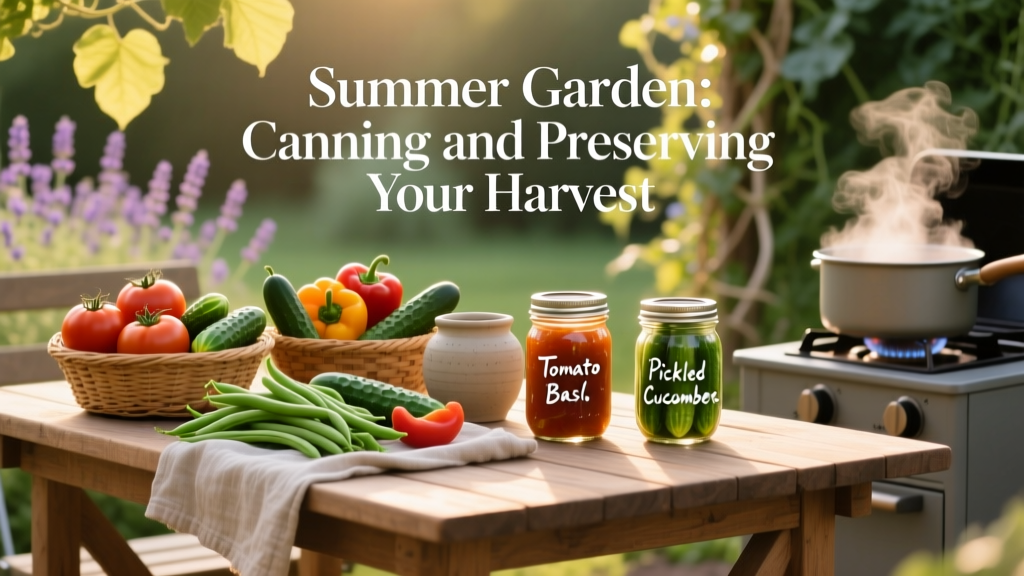
Summer Garden: Canning and Preserving Your Harvest
The window between “everything is ripe at once” and “too late” can be as short as 7–10 days in midsummer heat. If your tomatoes are coloring up, cucumbers are doubling in size overnight, and herbs are trying to bolt, you’re in the make-or-break stretch: harvest aggressively, protect quality in the garden, and set up a preserving rhythm you can repeat weekly until frost. Your goal is simple—keep produce moving from plant to pantry before flavor drops, pests move in, or a heat wave pushes crops past peak.
Use this guide like an almanac: start with the highest-priority tasks that protect yield and food safety, then move down the list to planting, pruning, and prep work that keeps harvests coming. Timing and temperatures matter, so you’ll see specific numbers throughout—use them to decide what to do this week.
Priority 1: Harvest now (and harvest smart) to preserve peak flavor
Preserving success starts in the garden. The best canning batch is made from produce harvested at peak maturity, cooled quickly, and processed the same day. Summer heat accelerates softening and spoilage; at 85–95°F, a basket of tomatoes or peaches can lose quality in hours if left in the sun.
This week’s harvest checklist (do these first)
- Pick early: Harvest before 10 a.m. when produce is coolest; shade harvested bins immediately.
- Pick often: Cucumbers, beans, okra, and zucchini need picking every 1–2 days; overmature fruit slows new set.
- Cool quickly: Move produce to a cool room (ideally 55–65°F for tomatoes; colder can dull flavor). Don’t leave harvest in a hot car.
- Sort on the spot: Set aside cracked, bruised, or pest-damaged fruit for immediate cooking/freezing; reserve flawless produce for canning.
- Keep it clean: Use clean harvest buckets; rinse dirt off outside to keep kitchen sanitation easier.
Crop-by-crop “right now” harvesting targets
Tomatoes: For canning, harvest fully colored fruit (not green-shouldered). If a heat wave is forecast above 95°F for 2+ days, pick at “breaker stage” (first blush of color) and ripen indoors to reduce sunscald and cracking.
Cucumbers: For pickles, aim small: many pickling varieties are best at 2–5 inches. Check vines every day; oversized cucumbers dilute brine strength and soften.
Green beans: Pick when pods are firm and “snap” cleanly—typically 4–6 inches depending on variety. Overmature pods get stringy and reduce future flowering.
Peppers: For shelf-stable canning, only pressure canning is recommended for plain peppers; otherwise pickle, ferment, or freeze. Harvest thick-walled peppers slightly under full softness for best texture.
Herbs: Cut basil, oregano, thyme before heavy flowering; quality drops after bloom. Take no more than 1/3 of the plant at a time to keep it producing.
“Canning is not an exact science… but it is a scientific process.” — USDA Complete Guide to Home Canning (2015)
Food-safety note you should not skip: Use tested recipes and current processing times. The USDA and extension services update guidance as jar sizes, product density, and safety research evolves. The USDA Complete Guide to Home Canning (2015) remains a primary reference for safe home canning procedures, including correct acidification and processing methods.
Priority 2: Preserve what’s coming in (set a weekly canning rhythm)
The easiest way to keep up is to assign a “preserving theme” to each harvest day. Plan around what’s ripening and your available time. A realistic weekly rhythm prevents the common midsummer failure mode: produce piling up faster than you can process.
Weekly timeline (repeat until your first frost)
- Day 1 (Harvest + triage): Pick, sort, and refrigerate/hold appropriately. Decide: can, freeze, dehydrate, ferment, or eat fresh.
- Day 2 (Prep): Wash jars, check lids/rings, prep brine/syrup, make ice water baths for blanching.
- Day 3 (Process): Water-bath can high-acid foods; pressure can low-acid foods; run dehydrator overnight if needed.
- Day 4 (Label + store): Label with product + date. Store jars cool, dark, and dry.
- Day 5 (Garden reset): Harvest again, prune, scout pests, fertilize as needed.
Preservation choices: pick the method that matches the crop
| Crop | Best summer-preserving option | Why it works well now | Fastest “save it today” option |
|---|---|---|---|
| Tomatoes | Water-bath canning (acidified) or sauce | Peak flavor during heavy set; excess piles up quickly | Freeze whole or chopped (skins optional) |
| Cucumbers | Pickles (quick-pack or fermented) | Daily harvest prevents oversized fruit | Refrigerator pickles |
| Green beans | Pressure canning or freezing | Quality drops fast after picking | Blanch and freeze |
| Peaches/nectarines | Water-bath canning (slices/halves), jams | Short harvest window; bruises easily | Freeze slices with sugar or as purée |
| Herbs | Dehydrating, herb salt, infused vinegar | Heat triggers bolting; cut now for best oils | Freeze chopped herbs in ice cube trays |
Citation: The USDA Complete Guide to Home Canning (2015) outlines safe boiling-water and pressure canning procedures and emphasizes using tested processes for acidification and processing times.
Citation: Penn State Extension notes that only a pressure canner reaches temperatures high enough for safe canning of low-acid foods (about 240–250°F at pressure), and recommends using research-tested recipes for safety (Penn State Extension, 2023).
Priority 3: What to protect (quality, pests, and diseases that ruin preserving batches)
Preserving magnifies flaws: a few cracked tomatoes or bitter cucumbers can spoil texture and flavor across a batch. Protect plants now so the harvest stays clean and firm.
Heat protection thresholds that change your decisions
Above 90°F: Tomato pollen can become less viable; blossoms may drop. Keep plants evenly watered to reduce blossom-end rot and cracking.
Above 95°F for multiple afternoons: Expect sunscald on exposed fruit. Add temporary shade cloth (30–40%) on the west side of tomatoes and peppers, or leave more foliage during pruning.
Soil consistently above 80°F: Lettuce and cilantro bolt fast; stop investing in them and pivot to heat lovers or start fall crops in partial shade.
Pest and disease prevention aimed at preserving-quality produce
Tomatoes (cracking, blight, hornworms): Mulch 2–3 inches to stabilize soil moisture. Water deeply in the morning. Remove lower leaves touching soil to reduce splash spread. Scout twice weekly for hornworms (look for stripped stems and black droppings). If you see white “rice grains” on hornworms, those are beneficial parasitoid cocoons—leave those worms in place to protect future plants.
Cucumbers and squash (powdery mildew, cucumber beetles): Improve airflow by training vines and removing overcrowded leaves. Water at the base. Pick fruit small and often to reduce stress. If powdery mildew appears, remove heavily infected leaves promptly and avoid overhead watering; stressed plants produce more bitter fruit.
Beans (rust, aphids): Harvest frequently and avoid working plants when wet. Blast aphids off with water early in the day; keep nitrogen moderate to avoid overly lush growth.
Stone fruits (brown rot, birds): Harvest promptly as fruit ripens. Thin crowded clusters earlier next season; for now, remove fallen fruit daily. Use bird netting before fruit fully colors to prevent peck damage that accelerates rot.
Right-now garden sanitation checklist
- Remove split fruit and diseased leaves weekly; don’t compost heavily diseased material.
- Keep harvest containers clean; rinse and dry after each use.
- Stake/trellis heavy plants so fruit doesn’t sit on soil (reduces rot and slug damage).
- Use drip irrigation or soaker hoses when possible to keep foliage dry.
Priority 4: What to prune (to keep harvests coming, without sunburning fruit)
Summer pruning is about balance: enough airflow to reduce disease, enough leaf cover to prevent sunscald. Prune with tomorrow’s heat in mind.
Tomatoes (indeterminate vs. determinate)
Indeterminate: Remove suckers below the first flower cluster if plants are jungle-dense, but avoid stripping too much foliage during hot spells. If temps are forecast above 95°F, leave extra leaf cover on the west/south side to shade fruit.
Determinate: Minimal pruning—too much leaf removal reduces total yield and increases sunscald risk. Focus on staking/caging and removing leaves touching soil.
Herbs: pruning that improves preserving quality
Pinch basil above a leaf node weekly to delay flowering. For woody herbs (thyme, rosemary, sage), take soft new tips and avoid cutting into old wood in midsummer heat.
Berry canes and fruiting shrubs (regional timing)
After summer-bearing raspberries finish: Cut fruited canes to the ground and thin new canes for airflow—this reduces disease and improves next year’s crop. In humid regions, this is a key step to keep late-summer fruit clean for freezing and jam.
Priority 5: What to plant (so you’re still harvesting when canning season peaks)
Even in a preserving-focused summer, planting now is what prevents the late-season gap. Work backward from your average first fall frost date. If your frost is October 15, count weeks from there; many fall crops need 6–10 weeks.
Planting windows by region (three real-world scenarios)
Scenario A: Short-season North (USDA Zones 3–5; first frost often Sept 15–Oct 1)
By late July to early August, prioritize fast crops: bush beans (50–60 days), beets (55–70), carrots (70–80 with thinning), and leafy greens under shade cloth. Start broccoli/cabbage transplants indoors or buy starts; set out when nighttime lows trend toward 55–60°F. Protect seedlings from cabbage worms immediately with row cover.
Scenario B: Hot-humid Midwest/Southeast (USDA Zones 7–9; first frost often Nov 1–Dec 1)
Heat can stall tomatoes and cucumbers, but you can keep planting. Start a second round of cucumbers and bush beans every 2–3 weeks through late August for steady pickling. Direct-sow okra and southern peas if soil is warm. Begin fall brassicas in late July/August in partial shade; keep them moist to germinate in soil above 80°F.
Scenario C: Dry West/Intermountain (often big day-night swings; USDA Zones 5–8 depending on elevation)
Use the cool nights to your advantage: succession sow carrots, beets, and greens in late summer. Wind and low humidity can cause blossom drop and sunscald—prioritize consistent irrigation and consider shade cloth on peppers and tomatoes. For preserving, this region excels at dehydrating: set up drying racks or a dehydrator for tomatoes, peppers, and herbs during low-humidity weeks.
What to plant now (quick list)
- Successions for preserving: Bush beans, pickling cucumbers, dill (for pickle batches), basil (for pesto/freezing).
- Fall “storage” crops: Carrots, beets, rutabaga (timing depends on frost date).
- Late-summer greens: Chard and kale tolerate heat better than lettuce; start lettuce later under shade.
Priority 6: What to prepare (tools, space, and supplies before the next glut)
When the garden hits peak production, the limiting factor is rarely the plants—it’s jars, lids, freezer space, and a clean workflow. Set up your “preservation station” now so processing days are smooth.
Pantry and equipment prep checklist
- Inventory jars today: Verify sizes and check rims for chips. Plan for at least 12–24 jars ready per big batch day.
- Buy new lids: Use new canning lids each season for best sealing reliability.
- Calibrate your process: Know if you’re water-bath canning (high-acid) or pressure canning (low-acid). Don’t improvise recipes.
- Clear freezer space: Freeze is the fastest preservation method—make room before the harvest forces your hand.
- Set up a cooling zone: Towels on a counter away from drafts; leave jars undisturbed for 12–24 hours.
- Label everything: Product + date + method (water-bath/pressure/freezer) so you rotate stock.
Monthly preserving schedule (adjust to your frost date)
| Month | Garden focus this month | Preserve first (highest payoff) | Prep for next month |
|---|---|---|---|
| July | Daily picking; pest scouting; stabilize watering | Pickles, pesto/herb cubes, early tomato sauce | Order lids/jars; start fall brassicas (hot areas) |
| August | Heat protection; succession planting; prune for airflow | Tomatoes (salsa/sauce), peaches, green beans | Plant carrots/beets; shade cloth for seedling starts |
| September | Fall crop push; cover crops in empty beds | Roasted peppers (freeze), late tomatoes, apples (if applicable) | Row covers ready; track first frost predictions |
Timing markers you can put on your calendar
Use these as decision triggers, not suggestions. Write them down with your local frost date.
- Every 1–2 days: Pick cucumbers, zucchini, okra, and beans to keep plants producing.
- Every 7 days: Full garden scout for mites, aphids, hornworms, powdery mildew; remove damaged fruit.
- When highs exceed 90°F: Increase watering consistency; mulch; avoid heavy pruning that exposes fruit.
- When highs exceed 95°F for 2+ days: Add temporary shade cloth and harvest breaker-stage tomatoes to finish indoors.
- 6–10 weeks before first frost: Plant most fall crops (greens sooner in heat, roots earlier for size).
Three “real life” preserving plans (choose the one that matches your week)
Plan 1: You have 2 hours after work (fastest saves)
Harvest + wash. Make refrigerator pickles or freeze chopped tomatoes and herbs. Blanch beans for 3 minutes and freeze. This plan prevents waste when you can’t run a canner on a weekday.
Plan 2: You have one weekend day (batch canning)
Pick Friday evening, process Saturday. Do one canner load of tomatoes (acidified) plus one quick pickle batch. Keep Sunday for garden reset: mulch, prune lightly, and sow another row of beans or dill.
Plan 3: You’re in a heat wave and quality is slipping
Switch from “perfect jars” to “save the flavor”: roast and freeze tomatoes/peppers, dehydrate herbs, and harvest earlier in the day. Add shade cloth and water deeply in the morning to prevent cracking and blossom-end rot.
Preserving season rewards repetition. If you harvest on schedule, protect plants from heat and disease, and keep jars/lids ready, you can ride the summer surge instead of getting buried by it. The best time to set your next canning day is now—look at the 7-day forecast, pick your processing day, and harvest into it.
Sources: USDA Complete Guide to Home Canning (2015); Penn State Extension, Safe Food Preservation and Pressure Canning guidance (2023).