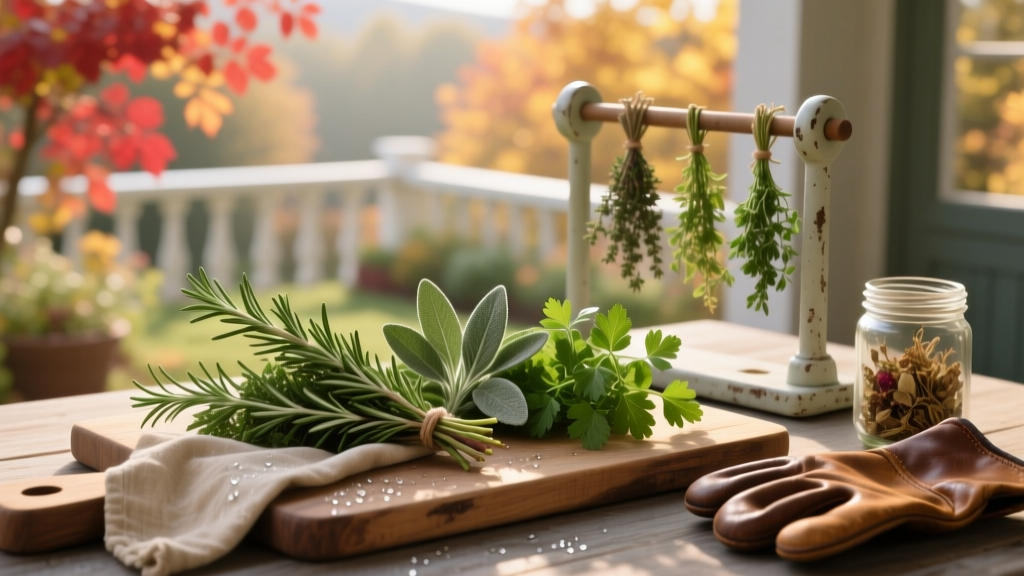
Fall Garden: Preserving Herbs by Drying and Freezing
The first real cold snap is your signal: herb flavor peaks right before plants shut down, and a single frost can turn tender leaves to mush overnight. If your nighttime lows are starting to flirt with 40°F, it’s time to harvest and preserve what you’ve grown—especially basil, cilantro, dill, parsley, and chives. Fall is also your window to reset the herb bed: clean up disease, protect perennials, and plant a few quick crops that still make it before hard frost.
Use this guide like a seasonal almanac. Start with the tasks that protect quality (harvest timing and safe drying), then move to pruning, protection, and prep for next season.
Priority 1: What to harvest and preserve right now (maximize flavor before frost)
Know your local deadlines: frost dates and temperature triggers
Herb preservation is all about timing. Use these concrete thresholds to decide what to do this week:
- Harvest tender herbs before the first frost (32°F). Basil and lemon balm are especially frost-sensitive.
- Plan to harvest within 7–10 days of your area’s average first frost date.
- Harvest on a dry morning after dew evaporates, ideally when air temps are 60–75°F for best essential oil retention and lower surface moisture.
- Start drying when indoor humidity is below ~60% (many homes hit this naturally once heating begins). High humidity slows drying and increases mold risk.
- Freeze herbs as soon as possible after cutting—within 2 hours is a practical target for best color and aroma.
If you don’t know your first frost date, look it up by ZIP code and cross-check with your microclimate (urban heat islands can be 3–5°F warmer; low spots in rural yards can frost earlier). In USDA Zones 3–5, that first frost often lands in September to early October. In Zones 6–7, it’s commonly mid-October to early November. In Zones 8–10, you may have a long runway; quality may decline from rain, shorter days, and disease before frost becomes the limiter.
Harvest rules that preserve oils (and prevent disease carryover)
Take the best leaves, not the whole plant—unless you’re ending the season. Use sharp, clean snips and avoid tearing stems. For most leafy herbs, harvest no more than 1/3 of the plant at a time if you want continued growth. If the forecast shows a dip below 36–38°F, treat that as “last call” for basil and other tender herbs and harvest aggressively.
Also: don’t preserve diseased material. Powdery mildew on oregano or bee balm, downy mildew on basil, or leaf spot on parsley will worsen in storage and can taint flavor. Strip and discard affected leaves; do not compost heavily infected material if you struggle with recurring issues.
Drying vs. freezing: choose the method that fits the herb
Drying concentrates flavors but can flatten delicate aromas. Freezing keeps “fresh” character, especially for tender herbs. Use this quick comparison to decide.
| Herb | Best Method | Why | Target Drying Time / Freezing Format |
|---|---|---|---|
| Basil | Freeze | Volatile aromatics fade when dried; leaves darken | Chop + oil/water in ice cube trays |
| Parsley | Freeze | Better color and “green” taste than dried | Chop + water cubes; or flat-freeze in bags |
| Cilantro | Freeze | Dries poorly; loses bright flavor | Stems + leaves blended with oil; cubes |
| Dill | Freeze or dry | Freezing holds fresh note; drying works for soups | Dry 3–7 days; or freeze sprigs |
| Thyme | Dry | Woody herb dries exceptionally well | Dry 5–10 days; strip leaves after |
| Rosemary | Dry | Resinous oils hold; low spoilage risk | Dry 7–14 days; store whole needles |
| Sage | Dry | Classic dried herb; strong flavor | Dry 7–14 days; crumble at use-time |
| Mint | Dry | Dries reliably; stores well for tea | Dry 3–7 days; keep leaves whole |
Safe, high-quality drying (small batches, fast finish)
The goal is to dry quickly enough to prevent mold, but gently enough to protect flavor. A warm, dark, well-ventilated room is better than a sunny windowsill (sun bleaches leaves and drives off aromatic compounds).
- Bundle drying (best for woody herbs): Tie small bundles (thumb-thick). Hang upside down with airflow. Add a paper bag “hood” if dusty.
- Screen drying (best for tender leaves): Lay single layers on a mesh screen. Turn once daily.
- Dehydrator (fastest and most consistent): Run at 95–115°F for leafy herbs to protect volatile oils; check every hour near the end.
Drying is done when leaves crumble cleanly and stems snap. Strip leaves, then store in airtight jars away from heat and light. Label with herb name and date; aim to use within 6–12 months for best flavor.
“For best quality, herbs should be dried quickly at low temperatures with good air circulation; high temperatures can cause loss of flavor and color.” — Extension guidance on herb drying and storage (University of Minnesota Extension, 2020)
Extension services consistently emphasize low heat and airflow for herb quality. For example, University of Minnesota Extension notes the importance of quick drying and proper storage to preserve flavor (2020). Michigan State University Extension also provides step-by-step recommendations for drying herbs safely and storing them to retain quality (2019).
Freezing herbs that still taste “fresh” in winter
Freezing is your best option for basil, cilantro, parsley, chives, and tarragon. Three reliable approaches:
1) Ice cube tray method (most versatile)
- Wash quickly, then dry thoroughly (salad spinner helps).
- Chop herbs; pack into ice cube tray compartments.
- Add enough water or olive oil to cover.
- Freeze solid (usually 12–24 hours), then pop cubes into labeled freezer bags.
Use water cubes for soups, beans, and rice; use oil cubes for sautés and pasta sauces.
2) Flat-freeze for “pinchable” herbs
Spread chopped herbs on a parchment-lined tray, freeze for 1–2 hours, then bag. This reduces clumping and lets you sprinkle straight from the freezer.
3) Herb paste (great for cilantro/basil)
Blend herbs with a little oil and salt, then freeze in small portions. This preserves color and makes fast weeknight cooking easier.
Food safety note: Herbs frozen in oil should be kept frozen until use; don’t leave oil-herb mixtures at room temperature for extended periods.
Fast timeline: your next 14 days
- Day 1–2: Harvest tender herbs before the next cold night; start freezing basil/parsley/cilantro immediately.
- Day 3–5: Start drying woody herbs (thyme, rosemary, sage, oregano). Check airflow and humidity.
- Day 6–10: Strip dried leaves, jar and label. Taste-test and adjust how much you dry vs. freeze.
- Day 11–14: Clean beds, remove diseased foliage, and set up protection for perennials.
Priority 2: What to plant (quick fall wins and overwintering options)
Plant quick herbs for protected harvests
If you still have 4–6 weeks before your average first frost, you can sow fast growers. In Zones 6–8, you may get meaningful fall cuttings with protection.
- Cilantro: Prefers cool weather; sow now for leaf harvest before hard freezes. Bolting is less of a problem in fall.
- Dill: Can work in mild falls; use row cover when nights drop below 40°F.
- Chervil: Excellent cool-season herb; a good “right now” sow in many regions.
- Parsley: More of an overwinter candidate in Zones 7+ with protection; in colder zones, treat as a late fall “bonus” harvest.
Bring herbs indoors: the pot-up deadline
If you want fresh herbs on a windowsill, pot them up 2–3 weeks before your first expected frost. This reduces transplant shock and gives you time to manage hitchhiking pests (aphids, spider mites).
Indoor transition checklist:
- Inspect undersides of leaves; rinse gently and remove eggs/aphids by hand.
- Quarantine indoors for 7–10 days away from other houseplants.
- Provide bright light (south window or grow light). Keep nights above 55–60°F for basil.
Priority 3: What to prune (and what NOT to prune) in fall
Cut back annuals hard; go easy on woody perennials
Annual herbs (basil, dill, cilantro) can be cut down as you harvest. Perennial and woody herbs need a different approach in fall:
- Do prune: Remove dead, diseased, or broken stems anytime. Lightly shape rosemary and thyme if they’re sprawling, but keep cuts minimal.
- Don’t hard-prune: Avoid heavy pruning of rosemary, sage, lavender, and thyme late in the season. Tender new growth is more likely to winterkill after a hard freeze (below 28°F).
- Do remove flowers/seeds (optional): If you want leaf production to continue, pinch flower spikes on basil and mint—but if frost is imminent, harvest instead.
Seed saving as part of “preserving” (dill, cilantro, fennel)
If you missed the leaf window or want a second preservation route, save seeds:
- Let seed heads dry on the plant, then bag and shake.
- Store seeds in labeled paper envelopes in a cool, dry place.
This is especially useful in regions with wet fall weather where drying leaves indoors is tricky.
Priority 4: What to protect (winter survival for perennials and quality control for stored herbs)
Protect perennial herbs in the ground
Perennial herb survival is less about cold alone and more about winter wet, freeze-thaw cycles, and wind. Use these season-specific moves:
- Mulch after the ground starts to cool and you’ve had a light freeze (often after the first few nights near 32°F). Mulching too early can invite rodents and keep crowns too warm.
- Target mulch depth: 2–4 inches of clean straw or shredded leaves around (not on top of) crowns.
- Wind protection: Burlap windbreaks help rosemary in exposed sites, especially in Zones 6–7.
- Drainage check: Rosemary, thyme, and lavender hate wet feet. If you get winter rain, prioritize drainage over insulation.
Row cover and cold frames for late harvest
Floating row cover can buy you 2–4 weeks of extra harvest time in many areas. Use it when nights dip below 40°F, and double it up when frost is forecast. Cold frames are even better for parsley and chervil in Zones 5–7.
Storage protection: keep dried herbs potent and pest-free
Dried herbs are shelf-stable, but not invincible. Protect your work:
- Light: Store in a dark cabinet. Light bleaches chlorophyll and dulls flavor.
- Heat: Avoid the stove area. Warmth speeds aroma loss.
- Moisture: If you see condensation in jars, the herbs weren’t fully dry—remove and re-dry immediately.
- Pantry pests: Rare, but possible. Use tight lids and rotate stock within 12 months.
Priority 5: What to prepare (clean beds, prevent fall disease, set up next spring)
Fall sanitation to prevent next year’s problems
Many herb diseases overwinter on plant debris. Fall cleanup is preventative medicine—especially if you battled basil downy mildew, powdery mildew on mint/monarda nearby, or leaf spots on parsley.
- Remove and discard infected leaves and stems (do not save for drying/freezing).
- Clean stakes, snips, and pots with soap and water; disinfect tools if you had disease issues.
- Weed thoroughly—winter annual weeds get a head start in fall.
Extension recommendations consistently stress sanitation and proper drying/storage for quality and safety (Michigan State University Extension, 2019; University of Minnesota Extension, 2020). Those same principles apply in the garden: remove disease sources now, and you reduce pressure next season.
Soil and bed prep around herb areas
- Top-dress lightly with finished compost around perennials (avoid burying crowns).
- Mark perennial locations with durable labels before foliage dies back.
- Plan drainage improvements now if rosemary/lavender struggled—raised rows or a gritty amendment zone can be installed before spring rush.
Regional scenarios: adjust your fall herb strategy to your reality
Scenario 1: Early frost regions (USDA Zones 3–5, mountain valleys, high plains)
If your first frost regularly arrives in September or early October, act earlier and prioritize freezing over drying for tender herbs.
- Start harvesting basil when nights drop to 45°F; don’t wait for a frost warning.
- Use a dehydrator to finish drying fast if indoor humidity is high from rainy weather.
- Mulch perennials after one or two frosty nights, not before.
Scenario 2: Temperate suburbs (USDA Zones 6–7, typical mid-October to early November frost)
You can often run a two-track plan: freeze tender herbs now, keep woody herbs growing a bit longer, and sow a last round of cilantro.
- Freeze basil and parsley in cubes within 24 hours of harvesting.
- Dry rosemary, thyme, sage over 7–14 days in a ventilated room.
- Use row cover when nights fall below 40°F to stretch harvest by weeks.
Scenario 3: Mild-winter and coastal gardens (USDA Zones 8–10)
Frost may not be your main threat—humidity, late-season rain, and fungal disease are. Focus on airflow, sanitation, and strategic harvesting.
- Harvest and preserve ahead of heavy rain events to avoid waterlogged leaves that dry poorly.
- Thin dense mint and oregano patches to reduce powdery mildew pressure.
- Consider drying in a dehydrator rather than air-drying if indoor humidity stays high.
Month-by-month schedule: a practical fall workflow
| Timing | Harvest | Preserve | Garden Tasks |
|---|---|---|---|
| Late Aug–Early Sep (or 6–8 weeks before first frost) | Begin selective harvest of basil, parsley, mint | Start freezing tender herbs in cubes | Inspect for disease; plan indoor pot-up |
| Mid–Late Sep (or 3–6 weeks before first frost) | Harvest big batches on dry mornings | Begin drying thyme/rosemary/sage; freeze cilantro | Sow cilantro/chervil in mild areas; start row cover at 40°F nights |
| 1–2 weeks before first frost | Cut basil hard; strip best leaves | Freeze remaining tender herbs within 2 hours | Quarantine indoor herbs 7–10 days; clean beds |
| First frost (32°F) to hard freeze (28°F and below) | Final harvest of any survivors under cover | Jar fully dried herbs; label and date | Mulch perennials 2–4 inches after soil cools; remove diseased debris |
Fall pest and disease prevention (so your preserved herbs stay worth eating)
Fall problems are predictable: cooler nights, heavier dew, and crowded end-of-season growth. Address them now to protect both your garden and your stored harvest.
- Powdery mildew: Common on mint family plants in late season. Increase airflow (thin stems), water at the base, and harvest earlier in the day once leaves are dry.
- Basil downy mildew: If suspected (yellowing tops, gray-purple underside), do not preserve affected leaves. Remove plants promptly to reduce spores.
- Aphids and whiteflies: Often spike as plants get stressed. Rinse leaves before freezing; don’t hang-dry infested stems indoors.
- Botrytis/gray mold: Risk rises with cool, damp conditions. Avoid drying thick bundles; use small bunches or screens.
Quick checklists: what to do this weekend vs. next
This weekend (high impact)
- Check the 10-day forecast for nights below 40°F and any frost warnings.
- Harvest basil, cilantro, parsley, and chives for freezing.
- Start dehydrator or hang-dry batches of thyme/rosemary/sage.
- Discard any diseased leaves; do not preserve them.
- Label freezer bags/jars with herb + date.
Next weekend (lock in winter survival)
- Clean herb beds; remove spent annuals and diseased debris.
- Pot up herbs you want indoors (ideally 2–3 weeks before frost) and quarantine 7–10 days.
- Set row cover/cold frame hardware in place before the first freeze scramble.
- After a light freeze, mulch perennials 2–4 inches (keeping crowns clear).
Fall herb preservation is a short, valuable window: harvest at peak, preserve with intention, and clean up with next spring in mind. Do the freezing and first drying batches immediately, then let the rest of your fall garden tasks follow in a calm, methodical order—your winter cooking will taste like you planned ahead because you did.
Sources: University of Minnesota Extension (2020), herb drying and storage guidance; Michigan State University Extension (2019), recommendations for drying herbs and preserving quality.