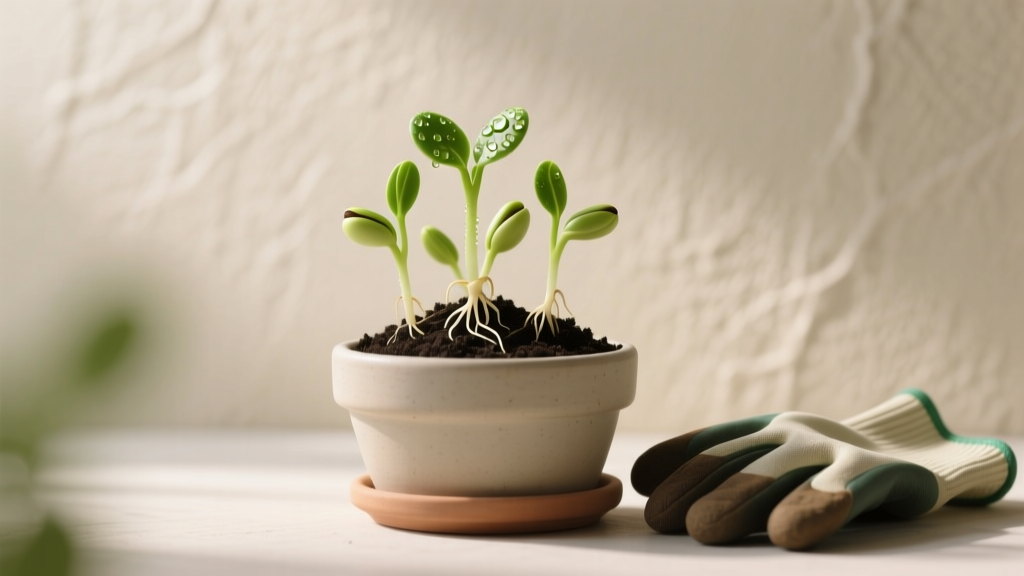
Starting Seeds for Spring Planting
The clock starts ticking the moment your seed packets arrive: miss your indoor sowing window by even two weeks and you’ll be forced to set out undersized transplants or gamble with direct sowing in cold, wet soil. The opportunity right now is to convert winter downtime into spring momentum—by using your local frost date, a few temperature thresholds, and a realistic seed-starting schedule that matches your space and light.
This guide is organized by priority—what to plant, what to prune, what to protect, and what to prepare—so you can act this week. Use it like an almanac: check your average last frost date, count backward in weeks, and start seeds on purpose rather than on impulse.
Priority #1: What to Plant (Start Indoors and Direct-Sow on Schedule)
Start with your frost date and count backward
Find your average last spring frost date (many state extension services and the National Weather Service publish tables). Then count backward from that date using the “weeks before last frost” guidance on seed packets as a baseline. Two hard numbers to keep in mind:
- Tomatoes, peppers, eggplant: start 6–10 weeks before your last frost.
- Broccoli, cabbage, cauliflower: start 4–6 weeks before your last frost for spring planting (or 6–8 weeks for a larger transplant).
Temperature matters as much as dates. Many cool-season seeds germinate reliably when soil is 50–65°F, while warm-season crops prefer 70–85°F. Most homes run too cool at night for heat-loving seeds unless you use a heat mat.
“For most species, optimum germination occurs within a specific temperature range; when temperatures are too low, germination is slow and uneven, increasing the risk of damping-off.” — University of Minnesota Extension (2020)
Use this quick timing table to pick what to sow now
Adjust the dates by your region and USDA zone (see regional scenarios below). This schedule assumes a last frost around April 15 (common in parts of USDA Zones 6–7), and shows when to sow indoors.
| Crop | Start Indoors (weeks before last frost) | Ideal Germination Temp | Transplant Out When… |
|---|---|---|---|
| Onion (from seed) | 10–12 weeks | 65–75°F | Soil workable; temps above 45°F |
| Leek | 10–12 weeks | 65–75°F | 2–4 weeks before last frost |
| Broccoli | 4–6 weeks | 60–75°F | 2–4 weeks before last frost |
| Lettuce | 3–5 weeks | 55–70°F | 2–4 weeks before last frost; protect from hard freezes |
| Tomato | 6–8 weeks | 70–85°F | After last frost; nights consistently above 50°F |
| Pepper | 8–10 weeks | 75–90°F | After last frost; nights above 55°F |
| Marigold | 6–8 weeks | 70–75°F | After last frost |
Month-by-month: a realistic seed-starting timeline
If you prefer a calendar view, use this as your baseline and shift earlier/later for your area. Concrete anchors: last frost could be March 15 (coastal South), April 15 (mid-latitudes), or May 15 (colder zones/high elevations). Your indoor sowing should slide accordingly.
| Month | What to start indoors | What to direct-sow (if soil is workable) | Key temperature trigger |
|---|---|---|---|
| February | Onions, leeks, early brassicas; slow herbs (parsley) | Peas, spinach (mild regions); fava beans | Soil near 45–50°F and not waterlogged |
| March | Broccoli, cabbage, lettuce; tomatoes late month (zones 6–7) | Radish, carrots, beets, greens under row cover | Consistent days above 50°F |
| April | Tomatoes, peppers (zones 4–5); cucumbers 3–4 weeks before planting | Potatoes, more carrots, turnips; herbs | Night temps trending above 40°F for cool crops |
| May | Successions of basil; late flowers | Beans, squash, corn after frost | Soil 60°F+ for beans; 65°F+ for squash |
Three regional scenarios (so your timing actually works)
Scenario 1: Mild-winter coastal South (USDA Zones 8–9; last frost often around February 15–March 15). Your seed-starting window arrives early. Start tomatoes and peppers 8–10 weeks before your last frost (often December–January), or buy transplants. Right now, prioritize succession sowings of lettuce and brassicas, and start warm-season seedlings only if you can protect them from surprise cold snaps. Keep row cover ready for nights that dip below 35°F.
Scenario 2: Mid-Atlantic/Midwest (Zones 6–7; last frost often April 10–April 25). This is the classic indoor seed-starting region. Begin onions/leeks 10–12 weeks before last frost (late January–February). Start brassicas in March, tomatoes about 6–8 weeks before last frost (mid-February to early March for early plantings, or mid-March for a safer schedule). Expect at least one “false spring” warm spell; avoid planting tender seedlings outdoors until nights stay above 50°F for tomatoes.
Scenario 3: Northern/high elevation (Zones 3–5; last frost often May 10–June 10). Indoor seed-starting is how you grow heat lovers at all. Start onions early (February), brassicas in April, tomatoes 6–8 weeks before last frost (late March–April), peppers 8–10 weeks (March). Plan for cold hardening and protection: low tunnels, cloches, or frost blankets are not optional when a 28°F night can show up after a week of 70°F days.
Priority #2: What to Prepare (So Your Seedlings Don’t Stall)
Set up light the right way (this is where most seedlings fail)
Window light is rarely enough for stocky seedlings. If you’re using LEDs or fluorescent shop lights, keep the fixture 2–3 inches above the seedling tops and raise it as they grow. Aim for 14–16 hours of light daily. Weak light causes leggy, disease-prone plants that struggle at transplant time.
Choose a seed-starting mix, not garden soil. It should be fine-textured, drain well, and be free of weed seeds and pathogens. Cornell University’s gardening resources and many extensions emphasize sterile or soilless mixes for indoor propagation to reduce damping-off risk.
Dial in temperature and moisture for even germination
Use these thresholds as your control knobs:
- Warm-season crops (tomato/pepper/eggplant): target 75–85°F at the soil surface for germination. A heat mat often cuts germination time in half.
- Cool-season crops (lettuce/brassicas/onions): target 60–70°F. Too warm can inhibit lettuce germination.
Water from the bottom when possible: set trays in a shallow basin for 10–20 minutes, then drain. The surface stays drier, which helps prevent fungal issues. Use a small fan on low nearby to keep air moving—stagnant air is a damping-off invitation.
Start a seed log (you’ll use it all spring)
Make a simple chart with: sow date, variety, germination date, first true leaves date, pot-up date, and notes. If you start 30–60 cells at once, you will forget what happened when unless you track it.
Potting-up: don’t wait until seedlings are starving
Most seedlings need to move from cell packs to larger containers once they have 2–3 sets of true leaves or roots are circling the bottom. Use a quality potting mix (not straight seed mix) and begin light feeding after potting up—about 1/4-strength liquid fertilizer weekly if the mix is unfertilized.
University of Maryland Extension notes that leggy seedlings are often caused by insufficient light and excessive heat; correcting those two issues early prevents weak transplants later (University of Maryland Extension, 2019).
Priority #3: What to Protect (Seedlings, Soil, and Early Transplants)
Prevent damping-off and fungus gnats before they start
Damping-off is the most common indoor seed-starting failure: seedlings germinate, then collapse at the soil line. Prevention is more reliable than cure.
- Use clean trays and tools; wash with hot soapy water and sanitize with a diluted disinfectant if reusing.
- Don’t overwater; keep mix moist like a wrung-out sponge, not soggy.
- Increase airflow with a fan; avoid overcrowding.
- Let the surface dry slightly between waterings.
Fungus gnats thrive in constantly wet media. Yellow sticky cards catch adults, but the real fix is moisture control. If gnats persist, consider a biological drench (beneficial nematodes or Bacillus thuringiensis israelensis) and improve drainage.
Harden off like you mean it (7–10 days, minimum)
Hardening off is not optional; indoor-grown leaves are tender. Start 7–10 days before transplanting. Day 1: put plants outside in bright shade for 1–2 hours above 50°F and out of wind. Add time and sun exposure daily. Bring plants in if temps drop below 40°F (cool crops can take a bit more) and always protect from strong wind.
For warm-season crops, wait for night temperatures: tomatoes are much happier when nights are consistently above 50°F; peppers prefer above 55°F. Planting earlier often results in a month of “cold sulking” rather than real growth.
Use row covers and low tunnels strategically
If you’re pushing the season, lightweight row cover can buy you 2–6°F of protection depending on weight and setup. Keep it on hand for late frosts; a surprise dip to 28°F can wipe out blossoms and tender transplants overnight.
Early-season pest and disease prevention (start now, not later)
Seedling and transplant time is when problems get established.
- Cutworms: Use collars (cardboard strips) around transplants at planting time, especially for tomatoes and brassicas.
- Flea beetles on brassicas: Row cover immediately after transplanting; small holes in leaves early can stall plants.
- Aphids: Avoid over-fertilizing with high nitrogen early; inspect undersides of leaves weekly indoors and outdoors.
- Tomato disease carryover: Start with clean pots and avoid splashing water on foliage; provide spacing and airflow. Many tomato leaf diseases spread faster when leaves stay wet for long periods.
As a research-backed practice, crop rotation and sanitation remain core disease prevention tools. Extension publications consistently recommend rotating plant families year to year to reduce soil-borne disease pressure (Penn State Extension, 2021).
Priority #4: What to Prune (And What Not to Touch Yet)
Prune for plant health—not because you’re restless
Seed-starting season overlaps with late-winter/early-spring pruning. The goal is to avoid removing flower buds at the wrong time and to prevent disease entry when conditions are wet.
- Prune dormant fruit trees (apple, pear) in late winter while temps are above about 20°F and before budbreak. Focus on removing dead, damaged, crossing branches.
- Hold off on spring-flowering shrubs (lilac, forsythia, azalea) until after they bloom, or you’ll cut off this year’s flowers.
- Cut back ornamental grasses before new growth reaches 4–6 inches.
If you’re in a warmer zone (8–9), pruning may already be in motion. In colder zones (3–5), you may still be waiting for a safe stretch of weather. Time pruning around dry days to reduce disease spread.
Seedling “pruning”: skip it, but do this instead
Don’t pinch tomato seedlings early to “make them bushy.” The best “pruning” at this stage is proper light and cooler nights (around 60–65°F for tomatoes after germination) to keep growth compact. If seedlings are leggy, pot them deeper (tomatoes can root along buried stems) rather than cutting them back.
Right-Now Checklists (Print This Mental List)
This week (indoors)
- Locate your average last frost date and write it on a sticky note near your trays.
- Start onions/leeks if you’re 10–12 weeks from last frost.
- Start brassicas if you’re 4–6 weeks from last frost.
- Set lights to 14–16 hours; keep bulbs 2–3 inches from seedlings.
- Sanitize trays; label everything with sow date and variety.
In 2 weeks
- Thin crowded seedlings (snip extras at soil line—don’t yank roots).
- Begin gentle airflow (fan on low) and bottom watering routines.
- Check for fungus gnats and correct overwatering immediately.
In 4–6 weeks
- Pot up seedlings with 2–3 sets of true leaves.
- Start tomatoes if you’re entering the 6–8 week window.
- Plan hardening-off space and protection (row cover, hoops, frost cloth).
Common bottlenecks (and fast fixes)
Problem: Seeds don’t germinate. Fix: verify temperature with a thermometer at tray level; many homes sit at 62–65°F at night, which is too cool for peppers. Use a heat mat set to 80–85°F for peppers and eggplant, and keep mix evenly moist.
Problem: Seedlings are tall and falling over. Fix: lower lights to 2–3 inches, add a fan, and reduce ambient heat after germination. Pot up and bury stems deeper (tomatoes especially).
Problem: Leaves yellow after the first true leaves. Fix: your mix may be unfertilized and seedlings are hungry. Start a weekly light feeding at 1/4-strength after pot-up, or sooner if the mix is very lean.
Problem: You ran out of room under lights. Fix: prioritize varieties you can’t easily buy locally (heirloom tomatoes, specialty peppers, unique flowers). For the rest, direct-sow or purchase a few sturdy transplants later. Overcrowding indoors produces inferior plants.
Extension-backed notes to keep you on track
Two research-and-extension points worth treating as rules:
- Seedlings need high light and appropriate temperatures to avoid weak growth; slow, uneven germination increases disease risk (University of Minnesota Extension, 2020).
- Managing indoor conditions (light, heat, airflow) prevents the most common seedling problems; leggy growth is typically environmental, not genetic (University of Maryland Extension, 2019).
Use those as your diagnostic framework: when something goes wrong, adjust environment first, not products.
A tight, actionable seed-starting routine (daily/weekly)
Daily (5 minutes): check moisture by lifting trays (light trays need water), scan for toppled seedlings, and verify lights are on a timer.
Twice weekly (10 minutes): rotate trays for even light, inspect for gnats/aphids, and remove any weak seedlings that are collapsing (don’t compost diseased material indoors).
Weekly (15 minutes): update your seed log, check height vs. light distance, and plan the next sowing based on your frost date and available space.
The most productive spring gardens aren’t started by luck—they’re started by hitting the sowing windows, keeping seedlings compact and healthy, and timing transplanting to real temperatures: soil that’s workable and warming, and nights that won’t punish tender plants. If you do one thing today, write down your last frost date and count backward for the crops you care about most—then start only what you can light well and harden off properly.