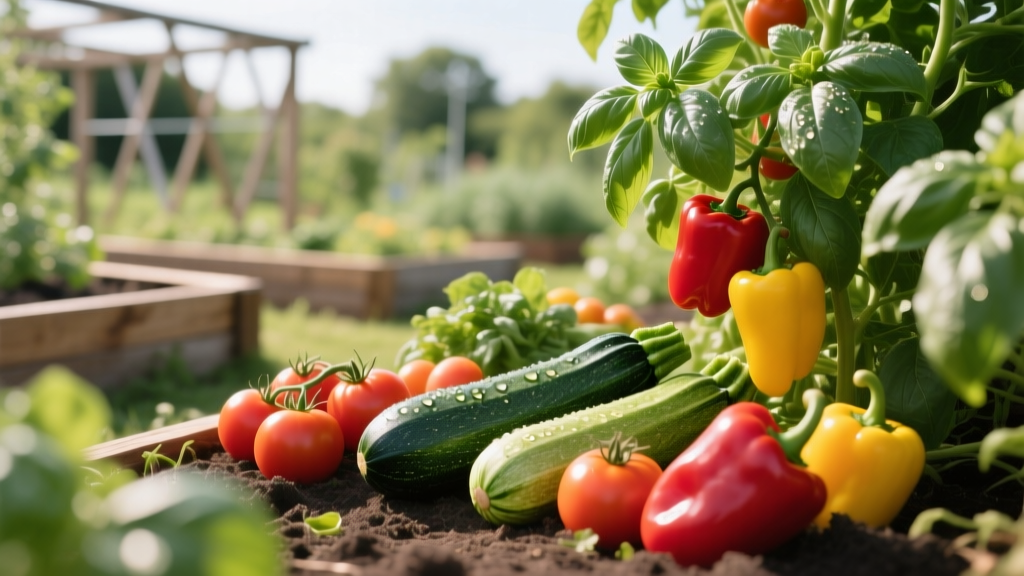
Summer Garden: Harvesting at Peak Ripeness Guide
The next 2–6 weeks are your best shot at flavor. Summer heat pushes sugars up fast, but it also shortens the window between “just right” and “overripe.” If you pick too early, you lose sweetness and aroma; too late, you invite cracking, sunscald, pests, and rot. Use this guide like a seasonal almanac: start with the highest-impact tasks (harvest and protection), then move into succession planting, pruning, and prep for late summer/fall.
Right-now rule: in most USDA zones 4–10, plan to harvest at least 3 times per week (daily for berries and cucumbers) during peak production. On days above 90°F, fruit can change maturity noticeably overnight—especially tomatoes, melons, sweet corn, and peaches.
Priority 1: Harvest at peak ripeness (do this first)
Peak ripeness is a balance of color, firmness, aroma, and ease of separation. Keep a small basket, snips, and a marker by the garden gate so harvesting is friction-free. If you’re only going out on weekends, you’re leaving flavor behind and feeding pests.
Fast cues for common summer crops
Tomatoes: Pick at “breaker stage” (first blush of color) if temperatures are consistently above 95°F or if pests/cracking are an issue; finish ripening indoors at 68–75°F. For best flavor in normal conditions, harvest fully colored with slight give near the blossom end, and a strong tomato aroma.
Cucumbers: Harvest small and often—most slicers are best at 6–8 inches; picklers at 2–5 inches. Oversized cucumbers slow the vine and turn seedy. Cut (don’t yank) to avoid tearing vines.
Summer squash/zucchini: Best texture at 6–8 inches (larger still edible but watery). Pick every 1–2 days during warm spells. Use a knife to avoid snapping stems.
Green beans: Pick when pods are firm, smooth, and “snap,” usually 4–6 inches depending on variety. If seeds bulge, you’re late. Harvest every 2–3 days.
Sweet corn: Harvest in the early morning when it’s cool. Silks should be brown/dry, husks green, and kernels should exude a milky juice when punctured (the “milk stage”). Corn sugars convert to starch quickly after picking; chill within 30 minutes for best eating quality.
Peppers: Harvest green at full size and glossy; colored peppers (red/yellow/orange) are sweeter but take longer and attract more pests. Snip with pruners to avoid breaking branches.
Melons: Learn the variety’s cue. Many muskmelons “slip” (separate easily from the vine) at peak aroma; watermelons don’t slip—look for a creamy yellow field spot and a dull rind. If nights are staying above 70°F, check daily—melons can over-ripen fast.
“Refrigeration slows the conversion of sugars to starch and reduces water loss; prompt cooling after harvest is one of the most effective ways to preserve quality.” — UC ANR Postharvest Center (Davis), guidance on maintaining produce quality (University of California Agriculture and Natural Resources, 2017)
Harvest timing: a simple weekly rhythm
- Monday/Thursday: cucumbers, zucchini, beans, okra, cherry tomatoes, basil pinches
- Tuesday/Friday: full-size tomatoes, peppers, eggplant, herbs for drying
- Wednesday/Saturday: berries, melons checks, sweet corn watch
- Sunday: clean-up harvest (anything overripe), compost cull, wash harvest bins
Adjust for heat: if your forecast shows 3+ consecutive days above 90°F, add an extra harvest pass because soft fruits and cucurbits surge in size and ripen unevenly.
Post-harvest handling that actually preserves flavor
Handle produce like it bruises easily—because it does. Keep harvested items shaded immediately. Don’t wash berries until just before eating. Store tomatoes at room temperature (60–75°F) for best flavor; refrigeration dulls flavor in many varieties (use the fridge only for very ripe tomatoes you can’t eat in 24 hours).
For food safety and shelf-life, follow extension-backed storage and handling practices. Michigan State University Extension emphasizes rapid cooling and careful handling to reduce postharvest losses, especially in warm weather (MSU Extension, 2020).
Priority 2: Protect ripening crops from heat, pests, and disease
Summer problems aren’t subtle: a single week can bring spider mites, blossom-end rot, sunscald, powdery mildew, hornworms, and fruit cracking. Protection now directly improves harvest quality.
Heat protection thresholds that matter
- Above 85°F nights: tomatoes may drop blossoms; focus on consistent moisture and shade cloth for afternoon sun.
- Above 90°F days: lettuce and cilantro bolt quickly; protect with shade (30–40% cloth) or harvest and re-sow.
- Above 95°F days: pepper and tomato sunscald risk rises; maintain leaf cover (don’t over-prune).
Action: Install shade cloth before the hottest stretch, not during it. Use hoops or stakes so cloth doesn’t rest on leaves (reduces disease and scorching).
Watering for ripeness (and fewer cracked fruits)
Inconsistent moisture is the biggest driver of cracking in tomatoes and splitting in cherries and plums. Aim for deep, even watering: 1–1.5 inches per week total (rain + irrigation) for many gardens, more in sandy soils and high heat. Mulch to stabilize moisture: 2–3 inches of straw, shredded leaves, or bark fines keeps roots cooler and reduces evaporation.
Blossom-end rot prevention: It’s triggered by irregular watering and rapid growth, not “lack of calcium in the soil” in most cases. Keep moisture consistent and avoid heavy nitrogen during fruit set. Ohio State University Extension notes that maintaining uniform soil moisture is a primary management step for blossom-end rot (OSU Extension, 2018).
Pest and disease prevention (summer-specific)
Powdery mildew (squash, cucumbers, pumpkins): Increase airflow (train vines, remove a few older leaves touching soil), water at the base early in the day, and avoid overhead watering at dusk. Start preventative sprays only if you’ve had recurring issues—options vary by local rules and crop use; always follow the label.
Tomato hornworm: Check at dusk with a flashlight. Hand-pick. If you see hornworms with white rice-like cocoons, leave them—those are parasitic wasps at work.
Spider mites (beans, cucumbers, tomatoes): Most likely during hot, dusty weather. Rinse the undersides of leaves with a strong stream of water early in the day; reduce plant stress with consistent watering. Avoid broad-spectrum insecticides that can worsen mite outbreaks by killing predators.
Stink bugs and leaf-footed bugs (tomatoes, peppers): Use row cover early in the season; in mid/late summer, focus on hand removal, weeding nearby hosts, and keeping harvest moving (overripe fruit attracts more feeding).
Birds and squirrels: Pick earlier (breaker stage for tomatoes), use exclusion netting where feasible, and remove fallen fruit daily. One cracked tomato can train pests to revisit.
Quick protection checklist (10 minutes a day)
- Remove overripe/damaged fruit (compost only if disease-free)
- Check undersides of leaves for mites/eggs on 5 random plants
- Scan squash leaves for first powdery patches
- Confirm mulch coverage (bare soil = heat + stress)
- Refill a slug/snail trap if you irrigate heavily (especially in coastal areas)
Priority 3: Plant now for late-summer and fall harvesting
While you’re harvesting peak summer crops, you should also be sowing the next wave. Timing is everything: count backward from your average first fall frost date. Many zone 5 gardens see first frost around Oct 10–20; zone 6 around Oct 15–30; zone 7 often Nov 1–15 (local variation is big). If your first frost is in 8–10 weeks, it’s time to seed fast crops and start transplants for brassicas.
Succession planting windows (by weeks)
8–10 weeks before first frost: bush beans (quick varieties), carrots (fast types), beets, chard, kale, and more cucumbers if disease pressure is low and you can water consistently.
6–8 weeks before first frost: lettuce, spinach (in cooler nights), radishes, turnips, cilantro (better as nights cool below 65°F), and last sowings of dill.
12–14 weeks before first frost: start broccoli, cabbage, and cauliflower transplants (or buy starts). These typically need time to size up before cooler fall growth slows.
Regional scenarios: what “plant now” means where you live
Scenario 1: Hot-summer, mild-winter (USDA zones 9–10; e.g., coastal South, parts of CA/AZ low deserts)
If daytime highs are still 95–105°F, direct-sowing many greens fails. Focus on heat-tolerant crops now (okra, sweet potatoes, cowpeas, yardlong beans) and begin fall crops under shade cloth. Start brassicas indoors or in a shaded nursery bed. Your “fall garden” often starts in late summer when nights drop toward 70°F.
Scenario 2: Short-season North (USDA zones 3–5; Upper Midwest, mountain valleys)
If your first frost can land in early to mid-September some years, prioritize fast crops: radishes (25–35 days), baby lettuce (30–45 days), bush beans (50–60 days), and turnips (45–60 days). Use row cover as soon as nights dip below 45°F to protect tender crops and extend harvest.
Scenario 3: Humid East/South with heavy disease pressure (zones 6–8; Mid-Atlantic, Southeast)
Late summer brings powdery mildew, downy mildew, and foliar diseases. When replanting cucurbits or beans, choose resistant varieties and space generously. Water at the base in the morning, and prioritize airflow over squeezing in “one more plant.” If tomatoes are blighting, switch to fall crops rather than fighting a losing battle.
Priority 4: Prune and train for better ripening (without sunburning fruit)
Summer pruning is not about making plants pretty—it’s about directing energy and improving airflow while keeping enough leaf cover to prevent sunscald. Think “selective and minimal.”
Tomatoes: prune with a purpose
Indeterminate tomatoes: Remove suckers below the first flower cluster if your plant is overly dense, and strip the lowest leaves that touch soil to reduce splash-up disease. Stop heavy pruning during heat waves; fruit can sunburn above 95°F when suddenly exposed.
Determinates: Minimal pruning. Focus on staking/caging and removing only diseased leaves.
Peppers and eggplant: support and small corrections
Stake heavily loaded plants to prevent branch breakage. Remove only leaves that are yellowing or touching soil. If pepper plants are dropping blossoms during sustained highs above 90°F, stop pruning and focus on even moisture.
Herbs: harvest = pruning
Pinch basil above a leaf node weekly to prevent flowering and keep leaves tender. If basil is already blooming, cut back by one-third and fertilize lightly; it will rebound quickly in warm weather.
What to prepare now (so you don’t lose harvest later)
Peak ripeness is only useful if you can process, store, or share the volume. A small amount of planning prevents waste when everything hits at once.
Set up a “harvest station” this week
- Two harvest baskets: one for perfect produce, one for “process today”
- Clean snips/knife + rubbing alcohol wipes for quick tool sanitation
- Paper bags or shallow trays for indoor ripening
- A shade spot (porch, garage) so harvest never sits in full sun
Processing timelines that match peak ripeness
Within 24 hours: sweet corn, cucumbers (for crisp pickles), berries, basil for pesto, fully ripe tomatoes (best flavor for sauce).
Within 3 days: peppers, eggplant, green beans (blanch and freeze), stone fruit (if fully ripe).
Within 7 days: winter squash only if fully matured (usually later), onions/garlic after curing (not peak summer for many regions).
Monthly schedule table: harvest and action plan (July–September)
| Month | Harvest at Peak | Plant Now | Protect/Prevent | Prep |
|---|---|---|---|---|
| July | Cucumbers daily; zucchini every 1–2 days; beans 2–3x/week; early tomatoes | More beans (if 60+ frost-free days remain); basil; late carrots (cooler regions) | Shade cloth if >90°F; watch mites and hornworms; mulch refresh to 2–3 inches | Clean jars/freezer space; set up harvest station; start a picking log |
| August | Tomatoes/peppers heavy; melons; sweet corn; eggplant | Fall carrots/beets; kale/chard; start broccoli/cabbage transplants (cooler zones) | Powdery mildew prevention; manage fruit cracking with consistent water (1–1.5 in/week) | Plan preservation days; rotate picking routes; inspect trellises and stakes |
| September | Late tomatoes; peppers; fall beans/greens; apples/pears in some regions | Radish/lettuce/spinach (as nights cool); cover crops after beds clear | Row cover when nights <45°F; remove diseased foliage; reduce late blight risk via sanitation | Note varieties that performed; order garlic/onion sets for planting by region |
Timelines: how to hit peak ripeness without the scramble
Use this as a rolling checklist. The goal is to keep quality high and losses low during the most productive stretch of the year.
Next 48 hours
- Do a full harvest pass; remove any cracked or overripe fruit
- Mulch thin spots back to 2–3 inches
- Set a watering plan to reach 1–1.5 inches/week (adjust for soil and heat)
- Scout 10 plants for mites, hornworms, mildew, and aphids
- Shade cloth up if a heat wave is forecast (>90°F for 3+ days)
Next 7 days
- Sow one succession row: beans or beets (or greens if nights are cooling)
- Train vines (tomatoes/cucumbers) so fruit is off soil and easier to pick
- Thin heavy fruit clusters if branches are snapping (especially tomatoes and peaches)
- Clean harvest tools and bins; sanitize if you’ve seen disease
Next 2–4 weeks
- Start or transplant fall brassicas (timed to your frost date)
- Remove exhausted plants that are no longer producing; compost only if disease-free
- Seed a quick cover crop in cleared beds where appropriate (region-dependent)
- Record harvest peak dates for next year’s calendar
Three common “right now” problems (and what to do today)
Problem: Tomatoes look ready, but flavor is flat
Likely causes: harvesting too early, heavy irrigation right before picking, or heat stress. Do today: pick fully colored fruit later in the day (after sugars build), avoid soaking the bed the evening before a big harvest, and keep plants mulched and evenly watered through the week instead of in one big dose.
Problem: Zucchini got huge overnight and plants stopped producing
Likely cause: missed harvest signals the plant to slow. Do today: remove all oversized fruit, then harvest daily for 10 days. Add a light side-dress of compost and keep water steady to push new flowers.
Problem: Cucumbers are bitter
Likely cause: heat + water stress, or fruit left too long. Do today: harvest smaller, increase watering consistency, and shade the vine during peak afternoon sun. If bitterness persists, switch varieties in your next succession planting (bitterness is partly genetic).
Notes by USDA zone: how long your peak window lasts
Zones 3–5: Peak harvest is intense but short. Expect a compressed 4–8 week surge. Prioritize frequent picking and fast fall crops early.
Zones 6–7: Often the easiest balance—long enough season for succession planting, but nights cool enough by late summer to improve tomato color and greens success. Watch late-summer disease pressure after storms.
Zones 8–10: Heat management is the main limiter. Your “peak ripeness” strategy often includes earlier picking (breaker stage), shade, and timing fall gardens to start as temperatures drop below 90°F and nights approach 70°F.
Use your local average first frost date to schedule sowing. If you don’t know it, check your state extension service or NOAA normals; then count backward in weeks based on days-to-maturity on your seed packets.
The best summer gardens aren’t the ones that produce the most at once—they’re the ones where the gardener stays ahead of ripeness by a day or two. Keep harvest frequent, protect plants from heat spikes and pests, and seed the next wave before the current one slows. Your reward is produce that tastes like it should: fully developed, fully aromatic, and picked at the exact moment it’s meant to be eaten.