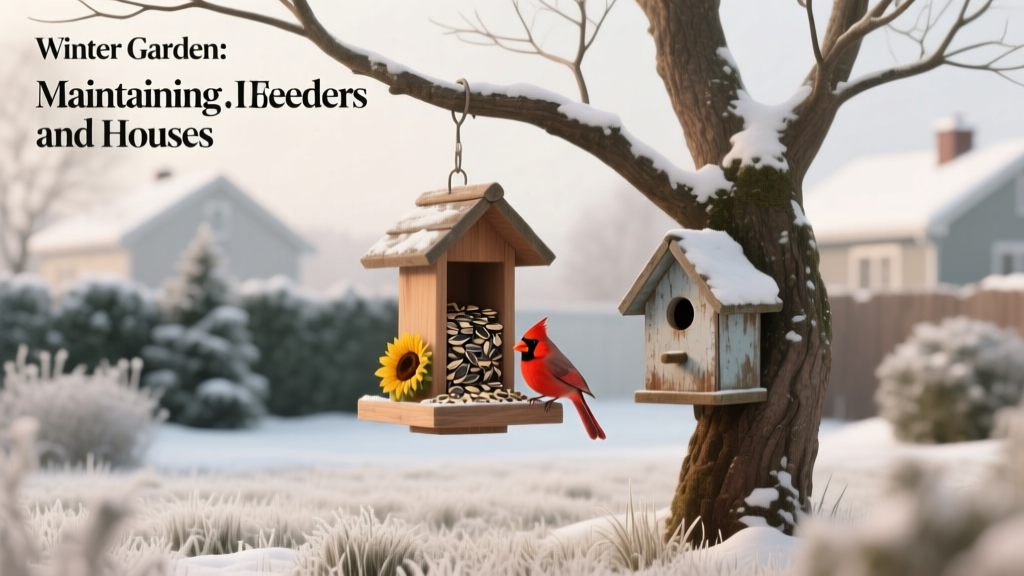
Winter Garden: Maintaining Bird Feeders and Houses
The cold snap that emptied your borders has a way of concentrating life into a few hotspots: the feeder, the birdbath, and any sheltered cavity a bird can claim. Winter is when your garden’s bird infrastructure either prevents starvation and exposure—or spreads disease and attracts rodents. If you act this week (not “sometime this winter”), you’ll see steadier bird activity, fewer pest problems, and healthier birds by the time nesting season arrives.
Use the tasks below like an almanac: top priorities first, then the supporting jobs that make everything run smoothly through freezing nights, snow events, and thaw/refreeze cycles.
Priority 1: What to protect (birds first, then your garden)
Keep feeders safe, sanitary, and storm-proof (do this now, then weekly)
Winter bird feeding is most helpful during sustained cold, snow cover, and ice—when natural foods are locked up. The trade-off is disease risk when many birds concentrate at one spot. Your number-one winter job is to keep feeding stations clean and dry.
“Dirty feeders can spread disease. Clean feeders regularly to prevent the spread of salmonella and other diseases.” — Cornell Lab of Ornithology, Project FeederWatch (2023)
Weekly minimum: clean high-traffic feeders every 7 days; every 3–4 days during wet thaws, above-freezing rain, or if you notice clumping seed, droppings buildup, or sick birds. When temperatures stay below 20°F (-6°C) for several days, seed stays drier, but sanitation still matters because birds crowd closer.
How to clean (quick method that works in winter):
- Empty old seed and hulls completely. Don’t “top off” moldy seed.
- Scrub with hot soapy water, then disinfect with a 10% bleach solution (1 part bleach to 9 parts water). Soak 10 minutes.
- Rinse well and air-dry fully before refilling. Damp seed is a disease starter.
- Rake or shovel the ground under feeders every 1–2 weeks to remove droppings and seed that can attract rodents.
Research-backed sanitation note: Many extension services recommend routine cleaning and prompt removal of wet, spoiled feed to reduce disease transmission at feeders (e.g., University of Wisconsin–Madison Division of Extension, 2019; Cornell Lab of Ornithology, 2023).
Prevent window strikes and predator ambushes (within 48 hours)
Winter birds often fly tight routes between cover and feeders. If your feeder is in the wrong place, you’ll see collisions. Fix this immediately—it’s one of the most effective changes you can make midseason.
- Place feeders either within 3 feet of a window (so birds can’t build up speed) or more than 30 feet away (so they’re less likely to launch toward glass).
- Keep feeders 10–12 feet from dense shrubs where cats can hide, but provide nearby “escape cover” like open-branch shrubs or a brush pile 15–20 feet away.
- Add window markers if you’ve had even one strike: tempera dots, external UV decals, or tape patterns spaced 2 inches apart horizontally and 4 inches vertically.
Make water reliable when temperatures dip below 32°F (0°C)
In many regions, liquid water is more limiting than food. If nights are below 32°F and days barely thaw, a heated birdbath (or a heater insert) becomes a high-value habitat feature.
- Use a thermostatically controlled heater when temperatures repeatedly fall below 25°F (-4°C).
- Keep water depth shallow (1–2 inches) to reduce freezing time and make it safer for small birds.
- Scrub algae and biofilm weekly; refill with fresh water every 1–2 days during warmer spells.
Protect birds from disease outbreaks (act at the first warning)
Winter is prime time for feeder-associated illness because birds crowd together. If you see birds that are fluffed up, lethargic, with crusty eyes, or that allow close approach, treat it as a red flag.
- Pause feeding for 7–10 days if you suspect an outbreak. Remove feeders and disinfect them. This disperses birds and breaks transmission cycles.
- Disinfect the ground area under feeders by removing droppings/seed and replacing with fresh mulch or moving the feeding station.
- Switch to feeders that reduce contact: tube feeders with perches spaced out; avoid crowded platform feeders during outbreaks.
Extension guidance commonly recommends temporarily taking down feeders during active disease events and disinfecting equipment before resuming (University of Wisconsin–Madison Division of Extension, 2019; multiple state wildlife agencies issue similar advisories during finch disease events).
Priority 2: What to prepare (feed strategy, supplies, and siting)
Use a winter feed mix that matches your weather (this week’s shopping list)
Different winter conditions demand different calories. Use this as a practical rule: the colder and windier it is, the more birds favor high-fat foods. When temperatures hover around 10°F (-12°C) or lower, suet and sunflower become the workhorses.
| Feed | Best for | Best winter conditions | Common problems |
|---|---|---|---|
| Black oil sunflower | Chickadees, nuthatches, finches, cardinals | All winter; especially below 25°F (-4°C) | Hull mess; attracts rodents if spilled |
| Suet cakes / plugs | Woodpeckers, wrens, nuthatches, titmice | Cold snaps; sustained below-freezing periods | Can spoil in warm spells above 50°F (10°C) |
| Nyjer (thistle) in finch feeder | Goldfinches, pine siskins | Dry cold; rotate stock frequently | Goes rancid; mold if wet; small feeders clog |
| Peanuts (shelled, roasted, unsalted) | Jays, woodpeckers, chickadees | Cold/dry weather | Mycotoxin risk if damp; use only fresh, dry nuts |
| White millet (sparingly) | Sparrows, juncos, doves | Snow cover; ground-feeding periods | High waste; attracts rodents; use in small amounts |
Storage timing tip: Buy only what you can use in 4–6 weeks, especially for nyjer and mixed seed, which can spoil faster once opened. Keep seed in sealed metal cans to prevent rodents and moisture uptake.
Build a “storm week” routine (before the next snow or ice event)
When a storm is forecast, you want a repeatable, safe routine that doesn’t require improvising on icy steps.
- 24–48 hours before storm: top off feeders with fresh, dry seed; swap in a new suet cake; check hanging hardware and baffles.
- During storm: clear snow off platform feeders and roofs; don’t add seed to wet feeders.
- First clear day after storm: shovel a small “foraging lane” under shrubs (2–3 feet wide) so ground feeders can find dropped seed without standing on crusted snow.
Right-size your birdhouse and roosting options (mid-winter is inspection season)
Most nest boxes are empty in winter, but many birds use cavities as nighttime roosts. Mid-winter is an ideal time to inspect and repair boxes because you’re not disturbing active nests.
- Check box integrity on a mild day above 40°F (4°C) so hinges and wood aren’t brittle.
- Make sure the roof overhang sheds water; add a drip edge if needed.
- Confirm drainage and ventilation holes are open (ice can block them).
- Clean out old nesting material if it’s damp, matted, or full of droppings.
Priority 3: What to prune (only what supports bird habitat and safety)
Prune for structure and shelter—avoid heavy cuts in deep cold
Pruning is a garden task, but in winter it directly affects birds: shelter from wind, escape cover, and perching sites. Keep it conservative during extreme cold. When temperatures are below 20°F (-6°C), postpone major pruning to prevent brittle breakage and plant stress.
- Do now: remove broken limbs, hanging hazards over feeders, and branches rubbing against birdhouses.
- Wait until late winter (often 2–6 weeks before last frost): larger structural pruning on many deciduous shrubs and trees, adjusted to your local frost date and species.
Bird-smart pruning tip: Keep at least one dense evergreen or twiggy shrub within 20–30 feet of your feeding station to provide refuge from hawks and wind, but not so close that predators can stage ambushes.
Priority 4: What to plant (winter additions that pay off next season)
Planting in winter: only when soil isn’t frozen and you can water in
In many USDA zones, winter planting is limited—but not always impossible. Use soil condition as your gatekeeper: if you can dig and the soil isn’t a frozen block, you can sometimes plant on a mild spell, especially in Zones 7–9. If the soil is frozen or water can’t soak in, postpone.
What to plant (regional windows):
- Zones 7–9 (mild winter): woody shrubs and small trees on warm spells when daytime highs are around 45–60°F (7–16°C). Water deeply at planting, then weekly if rainfall is low.
- Zones 3–6 (cold winter): plan now, plant later. Focus on ordering bare-root trees/shrubs for early spring delivery; use winter to prepare sites and protection.
- All zones: add brush piles (a “planting” of structure) from pruned branches. Place piles in a back corner, ideally 10–15 feet from feeders to avoid concentrating rodents at the feeding station.
Plants to prioritize for bird support (order now, plant at the right window): native dogwoods, serviceberry, viburnums, coneflower seed heads (leave standing), and evergreen cover (e.g., holly where suitable). Choose native species adapted to your USDA zone for reliable fruiting and shelter.
Monthly schedule: your winter feeder + house maintenance calendar
| Month | Feeder tasks | Birdhouse/roost box tasks | Garden tie-in |
|---|---|---|---|
| December | Start weekly cleaning; set up baffles; move feeders to safer window distances | Quick inspection; tighten mounts before wind/ice season | Leave seed heads; build brush pile from holiday greens (untreated) |
| January | Increase suet during cold snaps; clear snow from platforms; watch for disease | Check for leaks/ice blockages on mild days above 40°F (4°C) | Prune only storm damage; protect shrubs from salt spray near roads |
| February | Deep-clean all feeders; rotate seed stock; plan for late-winter hawk activity | Clean out boxes; repair roofs/hinges; ensure predator guards are intact | Prep planting sites; order natives; plan nest box placements before spring |
Fast checklists (printable mindset, no fluff)
Weekly winter checklist (15–30 minutes)
- Dump wet seed; wipe ports and perches
- Clean and disinfect one feeder (rotate if you have several)
- Refill with fresh seed; add suet during cold snaps
- Refresh water; check heater function if used
- Rake under feeders; remove hulls and droppings
- Scan for sick birds or unusual deaths
Monthly winter checklist (60–90 minutes)
- Deep-clean all feeders (10% bleach solution, 10-minute soak)
- Inspect hanging hardware, poles, baffles, and anchors for ice/wind damage
- Check birdhouse roofs, drainage, and mounting stability
- Review seed storage: discard musty or clumped seed
- Evaluate predator pressure (cats, hawks) and adjust feeder placement
Three real-world winter scenarios (adjust your plan)
Scenario 1: Northern climates (USDA Zones 3–5) with deep freezes and snow cover
If your winter includes long stretches below 10°F (-12°C) and persistent snow cover, prioritize calories and access.
- Feed higher-fat options: black oil sunflower + suet. Expect birds to visit most heavily right after sunrise and before dusk.
- Keep a shovel path to feeders and water. If you can’t safely reach the feeder, reduce the number of stations and make one accessible and easy to clean.
- Use squirrel baffles and seed catchers to minimize waste—waste becomes rodent bait under snow.
Pest/disease watch: Wet snow that melts into feeders causes moldy clumps. That’s when you tighten cleaning frequency to every 3–4 days.
Scenario 2: Transitional winters (Zones 6–7) with freeze/thaw and icy rain
Freeze/thaw cycles are hard on feeders and birdhouses because moisture moves in and out, creating mold risk and structural wear.
- Use feeders with good drainage and covered seed reservoirs; avoid open trays during rain.
- Time deep cleaning after warm wet spells (e.g., a week with highs above 45°F (7°C)), when mold risk spikes.
- Inspect roofs and seams on nest boxes—water intrusion is common during icy rain.
Pest/disease watch: Salmonella risk increases when surfaces stay damp and birds congregate. Keep perches clean and rotate feeding spots to prevent droppings accumulation.
Scenario 3: Mild-winter regions (Zones 8–10) where warmth alternates with cold fronts
In warm-winter climates, your biggest issues are spoiled fats, ants, and rodents—plus birds nesting earlier than you expect.
- Use no-melt suet or smaller suet portions when daytime highs reach 60°F (16°C). Replace frequently.
- Watch for ants: use ant moats on hanging feeders, and avoid syrupy treats that invite trails.
- Inspect birdhouses earlier: in some areas, nesting can begin by late February (or sooner). Clean and secure boxes by mid-February.
Pest/disease watch: Warmth increases bacterial growth in wet seed and on surfaces. Keep seed dry and stored in sealed containers out of humidity.
Birdhouse specifics: maintenance that prevents pests and improves occupancy
Clean-out timing: late winter, before nesting ramps up
Aim to clean boxes on a mild day in February or about 4–6 weeks before your average last frost date. That timing catches winter roost use but prepares for spring nesting.
- Remove old material and scrape out stuck debris.
- Brush out with hot soapy water; if needed, disinfect with 10% bleach solution, rinse well, and dry thoroughly.
- Do not add “nesting material” to the box—birds choose and build what they want.
Predator and parasite prevention
Winter is the best time to upgrade hardware because you’re not disrupting nests.
- Add a predator guard (stovepipe or cone baffle) to poles.
- Check entrance hole size and condition; replace enlarged holes to deter starlings or squirrels.
- Ensure the box is mounted securely; wobbling discourages use.
For placement and design standards (including appropriate entrance hole sizes and ventilation/drainage principles), many gardeners rely on land-grant extension and conservation resources; for example, University of Minnesota Extension provides birdhouse guidance emphasizing correct dimensions and siting for target species (2020).
Pest management around feeders (rodents, raccoons, and seed waste)
Rodent prevention that doesn’t involve poison
Poisoning rodents can secondarily poison hawks, owls, and other predators. In winter, focus on denying easy food and cover near the feeding station.
- Use seed trays or catchers to reduce spill. Empty them frequently.
- Feed in the morning, then reduce availability at night if rodents become persistent (some gardeners bring feeders in at dusk for a week to reset habits).
- Keep seed in metal containers with tight lids. Plastic is not rodent-proof.
- Move the feeding area every few weeks if spill accumulates.
Squirrel and raccoon control (reduce damage and keep feed cleaner)
- Install a proper baffle on a pole at least 4–5 feet off the ground.
- Keep feeders 8–10 feet away from jumping points (railings, branches, roofs).
- Choose weight-activated squirrel-resistant feeders if pressure is high.
Timing anchors: hard numbers to keep you on track
If you only remember a few winter thresholds, make them these:
- 7 days: basic cleaning interval for busy feeders (shorten to 3–4 days in wet weather).
- 32°F (0°C): start thinking seriously about reliable unfrozen water.
- 20°F (-6°C): postpone major pruning; prioritize feeder access and high-energy foods.
- 10°F (-12°C): increase suet and sunflower; expect heavy feeder dependence.
- 4–6 weeks before last frost: target window for cleaning/repairing nest boxes in most regions.
Set one repeating calendar reminder for feeder sanitation and one for a late-winter birdhouse check. Those two habits do more for winter bird health than any fancy feeder ever will.
When you step outside on a still, cold morning and hear chickadees and nuthatches working your feeders, you’re not just “watching birds”—you’re running a small winter support system. Keep it clean, keep it dry, keep it safe, and your garden will carry more life through the hardest weeks of the year and into the first nesting calls of spring.